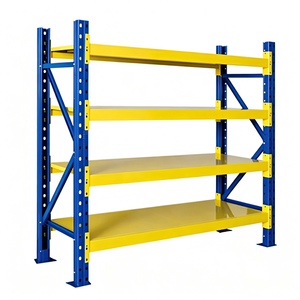
Top Trusted Slotted Angle Racks For Storage Factories & Suppliers
A technical procurement reference on modular perforated profile engineering, load integrity standards, dynamic storage logistics, and global tier-1 supply-chain benchmarking.
Enterprise Inventory Catalog
Engineered Slotted Angle & Heavy-Duty Structural Storage Systems
Explore precision-engineered slotted racking, cold-formed selective uprights, and mezzanine configurations manufactured in accordance with ISO 9001:2015 and CE structural execution codes.
Heavy Duty
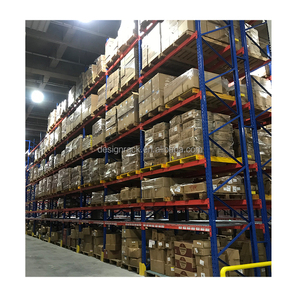
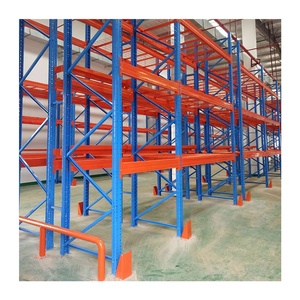
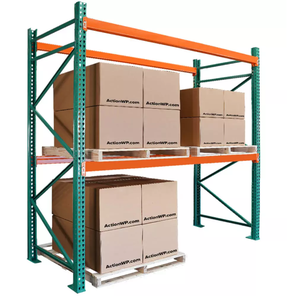
High Quality Warehouse Storage Heavy Duty Selective Pallet Rack Beam Shelf Custom Storage
In contemporary intra-logistics architecture, slotted angle racks and industrial boltless racking systems constitute the foundational skeleton of secondary distribution centers, spare-parts depots, light-assembly staging zones, and high-cube facilities. The structural integrity of perforated angle posts relies directly upon the cold-roll-forming precision of prime-grade low-carbon alloy coils, specifically Q235B structural carbon steel (Yield Strength fy ≥ 235 MPa, Tensile Strength fu = 370–500 MPa) and high-yield Q355B cold-formed micro-alloy for heavy-span framework.
Unlike standard punched sheet profiles that suffer from micro-fractures along slot perimeters, tier-1 manufacturing requires high-tonnage progressive CNC stamping stations. Perforations—typically engineered as staggered round and oval slot arrays on 50mm or 75mm centers—must preserve cross-sectional inertia to prevent torsional buckling under axial compression. By maintaining tight geometric tolerances (±0.15mm hole spacing accuracy), vertical posts resist local flange wrinkling under static point loading while allowing rapid bolted or teardrop mechanical fastening.
Profile Dimension (mm)
Gauge Thickness (mm)
Steel Designation
Standard Punching Pitch
Permissible Tier Load (kg)
Target Utilization Scope
38 × 38 × 1.8
1.8 mm nominal
Q235B Cold-Rolled
50 mm oval/circle array
100 – 180 kg / shelf
Retail stockrooms, archives, tool rooms
40 × 40 × 2.0
2.0 mm nominal
Q235B Hot-Dip Pickled
50 mm dual slotted
180 – 300 kg / shelf
E-commerce fulfillment bin-picking
60 × 40 × 2.3
2.3 mm calibrated
Q235B / Q355B Alloy
50 / 75 mm precision slot
300 – 650 kg / level
Automotive spares, hardware depots
80 × 50 × 2.5
2.5 mm heavy cold
Q355B Micro-Alloyed
75 mm structural step
650 – 1,200 kg / level
Machinery components, chemical bulk
Omega 90–120 Upright
2.0 – 3.0 mm heavy
Q355B Heavy Gauge
50 / 75 mm teardrop
1,000 – 5,000 kg / pallet tier
Heavy selective pallet & mezzanine columns
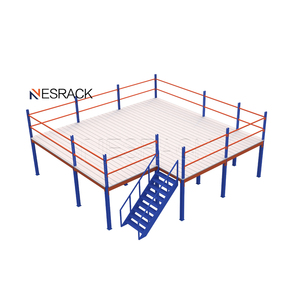
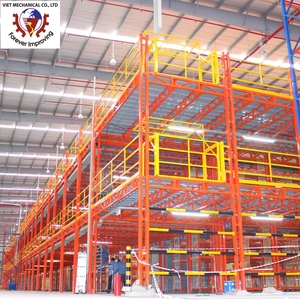
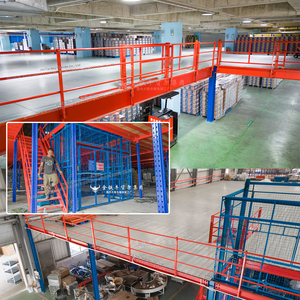
Deflection compliance must strictly mirror international storage equipment guidelines, notably EN 15512 (Steel Static Storage Systems) and the Rack Manufacturers Institute (RMI MH16.1) standard. The allowable vertical beam and shelf deflection ratio is constrained to L / 200 under uniform static loading. For heavy picking platforms and structural mezzanine floors, this criterion is tightened to L / 300 or L / 360 to eliminate dynamic sway, ensuring operator ergonomic safety and seamless cart transit.
Macro Procurement Roadmap
Strategic Sourcing & Procurement Trends for 2026–2030
Global supply-chain decision-makers are transitioning from transactional rack purchasing toward lifecycle value engineering, automated compatibility, and environmental surface durability.
TCO & Metric Optimization Over Unit Pricing
Industrial buyers now calculate the Total Cost of Ownership (TCO) per storage cubic meter rather than price per metric ton of steel. Precision-punched slotted angles that assemble 35% faster reduce contractor labor expenses and allow rapid repurposing when SKU profiles morph over multi-year logistics contracts.
AMR & AGV Clear-Aisle Compatibility
Autonomous Mobile Robots (AMRs) and automated pallet jacks require unobstructed bottom bays, ultra-flat ground leveling base plates, and impact-resistant column guards. Modern slotted angle frameworks are increasingly ordered with recessed bottom bracing to accommodate robotic underslung clearance.
Seismic & Environmental Zone Customization
Nearshoring hubs across Central America, Southeast Asia, and the Pacific Rim sit directly within active seismic fault lines. Procurement mandates finite element analysis (FEA), widened heavy-gauge anchor footplates, and seismic ductile cross-bracing certified to withstand Zone 3 and Zone 4 ground acceleration vectors.
The future of slotted angle racks and industrial storage hardware revolves around three disruptive technological axes: high-strength lightweight cold rolling, micro-textured anti-microbial powder coatings, and digital integration.
1. Advanced High-Strength Dual-Phase Steels: Traditional cold-rolled angles frequently relied on thick steel gauges to counteract buckling forces, resulting in heavy structures that elevated shipping container ocean freight costs. Contemporary roll-forming lines leverage micro-alloyed carbon steels with added manganese and vanadium. These advanced formulations achieve superior tensile yield strengths (>420 MPa) while decreasing wall thickness by 15–20%, reducing raw material consumption and carbon footprint without sacrificing load thresholds.
2. Hybrid Protective Finishes (ISO 12944 Environmental Categories): Standard industrial environments typically require C2 atmospheric protection, but warehouses in coastal ports, agrochemical storage facilities, or cold-chain distribution terminals face aggressive corrosive humidity. Leading manufacturers now offer three distinct finishing tiers:
Electrostatic Thermoset Polyester Powder Coating: Cured at 180°C–200°C after a 7-stage chemical immersion (degreasing, acid pickling, zinc phosphating, and passivation) to achieve a uniform 60–90 μm dry film thickness with 500+ hours salt spray test endurance.
Continuous Hot-Dip Galvanizing (HDG): Complying with EN ISO 1461, achieving a heavy zinc coating layer (>55–70 μm) for blast freezers, unheated damp transit lofts, and outdoor fertilizer storage.
Pre-Galvanized Coil Forming: High-speed rolling of Z275 certified steel coils for budget-conscious interior dry environments demanding zero chipped paint particles during assembly.
3. Digital Twin & QR Traceability: Every batch of cold-formed uprights and load-bearing beams is integrated with thermal-printed or laser-etched QR identifiers. Facility operations teams can scan physical posts to retrieve real-time structural calculations, load-capacity certificates, installation date, and factory mill test reports (MTR).
25+
Years Engineering Track Record
30,000m²
Advanced Production Workshop
30,000t
Monthly Racking Steel Output
120+
Global Export Destination Countries
Production Transparency
10-Stage High-Precision Manufacturing Pipeline
From raw alloy verification to automated CNC cold-forming and automated coating, our ISO 9001:2015 accredited factory enforces strict quality hold points at every fabrication milestone.
STAGE 01
Raw Materials
Mill-certified Q235B & Q355B coils verified via spectrometer analysis.
STAGE 02
Precision Slitting
High-speed rotary longitudinal shearing to exact strip tolerances.
Cross-hatch adhesion and load tests before sea-worthy container packing.
Procurement Due Diligence
Frequently Asked Questions for Storage Sourcing Teams
Direct engineering clarity regarding load calculations, corrosion mitigation, seismic anchorage, international building codes, and export container packing.
How do you verify allowable tier loading for custom slotted angle configurations?
Allowable tier load is established through finite element analysis (FEA) corroborated by physical prototype destructive testing under EN 15512 and RMI standards. Calculations evaluate the net effective section of the punched angle post, considering axial load, effective unbraced column length (slenderness ratio λ = KL/r), and corner gusset plate moment resistance. Our engineering department delivers a comprehensive signed structural calculation pack for every major project.
What surface treatment is best for humid, coastal, or refrigerated warehouses?
For standard indoor operations, our multi-stage electrostatic polyester powder coating (60–90 μm) delivers superior abrasion and scratch resistance. For cold-chain blast freezers with condensation risk, humid tropical coastal facilities, or agrochemical operations, we recommend continuous hot-dip galvanized (HDG) components complying with EN ISO 1461, ensuring multi-decade protection against cathodic oxidation.
Can slotted angle and selective pallet racks be engineered for active seismic zones?
Yes. Warehouses located in seismic regions (such as the Pacific Ring of Fire or Mediterranean fault zones) are calculated using local seismic response spectrum values (Ss and S1 under IBC / ASCE 7). We engineer heavy seismic baseplates with ductile anchor bolt configurations, reinforced horizontal/diagonal upright truss bracing, and heavy beam safety clips to prevent joint disengagement under seismic ground acceleration.
What documentation and third-party certifications validate your factory's production?
Our facilities operate under ISO 9001:2015 certification (Registration No. 18624Q00169R0M, valid through 2027), European CE Construction Products Regulation No. 2435-CPR-8605159, and RoHS compliance certificates. In addition, raw material mill test certificates (MTR) detailing chemical analysis and mechanical yield/elongation metrics accompany every container manifest.
How are components packed to prevent damage during transoceanic container shipping?
Posts and beams are bundled using specialized steel strapping over protective corrugated cardboard edge protectors and poly-film moisture barriers. Small fasteners, corner gussets, and hardware are crated in labelled wooden boxes with desiccant packets. Every container is stowed following computerized 3D container load plans to maximize cube utilization, prevent shifting at sea, and simplify destination customs inspections.
What inputs are required from the client to generate a complimentary 3D layout & static calculation?
We require: (1) Architectural CAD floor plan showing building length, width, clear eave height, and column grid; (2) Concrete slab thickness and reinforcement specification; (3) Stored goods profile (pallet dimensions, crate sizes, weight per unit); (4) Material handling equipment data (forklift turning radius, lift height, mast collapsed height); and (5) Environmental factors (ambient temperature, seismic zone, throughput velocity).
How does HEDA Shelves support on-site installation and field engineering compliance?
Every shipment arrives with comprehensive, step-by-step CAD assembly drawings, torque specification tables for bolts, and exploded 3D component diagrams. For remote oversight, our engineering team conducts daily video alignment check-ins. On large multi-tier structural mezzanine or heavy racking projects, senior installation project managers can be deployed directly to customer sites worldwide to supervise local erection crews, ensure plumbness tolerances under EN 15635, and certify final commissioning.
HEDA Shelves: Tier-1 Direct Racking Manufacturing
Established in Guangzhou in 2001, Guangzhou Heda Shelves Co., Ltd. delivers single-source manufacturing accountability for warehouse operators across 120+ nations. Encompassing 30,000 square meters of precision manufacturing facilities, 300+ engineering professionals, and a 30,000-ton monthly capacity, we design, fabricate, and test each storage system to international structural benchmarks.
CE Certified (2435-CPR-8605159)
ISO 9001:2015 Registered
RoHS Environment Compliant
FOB / CIF Global Seaport Direct
Connect with an Application Engineer
Receive your custom 2D/3D CAD warehouse layout proposal and itemized factory-direct quote within 24 hours.