Enterprise Product Series
Industrial Storage Rack Portfolio & Structural Components
Explore our certified cold-formed steel racking systems and safety hardware manufactured to comply with FEM 10.2.02, EN 15512, and ANSI MH16.1 specifications for modern distribution centers.
Engineering White Paper
Structural Anatomy & Load Mechanics of Selective Pallet Racking
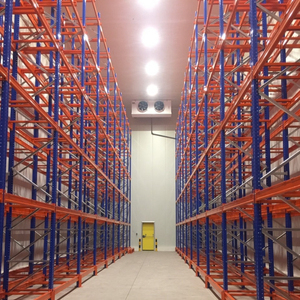
Selective pallet racking represents the architectural backbone of international logistics. Providing 100% immediate accessibility to every stored unit load without shifting neighboring pallets, it is the globally accepted standard for FMCG distributors, third-party logistics providers (3PLs), and industrial spare-parts hubs.
Omega Upright Posts (Q235B / Q355B)
Roll-formed through 20+ progressive stations into an optimized 11-fold closed-profile Omega configuration. Precision perforated at 50mm or 75mm pitches, uprights exhibit outstanding axial compressive strength and torsion resistance under full seismic load combinations.
Interlocking Box & Step Beams
Constructed with dual C-profiles continuously seam-welded to create hollow rectangular sections. Welded to heavy-gauge 3, 4, or 5-prong cold-stamped connector brackets featuring automatic spring-action safety locking pins to avoid accidental dislodgement from lift trucks.
Seismic Anchor Baseplates
Oversized footplates laser cut from structural grade steel plates. Engineered to transfer moment stresses cleanly into industrial slab foundations via dual M12/M16 chemical or mechanical wedge anchors calculated against site-specific earthquake acceleration factors.
| Storage System Type |
Selectivity |
Floor Space Utilization |
Inventory Rotation |
Capital Cost (CAPEX) |
Ideal Handling Equipment |
| Selective Pallet Racking |
100% (Instant Direct Access) |
40% – 45% (Standard Aisle) |
FIFO or LIFO Flexible |
Low / Economical |
Counterbalance, Reach Trucks |
| Double Deep Racking |
50% (Two-Pallet Depth) |
55% – 60% |
LIFO |
Low to Medium |
Pantograph Reach Trucks |
| Drive-In / Drive-Through |
15% – 20% (Aisle-free Lanes) |
70% – 80% |
LIFO (Drive-In) / FIFO (Drive-Thru) |
Medium |
Narrow Counterbalance |
| Push-Back Pallet Racking |
Limited per Cart Line |
65% – 70% |
LIFO |
Medium to High |
Standard Forklifts |
| Radio Shuttle Automation |
Lane-Dependent Selectivity |
80% – 85% |
Automated FIFO / LIFO |
High |
Standard Truck + Robotic Shuttle |
Table 1: Structural performance and efficiency index across primary heavy-duty warehouse storage methodologies.
Manufacturing Authority
25+ Years of Racking Manufacturing Excellence
Guangzhou HEDA Shelves Co., Ltd. has stood at the forefront of international material handling equipment production since 2001. Operating certified facilities compliant with ISO 9001:2015, CE (EN 1090 / EN 15512), and RoHS directives, our end-to-end control ensures safety factor reliability up to 1.5 to 1.8.
10-Stage Precision Fabrication Workflow
Every profile undergoes rigorous metallurgical, dimensional, and coating validation before seaworthy packaging.
01
Certified Raw Steel
Premium Q235B/Q355B coils tested for yield tensile integrity.
02
High-Speed Slitting
Automated uncoiling & slitting to tight edge tolerances.
03
CNC Punching
Inline hydraulic indexing of teardrop and diamond slots.
04
Cold Roll Forming
Multi-stand rollers produce crisp continuous Omega profiles.
05
Robotic Seam Welding
Digital welding cells assemble connector brackets & tubes.
06
Mechanical Polish
De-burring and weld-slag removal prior to surface treatment.
07
Chemical Pre-treatment
Multi-stage ultrasonic degreasing, pickling & phosphating.
08
Electrostatic Coating
Thermosetting epoxy-polyester powder (60–80 µm thick).
09
Thermal Curing
Baking at 180°C–200°C for superior corrosion resistance.
10
Multi-Point QC & Pack
Load sampling, thickness testing, and container strapping.
TREND 01
Autonomous Mobile Robot (AMR) & AGV Compatibility
Conventional selective layouts are increasingly adapted to host autonomous reach trucks and floor-level AMRs. This necessitates floor-level guided tracks, tighter manufacturing tolerances on beam deflections (≤ L/200), and integrated optical barcode target plates on load levels.
TREND 02
High-Strength Low-Alloy (HSLA) Steels
Rising ESG standards and sea freight costs have accelerated the shift toward micro-alloyed HSLA steels. Thinner gauge materials engineered with higher yield strengths achieve equal or superior load ratings while cutting tare weight by 12%–18%, significantly lowering carbon footprint.
TREND 03
Multi-Tier Space Monetization
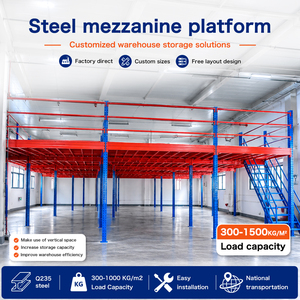
Industrial real estate acquisition costs have surged globally. Procurement teams are heavily favoring hybrid installations where selective pallet racking frameworks serve simultaneously as structural supports for overhead picking mezzanines and catwalk runways.
TREND 04
Seismic Resiliency & Performance-Based Codes
Standard static calculations are no longer adequate for regulatory sign-offs. Modern supply chain operations mandate rigorous Non-Linear Time-History (NLTH) finite element simulations to ensure rack structures remain serviceable without brittle collapse during high-intensity earthquakes.
TREND 05
Pre-Galvanized & High-Durability Hybrid Finishes
Cold storage facilities and tropical coastal logistics centers demand extreme corrosion resistance. The market is shifting from conventional paint toward pre-galvanized upright frames paired with zinc-rich powder-coated beams to eliminate atmospheric blister rust and chemical degradation.
TREND 06
Modular, Standardized Component Interchangeability
To guard against supply disruptions, global enterprises demand standardized tear-drop or 50mm pitch punchings that allow simple re-profiling, beam elevation adjustments, and cross-compatibility with secondary storage modules and warehouse accessories.
Procurement Knowledge Hub
Frequently Asked Questions on Pallet Racking Procurement
Technical answers prepared by our senior structural engineers to simplify your tender documentation, spatial calculations, and import compliance.
Q: How is safe beam load capacity determined under international codes?
Beam capacities conform to EN 15512 and ANSI MH16.1 guidelines based on uniformly distributed loads (UDL). The deflection limit must not exceed L/200 (span length divided by 200). A safety factor of at least 1.5 is standard to prevent plastic deformation under maximum operational weight.
Q: What warehouse information is required to produce a complimentary 3D layout?
Our engineering desk needs clear warehouse dimensions (length, width, clear eaves height), concrete slab compressive strength, column grid locations, pallet footprint (W x D x H including overhang), maximum gross pallet weight, and the turning radius/lift reach of your forklifts.
Q: How do you handle seismic considerations for earthquake-prone regions?
HEDA Shelves runs finite element structural modeling incorporating local seismic site class, spectral response accelerations (Ss and S1), and building hazard category. We size footplates, brace geometry, and anchor embedment depths to ensure seismic compliance.
Q: Which surface treatment is optimal for humid, tropical, or cold-room settings?
For standard ambient warehouses, our multi-stage phosphated electrostatic powder coating provides 500+ hours of salt-spray endurance. For harsh freeze-thaw cycles or coastal shipping hubs, hot-dip galvanized steel components provide superior, lifetime barrier defense against rust.
Q: What is the standard production and ocean shipment lead time?
Standard production runs for 1 to 5 container loads typically range between 15 and 25 calendar days. Ocean transit times vary depending on the destination port (e.g., 20–35 days for the Americas or Europe). Containers are systematically bundled and labeled to ensure fast customs clearance.
Q: What installation assistance and technical documentation do you provide?
Every shipment is accompanied by detailed CAD erection drawings, 3D exploded assembly diagrams, piece-by-piece packing lists, and step-by-step video manuals. For complex or multi-tier installations, certified site supervisors can be dispatched on-demand.
Q: How do upright column protectors reduce long-term maintenance costs?
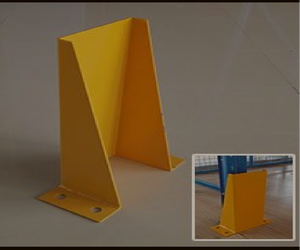
Forklift impact is the leading cause of racking collapse. Heavy-duty U-shaped or wrap-around column protectors absorb and deflect low-level impacts, shielding thin-walled upright sections from irreversible sectional deformation and eliminating costly pallet unloading repairs.
Q: Can selective pallet racking accommodate non-palletized or broken cargo?
Yes. By integrating galvanized wire mesh decking, drop-in steel panels, or cross-pallet support bars, selective systems comfortably support unpalletized cartons, odd-sized skids, and heavy tote boxes while meeting NFPA fire-sprinkler drainage requirements.
Transform Your Warehouse Capacity with Certified Engineering
Connect with HEDA Shelves' technical engineering division today. Receive a comprehensive CAD floor layout, structural finite-element load calculations, and a fully itemized factory-direct quote within 24 hours.