High-Through put Warehouse Picking & Storage Systems
From single-bay manual order picking to multi-tier dynamic flow and vertical carousel automation, explore 8 proven racking solutions manufactured under certified quality management systems.
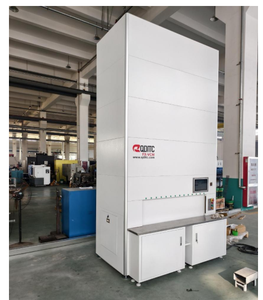
Vertical Rotating Automated Inventory System & Smart Storage Cabinet
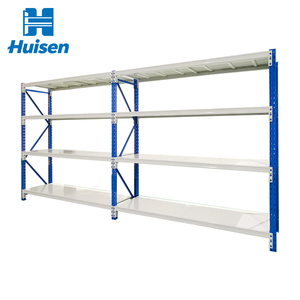
High-Strength Steel 5- Layer Adjustable Manual Picking Rack
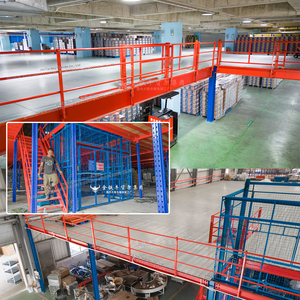
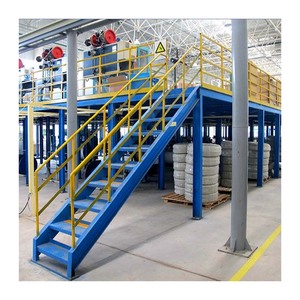
Custom Heavy I-Beam Structural Steel Platform Mezzanine Loft
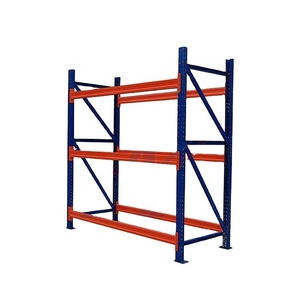
< a href="/product/heavy-duty-industrial-warehouse-storage-rack/">Heavy-Duty Industrial Q235B Storage Rack with Powder Coating
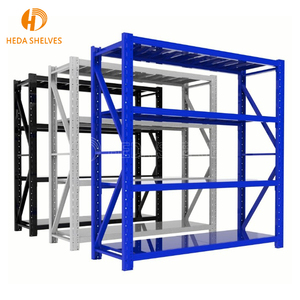
Industrial Multi-Layer Thickened Steel Picking Shelves
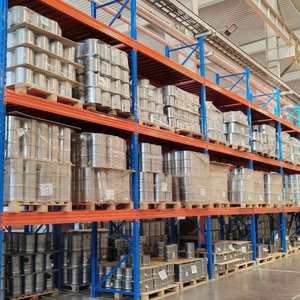
Heavy-Duty Selective Pallet Racking with Drop-In Locking Beams
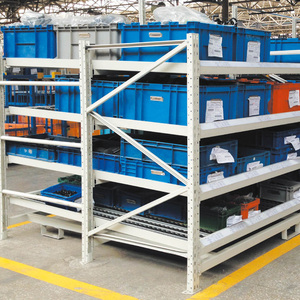
Dynamic High-Density Gravity Carton & Pallet Flow Racking
Why Global Supply Chains Trust Guangzhou HEDA Shelves
Industrial picking racking systems represent long-term capital assets where structural safety, metallurgical purity, and dimensional precision directly dictate life cycle return on investment (ROI).
Certified Structural Compliance
Every picking racking and mezzanine structure conforms to stringent international building codes, including European Standard EN 15512 (FEM 10.2.02) and American ANSI/RMI MH16. 1 specifications. Holding CE Certificate No. 2435-CPR-8605159, ISO 900 1:2015 No. 18624Q00169R0M, and RoHS certifications, we guarantee audited quality and traceable steel mill certificates.
- CE Certificate No. 2435-CPR-8605 159 Verified
- ISO 9001:2015 Audited Quality Management System
- Full traceability from raw steel coil to finished beam
Full In-House Manufacturing Cycle
Operating across our 30,000 square meter modernized factory with over 300 skilled technicians, HEDA controls 10 critical manufacturing stages: continuous roll-forming lines, automated CNC multi-punching press units, robotic welding stations, pre-treatment acid pickling and phosphating lines, and electrostatic powder coating chambers.
- High-grade Q235B & Q345B structural steel coils
- Automated CNC pitch punching ensuring ±0.5mm tolerances
- Dual -stage epoxy-polyester cured at 180°C baking oven
Free 3D Layout & Seismic Calculations
We deploy senior structural engineers to conduct finite element stress analysis (FEA), forklift travel clearance simulations, and seismic site analysis. Importers receive full CAD layout proposals, structural deflection verification ($L/200$ criteria), and 3D realistic renderings prior to production, eliminating costly on-site installation modifications.
- Custom CAD layout & 3D isometric rendering within 24 hours
- Seismic spectral acceleration modeling for active earthquake belts
- Optimized aisle engineering for reach trucks, VNAs, and AGVs
Mechanical Design Principles & Anti-Corrosion Metallurgy
A detailed technical guide to specifying picking racks for high-cycle distribution centers, cold-storage chains, and tropical environments.
1. Material Selection & ; Cold-Roll Forming
The core structural integrity of picking uprights depends on cold-formed steel yield strength ($f_y$). While commodity suppliers utilize non-standard commercial steel with erratic grain orientations, HEDA standard izes on prime Baosteel and Shougang Q235B and Q345B micro-alloyed carbon steel coils. During continuous roll-forming across 18 sequential roller stands, residual stress is minimized to prevent bow, camber, and torsional twist across 12-meter tall upright frames.
2. Seismic Acceleration & Anchoring Mechanics
For installations in seism ically volatile regions (such as the Pacific Rim and Central America), picking racks are modeled as unbraced ductile moment frames in the down -aisle direction and braced frames in the cross-aisle direction. Our engineering team calculates overturning moment, base plate thickness ($ t \ge 8\text{mm}$ to $16\text{mm}$), and chemical or mechanical anchor bolt shear stresses using European Eurocode 8 and IBC / RMI formulas.
3. Tropical & Cold-Chain Surface Treatment
In high humidity environments exceeding 85% RH or sub-zero blast freezers ($-30^\circ\text{C}$), ordinary single -coat paints suffer blistering and galvanic flaking. HEDA utilizes a continuous 10-stage immersion pre-treatment involving hot alkaline degreasing, twin water rinses, acid pickling to descaling, zinc phosphate micro-crystallization, followed by electrostatic thermoset polyester powder coating ($70\text{--}90\,\mu\text{m}$) or hot-dip galvanizing.
| Racking Architecture | Typical Load Rating | Picking Velocity | Space Utilization | Ideal Logistics Profiles | Structural Standards |
|---|---|---|---|---|---|
| Manual Medium Duty Picking | 2 00 – 800 kg / Shelf | High (Piece Pick) | Moderate (50-60%) | E-commerce fulfillment, spare parts, apparel cartons | FEM 10.2.0 2 / CE |
| Heavy Duty Selective Racking | 1,000 – 4,500 kg / Level | Full Pallet Selectivity | Standard (40-50 %) | FMCG, 3PL multi-client distribution, heavy industrial machinery | ANSI MH16.1 / EN 15512 |
| Dynamic Gravity Carton / Pallet Flow | 500 – 1,500 kg / Lane | Ultra -Fast FIFO | Very High (70-80%) | Pharmaceuticals, perishable foods, short shelf -life beverage sorting | EN 15095 / CE |
| Rack -Supported Mezzanine Platform | 300 – 1,200 kg / m² | Multi-Tier Pick Zone | Maximum (150-200% Floor Area) | Automotive parts, bonded customs warehouses, archive storage | AISC 360 / CE CPR |
| Smart Automated Vertical Carousel | 250 – 650 kg / Carrier | Automated Goods -to-Person | High Vertical Density | Micro-electronics, tooling, high-value bonded inventory, medical devices | CE Machinery Directive |
Future Procurement & Technological Trends in Picking Racks
Modern distribution hubs are moving away from static, single-function storage toward dynamic, hybrid-automated architectures designed to buffer labor shortages and shifting freight cycles.
1. Sym biosis with AMRs & AGVs
Warehouses are no longer exclusively designed for pedestrian pickers or traditional counterbalance forklifts. Modern picking racks increasingly feature raised bottom clearance levels, reinforced guide rails, and high -precision laser retroreflectors calibrated for Autonomous Mobile Robots (AMRs) and automated Guided Vehicles (AGVs). Procurement executives must specify beam clear spans and frame plumbness that support automated robotic bin-handling mechanisms.
- Sub-millimeter beam deflection controls to assist robotic vision
- Custom lower -level tunnel designs for under-rack AMR transit
- Integrated floor anchor plates capable of handling high dynamic shear
2. Vertical High-Density Modular Mezzanines
< p>With industrial land acquisition costs rising exponentially across global gateway cities, procurement directors favor multi-tier rack-supported platforms over brick-and-mortar facility expansion. Adding a 3-tier rack-supported mezzanine provides 200% to 300% more pick faces inside the existing building footprint without requiring new zoning permits or municipal land approval. < ul class="aicc_feature_list">3. IoT Structural Monitoring & Smart Digital Twins
The next generation of picking racks incorporates embedded strain gauge sensors, ambient vibration transceivers, and RFID impact sensors directly into upright column bases. This enables warehouse operators to receive real-time notifications on mobile dashboards whenever a forklift impact exceeds allowable structural limits, eliminating hidden buckling risks and ensuring compliance with occupational safety audits.
- Real-time telemetry on static beam overload and cyclical deflection
- Immediate telemetry alerts for hidden seismic or forklift impacts
- Integration with Warehouse Management Systems (W MS) for slotting
Frequently Asked Questions by Industrial Sourcing Teams
Clear technical, engineering, and logistics answers addressing import risks, load tolerances, certifications, and global site erection.
Q1: How does HEDA verify structural load safety for custom picking systems?
Our engineering division prepares structural calculations using Finite Element Analysis (FEA) software . We calculate both static dead loads and dynamic live loads in strict conformity with EN 15512 and RMI specifications . All components incorporate a safety factor of 1.5 to 1.65 above rated capacities, and full calculation packages are signed off by structural engineers for presentation to local insurance and building code regulators.
Q2: What floor slab parameters are required prior to installing heavy-duty picking racks?
Standard installations require a reinforced concrete slab with a minimum compressive strength of 25 to 30 MPa ($C25/C30$) and a thickness of at least 150mm to 200mm, with no expansion joints directly below upright baseplates. During our free design review, we evaluate your slab core samples and soil reports to specify optimal baseplate surface dimensions, thickness, and anchor embedding depths ($M10$ to $M16$ chemical or expansion bolts).
Q3: How do you prevent corrosion and transit damage during oceanic container shipments?
Ocean freight exposes steel racks to humid, saline conditions. All HEDA components undergo hot phosphating and automated electrostatic powder curing. For overseas container transit, uprights and beams are packaged with corner edge protectors, high -density non-woven moisture barriers, and heavy-duty steel strapping. Bundles are labelled with individual barcode tags and detailed packing lists , simplifying customs clearance at global destination ports.
Q4: Can your picking racks be engineered for active seismic fault zones?
Yes. We have engineered and installed certified heavy-duty storage projects across earthquake-prone regions worldwide, including the Pacific Ring of Fire and Latin America. We incorporate localized spectral acceleration coefficients ($S_s, S_1$), increase upright steel gauge thicknesses, expand base plate surface contact areas, and incorporate supplemental horizontal and vertical X-bracing assemblies designed to dissipate lateral seismic energy.
Q5: What is the typical lead time for custom OEM/ODM picking racking orders?
Standard custom orders require 15 to 25 production days following approval of CAD drawings. Because our 30,000 m ² factory maintains a standing inventory of high-grade raw steel coils and operates high-speed roll forming lines yielding over 30,0 00 metric tons per month, we can fulfill fast-track industrial orders for urgent warehouse construction schedules.
Q6: How is overseas on -site installation managed and supported?
Every shipment includes step-by-step 3D assembly shop drawings, numbered part schedules, and high-definition installation videos. For medium and large-scale installations, we provide remote video engineering support or dispatch qualified project management supervisors to oversee your local installation crews, conduct anchor torque audits, and certify safe load placement .
Request a Complete 3D Warehouse Layout & Quotation
Send our senior engineering team your warehouse dimensions, ceiling clear heights, SKU weight distribution, and forklift models. We will provide an engineered CAD layout , load calculations, and a transparent FOB/CIF factory direct proposal within 24 hours.