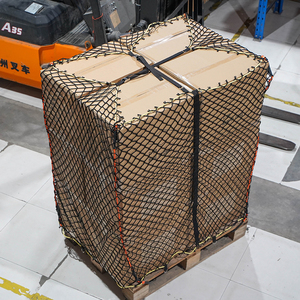
Shelf Cargo Reusable Pallet Securing Containment Nets
High-tensile modular safety netting prevents cargo displacement and overhead pallet fall hazard during seismic events or forklift operations.
Explore our certified structural storage configurations designed to maximize volumetric efficiency, optimize picking cycles, and handle high static-dynamic pallet loads.
High-tensile modular safety netting prevents cargo displacement and overhead pallet fall hazard during seismic events or forklift operations.
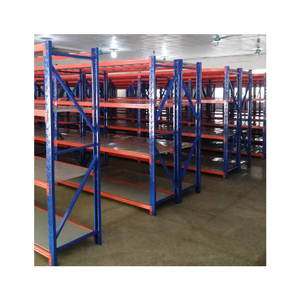
Versatile Q235B cold-rolled steel industrial racking system with adjustable beam levels, providing 100% selective accessibility for multi-SKU facilities.
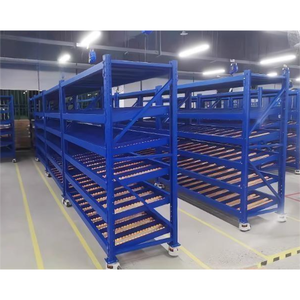
Self-propelled dynamic roller beds for strict First-In, First-Out throughput. Best suited for high-density perishable goods, pharmaceuticals, and cold chains.
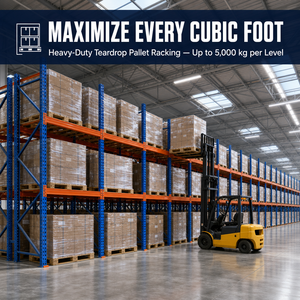
Custom-engineered high-bay conventional racking engineered for intensive order-picking logistics hubs and rapid container turnarounds.
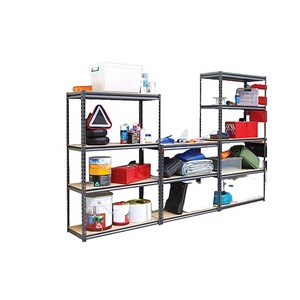
Flexible boltless manual picking unit with multi-tier rust-resistant treatment, ideal for maintenance rooms, retail backrooms, and automotive spare parts.
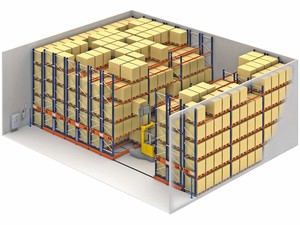
Floor-rail mounted motorized racking that collapses unused aisles, eliminating footprint redundancy while boosting cold-storage space utilization by 85%.
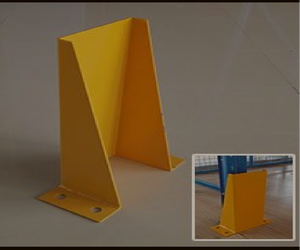
High-visibility impact-deflecting protective boots anchored to floor slabs to safeguard vertical upright frames from forklift collisions and structural fatigue.
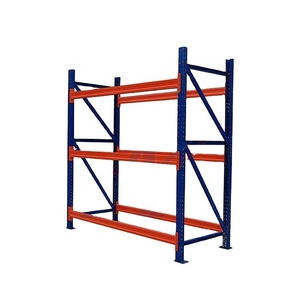
Massive-payload warehouse picking rack engineered with specialized electrostatic polyester powder coating for maximum abrasion and rust resistance.
In modern distribution logistics and supply chain infrastructures, warehouse real estate is often the second largest capital expense behind human capital. Maximizing cubic volume through heavy-duty pallet rack platforms and rack-supported mezzanines has shifted from a convenience to a strategic balance sheet necessity. Selecting an international manufacturing partner requires rigorous structural validation beyond baseline visual inspections.
A frequent vulnerability in international procurement is non-standard steel alloy substitutions. Reliable platforms are engineered with certified minimum yield strengths (fy ≥ 235 N/mm² or 355 N/mm²). Horizontal beams must adhere strictly to a serviceability deflection criterion of L/200 (or L/300 in precision automation aisles), where total flexure across beam length does not distort mechanical tolerances or risk dislodging lock pins. Our factory uses continuous CNC automated roll-forming lines to maintain precise dimensional tolerances (±0.5mm), eliminating eccentric loading risks during field erection.
Logistics facilities located in maritime, humid, or equatorial zones (such as Central American ports, Southeast Asia, or coastal export corridors) experience rapid electrochemical oxidation if steel is improperly prepared. Surface coating longevity depends 80% on chemical pre-treatment and only 20% on the topcoat. Our 10-stage automated finishing includes deep acid pickling to strip scale, phosphate immersion to create a microscopic crystalline bonding substrate, followed by automated electrostatic polyester powder baking at 180°C–200°C. For sub-zero blast freezers or aggressive chemical warehouses, heavy-duty hot-dip galvanization (HDG compliant with ISO 1461) delivers lasting cathodic protection.
Global warehouse executives are adapting their procurement specifications to address rising land costs, labor shortages, and rapid warehouse automation integrations.
Traditional static storage is transitioning toward hybrid configurations. Pallet racking must now feature tight structural deflection limits to accommodate autonomous mobile robots (AMRs), automated 4-way radio shuttles, and stacker cranes without structural sway.
With distribution hubs expanding across seismic fault zones in the Americas and Pacific Rim, structural engineers mandate non-linear response spectrum analysis. Upgraded footplate anchors, column bracing ratios, and top-tier splice joints are essential to safeguard personnel.
Next-generation racking includes integrated load-cell brackets and impact sensors on column guards. These IoT units stream instantaneous rack overload alerts and collision data to central WMS software before catastrophic upright collapses can occur.
Multinational corporate tenants now calculate embedded emissions across their storage infrastructure. Sourcing steel manufactured with electric arc furnace (EAF) technology and VOC-free powder coatings will become a standard contractual compliance clause.
Rather than investing in costly building expansions, industrial facilities are installing 2-tier and 4-tier rack-supported platforms. These systems blend bulk pallet replenishment below with high-density bin picking on upper mesh or steel-plank decks.
International ocean freight volatility demands sophisticated bundling schemes. Structural profiles engineered with nested uprights and detachable connectors significantly improve container volumetric fill, lowering ocean shipping expense per pallet position.
Combining 25 years of fabrication expertise with structural engineering rigor and end-to-end export documentation.
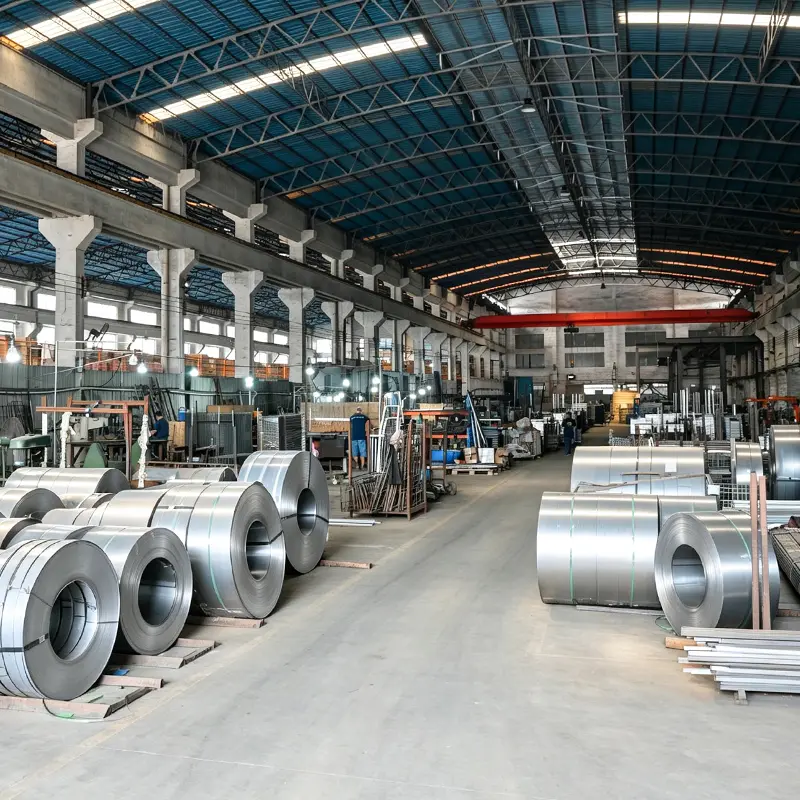
Established in 2001 in Guangzhou, HEDA Shelves operates a modern 30,000 m² plant, supporting distributors, 3PL giants, and corporate developers across 120+ countries.
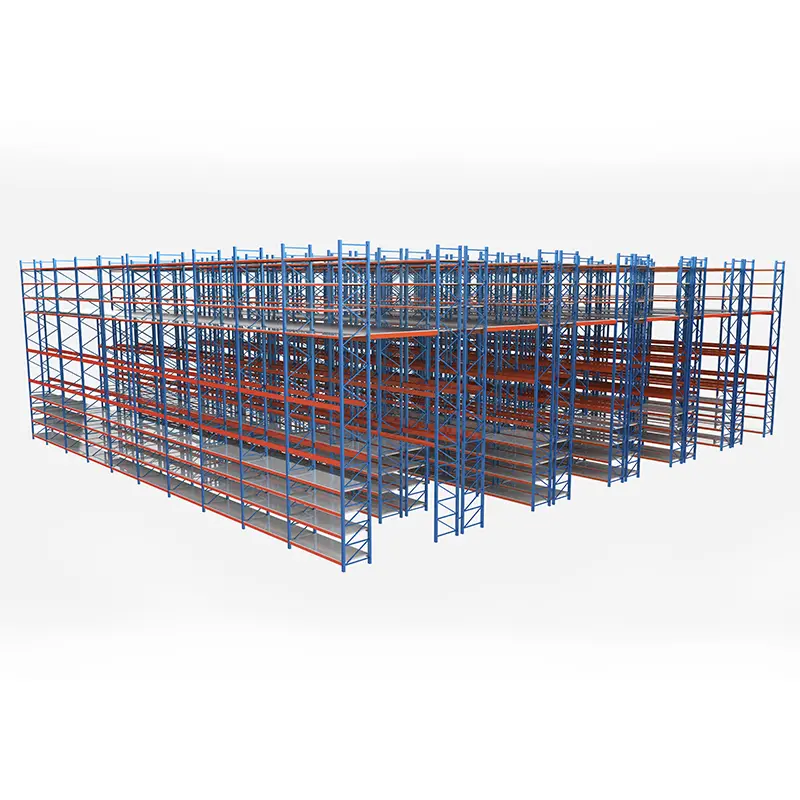
Our senior engineers deliver complete CAD layouts, aisle reach calculations, and 3D visual renderings before production, ensuring full alignment with your floor capacity and forklift fleet.
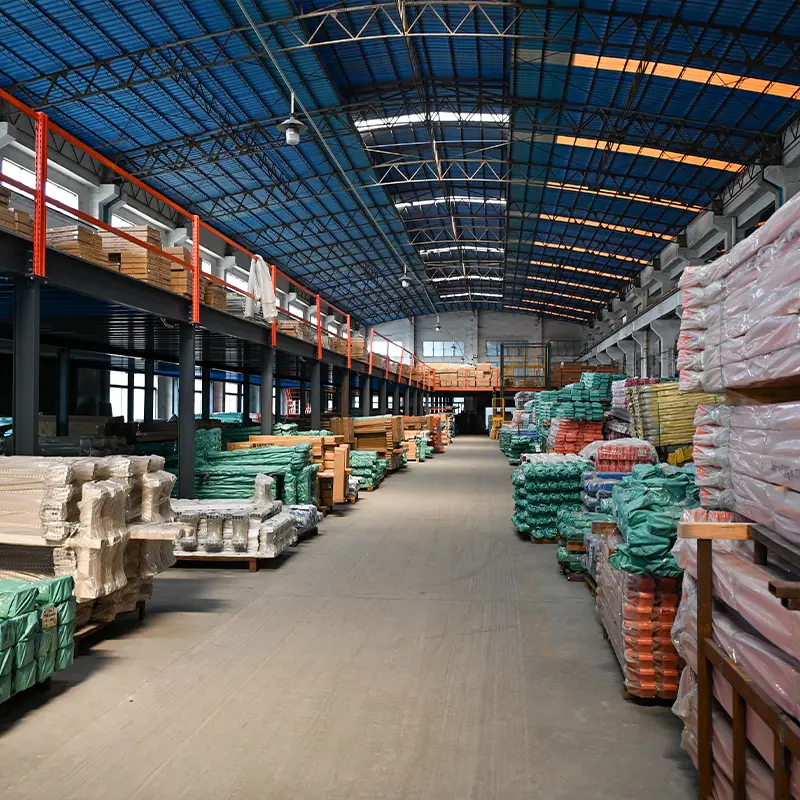
Every profile conforms to stringent European CE (No. 2435-CPR-8605159) and ISO 9001:2015 certifications, accompanied by complete mill test certificates (MTC) and weld inspection reports.
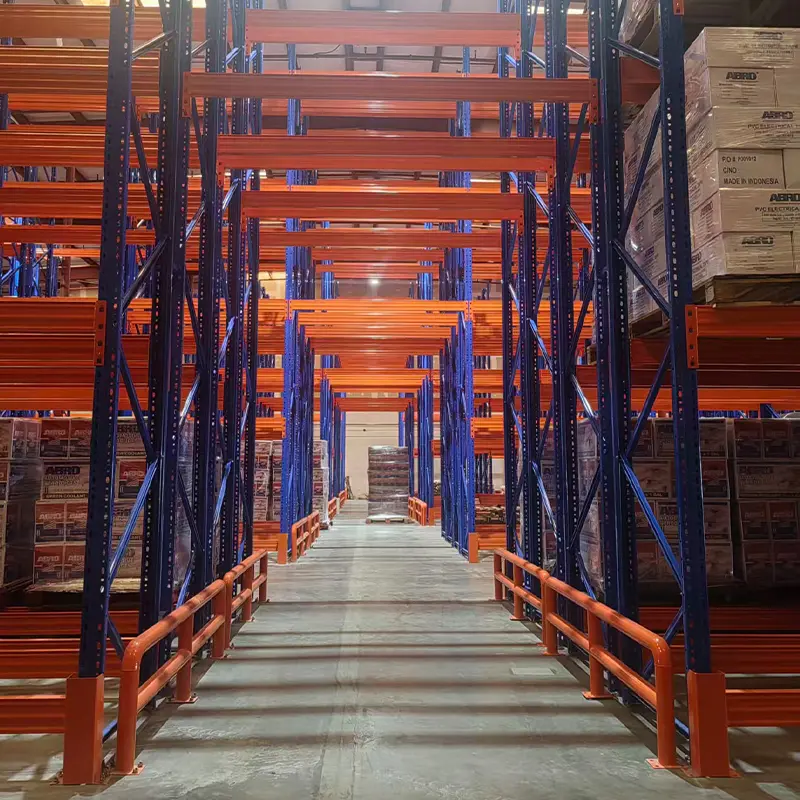
From bundle-strapping with edge protectors to clear container loading lists, our team delivers FOB, CIF, or DDP shipments directly to Pacific, Atlantic, and Caribbean hubs with zero in-transit damage.
Key technical and commercial answers to simplify your project planning and vendor evaluation.
Load ratings are calculated using structural finite element analysis (FEA) based on beam length, profile depth, material thickness, and upright configuration. We evaluate static dead load, product payload (UDL), seismic acceleration vectors, and forklift impact factors according to EN 15512 and RMI standards before locking in profile gauges.
Yes. Warehouses located in seismic regions require verified baseplate dimensions, high-strength chemical anchor bolts, heavy-duty diagonal back-bracing, and horizontal aisle ties. Our technical team configures system ductility based on the soil class and spectral acceleration values specified by your regional structural engineer.
For blast freezers and cold distribution facilities operating between -20°C and -30°C, cold-embrittlement is prevented by utilizing structural steel with verified charpy impact toughness. We recommend either specialized low-temperature powder coatings or continuous hot-dip galvanization to stop moisture condensation rust.
To produce an optimized CAD proposal, our layout team needs: (1) Architectural drawings showing clear building height and internal column grid; (2) Pallet dimensions (W × D × H) including cargo overhang and maximum gross weight; (3) Forklift model, minimum aisle turning radius, and maximum lift mast height; (4) Target SKU turnover model (FIFO or LIFO).
Our production line integrates 10 automated quality control check-gates, covering steel tensile testing, CNC hole center verification, automated robotic welding, and powder dry film thickness (DFT) gauges. Prior to container stuffing, pre-assembly trials are conducted to verify beam-end connectors and locking pins install without field modifications.
Standard fabrication runs between 15 to 25 working days depending on tonnage. Orders are securely palletized, cross-strapped, and loaded into 40ft HQ shipping containers with comprehensive packing manifests for straightforward port customs clearance across Europe, North America, Central America, Africa, and the Middle East.