High Load Capacity
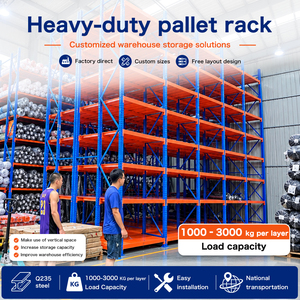
Heavy Duty Warehouse Steel Pallet Racking
Industrial adjustable beam layout engineered for maximum pallet accessibility, custom beam connector pins, and high bay load distribution.
Certified to international structural codes (EN 15512, RMI, ISO 9001:2015), our racking and shelving infrastructures empower high-density space utilization, seamless pallet replenishment, and dynamic batch handling.
Industrial adjustable beam layout engineered for maximum pallet accessibility, custom beam connector pins, and high bay load distribution.
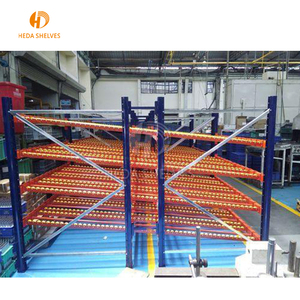
Continuous roller lanes engineered for split-case picking, rapid fulfillment cycles, and first-in-first-out inventory rotation.
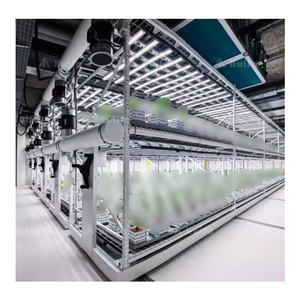
Multi-tier modular framework with anti-corrosive powder finishes, precision lighting brackets, and automated irrigation channels.
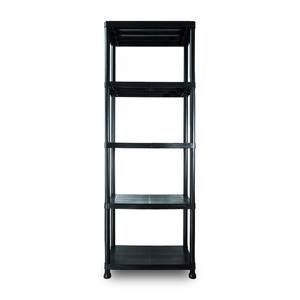
24" x 12" x 53" modular boltless steel shelving engineered for manual picking parts, archival storage, and workshop organization.
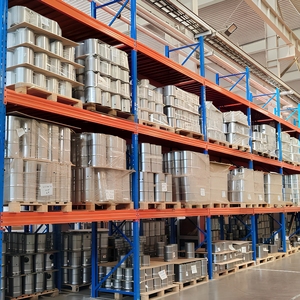
Freestanding stackable steel frames with 1000kg safe working load per level, electro-phosphate pre-treatment, and anti-corrosion barrier.
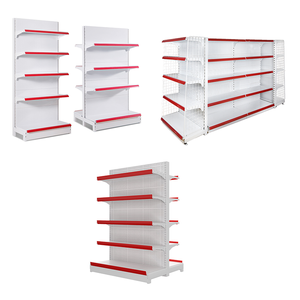
Light-duty heavy-gauge cold-rolled steel merchandising displays for cash-and-carry wholesale depots, front retail, and backroom staging.
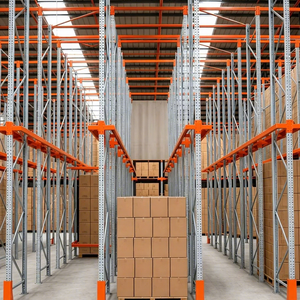
Continuous aisle rail engineering eliminating operating aisles to deliver up to 80% footprint volume optimization for cold store and bulk goods.
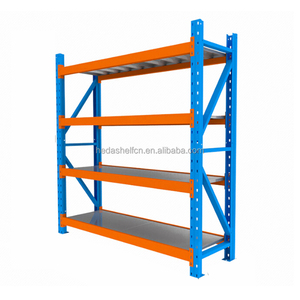
Tool-free interlocking structural steel stacking framework for seasonal buffer spaces, flexible floor expansion, and bulk box handling.
As modern logistics hubs confront surging land costs and accelerated fulfillment schedules, Pallet Flow Racking Systems (also known as Gravity Flow Racks) have emerged as the definitive benchmark for ultra-high-density storage adhering strictly to First-In, First-Out (FIFO) stock principles. Unlike static selective pallet racks that mandate wide service aisles for counterbalanced forklifts, a pallet flow infrastructure uses an inclined roller bed (typically engineered at a calibrated gradient of 3.0% to 4.5% or 35–45 mm per linear meter). Pallets are loaded from the upper charge end and roll under gravitational acceleration toward the lower retrieval face, where specialized load separators isolate the pick pallet from accumulating backpressure.
From a structural integrity perspective, designing an industrial-grade pallet flow lane requires balancing kinematic friction, dynamic braking resistance, structural deflection under dynamic loads, and roller impact mechanics. Below is an engineering overview of the critical components that differentiate professional-grade gravity racks from standard storage:
Direct-contact centrifugal dynamic brake rollers regulate the travel speed of rolling pallets to an engineered velocity under 0.3 m/s, preventing terminal impact shock regardless of pallet payload variation (300kg to 1,500kg).
Mechanical entry/exit separators hold back downstream queue pallets while the operator picks the lead pallet, reducing pallet-to-pallet backpressure to zero and eliminating forklift tines jamming.
Reinforced entry guides with replaceable steel guides align off-center loads safely into roller lanes, protecting structural uprights from forklift misalignments at the charge face.
Pallet bottom board deflection, surface friction variation, and environmental temperatures directly influence rolling friction coefficient ($\mu$). In refrigerated and blast-freezer setups (-30°C to -10°C), lubricants within standard bearings freeze, leading to stuck pallets. Our engineering team incorporates proprietary low-temperature synthetic lubricants, high-grade galvanized skate wheel tracks or full-width steel rollers, and heavy-duty triple-spring braking systems that perform reliably in challenging cold chain environments.
Selecting the optimal storage system requires evaluating inventory rotation rules, SKU selectivity, forklift cycle efficiency, and volumetric density tradeoffs.
| System Architecture | Inventory Principle | Floor Space Utilization | Selectivity per SKU | Forklift Operating Travel | Throughput Velocity | Initial CapEx |
|---|---|---|---|---|---|---|
| Gravity Pallet Flow Rack | Strict FIFO (First-In, First-Out) | Exceptional (up to 85%) | 1 SKU per Lane (Deep Storage) | Minimal (Dedicated Charge & Pick Aisles) | Ultra-High (Self-feeding queue) | Medium to High |
| Selective Pallet Racking | Universal FIFO / LIFO | Moderate (35% - 45%) | 100% Direct Immediate Access | High (Aisle travel per pallet) | High Pick Rate / Low Density | Low |
| Drive-In Racking System | Strict LIFO (Last-In, First-Out) | Very High (up to 75%) | Low (Entire bay per SKU) | High (Trucks enter rack structure) | Low to Moderate (Forklift bottlenecks) | Low to Medium |
| Push-Back Cart Racking | LIFO (Last-In, First-Out) | High (up to 70%) | Moderate (1 SKU per lane, 2-6 deep) | Moderate (Single service aisle) | Moderate to High | Medium |
| Radio Shuttle Automation | Flexible FIFO / LIFO | Ultra-High (up to 90%) | Configurable per Lane | Low (Autonomous shuttle moves pallet) | High (Simultaneous transfer) | High |
B2B procurement leaders and supply chain executives are moving beyond viewing pallet racks as static commodity steel. Strategic enterprise procurement focuses on future-proof modularity, automation interoperability, carbon accounting, and resilience against seismic and extreme climatic events.
Modern flow racks are increasingly integrated with Autonomous Mobile Robots (AMRs) and Automated Guided Vehicles (AGVs). Procurement specifications require optical docking sensors, specialized pallet run-out stops, and robotic end-of-aisle transfer stations.
Corporate ESG mandates require certified Environmental Product Declarations (EPDs). Specifiers favor suppliers using high-strength Q355B cold-rolled coils produced in electric arc furnaces (EAF) to reduce structural weight without sacrificing load capacities.
High-throughput distribution centers are deploying passive IoT roller monitors to detect speed brake degradation, track temperature shifts, and identify lane blockages before catastrophic line shutdowns occur.
Gravity flow systems are advancing through materials science, fluid dynamics, and automated manufacturing techniques:
Delivering heavy-duty warehouse infrastructure engineered to ISO 9001:2015 and CE certifications for reliable long-term operations.
Operating since 2001, Heda has engineered and shipped turnkey pallet racking, shelving, and mezzanine solutions to over 120 countries across five continents.
Our automated production facilities feature roll forming lines, robotic laser cutting, and automatic punching systems, providing scalable production and predictable project timelines.
Fabricated using prime cold-rolled steel coils, our uprights and beams undergo automated chemical pickling, phosphating, and electrostatic powder coating for durable corrosion resistance.
Our dedicated engineering department generates detailed floor plans, warehouse layout optimizations, and seismic load calculations before production begins.
Direct engineering answers addressing pallet specifications, velocity braking, structural deflection limits, and building code compliances.
The standard incline angle for general warehouse pallet flow racks ranges between 3.0% and 4.0% (approximately 30 mm to 40 mm per meter of lane length). However, optimal incline is dictated by pallet bottom board conditions, total unit load (from 400kg to 1,500kg), and bearing friction. Hardwood pallets typically operate efficiently at 3.5%, while flexible plastic or lightweight Euro-pallets may require 4.0% or continuous multi-track roller arrangements. Dynamic testing in our facility confirms run angles prior to factory shipment.
Centrifugal brake rollers are distributed at calculated intervals (usually every 2 to 3 pallet positions) along the gravity lane. As a pallet rolls over the controller, an internal planetary gear engages a centrifugal clutch. The braking force generated is directly proportional to pallet speed: if a heavy pallet starts accelerating beyond 0.3 m/s, the centrifugal brake automatically applies resistance to slow it down. Once the pallet returns to safe operational speed, resistance decreases, ensuring smooth transit without abrupt stops.
Pallet quality is the most critical operational variable in gravity flow systems. Split, warped, or missing bottom runners can catch between rollers or cause uneven weight distribution, which may stall a pallet midway through a deep lane. We recommend GMA Grade-A wooden pallets, plastic pallets with reinforced perimeter runners, or slave pallets. If mixed or lower-grade pallets must be handled, full-width steel cylindrical rollers should be specified over dual skate-wheel tracks.
In deep lanes (e.g., 5 to 20 pallets deep), cumulative backpressure from the queue builds against the front pallet according to the formula: $P = n \times W \times \sin(\theta)$, where $n$ is pallet count, $W$ is unit weight, and $\theta$ is slope angle. On a 10-pallet lane with 1,000kg loads, backpressure can exceed 600kg, pressing the front pallet tightly against the stop. The mechanical separator isolates the front pallet by physically locking the second pallet until the first pallet is completely lifted and cleared by the forklift, eliminating tine pinches and equipment wear.
Pallet flow racks impose concentrated point loads on concrete floor slabs due to condensed bay storage. Engineers must evaluate slab thickness, concrete compressive strength (typically 25–30 MPa minimum), subgrade modulus, and reinforcement spacing. Floor levelness and flatness (FF/FL ratings per ASTM E1155 or DIN 18202) are critical: uneven floors can alter lane inclinations, causing tracking drift. Heavy baseplates and anchor bolts are customized based on site seismic zone classifications.
Sub-zero freezer environments (-20°C to -30°C) increase roller lubricant viscosity, generate frost condensation on steel runners, and embrittle plastic rollers. To maintain reliable flow in cold rooms, Heda uses low-temperature synthetic lubricants, high-grade galvanized skate wheel tracks or full-width steel rollers, and heavy-duty triple-spring braking systems designed for low-temperature applications.
Our engineering, fabrication, and structural testing procedures comply with European Standard EN 15512 (Steel static storage systems – Adjustable pallet racking systems – Principles for structural design), the American RMI MH16.1 specification, and ISO 9001:2015 quality standards. Upright frames and load beams are constructed from certified high-strength cold-rolled steel coils with documented mill test certificates.
Regular maintenance includes bi-monthly visual inspections of roller axles and spring clips, quarterly checks of centrifugal brake rotation resistance, verification of pallet separator trigger springs, and clearance of debris from roller beds. In addition, aisle upright protectors and anchor bolt torques should be audited following any accidental forklift impacts.
Connect with our structural design team today for free CAD layouts, 3D renderings, and pallet flow feasibility studies tailored to your throughput metrics and facility dimensions.
Get Catalog