High-Efficiency Industrial Storage Racks & Systems
Engineered from premium Q235B and Q355B cold-rolled structural steel, certified under ISO 9001:2015 and CE standards, our factory-direct racking products provide structural integrity and dynamic throughput optimization.
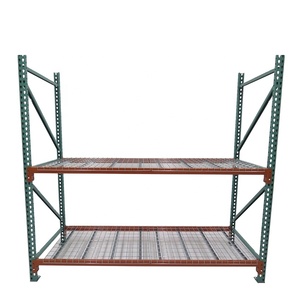
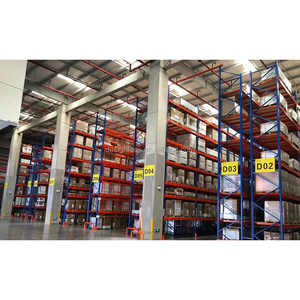
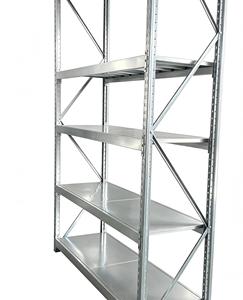
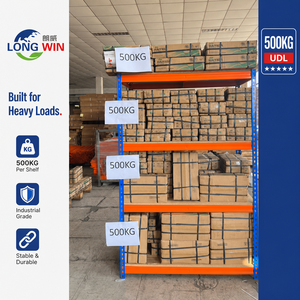
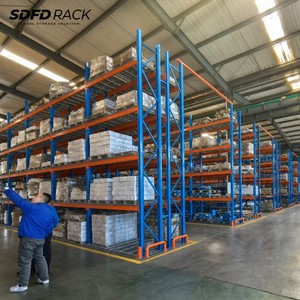
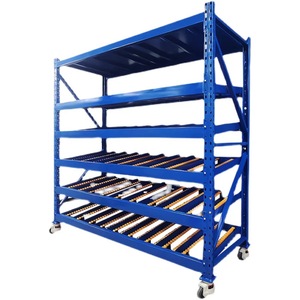
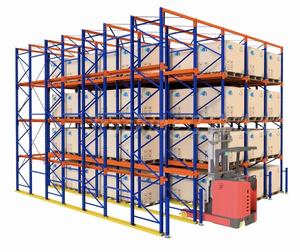
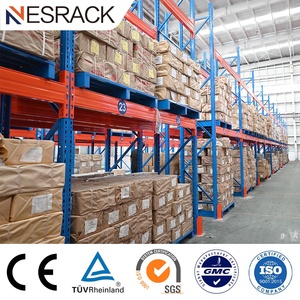
25+ Years of Certified Racking Engineering & Global Export Scalability
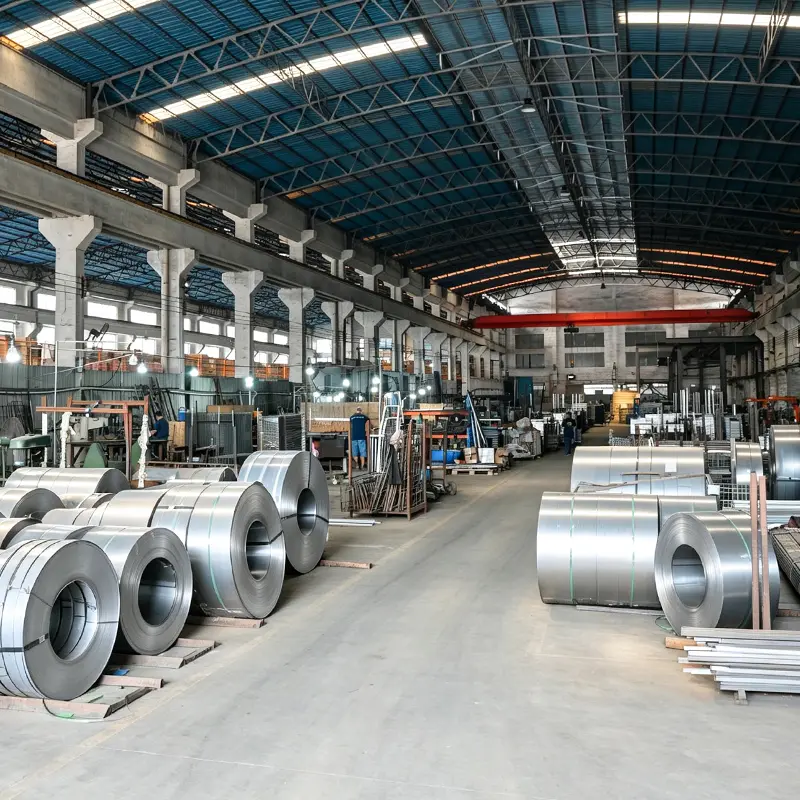
Founded in 2001, Guangzhou Heda Shelves Co., Ltd. has developed into a premier industrial racking solutions factory and global supply chain exporter. Operating from a modern 30,000 square meter integrated manufacturing facility staffed by 300+ structural engineers, precision machine operators, and logistics specialists, we deliver over 30,000 tons of precision-formed warehouse storage systems every single month.
For international supply chain directors, procurement executives, and 3PL warehousing contractors, purchasing factory-direct means complete transparency over steel grade traceability, weld integrity, surface treatment durability, and strict adherence to worldwide structural safety standards including ANSI/RMI MH16.1, EN 15512, and ISO 9001:2015.
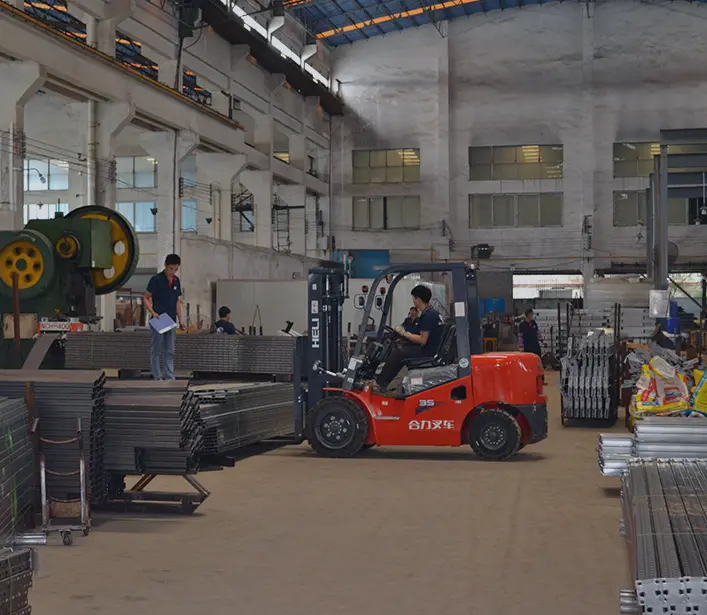
Over two and a half decades of continuous engineering excellence and automated tooling advancements.
Dedicated roll forming, automated robotic welding, and automated multi-stage powder coating lines.
Reliable high-tonnage production output ensuring guaranteed lead times for multi-thousand pallet bay tenders.
Successfully installed across 120+ sovereign nations covering logistics hubs, cold chains, and e-commerce depots.
End-to-End Production Process & Metallurgical Control
A rigorous 10-step precision engineering workflow guarantees that every upright frame, cross beam, and connector bracket provides certified load capacity and deflection limits under strict seismic and dynamic loads.
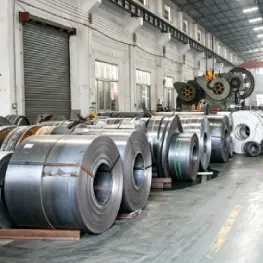
Prime Raw Steel Inspection
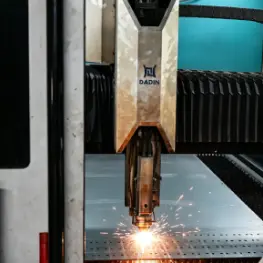
CNC High-Speed Slitting
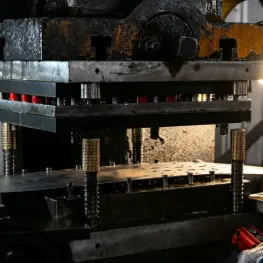
Continuous CNC Punching
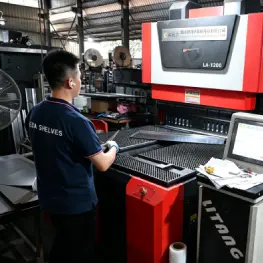
Cold Roll-Forming
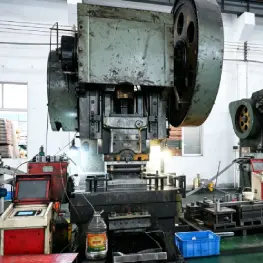
Precision Profile Sizing
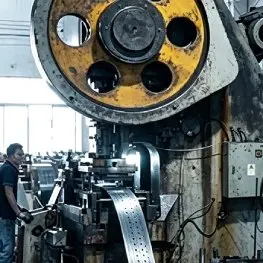
Automatic Deburring
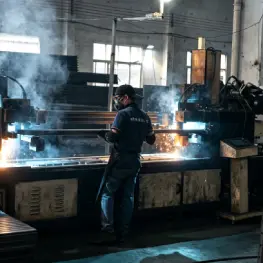
Robotic Shielded Welding
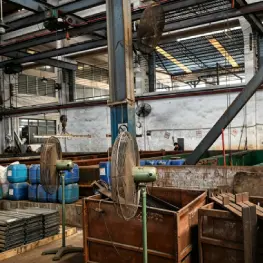
Pickling & Phosphating
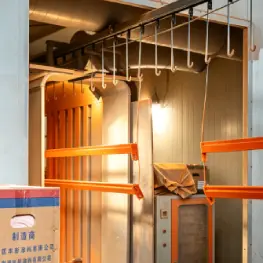
Thermosetting Powder Coat
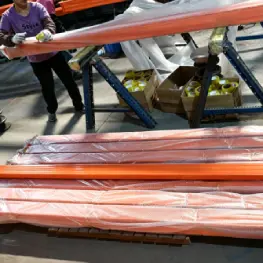
QC Load Test & Packing
Future Global Procurement Trends in Industrial Storage (2025–2035)
Enterprise warehousing is evolving from static inventory repositories into dynamic, high-density throughput engines. Forward-thinking procurement teams must navigate five structural market shifts to preserve capital efficiency and operational agility.
1. Nearshoring & Regional Hub Consolidation
Global supply chain volatility has made regional buffer hubs essential across Central America, Southeast Asia, Eastern Europe, and the Middle East. Multinationals are securing large-bay distribution centers requiring rapid-shipment modular pallet racks with standardized connector designs to fast-track commissioning by 40%.
2. Total Cost of Ownership (TCO) Prioritization
Procurement audits reveal that structural repairs, collision damages, and premature rust account for up to 35% of total racking life-cycle expenditure. Modern contracts focus heavily on yield strength (minimum 355 MPa), 80–120 micron epoxy-polyester coatings, and floor-anchored column protectors to mitigate structural wear.
3. Decarbonized Steel & Green Warehousing
Global ESG mandates require traceable scrap-recycled steel coils and low-VOC powder finishes. Modern logistics developers insist on factory verification of non-toxic phosphating baths, closed-loop water treatment, and zero-lead formulations compliant with EU RoHS directives.
Key Technological Trends in Modern Intralogistics Storage
Industrial storage engineering is experiencing an unprecedented shift toward semi-automation, seismic resilience, and predictive maintenance monitoring. Integrating these structural technologies delivers higher capacity, reduced labor overhead, and operational safety.
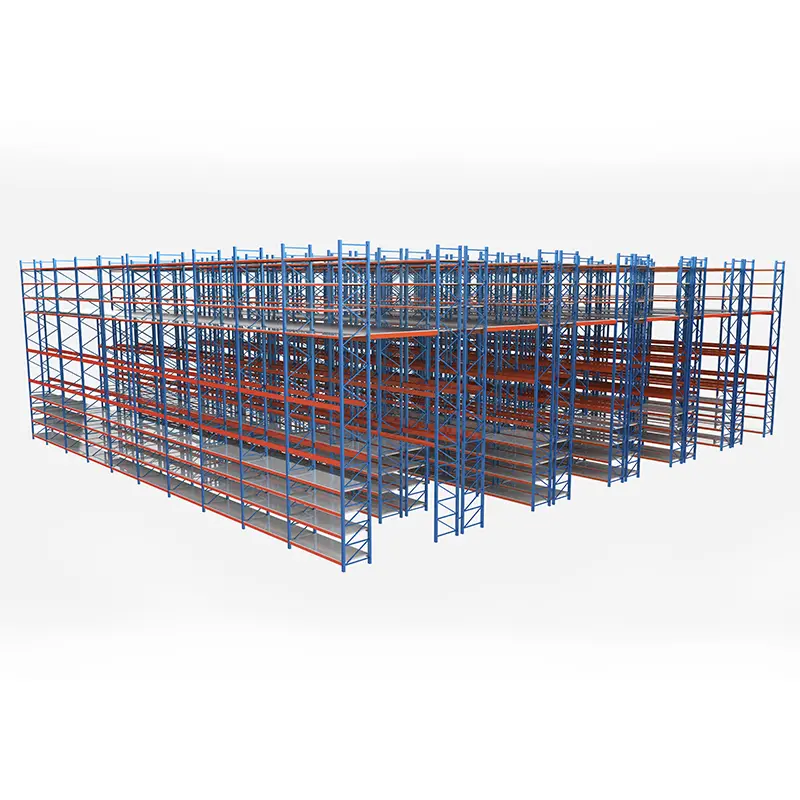
Automated Storage & Retrieval (AS/RS) and Shuttle Integration
Manual forklift travel within storage lanes is rapidly being phased out by Radio Shuttle carriers and automated cranes. These high-density deep-lane channels boost cubic storage density by up to 80% while eliminating mast collisions inside the racking matrix.
Modern radio shuttle tracks use high-precision cold-formed galvanised guides engineered to millimeter tolerances, providing smooth travel for automated shuttles moving 1,500kg payloads under sub-zero or high-humidity tropical conditions.
Seismic Damping & Finite Element Analysis (FEA) Modeling
Because major distribution hubs are situated across active earthquake zones (including Central America's Pacific Rim, California, Chile, and Japan), modern racks are designed with full FEA computer simulations. Base plates, upright profiles, and bracing configurations are calculated to absorb lateral vibrational energy.
Our engineering design incorporates heavy-duty ductile baseplates anchored with multi-bolt mechanical chemical studs, allowing the structure to flex within engineered elastic limits without structural collapse during seismic events.
Industrial Racking System Comparison for Logistics Engineers
Review key technical trade-offs across storage density, picking selectivity, forklift requirements, and capital expenditure to identify the ideal racking architecture for your warehouse.
| Racking Architecture | Pallet Selectivity | Cubic Density | Inventory Principle | Forklift Compatibility | Optimal Application |
|---|---|---|---|---|---|
| Selective Pallet Racking | 100% Immediate | Baseline (40–50%) | FIFO / LIFO Flexible | Standard Counterbalance, Reach | Multi-SKU 3PL Distribution, FMCG, Retail Hubs |
| US Teardrop Pallet Rack | 100% Immediate | Baseline (40–50%) | FIFO / LIFO Flexible | Any Standard Forklift Mast | North/Central American Standard Warehouses |
| Drive-In / Drive-Through | Low (Lane-Based) | Very High (Up to 80%) | LIFO (Drive-In) / FIFO (Drive-Thru) | Narrow Counterbalance, Reach | Cold Storage, Seasonal Harvest, Beverage Plants |
| Radio Shuttle System | Moderate (By Lane) | Maximum (85%+) | FIFO & LIFO Automated | Any Standard Mast (Exterior Only) | Refrigerated Depots, High-Volume Buffer Hubs |
| Gravity Pallet Flow | Moderate per Lane | High (70–75%) | Strict FIFO Gravity Driven | Standard Loading / Discharge Trucks | Perishable Dairy, Fresh Produce, Pharmaceuticals |
| Heavy Duty Cantilever | 100% Frontal | High for Long Items | Random Access | Side Loader, Multi-Directional Forklift | Steel Pipe Yards, Timber, Rebar, Aluminum Extrusions |
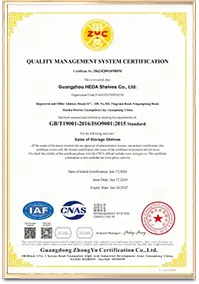
Internationally Verified Factory Certifications
Our heavy-duty warehouse storage racks hold authentic, traceable certifications required by industrial building inspectors, safety auditors, and insurance underwriters worldwide.
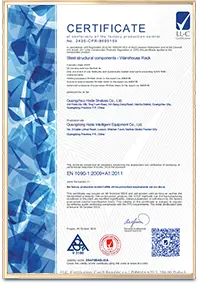
CE Certified
Registration No. 2435-CPR-8605159. Conforming to EN 1090-1 and European structural steel safety mandates.
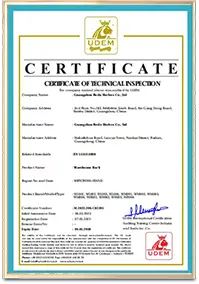
ISO 9001:2015
Certificate No. 18624Q00169R0M. Audited quality management spanning raw material receipt to export delivery.
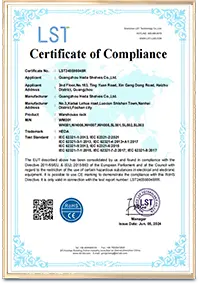
RoHS Compliant
Guaranteed non-toxic surface treatment, lead-free powder finishes, and hazardous-substance clearance.
Deflection Testing
Independently verified static beam deflection (1/200th span ratio) under maximum design payload conditions.
Frequently Asked Questions on Industrial Racking Procurement
Key technical, commercial, and engineering questions answered directly by our factory structural engineers to guide your procurement decisions.
What primary structural information is required to engineer a warehouse racking layout?
To produce an engineered CAD drawing and accurate price quote, our engineering department requires: (1) Architectural warehouse drawings noting clear ceiling height, column grid coordinates, and sprinkler clearance; (2) Pallet dimensions (width, depth, overall height including cargo overhang) and maximum gross weight; (3) Forklift specifications including collapsed mast height, maximum reach, and minimum turning radius (aisle width requirement); and (4) Local seismic zone coefficients.
How does your factory ensure seismic code compliance for international project sites?
Our structural team utilizes finite element structural calculation software following ANSI/RMI MH16.1 (US), FEM 10.2.02 (Europe), and AS4084 (Australasia). We evaluate local ground acceleration data, soil classifications, and building design categories to calculate upright profile gauge, baseplate surface area, column anchor bolt quantities, and rear diagonal bracing systems.
Which surface finishing option should we specify for humid or coastal distribution hubs?
For standard inland ambient warehouses, our multi-stage pre-treatment (chemical degreasing, acid pickling, zinc phosphating) followed by an 80–120 micron electrostatic powder coat provides durable protection against rust and mechanical abrasion. For seaside ports, open sheds, fertilizer storage, or freezing cold rooms (-30°C), we recommend hot-dip galvanization conforming to ISO 1461, providing 30+ years of maintenance-free cathodic rust defense.
How do you pack and label heavy structural steel for international ocean transport?
Racking components are bundled by part type using protective timber dunnage, high-tensile steel straps, and waterproof shrink film to avoid transit rubbing and salt-air contact. Upright frames and beams are nested into container-optimized bundles with clear color-coded export labels indicating part numbers, lengths, and container packing list positions for fast site sorting and customs clearance.
Can your beams and uprights integrate with our existing racking infrastructure?
Yes. Our manufacturing facility maintains precision roll-forming dies for all major worldwide connection profiles. We regularly fabricate OEM-compatible components including American Teardrop, European 50mm pitch slot, 75mm/76.2mm pitch British/Australian box sections, and customized omega profiles to expand or repair existing logistics centers without complete tear-outs.
What on-site installation guidance and commissioning support do you provide?
Every delivered project includes detailed 3D step-by-step installation manuals, piece-by-piece assembly drawings, and video guides. For mid-to-large-scale logistics complexes, we provide direct video engineering support or dispatch qualified on-site installation supervisors to coordinate local assembly teams, certify torque tolerances, and perform pre-commissioning deflection inspections.