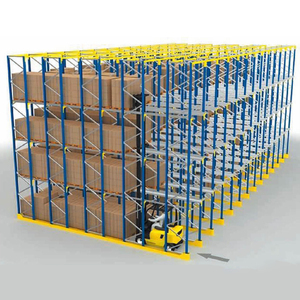
 Cold Chain
Industrial 5 Layer Heavy Duty Drive-In Pallet Racking Anti Corrosion Design
Anti-Corrosive
5-Tier Deep
Sub-Zero Tested
Manufactured from structural grade Q235B/Q355 steel, our Drive-In racking and industrial systems eliminate redundant access aisles, transforming up to 80% of warehouse floor space into active cube capacity.
Cold Chain
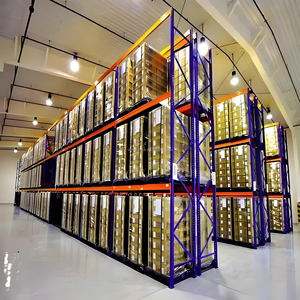 High Density
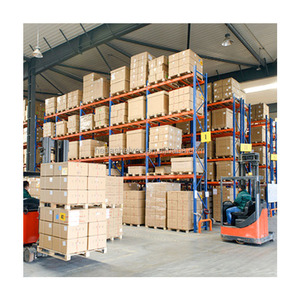 Blast Freezer
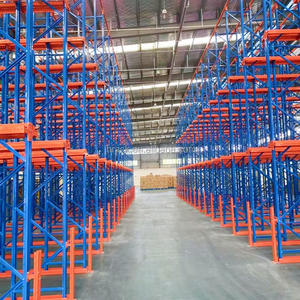 Heavy Load
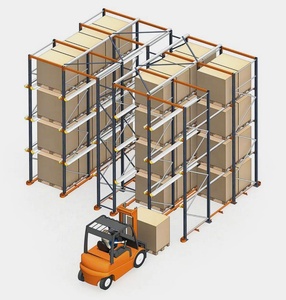 Value Series
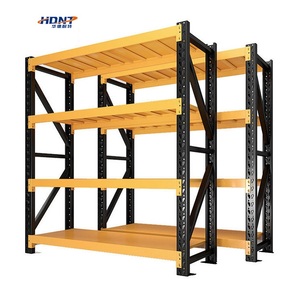 Medium Duty
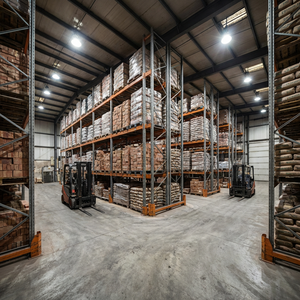 Selective
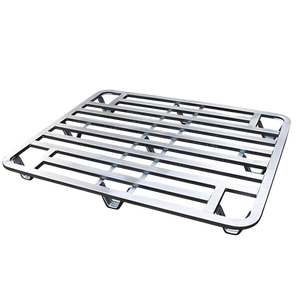 Heavy Pallet
Drive-in and Drive-through racking systems operate on continuous uninterrupted blocks of storage, eliminating operating aisles. Below is an engineering overview of structural load calculations, forklift tolerances, and aisle density metrics.
Unlike standard selective frames, Drive-In frames feature cantilevered bracket support arms and longitudinal pallet rails. Uprights are subjected to combined axial compression and torsional forces requiring heavier upright post profiles (typically 90x68mm up to 120x95mm with 2.0mm to 2.5mm cold-rolled thickness).
Because forklifts enter the rack bays directly, horizontal cross-beams are omitted inside lanes. System rigidity is maintained via heavy-duty top transverse portal beams, vertical rear X-bracing (for Drive-in FILO configurations), and ground anchor baseplates anchored with expansion bolts rated for seismic stress.
Driver entry within enclosed corridors introduces elevated impact risks. Our systems integrate heavy structural floor guide rails (angle or structural channel sections) coupled with flared column protectors to shield front post uprights from direct wheel and mast collisions.
| Storage System Type | Space Utilization | Selectivity (Access) | Ideal SKU Profile | Inventory Flow | CAPEX per Pallet Position |
|---|---|---|---|---|---|
| Drive-In Racking | High (~75%-85%) | Low (Lane-Level) | Low SKU Count, Homogeneous Goods | LIFO (Last-In, First-Out) | Low to Moderate |
| Drive-Through Racking | High (~70%-80%) | Moderate (Two-Way) | High Batch Volume, Perishables | FIFO (First-In, First-Out) | Moderate |
| Selective Pallet Racking | Low (~35%-40%) | 100% Direct Access | High SKU Variance, Rapid Sorting | FIFO / LIFO Unrestricted | Lowest |
| Radio Shuttle System | Ultra-High (~85%+) | Semi-Automated Access | High Volume, Deep Freezers | FIFO or LIFO Selectable | Higher (Capital + Automation) |
Strategic purchasing managers and supply chain directors are shifting from basic component sourcing to lifecycle-engineered warehousing solutions. Here are the macro shifts shaping procurement through 2026 and beyond.
Global procurement contracts increasingly mandate verifiable compliance with FEM 10.2.02, EN 15512, and RMI (Rack Manufacturers Institute) standards. Structural calculation reports accounting for dynamic ground acceleration (PGA) in seismically active jurisdictions are becoming mandatory baseline submittals.
With refrigeration energy representing over 60% of cold warehouse operating budgets, facilities are aggressively retrofitting conventional selective layouts with 5-to-8-tier Drive-In or Shuttle storage. Maximizing the cubic volumetric density directly reduces thermal dissipation and refrigeration cost per pallet.
High humidity and chemical environments require superior surface longevity. Procurement requests are shifting away from thin single-coat paints to multi-stage degreasing, zinc-phosphate pickling, and thermo-hardened electrostatic powder coatings with salt-spray resistance exceeding 500 hours, or hot-dip galvanization.
Warehouses are designing drive-in footprints that accommodate dual-compatibility: standard reach trucks today, with modular conversion readiness for Automated Guided Vehicles (AGVs) or radio shuttle cart insertion tomorrow, protecting long-term capital investments from technological obsolescence.
Headquartered in Guangzhou with over two decades of engineering history, Guangzhou Heda Shelves Co., Ltd. provides complete end-to-end manufacturing, custom profiling, and rigorous structural analysis.
Full manufacturing lifecycle certified under ISO 9001:2015 (Certificate No. 18624Q00169R0M, valid to June 2027), CE Certification No. 2435-CPR-8605159, and comprehensive RoHS chemical safety compliances.
Our senior civil and logistics engineering team crafts tailored AutoCAD layouts, 3D renderings, and structural loading simulations based on your building clearance, forklift turnaround radii, and slab capacities.
Turnkey export logistics handling FOB, CIF, or DDP shipments. Every bundle is tagged with barcoded loading lists to ensure rapid container devanning and customs clearance across North America, Latin America, Europe, and SE Asia.
Essential design calculations, forklift compatibility, safety considerations, and ordering workflows answered by our structural engineering team.
Drive-In Racking features a single entry/exit point per storage lane. Forklifts enter and exit from the same aisle, operating on a Last-In, First-Out (LIFO / FILO) sequence. This layout accommodates rear X-bracing, giving the rack high lateral stiffness. Drive-Through Racking allows access from both front and rear aisles, facilitating a First-In, First-Out (FIFO) flow. Because drive-through systems cannot utilize full back bracing across the lane openings, their upright sections and top tie-beams must be engineered to withstand additional racking deflection.
Standard design calls for minimum 75mm to 100mm clearance on either side between the widest part of the forklift (or pallet overhang) and the upright column/support arm. In addition, floor guide rails (typically 100x75x6mm steel angles) are installed along both sides of the corridor floor to align the forklift wheels and prevent direct mast contact with structural upright columns.
Yes. Sub-zero temperatures can induce low-temperature embrittlement in structural carbon steel. We utilize certified Q235B or Q355B killed steel formulated with low-temperature impact toughness. For corrosion and thermal contraction protection, components undergo specialized phosphating followed by cold-resistant epoxy-polyester electrostatic powder coatings or full hot-dip galvanization (HDG) per ASTM A123 standards.
To produce an engineered proposal and quotation, we require: (1) Warehouse architectural drawings indicating clear ceiling height, column grids, and floor slab thickness/compressive strength; (2) Pallet specifications including width, depth, overall height, and gross loaded weight; (3) Forklift model, maximum collapsed height, maximum lift height, and outer turning radius; (4) Local seismic design category or building code requirements (e.g., ASCE 7, Eurocode 8, or GB 50011).
Every shipment is accompanied by detailed CAD assembly drawings, erection sequencing plans, and component piece-mark schedules. All upright frames are CNC punched on 50mm or 75mm pitch increments for easy bolted field erection. For large-scale projects, we provide remote video engineering support or dispatch qualified site supervisors to direct local installation contractors.
All HEDA storage systems carry a standard 5-to-10-year structural warranty against manufacturing defects, weld failures, or abnormal material degradation when loaded within specified operational load charts. Each installed system includes engraved visual load warning plaques detailing rated pallet load, maximum level load, and bay capacities per rack aisle.
Send us your warehouse CAD floor plan, pallet dimensions, and forklift specifications. Our senior racking engineers will return a complete 2D layout, 3D visualization, and structural load analysis within 24 hours.
Inquire Now