Engineered Industrial Racking & Commercial Shelving Solutions
Manufactured using cold-formed structural steel certified to Q235B and Q355B standards. Designed for extreme load compliance, rigorous seismic deflection thresholds, and optimal warehouse volumetric throughput.
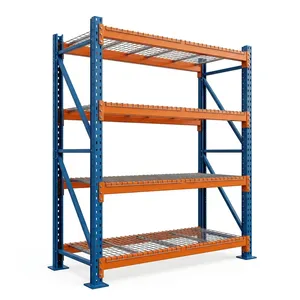 Standard Selective
Heavy Duty Steel Pallet Racking System Adjustable Warehouse Storage Rack
Engineered for 100% immediate SKU selectivity with up to 4,500 kg per beam level. Equipped with beam-locking safety pins and cold-rolled upright columns.
- Load: 1,000–4,500 kg/Tier
- Pitch: 50mm / 75mm
- ISO 9001 Audited
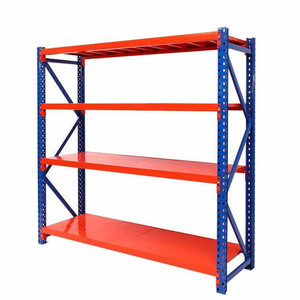 Custom Fabricated
Custom Heavy-Duty Metal Rack Storage Shelf Iron Cargo Equipment
Tailor-designed industrial storage racking manufactured to irregular architectural footprints, heavy point loads, and specialized steel baseplates.
- Custom Spans & Depths
- Q355B High-Yield Steel
- Hot-Dip Galvanized / Epoxied
 Commercial Retail
Double Sided Supermarket Gondola Rack Low Base Narrow Aisle Unit
Precision-manufactured commercial retail shelving optimizing merchandising aisle density, weight distribution, and high-turnover front-end inventory display.
- 1310×900×350 mm Size
- Anti-Scratch Coating
- Modular Gondola Bays
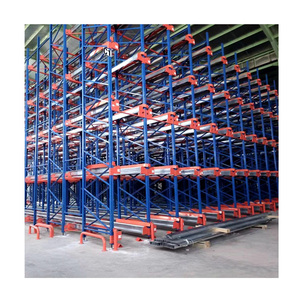 Semi-Automated
High-Speed Auto Shuttle Pallet Racking Deep Lane System
Autonomous battery-powered shuttle carrier runs inside deep storage channels. Maximizes volume utilization up to 85% while slashing forklift cycle times.
- FIFO & LIFO Flexible
- Speed: 0.8–1.2 m/s
- Cold-Chain Certified
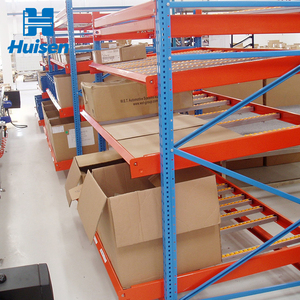 Dynamic FIFO
Heavy Duty Steel Pallet Flow Gravity Racking System
Gravity-driven dynamic roller tracks provide automatic stock rotation for perishables, FMCG, and high-cadence fulfillment operations with zero electric power consumption.
- Strict FIFO Discipline
- Centrifugal Brake Rollers
- Anti-Rust Tropical Finish
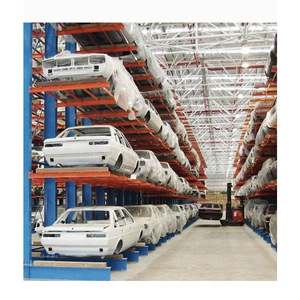 Long Load Heavy
Heavy-Duty Cantilever Racking System for Car & Pipe Storage
Unobstructed frontal design engineered for structural steel, timber, conduits, sheet metals, and automotive chassis storage with high moment-resistant bases.
- Up to 3,500 kg/Arm
- Single / Double Sided
- CE Cert. No. 2435-CPR
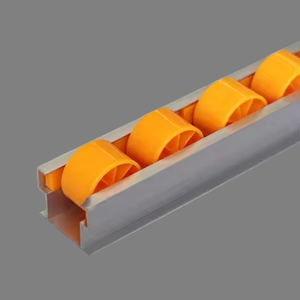 Split-Case Picking
Modular Carton Flow & Heavy Duty Industrial Gravity Shelving
Ergonomic split-case and carton live storage tracks integrated directly into pick modules to minimize picker travel distance and eliminate bottleneck assembly zones.
- Adjustable Track Gradient
- Aluminum Skate Wheels
- High Ergonomic Output
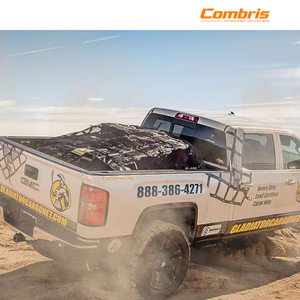 Safety & Compliance
Anti-Static PVC Metallic Mesh Pallet Rack Safety Enclosure
High-tensile industrial containment netting designed to eliminate carton fall injuries in high-density rack flue spaces and pedestrian walkways.
- UV & Tear Resistant
- OSHA & ANSI Aligned
- Flame Retardant Matrix
Next-Generation Commercial & Industrial Shelving: Evolution, Resilience & Automation
A technical executive briefing for supply chain directors, industrial architects, and procurement heads analyzing capital expenditure life-cycles and volumetric efficiency.
In modern industrial logistics, commercial and industrial shelving systems are no longer treated as passive metal storage furniture; they constitute the load-bearing nervous system of mission-critical global fulfillment networks. As macro real-estate dynamics drive industrial land costs and construction costs to historic heights, modern warehousing demands a fundamental pivot: transitioning from low-density planar storage to vertical, structural, and semi-automated intralogistics ecosystems. The convergence of automated material handling, advanced Finite Element Analysis (FEA) structural modeling, and strict safety standard enforcement (including ANSI MH16.1, EN 15512, and FEM 10.2.02) dictates how enterprise facilities procure racking infrastructure.
Engineered cold-formed steel profiles must balance ductile ductility against structural yield capacity. By deploying high-tensile hot-rolled steel coils slit with micrometer tolerances, HEDA Shelves ensures that upright omega profiles, interlocking connector teeth, and box-formed beam sections maintain structural integrity under static load, dynamic placement stress, and unexpected horizontal forklift impacts.
ASRS & Shuttle-Ready Upright Geometries
Procurement teams are shifting away from traditional static selective racking toward shuttle-compatible deep-lane formats. Modern upright profiles are engineered with pre-punched precision tooling to accept dynamic automated shuttle rails, conveyor transfer brackets, and optical guide sensors without post-drilling.
Dynamic Seismic Load Calculation
Global supply chains frequently run across complex seismic zones (such as the Pacific Rim and Mediterranean fault lines). Future-proof procurement requires site-specific earthquake design calculations, accounting for floor slab thickness, subgrade soil classifications, and anchor ductility factors under cyclic lateral loads.
Total Cost of Ownership (TCO) vs Steel Weight
Procurement models are abandoning raw metric-tonnage comparisons in favor of 15-year TCO evaluations. Up-front expenditures are balanced against damage frequency, beam deflection tolerances (e.g., L/200 vs L/250), upright impact-sleeve compatibility, and the cost of replacing sheared anchors or bent struts.
Commercial & Industrial Storage Architecture Decision Matrix
A comparative structural breakdown helping industrial engineers and operations managers align operational throughput targets with structural load footprints.
| System Architecture | Floor Space Utilization | Selectivity Ratio | Pallet Throughput | Typical Load Rating | Inventory Discipline |
|---|---|---|---|---|---|
| Selective Pallet Racking | 40% - 45% | 100% (Instant) | Standard Forklift Cadence | 1,000 – 4,500 kg / level | Universal / FIFO |
| Radio Shuttle System | 75% - 85% | SKU Lane Dependent | Ultra-High (Automated) | 500 – 2,000 kg / pallet | FIFO or LIFO Switchable |
| Gravity Pallet Flow | 70% - 80% | Per Lane / Level | High Gravity-Fed Continuous | 800 – 1,500 kg / pallet | Strict FIFO Mandatory |
| Drive-In / Drive-Through | 65% - 75% | Low (Block SKU) | Moderate (Vehicle Inside Bay) | 1,000 – 2,000 kg / pallet | Strict LIFO (Drive-In) |
| Structural Cantilever | Optimized for Linear | 100% Along Face | Crane / Sideload Forklift | 500 – 3,500 kg / arm | Specialized Long Goods |
| Rack-Supported Mezzanine | 100% - 200% Floor Gain | 100% Hand Picking | Manual Cart / Spiral Chute | 300 – 1,000 kg / m² | Multi-SKU E-Commerce |
End-to-End Direct Production: From Steel Coil to Coated Racks
Our ISO 9001:2015 certified 30,000 m² Guangzhou production complex produces over 30,000 tons of industrial storage hardware monthly across ten automated stages.
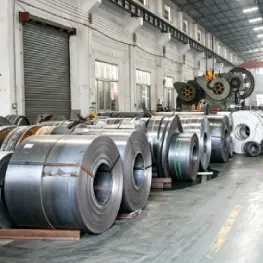
Raw Material Mill Testing
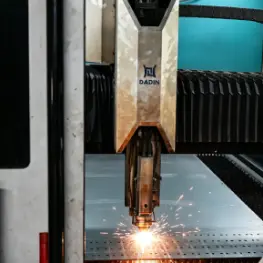
CNC Precision Slitting
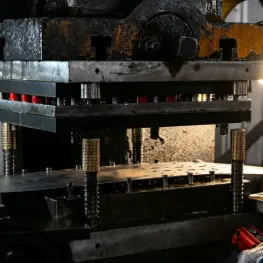
Automated CNC Punching
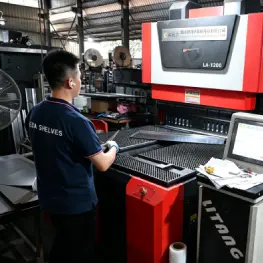
Continuous Roll Forming
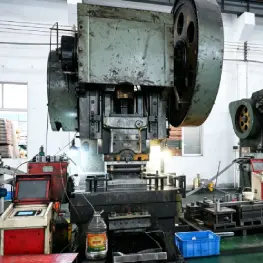
Cold-Bend Optimization
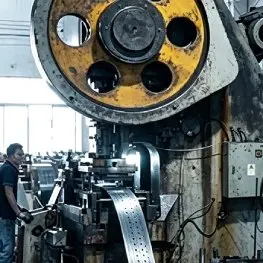
Automated Weld Polishing
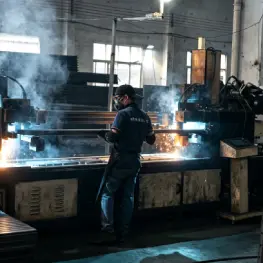
Robotic Shielded Welding
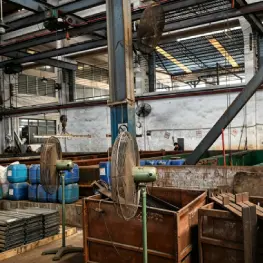
Pickling & Phosphating
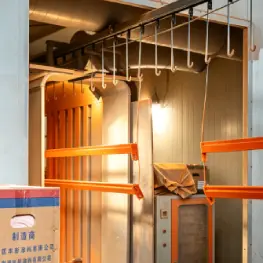
Electrostatic Powder Curing
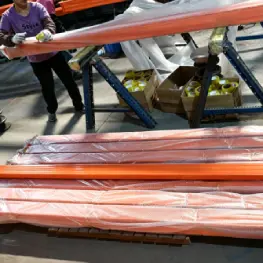
QA Load Test & Palletizing
Accredited Quality and Structural Safety
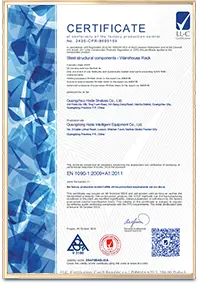
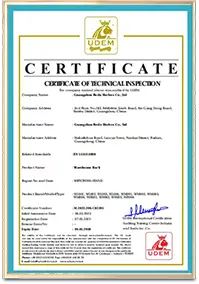
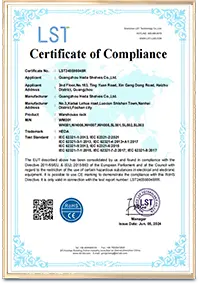
Every commercial and industrial shelving component engineered in our manufacturing plant undergoes strict destructive load testing, elongation tracking, and coating adhesion verification. We provide verifiable third-party certification documentation to support warehouse permitting processes worldwide.
-
CE Structural Certification: Certificate No. 2435-CPR-8605159 (Compliant with EN 1090 & EN 15512)
-
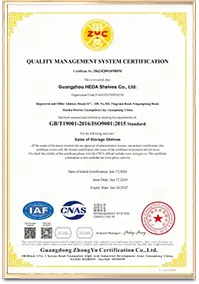
ISO 9001:2015 Quality Management: Registration No. 18624Q00169R0M (Audited through June 2027)
-
RoHS & REACH Coating Compliance: Non-toxic, heavy-metal-free electrostatic finishes safe for pharmaceutical & food logistics
Frequently Asked Questions on Commercial Industrial Shelving Procurement
Expert engineering insights covering structural safety, environmental resilience, logistics shipping, and installation management.
How does HEDA calculate structural load capacities and seismic safety factors for international projects? +
Our structural engineering department performs custom Finite Element Analysis (FEA) based on each project's geographical seismic acceleration zone (Ss, S1), building soil profile class, concrete slab thickness (typically requiring minimum 150mm to 200mm 28-day 25MPa/30MPa compressive strength), and operating live pallet weights.
We apply safety coefficients aligned with European Standard EN 15512 and American RMI ANSI MH16.1. Upright omega profiles are engineered with cold-formed stiffener ribs to prevent torsional buckling under combined axial compression and horizontal impact moments. Certified structural calculation reports with anchor bolt shear and pullout tension values are submitted prior to manufacturing sign-off.
What surface treatment is specified for humid, coastal, or sub-zero cold-storage facilities? +
Standard dry ambient warehouses receive an automated 4-stage pretreatment (alkaline degrease, acid pickling, rinse, iron/zinc phosphating) followed by thermosetting electrostatic polyester epoxy powder coating cured at 180°C–200°C (60–90 micron dry film thickness). This provides excellent resistance against scratches, chipping, and standard humidity.
For coastal warehouses exposed to salt spray (ISO 12944 C3/C4 environments) or cold-chain freezers operating at -25°C to -40°C where thermal cycling induces chronic condensation, we engineer components from pre-galvanized coils or hot-dip galvanized steel (immersion in molten zinc conforming to ISO 1461, yielding 70–100 micron protective zinc coatings). This completely prevents corrosion creep along baseplates, anchor sleeves, and punched column faces.
How do you support site installation, anchor leveling, and layout verification remotely? +
Every commercial industrial shelving shipment is accompanied by a project-specific Engineering Execution Dossier. This package includes high-resolution 2D CAD assembly floor layouts, 3D structural connection schematics, step-by-step frame bolting torque requirements, and color-coded component packing lists cross-referenced to container bay numbers.
We provide remote video engineering support directly with your local mechanical installation contractor, validating anchor torque calibration, plumbness tolerances (typically max 1:500 plumb deviation according to EN 15635), and beam elevation safety locks. For large-scale automated shuttle installations and high-bay multi-tier mezzanine builds, factory-certified site superintendents can be dispatched directly to your job site to oversee execution.
What concrete slab specifications and anchor pullout values are necessary for heavy-duty industrial racks? +
Heavy-duty selective and drive-in pallet systems generating upright frame leg loads exceeding 8,000 kg to 20,000 kg require reinforced industrial concrete slabs with a minimum compressive strength of 20 to 30 N/mm² (3,000 to 4,500 PSI). Floor slab flatness should comply with DIN 18202 or ASTM E1155 (FF/FL numbers) to prevent excessive mast leaning during forklift elevation.
We supply seismic wedge anchors or chemical capsule anchor studs engineered for concrete baseplate fastening. Standard anchor embedment depths range between 90mm and 150mm with characteristic tension resistance exceeding 25 to 45 kN per anchor. Shims in 1mm, 2mm, and 3mm cold-rolled steel are supplied with every order to ensure vertical plumb on uneven slab surfaces.
What is the lead time, container packing protocol, and export logistics clearance process? +
Standard fabrication cycle runs 15 to 25 business days from CAD approval and deposit confirmation. Because industrial racking components feature high length-to-weight ratios, inefficient packing results in exorbitant freight rates. Our logistics team utilizes specialized container loading simulation software to balance cube volume and gross metric tonnage.
Beams are steel-strapped into bundled pallets with wooden dunnage, upright frames are pre-assembled or flat-packed according to freight feasibility, and small accessories (baseplates, safety pins, row spacers, shims) are packed in heavy-duty labeled wooden crates. We regularly coordinate CIF, FOB, and DDP shipments through major international ocean terminals including Puerto Quetzal, Puerto Cortés, Balboa, Colón, Rotterdam, Los Angeles, and Jebel Ali, accompanied by Bills of Lading, Certificates of Origin, and Mill Test Reports.
Accelerate Your Facility's Storage Capacity Today
Send our senior engineering team your warehouse architectural floor plans, ceiling clear heights, and pallet load parameters. We deliver an optimized 2D/3D CAD layout, structural load calculation analysis, and itemized direct-factory cost quotation within 24 hours.