High-Density Warehouse Racking & Pallet Handling Systems
Explore precision-rolled structural racking engineered for very narrow aisle configurations, dynamic gravity flow, and automated turret truck operations. Direct from China's premier manufacturing lines.
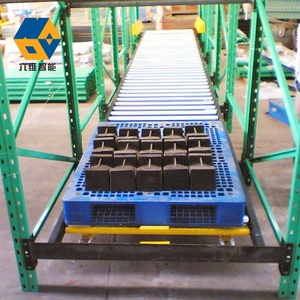
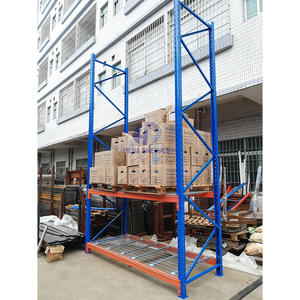
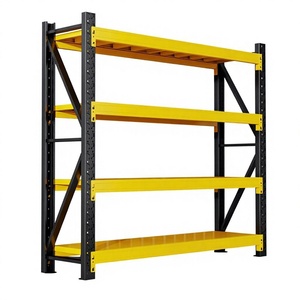
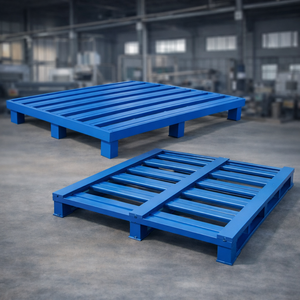
The Mechanics of Very Narrow Aisle (VNA) Racking Architecture
Evaluating volumetric density, mechanical deflection margins, and floor tolerances in modern high-bay logistics facilities.
Aisle Footprint Optimization
Traditional counterbalanced forklift aisles mandate operating widths of 3.2m to 3.8m. In contrast, Very Narrow Aisle (VNA) systems condense operating aisles down to 1.5m – 1.85m. By recapturing over 45% of redundant transit floorspace, distribution facilities convert horizontal waste into active pallet storage, maximizing footprint return on investment.
Vertical Volume Capitalization
While standard reach trucks peak around 8.5 to 10 meters, articulated VNA man-up turret trucks and order pickers operate comfortably at heights exceeding 14 to 18 meters. This vertical extension optimizes warehouse cubic volume (m³) rather than mere surface area (m²), directly diminishing the square-meter leasing cost per pallet slot.
100% Selectivity & Direct Picking
Unlike Drive-In, Shuttle, or Push-Back layouts that compromise direct accessibility for density, VNA retains unrestricted 100% individual pallet selectivity. Every single SKU remains instantly addressable by turret forks without shifting intermediate pallets, maintaining supreme velocity in high-mix FMCG, pharmaceuticals, and retail logistics.
| Storage Racking Architecture | Operating Aisle Width | Space Utilization Ratio | SKU Selectivity Rate | Handling Equipment Requirement | Relative Cost / Pallet |
|---|---|---|---|---|---|
| Very Narrow Aisle (VNA) | 1.5m – 1.85m | 85% – 90% High | 100% Immediate Access | Specialized Turret Truck / Articulated VNA | Moderate (High ROI) |
| Standard Selective Racking | 3.0m – 3.8m | 45% – 50% Baseline | 100% Immediate Access | Standard Counterbalance / Reach Truck | Low |
| Double-Deep Racking | 2.8m – 3.2m | 60% – 65% Moderate | 50% (Requires Shifting) | Pantograph Double-Reach Truck | Low - Medium |
| Drive-In / Drive-Through | Integrated Drive Lane | 75% – 80% Dense | Low (Last-In-First-Out) | Standard Counterbalance / Reach Forklift | Medium |
| Radio Shuttle Racking | Main Transit Aisle Only | 85% – 92% Extreme | Channel-Dependent FIFO/LIFO | Semi-Automated Shuttle Cart + Forklift | High Initial CapEx |
Guangzhou HEDA Shelves: Tier-1 Chinese Racking Engineering
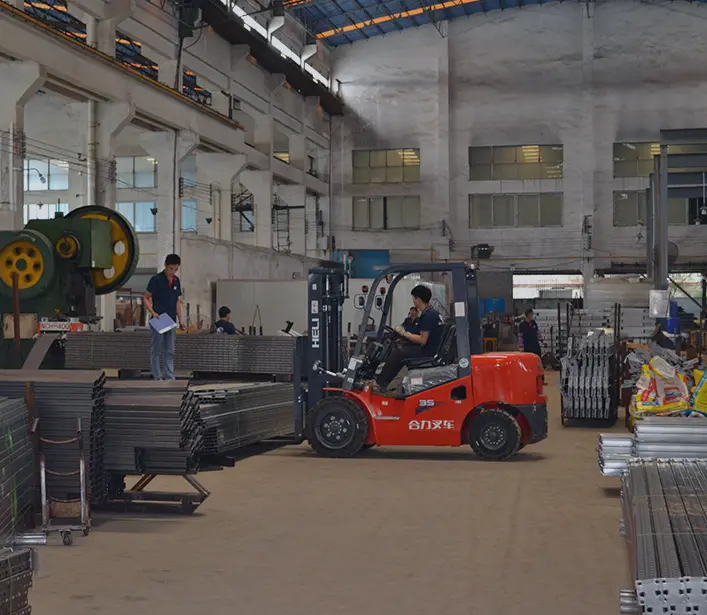
Established in 2001, Guangzhou Heda Shelves Co., Ltd. has evolved into an authoritative designer, structural fabricator, and exporter of industrial warehouse storage infrastructures. Operating an advanced 30,000 m² integrated production base with over 300 experienced engineers and technicians, HEDA processes up to 30,000 metric tons of certified structural steel monthly.
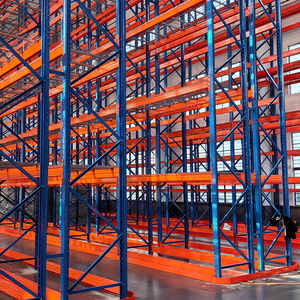
Our heavy-duty VNA racking uprights are cold-roll profiled using high-grade continuous coil steel (Q235B / Q355B), adhering to strict international engineering calculations such as FEM 10.2.02, EN 15512, and ANSI MH16.1. From automated laser CNC punch-profiling to continuous seam welding and 10-stage electrostatic powder passivation, every structural member is built to withstand dynamic seismic harmonics and intensive 24/7 turret cycling.
Five Critical Trends Shaping Future VNA Racking Procurement
How intelligent automation, floor tolerance standardization, and sustainability criteria are altering enterprise tender specifications through 2030.
Autonomous Mobile Robot (AMR) & AGV Synergies
The traditional manned turret truck is transitioning rapidly toward automated guided VNA vehicles (VNA-AGVs). This shift demands sub-millimeter tolerances on base plate positioning, laser-calibrated guide rails, and inductive ground wire slots to ensure robotic optical sensors navigate without lateral sway.
Floor Flatness & Super-Flat Slab Standards (DIN 15185 / VDMA)
Because high-bay masts extend up to 18 meters, minor millimeter imperfections on the concrete slab amplify exponentially at the top beam. Sourcing teams are increasingly pairing VNA racking procurement directly with precision floor grinds adhering to DIN 18202 Category 4 and DIN 15185 F-min 100 specifications.
Cold-Chain Optimization & Galvanized Thermal Resilience
Cold storage energy costs 400% more than ambient warehousing. VNA cold rooms minimize cubic air volume while maximizing pallet density. Procurement specifications increasingly require hot-dip galvanizing (HDG) or zinc-rich powder treatments to prevent condensation embrittlement at -25°C to -30°C.
Dynamic Seismic Load Calculations & Elastic Damping
Global warehouse operators situated along seismically vulnerable corridors (such as Latin America, the US West Coast, and Southeast Asia) mandate non-linear pushover seismic modeling, dual-gusseted base plates, and high-tensile anchor embedments compliant with Eurocode 8 and RMI 2023.
Circular Logistics, ESG & Low-Carbon Certified Steel Mills
Corporate ESG governance has entered warehouse racking procurement. Global EPC contractors prioritize Chinese tier-1 mills that utilize electric arc furnace (EAF) steel with traceable carbon footprints, lead-free RoHS-compliant powder chemistries, and modular bolt-together frameworks engineered for 100% post-lifecycle recycling.
Frequently Addressed Inquiries by Global Purchasing Directors
Clear, engineer-verified answers regarding structural clearances, guiding mechanisms, slab tolerances, and Chinese factory audit metrics.
Q: What is the critical difference between mechanical rail guidance and wire guidance in VNA aisles?
Mechanical Guide Rails: Structural steel angle iron (typically 100x75x10mm or 125x75x10mm) is anchored directly to the slab along both sides of the aisle. The truck's low guide rollers engage mechanically with the rail, allowing fast entry and high operating speed. Wire Guidance: A copper induction wire is embedded in a narrow saw-cut slot centered in the floor, emitting a low-frequency electromagnetic signal traced by the truck's antenna. Wire guidance eliminates trip hazards and simplifies cleaning, but requires dedicated lead-in sensors and slightly wider safety run-in clearances at aisle heads.
Q: Why are concrete floor slab tolerances so stringent for VNA racking installations?
In a 15-meter tall VNA bay, a mere 2mm transverse deviation across the truck's wheel track can translate into a mast displacement of over 50mm at top elevation. This mast lean can cause collision with adjacent uprights or pallet overhang. Consequently, VNA installations demand adherence to DIN 15185 or TR34 (Category Free Movement DM1/DM2) standards, often requiring laser-guided concrete grinding prior to anchor installation.
Q: How does HEDA ensure steel quality and weld integrity for international projects?
HEDA sources premium hot-rolled coil and structural steel with certified Mill Test Certificates (MTC) verifying yield strengths for Q235B (minimum 235 MPa) and Q355B (minimum 355 MPa). All beam connector claw hooks and base plates undergo automated continuous CO2 shielded gas welding. Periodic weld penetration macro-etch tests and ultrasonic testing (UT) are conducted to eliminate cold lap or porosity.
Q: What data must an engineering buyer provide to receive an accurate VNA CAD layout?
To produce a compliant 3D design and structural calculation, the engineering team requires: (1) Warehouse architectural drawings indicating clear height under roof joists, column grids, and floor joint positions; (2) Pallet specifications (width, depth, full load height including timber skid, and maximum gross weight); (3) Forklift model, mast collapsed height, lift height, and minimum chassis operating clearance; (4) Local seismic zone ground acceleration coefficients (Ss, S1).
Q: Can VNA pallet racking be integrated with mezzanine platforms or picking towers?
Yes. HEDA specializes in rack-supported multi-tier structures. In hybrid configurations, the lower levels of a VNA system can support catwalks, steel grating decks, and carton flow roller tracks for high-density manual item picking, while the upper vertical reaches are reserved for full-pallet buffer replenishment via high-lift turret pickers.
Q: How are overseas shipping, container stuffing, and on-site assembly handled?
Racking uprights are bundled with protective corrugated paper and heavy-duty steel strapping; beams are nested and palletized to maximize 40ft High Cube container volumetric load capacity (25–27 metric tons per 40HQ). Every container is dispatched with detailed piece-marked loading lists matching CAD assembly drawings. HEDA provides comprehensive step-by-step 3D installation videos, remote video conferencing with senior field engineers, and on-site installation supervisors for large-scale logistics hub deployments.
Request a Custom VNA Warehouse Layout & Factory-Direct Quotation
Partner with China's veteran racking engineering team. Receive free 2D/3D CAD layouts, structural stress simulations, and detailed containerized FOB/CIF shipping schedules tailored to your facility parameters within 24 hours.