Engineered Heavy-Duty Storage Racking for Critical Industrial Logistics
In modern logistics infrastructure, industrial racking systems serve as foundational structural assets rather than commodity fixtures. With global warehousing costs escalating per square meter, tier-1 global operators require engineered storage systems that balance volumetric utilization (m³/m²), strict structural safety benchmarks (EN 15512, RMI MH16.1, and AS 4084), seismic load dampening, and low lifetime depreciation. As a premier Chinese manufacturer operating with over two decades of metallurgical precision, Guangzhou Heda Shelves Co., Ltd. architects mission-critical warehousing systems backed by finite element analysis (FEA), ISO 9001 certified roll-forming lines, and comprehensive containerized logistics optimization.
Recommended Industrial Racking & High-Density Storage Systems
Engineered for dynamic load conditions, high pallet turnover rates, and optimized cubic footprint extraction across diverse supply chain environments.
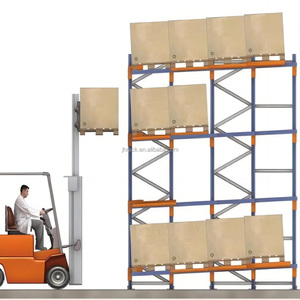
Slide System Industrial Metal Storage Push-Back Pallet Racking
Telescoping nested cart system riding on inclined structural steel rails. Maximizes storage density along aisle faces while avoiding forklift chassis in-rack entry risks.
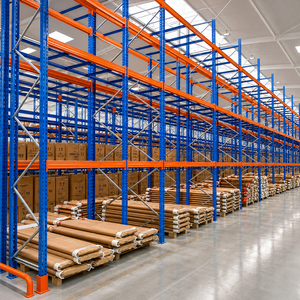
Selective Pallet Rack Q235B Steel Adjustable Storage Rack
The international baseline for fast multi-SKU logistics hubs. Roll-formed box beams paired with 75mm slotted uprights for total pallet accessibility and universal handling compatibility.
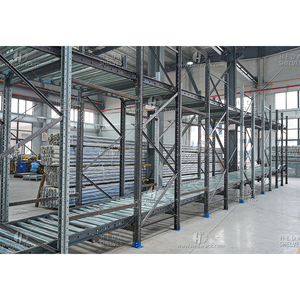
Gravity Roller Carton Flow High Quality Racking System
Inclined aluminum or sheet-metal roller beds powered purely by gravity. Separates loading and picking corridors to maximize labor efficiency in FMCG, e-commerce, and pharma dispatching.
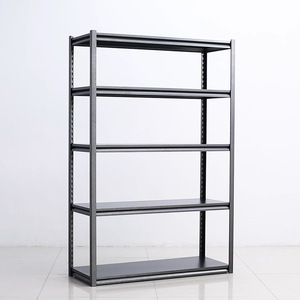
5 Tier Heavy Duty Adjustable Steel Storage Shelf Unit
Reinforced medium-to-heavy tier storage engineered for intermediate item handling, automotive parts distribution, and industrial maintenance spare parts repositories.
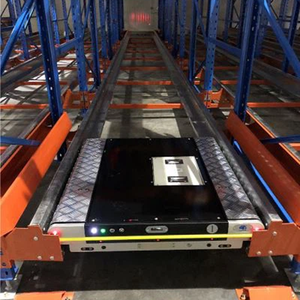
Automated Two-Way Radio Shuttle Pallet Racking System
Intelligent battery-powered shuttle vehicles run inside deep guide rails under wireless terminal command. Elevates cubic storage utilization to over 85% while cutting forklift travel times.
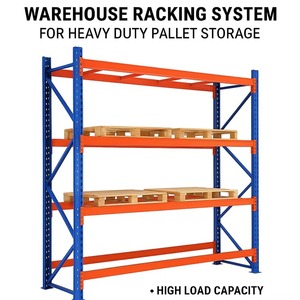
Material Handling Heavy Duty Pallet Storage Racking System
Structural steel cold-formed profiles engineered to support ultra-dense goods, chemical IBC containers, bulk machinery castings, and raw manufacturing materials with maximum safety factor.
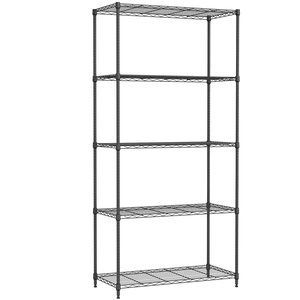
MZG 1250 lbs Narrow 5 Tier Metal Wire Storage Rack
High-precision cold-drawn steel wire configuration ideal for dry food, pharmaceutical sanitary environments, commercial cold rooms, and sprinkler water penetration compliance.
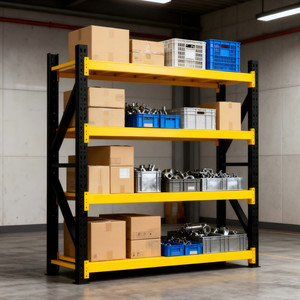
Boltless Storage Shelf Adjustable System Free Combination
Drop-in butterfly lock mortise design enabling ultra-rapid installation without specialized tooling. Easily connects main and sub-units to form infinite aisle runs for fulfillment centers.
Engineering Parameter & Structural Feasibility Comparison
Logistics engineers must rigorously match facility ceiling clear heights, SKU variance profiles, and handling fleet kinematics against racking structural typologies.
| Racking System Type | Floor Space Utilization | SKU Selectivity Index | Inventory Turnover Logic | Recommended Pallet Loads | MHE Fleet Requirements |
|---|---|---|---|---|---|
| Standard Selective Rack | 40% – 50% Volumetric | 100% Direct Immediate | FIFO or LIFO Arbitrary | 500 – 2,000 kg/Pallet | Standard Counterbalance, Reach Truck |
| Push-Back System | 70% – 75% High-Density | Lane-Level (Per Cart Run) | Strict LIFO Rotation | 800 – 1,500 kg/Pallet | Standard Reach Truck (No in-rack driving) |
| Gravity Pallet Flow | 75% – 85% Ultra-Dense | Lane-Dedicated SKUs | Strict Automatic FIFO | 500 – 1,400 kg/Pallet | Dual-Corridor Trucks (Loading / Picking) |
| Automated Radio Shuttle | 85% – 90% Maximized | Channel Batched SKUs | Software Config FIFO / LIFO | 500 – 1,800 kg/Pallet | Standard Forklifts + Intelligent Shuttles |
| Heavy Duty Drive-In | 65% – 75% High-Density | Deep Bay Consolidated | LIFO (FIFO with Drive-thru) | 1,000 – 1,500 kg/Pallet | Narrow Mast Drive-In Guided Forklifts |
| Rack-Supported Mezzanine | 150% – 200% Usable Footprint | 100% Manual Tier Picking | Flexible Zone Picking | 300 – 1,000 kg/m² Floor | Freight Lifts, Conveyors, Manual Trolleys |
Strategic Procurement Shifts in Industrial Racking Systems
International warehouse procurement is navigating structural transformations driven by raw material dynamics, nearshoring logistics patterns, and life-cycle carbon accounting.
Direct Factory OEM over Local Brokerage
Global supply chain directors are systematically bypassing domestic trading middlemen. Direct-from-factory procurement from established Chinese manufacturers unlocks 25%–40% cost savings on steel per ton, delivers transparent metallurgical mill certificates (MTCs), and enables bespoke structural profile extrusions tailored directly to building column grids.
Container Cubing Optimization (40HQ TEU)
Volatile ocean freight indices demand that racking structural profiles undergo digital nested packaging design prior to fabrication. Standardized bundle nesting of upright profiles, interlocking beam boxing, and optimized pallet palletization algorithms allow modern Chinese factories to achieve up to 26–28 tons per 40HQ container, lowering per-pallet freight landed costs significantly.
Verified Compliance with Regional Seismic Codes
Overseas project procurement teams increasingly require certified finite element stress calculations compliant with local seismic designations (e.g., Eurocode 8, RMI Seismic Zones 1–4, and Latin American/Central American volcanic belts). Racking factories must supply verified anchorage pullout values, base plate stress distribution proofs, and certified welding testing.
Strategic Sourcing Takeaway: Procurement contracts in 2026 onwards focus heavily on Total Cost of Ownership (TCO). Buyers look past the initial cost of raw steel and scrutinize surface powder coating thickness (minimum 60–80 microns dry film thickness), automated continuous robotic welding passes, and hot-dip galvanizing options for extreme humidity or cold environments.
Emerging Technology & Engineering Innovations in Warehouse Storage
How autonomous systems, high-grade micro-alloyed metallurgy, and IoT-driven structural safety monitoring are redefining racking performance.
Convergence with AMR & Shuttle AS/RS
Traditional static storage is rapidly merging with robotic automation. Pallet racking designs now incorporate high-tolerance laser-calibrated guide tracks for 2-way and 4-way autonomous shuttles, AGV transfer stations, and vertical reciprocating lifts (VRCs), allowing uncrewed operations inside ambient and sub-zero storage chambers.
Micro-Alloyed High-Yield Steels (Q355B+)
Transitioning from generic carbon steel to precision micro-alloyed Q355B cold-rolled coils enables thinner structural profile gauges without sacrificing structural load capability. This reduces overall framework mass by 12%–18% while enhancing yield deflection resistance under maximum dynamic beam deflection ratios (L/200 standard).
Automated Real-Time Structural Telemetry
Next-generation mega-distribution racks are integrating wireless piezoelectric strain gauges and 3-axis accelerometer sensor pods directly into critical upright base plates. These IoT modules detect forklift mast collisions, structural racking lean tolerances, and seismic harmonic oscillations before structural deformation hazards occur.
Why Global Tier-1 Logistics Trust Our Manufacturing Infrastructure
Based in Guangzhou with over 25 years of engineering experience, Guangzhou Heda Shelves Co., Ltd. operates a comprehensive 30,000 m² smart factory facility with ISO 9001 and CE audited compliance.
Rigorous Audited Certifications
Every manufacturing run adheres to verified quality regimes: CE Certificate No. 2435-CPR-8605159, ISO 9001:2015 Quality Management System Certification No. 18624Q00169R0M, and comprehensive European RoHS compliance for raw coating polymers.
Anti-Seismic & Harsh Climate Engineering
Specialized structural profiles are designed for active seismic belts (such as Central America's Pacific Rim) and coastal high-humidity ports. Standard steel components undergo acid pickling and phosphating before electrostatic curing; hot-dip galvanizing options offer decades of salt-fog and sub-zero durability.
Complimentary 2D CAD & 3D Modeling
Our senior structural engineering team develops customized 2D layout blueprints, 3D parametric simulations, and comprehensive weight load distribution schedules at zero charge, ensuring flawless alignment with local architectural columns, sprinkler clearances, and forklift turning radii.
Essential Procurement Questions Answered for International Buyers
Critical engineering criteria, customs documentation, installation oversight, and load calculation methods clarified by senior factory structural engineers.
We use prime hot-rolled and cold-rolled certified Q235B (yield strength ≥ 235 MPa) and Q355B (yield strength ≥ 355 MPa) from tier-1 steel mills like Baosteel and Shougang. Load ratings are determined under Finite Element Analysis (FEA) software conforming to European standard EN 15512 and American ANSI/RMI MH16.1 specifications, maintaining a strict safety coefficient factor between 1.5 and 1.65 under ultimate static deflection limits of L/200.
Yes. We frequently engineer installations for seismically active regions across Central America (Guatemala, Costa Rica, El Salvador, Panama) and the Pacific Rim. By factoring in your facility's geotechnical classification, floor slab compressive strength (MPa), concrete thickness, and building ground acceleration spectra (Ss/S1), we calibrate structural upright profile depths, horizontal/diagonal bracing thicknesses, base plate thicknesses (up to 12mm+), and mechanical/chemical anchor bolt specifications.
Standard components undergo an automatic 9-stage pre-treatment regimen including acid washing, surface descaling, neutralizer rinsing, and zinc phosphating, followed by thermosetting electrostatic polyester powder baking (60–90 μm thickness). For blast freezers down to -30°C, chemical storage hubs, or coastal warehouses near ocean terminals, we provide continuous hot-dip galvanizing per ISO 1461, delivering up to 70–100 μm of metallurgical zinc alloy protection against corrosion.
To deliver an accurate CAD design and quotation within 24 hours, our engineering office requires: 1) Architectural building layout (clear height to lowest ceiling obstruction, column grid coordinates, fire exit doors); 2) Pallet specifications (Width × Depth × Total Height including cargo, gross weight per pallet); 3) Handling equipment type (counterbalance, reach truck, VNA turret truck, including maximum fork lift height and minimum right-angle aisle turning width); 4) Target operating environment (ambient dry, humidity-controlled, cold storage).
Every system is packed according to automated container loading algorithms. Upright frames are pre-assembled or flat-packed with protective corrugated buffering; box beams are stacked in paired bundles with quick-release strapping and corner protectors. Each ocean container includes a complete bilingual packing list keyed directly to section markings on the engineering blueprints, accelerating customs clearance and on-site sorting at destination seaports under FOB, CIF, or DDU/DAP incoterms.
All shipments come accompanied by detailed 3D step-by-step assembly drawings, structural torque specifications, and bolt classification schedules. We provide real-time remote technical video support for your local contracting crew. For complex large-scale installations (such as multi-tier rack-supported mezzanines or radio shuttle configurations), Guangzhou Heda Shelves can dispatch senior bilingual field engineers to your jobsite to oversee installation, alignment, and final commissioning sign-off.
Optimize Your Warehouse Storage Density & Engineering Safety Today
Connect directly with Guangzhou Heda Shelves' senior structural engineering team. Receive complimentary customized CAD blueprints, 3D project visualization, and an itemized factory-direct quotation within 24 business hours.