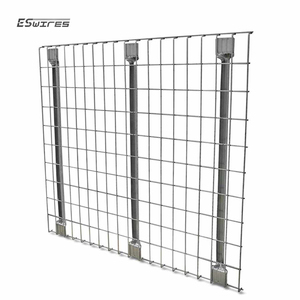
Safety Decking System
Discover our high-precision track-bound shuttle racking systems, heavy duty modular pallet frameworks, mezzanine platforms, and rough-terrain handling infrastructure.
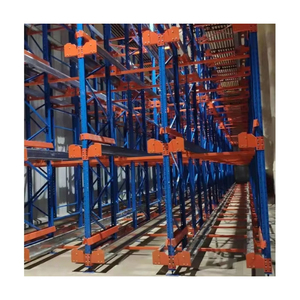
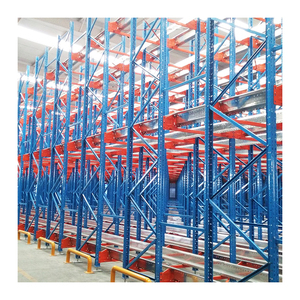
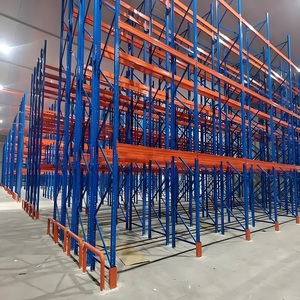
Modern industrial supply chains face unprecedented challenges: land valuation inflations, escalating cubic-meter cold storage overheads, and the imperative for accelerated SKU throughput. In response, high-density pallet racks on tracks—encompassing both motorized electrical mobile racking systems (MRS) and rail-guided radio pallet shuttle storage networks—have transitioned from optional high-tier logistics investments into mainstream intralogistics necessities.
As a leading Chinese manufacturer and global exporter, Guangzhou Heda Shelves Co., Ltd. examines the underlying structural kinematics, floor embedding mechanics, metallurgical tolerances, and wheel-rail dynamics that govern the operational integrity of track-bound storage infrastructures.
The structural efficacy of pallet racks mounted on floor rails relies heavily on the concrete slab's mechanical load distribution. Mobile racking bases transfer intense point loads through high-tensile steel bogies into the embedded rails. In accordance with DIN 15185 and EN 15620 guidelines, allowable rail elevation tolerances must not deviate by more than ±1.0 mm over a 2-meter measurement chord, and must remain within ±2.0 mm across the entire length of the warehouse aisle.
Floor embedded tracks are generally categorized into two execution styles:
Guide and running rails are suspended in pre-formed floor trenches using precision laser jigs, followed by secondary non-shrink epoxy grout infusion to ensure voidless load distribution.
Flat top running surfaces engineered with Q355 carbon steel rail profiles prevent tripping hazards and ensure seamless crossover for counterbalanced or reach forklifts without chassis jarring.
Embedded tracks incorporate continuous copper bonding loops at every thermal expansion joint, mitigating static charge buildup generated by polyurethane drive wheel friction.
The mobile carriages serving as running bases for pallet racks on tracks are fabricated from cold-formed high-strength structural steel profiles conforming to EN 10025-2 S355JR. Direct-drive asynchronous geared motor units, equipped with variable-frequency drives (VFD), ensure gentle acceleration and deceleration ramps (smooth soft-start/soft-stop), preventing inertial pallet slippage when shifting dynamic multi-bay rack configurations carrying upwards of 400 metric tons per block.
| System Architecture | Space Utilization | Accessibility Index | Cold Room ROI | Floor Track Profile | Handling Interface |
|---|---|---|---|---|---|
| Motorized Electric Mobile Racks | 85% - 92% | 100% Selective (Dynamic Aisle) | Ultra High (24-36 Mos) | Dual-Flanged Rail + Flat Guide | Standard Reach / Counterbalance |
| Track-Bound Radio Shuttle Racks | 80% - 88% | LIFO / FIFO High-Density Lane | Extremely High | Elevated Rack-Formed Channel | Automated Rail-Guided Carrier |
| Double Deep Static Racks | 60% - 68% | 50% Direct Selectivity | Moderate | Trackless (Floor Mounted) | Pantograph Reach Forklift |
| Standard Selective Pallet Racks | 40% - 48% | 100% Direct Selectivity | Low (High Air Volume Waste) | Trackless | Any Standard Forklift |
Headquartered in Guangzhou with more than 25 years of specialized manufacturing prowess, HEDA Shelves delivers turnkey intralogistics engineering from raw steel coil to on-site assembly worldwide.
Fully compliant with CE Certificate No. 2435-CPR-8605159, ISO 9001:2015 Quality Management System No. 18624Q00169R0M, and RoHS standards.
Continuous automated CNC roll-forming lines with multi-point punching assure sub-millimeter upright perforation accuracy, optimizing beam lock-in rigidity.
10-stage automated surface pre-treatment (pickling, phosphating, passivation) followed by electrostatic polyester powder curing ensures corrosion resistance in tropical humidity.
In-house structural engineering team provides complete 3D layouts, finite element stress modeling (ANSYS), and dynamic seismic displacement simulations prior to steel fabrication.
The global warehousing landscape is experiencing profound structural transformations. When sourcing track-bound heavy-duty racking from China, corporate supply chain directors must evaluate their investments beyond simple upfront steel tonnage prices. Strategic procurement focuses on lifetime total cost of ownership (TCO), technological integration vectors, and lifecycle sustainability.
Traditional shuttle systems are evolving into multi-directional 4D shuttle architectures where autonomous mobile robots (AMRs) interface directly with vertical track lifts, creating uninterrupted pallet streams without human forklift operators.
Next-generation mobile carriage bogies feature embedded vibration transducers, laser wheel-alignment sensors, and thermal bearing monitors that transmit real-time telemetry to cloud-connected maintenance platforms.
With deep-freeze cold storage operating at -25°C, regenerative braking units installed on moving mobile carriages recapture dynamic kinetic energy, feeding clean electricity back to the central facility grid.
Global procurement teams should insist on the following five core engineering criteria before finalizing contracts with any Chinese manufacturing exporter:
Direct technical answers addressing engineering parameters, civil floor tolerances, international maritime shipping, and installation workflows.
The slab must be engineered as a heavy-duty industrial jointless or saw-cut slab with a minimum compressive strength of C28/35 or C30/37. Under full dynamic carriage loading, the slab settlement should not exceed 1/1000 between adjacent rail tracks. Laser screed installation ensures the surface meets DIN 18202 Table 3 flatness standards before trench cutting or embedded track positioning.
Our engineering division designs according to RMI MH16.1 (USA), EN 16681 (Europe), or local building seismic codes. Uprights are reinforced with increased wall thickness (up to 2.5 mm or 3.0 mm), baseplates feature dual wedge anchors with heavy gusset stiffeners, and the mobile base assemblies incorporate mechanical anti-tip claws that lock firmly into the embedded floor rails under ground shake.
Yes. When full floor excavation is unviable, low-profile surface tracks can be laid over the existing slab, followed by a secondary concrete topping or ramped transition plates. For radio shuttle racking on fixed frames, no floor cutting is required at all: the shuttle runs entirely on guided steel track profiles integrated into the rack beams.
Standard fabrication lead time is 20 to 35 business days depending on tonnage (1 to 10 full container loads). Structural design approval and CAD verification take 3 to 5 days. Maritime transit from Guangzhou / Shenzhen port to major European, North American, or Central American seaports ranges from 18 to 35 days under FOB, CIF, or DDU commercial terms.
Every shipment is accompanied by comprehensive 3D visual erection diagrams, component numbering keys, and pre-wired plug-and-play motor harnesses. For large projects, HEDA Shelves dispatches bilingual commissioning engineers to supervise rail leveling, carriage mechanical alignment, PLC commissioning, and local operator safety training.
We source prime cold-rolled coils exclusively from top-tier state-owned mills (Baosteel, Shougang). Every batch undergoes spectrometer chemical analysis, tensile yield tests, and 500-hour neutral salt spray (ASTM B117) adhesion tests. Finishes are cured at 180°C-200°C using high-grade polyester powders to resist flaking, impact, and humidity.