High-Tolerance Base Plates & Heavy-Duty Stillage Feet
Manufactured using progressive deep stamping, robotic CO₂ gas-shielded welding, and anti-abrasion finishes. Engineered to EN 15512 and RMI dynamic loading standards.
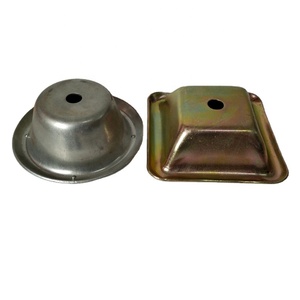
Stamping Double Sided Foldable Stainless Steel Pallet Feet for Storage Stillages
- Material: AISI 304 / 316 Stainless Steel
- Process: High-Tonnage Hydraulic Stamping
- Application: Cleanrooms & Chemical Stillages
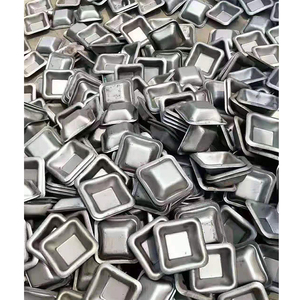
Metal Pallet Feet for Detachable and Foldable Steel Stillage Stacking Racks
- Material: Structural Q235B Carbon Steel
- Cup Geometry: Self-Centering Beveled Cup
- Stacking Capacity: 4 to 6 Tiers Safe Load
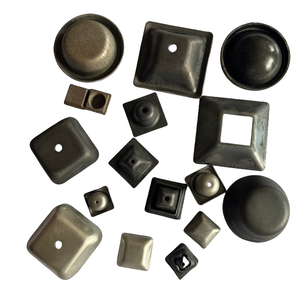
Best Quality Heavy Duty Round Stacking Steel Pallet Stillage Feet Bottom Feet
- Profile: Spherical / Flanged Heavy Base
- Floor Protection: Low Point-Pressure Apex
- Finish: Zinc Electroplate / Powder Coat
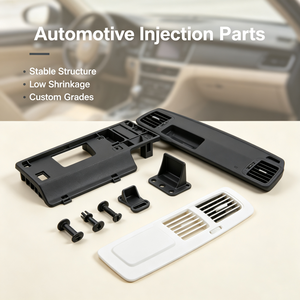
Custom Injection Molded Reinforced PP Pallet Feet For Transport Racks
- Matrix: High-Impact Glass-Fiber PP Resin
- Corrosion: Completely Rustproof / Chemical Resistant
- Use: AS/RS Tote Carriers & Light Racks
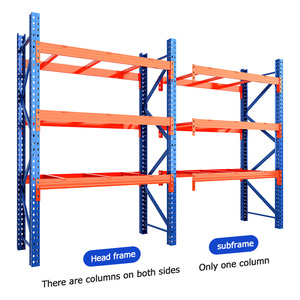
Q235 Customized Adjustable Leveling Feet Pallet Racking Corrosion Protection
- Threading: M20–M36 High-Torque Stud
- Coating: 60–90µm Electrostatic Epoxy
- Feature: High-Tolerance Slab Compensation
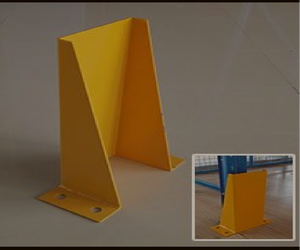
U-shaped Protective Foot for Pallet Racking Column Upright Impact Guard
- Steel Thickness: 4.0mm to 6.0mm High Grade
- Safety Code: Conforms to OSHA / EN 15635
- Anchors: Pre-Drilled M12 Base Mounts
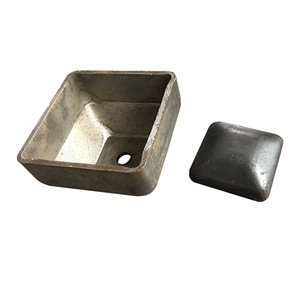
Anti-Rust Carbon Steel Shelf Sheet Stillage Stacking Pallet Feet
- Pre-Treatment: Acid Pickling & Phosphating
- Design: Multi-Directional Interlock Foot
- Compatibility: Standard & Euro Post Stillages
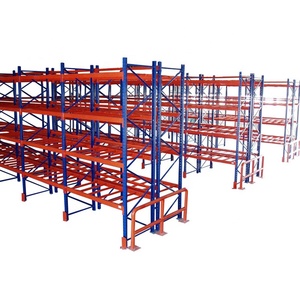
High Quality Customized Warehouse Steel Pallet Racking Adjustable Base Plates
- Steel Grade: Hot-Rolled Q355B / ASTM A572
- Seismic Holes: Dual-Offset Anchor Configuration
- Compatibility: Teardrop, Slotted & Box Uprights
The Critical Mechanical Role of Pallet Racking Feet & Base Plates
In modern logistics engineering, upright base plates (often referred to generically as pallet racking feet) are the most critical yet frequently under-specified structural components in a warehouse. While racking beams support the horizontal gravity loads of palletized cargo, the base plate assembly is tasked with resolving all vertical dead and live loads into the concrete floor slab. More critically, pallet racking feet govern the moment capacity at the base of the frame, transfer horizontal shear stresses generated during seismic oscillation or forklift impacts, and prevent catastrophic progressive structural collapse.
China's manufacturing sector has undergone a massive engineering evolution over the past decade. Advanced suppliers in Guangzhou and the Guangdong industrial corridor have moved far beyond low-cost manual stamping. Tier-one manufacturers now employ fully automated progressive die presses, precision laser punching for seismic bolt pattern accuracy, robotic continuous-weld seams, and certified structural steel chemistries conforming strictly to global quality benchmarks (ISO 9001:2015, EN 15512, and American RMI MH16.1).
| Component Type | Typical Raw Material | Tensile Strength (MPa) | Yield Strength (MPa) | Primary Mechanical Function |
|---|---|---|---|---|
| Standard Heavy Base Foot | Q235B (ASTM A36 Equiv.) | 370 – 500 MPa | ≥ 235 MPa | Gravity point-load dispersion on standard C30/37 concrete slabs. |
| Seismic Anchor Base Plate | Q355B (ASTM A572 Gr 50) | 470 – 630 MPa | ≥ 355 MPa | Moment dissipation, ground acceleration flexure, high uplift shear resistance. |
| Foldable Stillage Post Foot | Cold-Rolled SPCC / Q235 Stamping | 340 – 440 MPa | ≥ 215 MPa | Self-locating conical nesting, dynamic stacking weight distribution. |
| Adjustable Leveling Foot | 40Cr Alloy Pin + Q235 Base | ≥ 980 MPa (Stud) | ≥ 785 MPa | Precision millimeter-grade elevation compensation on uneven floor slabs. |
Future Procurement Trends in Pallet Racking Hardware (2026–2030)
How automation, ESG criteria, seismic code enforcement, and high-cube warehouse footprints are fundamentally altering the specifications of racking feet.
1. High-Bay AS/RS & Autonomous Shuttles
As warehouse clear heights push beyond 20 to 35 meters in automated storage and retrieval systems (AS/RS), floor tolerances shrink drastically (to VDMA 15251 and DIN 18202 standards). Standard stamped base plates can no longer accommodate the high vertical racking runout. Procurement is shifting toward CNC-machined, micro-adjustable leveling base feet capable of sub-millimeter torque alignment.
2. Stringent Seismic Base Plate Protocols
Global logistics hubs located along active fault lines (e.g., Central America, the Mediterranean, East Asia, and the US West Coast) require racking base plates engineered with dual or quadruple staggered anchor anchorages. Engineers now mandate pre-calculated slot patterns that prevent crack-propagation in concrete while avoiding the cutting of steel rebar during hammer-drill installation.
3. Eco-Friendly, Cold-Chain Surface Treatments
Traditional solvent coatings are rapidly being replaced by high-durability thermosetting electrostatic powders that produce zero VOC emissions. Simultaneously, cold-storage expansions have accelerated demand for continuous hot-dip galvanized (HDG) racking feet (ISO 1461 compliant, 85µm+ zinc thickness) that completely eliminate rust in sub-zero -30°C humidity cycles.
Why Tier-1 Global Contractors Source from HEDA Shelves
Established in Guangzhou in 2001, Guangzhou Heda Shelves Co., Ltd. has grown from a specialized tooling workshop into one of China's most accredited warehouse logistics infrastructure manufacturers.
Unlike export trading intermediaries who outsource sheet metal stampings, our modern 30,000 square meter intelligent manufacturing facility hosts complete, in-house mechanical operations: from continuous uncoiling, automated multi-station hydraulic punching, and cold-roll bending to robotic 6-axis welding and multi-stage phosphate dipping. Our monthly capacity exceeds 30,000 metric tons of structural storage components, delivering reliable dimensional tolerances and verified metallurgical purity to clients in over 120 nations.
Our Certified 10-Stage Manufacturing Process
Every base foot and stillage component passes through strict automated validation gates:
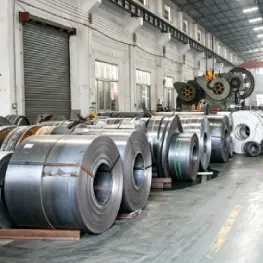 01. Steel Testing
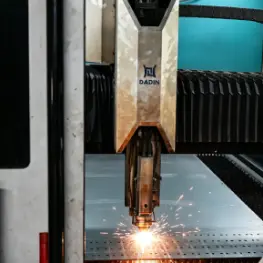 02. CNC Cutting
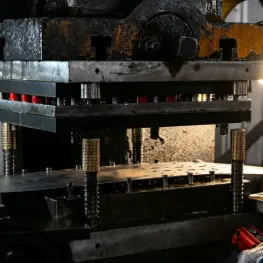 03. Auto Punching
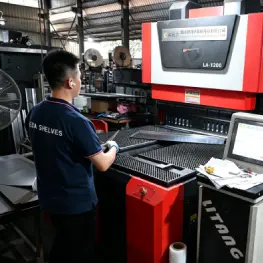 04. Cold Forming
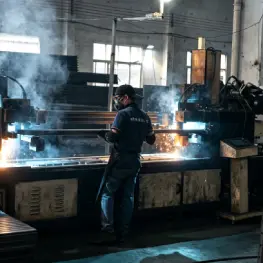 05. Robotic Weld
Frequently Asked Questions by Structural Engineers & Buyers
Comprehensive technical answers to optimize base plate sizing, slab anchoring, anti-corrosion finishes, and international shipping logistics.
How do engineers calculate the required base plate dimensions and steel thickness for heavy pallet racking?
Base plate sizing is governed by the maximum compressive stress exerted on the concrete slab, following international codes like EN 15512, RMI MH16.1, or ACI 318. The calculation determines the effective bearing area required so that the bearing stress under the base plate does not exceed the permissible design bearing strength of the concrete (usually 0.6 to 0.85 times f'c, depending on local safety factors). For standard heavy-duty selective racking (loads of 1,000 to 1,500 kg per pallet, frames 8 to 12 meters high), base plates typically require a thickness between 6.0mm and 12.0mm and an area of at least 150 × 120mm to prevent punch-through shear and local concrete crushing.
What is the functional difference between welded base plates and bolt-on base plates?
Welded base plates provide an ultra-rigid factory-bonded connection offering high moment resistance against base rotational flexure; however, they require higher shipping cubic volume (CBM) in ocean containers and make field repairs expensive if damaged by forklifts. Bolt-on base plates, which are mechanically connected to the bottom of the upright profile using high-tensile Grade 8.8 bolts, allow flat-pack knockdown packing—significantly lowering ocean freight costs. Moreover, if a lower frame segment suffers accidental impact, bolt-on base feet can be swiftly inspected, detached, and replaced without replacing the entire vertical upright frame.
How are stillage stacking pallet feet engineered to prevent stack collapse under dynamic crane handling?
Stillage stacking feet feature a distinctive cupped, flared, or conical nesting geometry. When stillage containers are stacked 4 to 6 tiers high in industrial yards, each leg of the upper bin seats naturally into the flared receiving rim of the post beneath it. The internal bevel angle (typically 30° to 45°) provides self-centering capability during forklift placement while creating a physical mechanical interlocking lip that resists lateral seismic loads, operational vibrations, and minor tipping forces. Deep-stamped carbon steel feet are critical because bent plate welded corners can fail under repeated drop-shock impacts.
What surface finishes should be specified for coastal or high-humidity distribution centers?
For dry indoor ambient warehouses, our multi-stage pre-treatment (acid pickling, alkaline degreasing, and zinc phosphating) followed by a 60–90 micron electrostatic epoxy-polyester powder coat provides outstanding corrosion resistance (surpassing 500 hours of ASTM B117 salt spray testing). However, for coastal warehouses exposed to marine air or cold storage facilities with frequent condensation cycles, we mandate continuous hot-dip galvanization (HDG) conforming to ISO 1461. The sacrificial zinc-iron alloy coating provides metallurgical bonding and edge-healing properties that prevent oxidation for over 25 years.
What documentation and quality certifications does HEDA Shelves supply for overseas port customs clearance?
Every export shipment includes verified Mill Test Certificates (MTC) proving steel chemical composition (C, Mn, Si, P, S) and mechanical yield ratings. In addition, we furnish itemized container loading lists with barcoded piece counts, Certificate of Origin (CO/Form E/EUR.1), verified CE Declaration of Performance (Certificate No. 2435-CPR-8605159), ISO 9001:2015 quality management compliance paperwork, and comprehensive structural CAD assembly drawings to streamline customs clearance and municipal building permit inspections.