Featured Industrial Pallet Racking & Modular Shelving Systems
Designed and fabricated under ISO 9001:2015 and CE EN15512 compliance standards for high-density logistics, automotive e-commerce fulfillment, and light-to-medium payload material handling.
Engineering Principles & Industry Standards in Lightweight Racking
Analyzing cold-formed high-strength steel profiles, structural mechanics, deflection coefficients, and modern warehouse dynamics.
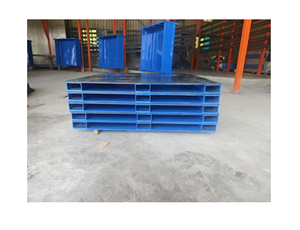
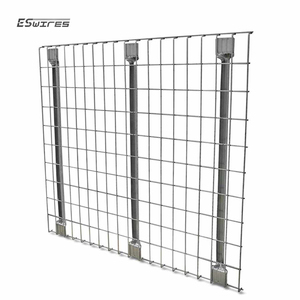
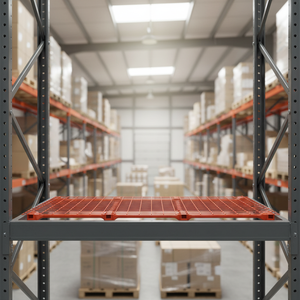
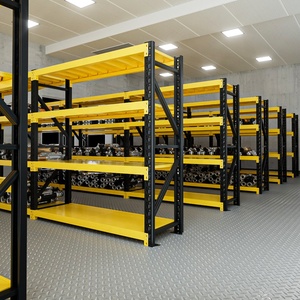
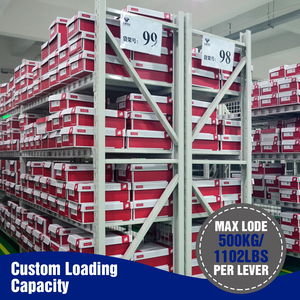
In contemporary warehousing and intralogistics architectures, the term lightweight pallet racking (often intersecting with light-to-medium duty modular longspan racking and specialized light pallet frameworks) does not imply structural fragility. Rather, it represents an advanced optimization of material science and cold-formed profile geometry. Developed for applications handling unit loads typically ranging between 100 kg to 800 kg per beam tier—such as lightweight standard Euro-pallets, micro-fulfillment tote containers, electronic component subassemblies, and carton distribution—lightweight systems deliver high spatial yield without incurring the massive foundational dead-weight of classic heavy-duty logistics systems.
Leading Chinese manufacturing hubs have spearheaded this technical evolution through the deployment of continuous automated roll-forming lines, computerized multi-stage punch presses, and FEA (Finite Element Analysis) structural simulation. By selecting high-tensile certified structural steel grades—predominantly Q235B and Q355B—manufacturers create multi-bend omega (Ω) and teardrop column profiles. These geometric cross-sections radically improve the radius of gyration, torsional rigidity, and resistance to local buckling, permitting reduced wall thicknesses (1.2 mm to 1.8 mm) that achieve equal or superior structural capacity compared to traditional heavier, thicker gauge profiles.
| Structural Parameter | Lightweight / Medium-Duty Racking | Standard Heavy-Duty Pallet Racks | High-Density Shuttle Racking |
|---|---|---|---|
| Target Unit Load | 100 kg – 800 kg / Level | 1,000 kg – 3,000 kg / Level | 500 kg – 1,500 kg / Pallet |
| Typical Upright Profile | 55×47 mm / 60×50 mm (1.2–1.8 mm) | 80×60 mm up to 120×95 mm (2.0–3.0 mm) | 90×70 mm / 100×70 mm (2.0–2.5 mm) |
| Primary Steel Grade | Cold-Rolled Q235B / Cold-Formed Strip | Hot-Rolled / Cold-Rolled Q235B & Q355B | High-Strength Q355B Certified |
| Floor Slab Thickness Req. | 120 mm – 150 mm Non-Reinforced/Light | 180 mm – 250 mm Reinforced Concrete | 200 mm+ C25/C30 Laser Screeded |
| Installation Configuration | Boltless Interlock / M8 High-Tensile | Welded/Bolted Frame with 4-Claw Beams | Heavy Anchor-Bolted Guide Rails |
| Safety Factor (Design) | 1.5 to 1.65 (FEM / EN 15512) | 1.65 to 1.95 (EN 15512 / RMI) | 1.8 to 2.0 (Dynamic Machinery Factor) |
Future Trends: Evolution of Lightweight Modular Storage Systems
How automation integration, environmental regulations, and intelligent supply chains are reshaping manufacturing benchmarks.
High-Strength Steel Thinning
Advancements in micro-alloyed metallurgy enable the production of thinner steel cross-sections without sacrificing yield stress. Through sophisticated roll forming, cold work hardening adds substantial yield capacity, reducing overall raw material consumption by up to 18% per square meter of storage volume.
Robotic AMR/AGV Interfacing
Next-generation light pallet racks are transitioning from pure manual handling to integrated automated interfaces. Precision tolerances on beam depths, roll-track inserts, and floor-level pickup bays are now manufactured specifically to dock with Autonomous Mobile Robots (AMRs) and automated sorting bots.
Zero-VOC Eco-Friendly Coatings
Environmental compliance mandates have accelerated the adoption of automated phosphating-free silane pre-treatments combined with ultra-durable, heavy-metal-free electrostatic polyester-epoxy powder formulations. This ensures over 500 hours of salt spray resistance (ASTM B117) with zero hazardous emissions.
Future Procurement Trends for International Warehouse Buyers
What engineering teams, global procurement managers, and 3PL facility planners need to evaluate before contracting with Chinese suppliers.
Cross-border procurement of industrial racking systems has matured significantly beyond transactional price-per-kilogram shopping. Today’s multinational supply chain leaders conduct rigorous engineering audits, focusing on certified traceability from steel mills, compliance with local building codes (including IBC, Eurocodes, and seismic provisions), and the total cost of ownership (TCO) inclusive of ocean container dunnage and on-site assembly efficiency.
Seismic & Wind Structural Calculation
International contracts now mandate project-specific static calculations verified by local registered professional engineers (PE). Suppliers must simulate specific site acceleration coefficients (Ss, S1), building soil categories, and slab anchorage requirements prior to manufacturing.
Container Cube Optimization
With ocean freight volatility, procurement directors prioritize modular designs engineered specifically for 40ft High Cube containers. Nestable upright columns, demountable footplates, and bundled beam packs prevent dead airspace and reduce container freight costs by 20% to 35%.
Mill Test Traceability (MTC EN 10204)
Top tier manufacturers provide 3.1 Mill Inspection Certificates validating carbon equivalent, chemical composition, elongation ratios, and yield strengths directly sourced from tier-one Chinese mills such as Baosteel, Shougang, or Ansteel.
Guangzhou HEDA Shelves: 25 Years of Manufacturing Authority
World-class manufacturing scale, certified quality frameworks, and end-to-end engineering capabilities.
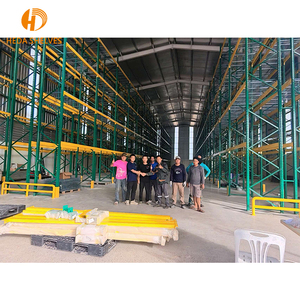
Established in 2001 in Guangzhou, China, Guangzhou Heda Shelves Co., Ltd. has grown into an international leader in the engineering, design, and manufacturing of premium warehouse racking and mezzanine systems. Spanning a 30,000-square-meter modern fabrication facility with a monthly capacity exceeding 30,000 tons, HEDA Shelves operates a robust team of over 300 experienced engineers, structural technicians, and skilled logistics specialists.
Strict Global Certifications
Fully certified under CE Certificate No. 2435-CPR-8605159, ISO 9001:2015 Registration No. 18624Q00169R0M (valid through June 2027), and RoHS compliance, our structures ensure guaranteed safety and regulatory approvals across European, American, and Latin American jurisdictions.
Custom Seismic & Climate Adaptation
Having completed more than 10,000 projects across 120+ countries, HEDA specializes in structural calculations tailored to regional environmental challenges, including seismic design parameters for active fault regions and anti-corrosive multi-stage pre-treatment for high-humidity coastal ports.
Full In-House Manufacturing Chain
Our 10-step proprietary production pipeline—from raw coil slit cutting, automated CNC column punching, and roll forming to specialized robotic welding, automated pickling, phosphating, and electrostatic powder coating—guarantees total dimensional precision and aesthetic quality.
Frequently Asked Questions: Sourcing Lightweight Racking
Direct answers to the most critical technical, commercial, and logistical inquiries from global procurement managers.
What load capacity defines "lightweight" vs. "heavy-duty" pallet racking?
Lightweight to medium-duty racking systems typically cater to load capacities between 100 kg and 800 kg per storage level (or 300 kg to 600 kg per pallet position). Heavy-duty systems are engineered for industrial loads from 1,000 kg up to 3,500 kg per level. Choosing lightweight racking significantly lowers structural steel deadload and overall capital expenditures when handling smaller items, tote bins, e-commerce cartons, or light cargo.
How does HEDA Shelves ensure structural safety and seismic compliance?
Every project layout is engineered using finite element analysis (FEA) compliant with FEM 10.2.02, EN 15512, and RMI standards. When client sites are situated in active seismic zones (such as the Pacific Rim or Central American fault lines), our engineering team calculates seismic spectral accelerations, incorporating enlarged baseplates, high-grade Hilti anchoring systems, and reinforced cross-bracing.
What surface finishes are recommended for tropical or coastal environments?
For standard inland environments, our multi-stage electrostatic thermosetting powder coating (60–80 microns thickness) provides superior scratch and corrosion resistance. For facilities exposed to high ambient humidity, coastal salt-laden air, or cold-storage temperature cycling, we supply hot-dip galvanized steel components (compliant with ISO 1461) to eliminate oxidation and rust risks over decades of use.
What is the typical manufacturing lead time and FOB/CIF shipping protocol?
Production lead times for customized lightweight racking typically range from 15 to 25 business days depending on volume and powder coat colors. We handle export documentation, shipping FOB Guangzhou/Shenzhen or CIF to primary global seaports across North America, Europe, Africa, the Middle East, and Latin America, accompanied by detailed, labeled container packing lists for seamless customs clearance.
What engineering data must buyers provide to receive a free 3D CAD proposal?
To prepare an accurate proposal and 3D structural model, please share: (1) Warehouse clear height and architectural CAD layout showing column grids; (2) Pallet or tote dimensions (L×W×H) and maximum loaded unit weight; (3) Handling equipment model, minimum turning radius, and lift height; and (4) Throughput requirements (FIFO or LIFO stock rotation policy).
Are custom teardrop punch patterns compatible with US standard racking?
Yes. Our automated CNC punching lines fabricate fully compatible American teardrop punch styles with standard 2-inch pitch adjustability, allowing seamless expansion, beam interchangeability, and accessory integration with pre-existing American racking infrastructure.