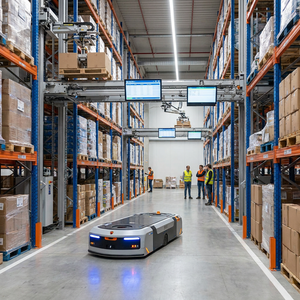
Adjustable Beam Heavy Duty Pallet Rack System
Universal teardrop and box-beam connections offering modular vertical adjustment at 50mm/75mm pitches for variable SKU sizes.
View DetailsFabricated from high-tensile cold-rolled Q235B/Q355B structural steel. Each system is designed to comply with rigorous FEM, RMI, and ISO 9001 load specifications.
Universal teardrop and box-beam connections offering modular vertical adjustment at 50mm/75mm pitches for variable SKU sizes.
View Details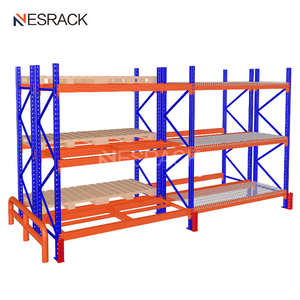
Supports 500kg to 3,000kg uniformly distributed load (UDL) per shelf layer. Optimized interlocking pins eliminate complex bolt installations.
View Details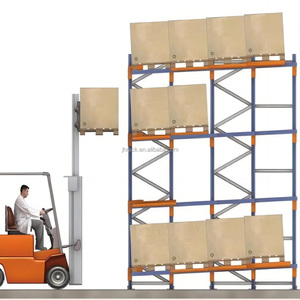
Last-In, First-Out (LIFO) nested cart system allowing up to 6 pallets deep per lane, maximizing floor footprint efficiency by up to 75%.
View Details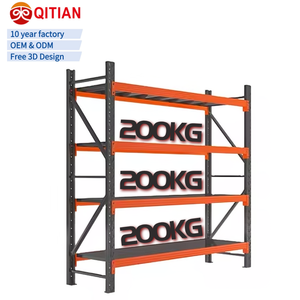
Engineered for manual order sorting, spare components, and retail distribution centers with a verified 200kg-500kg level payload.
View Details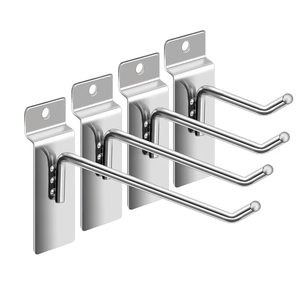
Precision laser-punched backboards paired with reinforced hook attachments, bridging front-of-house retail with industrial backroom staging.
View Details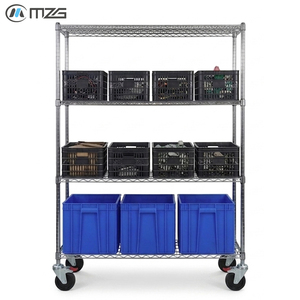
Chrome-plated or epoxy powder-coated open mesh design, resisting dust accumulation while accommodating heavy warehouse tooling cart operations.
View Details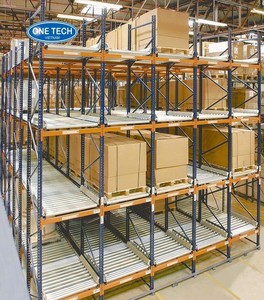
Precision aluminum/steel roller tracks supporting strict First-In, First-Out (FIFO) split-case picking workflows for rapid e-commerce operations.
View Details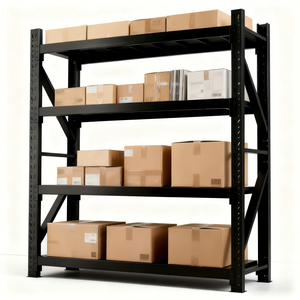
Interlocking upright frames creating structural catwalks and secondary storage floors, fully capitalizing on unused vertical ceiling clearance.
View DetailsThe global warehousing and logistics sector is navigating an unprecedented structural transformation. As industrial facilities face steepening real estate costs and soaring square-meter operational valuations, the procurement of heavy duty industrial shelving has evolved from a straightforward hardware purchase into an engineering-led capital optimization project. China represents the foremost production epicenter for structural warehouse equipment, housing high-capacity manufacturing clusters across Guangdong, Jiangsu, and Shandong provinces. However, navigating the vast directory of suppliers requires understanding the metallurgical, robotic, and QA differences separating Tier-1 original equipment manufacturers from low-cost steel assemblers.
In high-capacity logistics environments, static loads represent only a fraction of mechanical stress. Dynamic live loads, forklift impact momentum, structural shear stresses, and harmonic resonance during loading operations require strict structural calculations. Leading Chinese manufacturers leverage state-of-the-art cold-roll profiling lines where structural beams and upright columns undergo multi-stage continuous roll forming. This metallurgical precision ensures consistent tensile yield strength (often exceeding 235 to 355 MPa) and minimizes internal micro-fractures within the steel grain structure.
Under international standards (such as EN 15512 and ANSI MH16.1), heavy-duty beam deflection must not exceed L/200 of the clear span under maximum design load. Tier-1 Chinese manufacturers utilize proprietary box beam profiles with automated continuous robotic seam welding to eliminate structural torsion and localized bucking under sustained load profiles.
Furthermore, surface longevity in high-throughput facilities dictates life-cycle operating expenses. Advanced Chinese manufacturing facilities incorporate full 10-stage automated pre-treatment lines consisting of industrial pickling, phosphating, rust removal, and ultrasonic washing prior to electrostatic powder deposition. This level of environmental passivation ensures rust and corrosion resistance capable of withstanding the tropical humidity of Southeast Asia, coastal marine transit zones, and temperature-controlled cold chain logistics environments.
What enterprise supply chain leaders must evaluate over the next decade to maintain agility, compliance, and structural resilience.
Traditional static storage is rapidly converging with semi-automated and fully automated guided vehicle (AGV) interfaces. Procurement protocols are now prioritizing micro-tolerance deflection standards (+/- 1.0mm) to allow seamless crane, shuttle, and autonomous stacker integration without mast jams or optical sensor disruption.
With cold-chain pharmaceutical facilities and refrigerated food distribution centers expanding globally, conventional electrostatic paint finishes are being augmented by continuous pre-galvanized or hot-dip galvanized steel components capable of resisting -30°C temperature shifts without thermal cracking or embrittlement.
The next procurement horizon centers on structural health monitoring. Smart warehouses are requiring factory-fitted strain-gauge pockets and IoT accelerometers within rack columns to detect fork truck micro-impacts, weight distribution anomalies, and seismic shift vectors in real time, preventing catastrophic structural collapse.
Over 25 years of end-to-end manufacturing control, international certifications, and tailored structural support.
From raw high-grade steel coil shearing and automated punch presses to robotic continuous welding and dual powder-coat curing lines, all processes occur within our 30,000 m² workshop.
Fully compliant with CE Certificate No. 2435-CPR-8605159, ISO 9001:2015 Quality Management Systems (Certificate No. 18624Q00169R0M), and stringent RoHS metallurgical verification.
Our dedicated engineering department creates complete finite element analysis (FEA) models, seismic compliance calculations, and floor plan optimizations tailored to local building codes at zero cost.
Structured bundling, high-density bundling, position-coded labeling, and dedicated seaworthy steel wrapping allow zero-damage CIF/FOB global deliveries to over 120 destination countries.
Direct answers addressing technical specifications, container loading, installation integrity, and international logistics.