High-Density Dynamic & Industrial Storage Solutions
Explore our core product lines manufactured from heavy cold-rolled Q235B/Q355B steel, fully customizable with gravity brake rollers, speed controllers, and automated integration options.
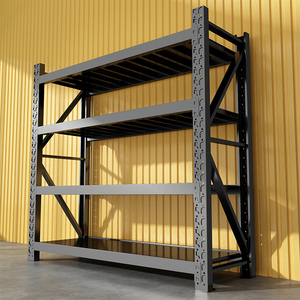
Adjustable Industrial Warehouse Light Duty Steel Slotted Angle 5 Layer Shelving Rack System with 500KG Capacity 10 Year Warranty
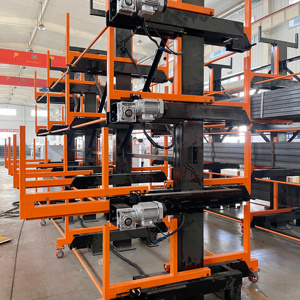
Automatic PLC Control Factory Warehouse Cantilever Shelving Telescopic Storage Rack Electric Heavy Duty Steel for Long Profiles
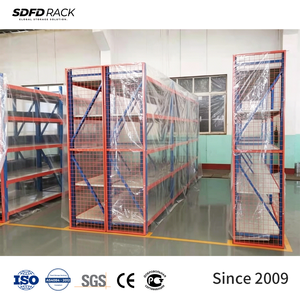
Wholesale Hot Selling 2400x600x2200 Medium Duty Longspan Warehouse Shelves 4 Layers/400kg Load Capacity Industrial Storage Racks
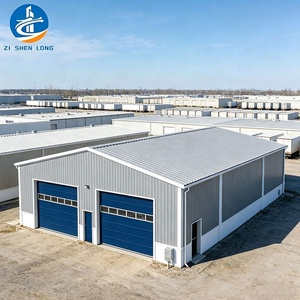
Steel Structure Factory Building Prefab Warehouse Commercial Office Hangar Prefabricated Steel Workshop Buildings
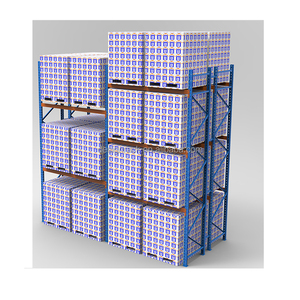
Manufacturer Heavy Duty Warehouse Shelving/storage Pallet Rack /selective Heavy Duty Racking System
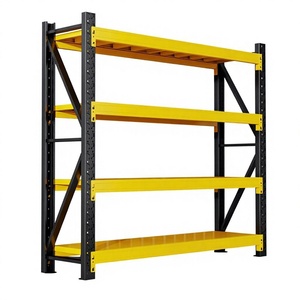
Adjustable Heavy Duty Load-Bearing 500kg/Layer Steel Racks Warehouse Industrial Stack Storage Racking Shelving System
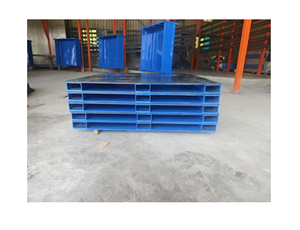
Customized Heavy Duty Steel Storage Rack Warehouse Pallet Racking System with Roller Bearing New 100kg Load Capacity
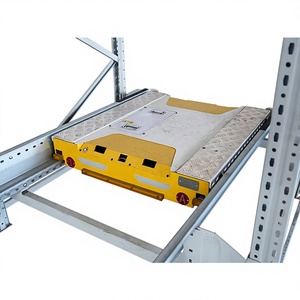
Pallet Shuttle Racking System Warehouse Rack Automatic 4-Way Shuttle Racking Four Way Cold Storage Shuttle Rack
Kinematic Physics of Flow Through (Gravity Pallet Flow) Systems
Understanding the dynamic balance between gravitational incline, rotational inertia, speed controller placement, and safety separators for high-throughput zero-energy logistics.
Gravitational Track Incline (2.5° to 3.5°)
Flow through pallet racking leverages natural gravity by mounting steel roller tracks at a calculated incline of 2.5% to 3.5% (approx. 1.5°–2°). This specific pitch provides sufficient gravitational pull to overcome the static friction coefficient of wooden or composite pallet skids without producing hazardous terminal velocities over extended run lanes.
Centrifugal Brake Speed Controllers
To restrict pallet acceleration over depths ranging from 4 to 25 pallets deep, calibrated magnetic or centrifugal friction brake rollers are positioned at calculated intervals (typically every 1 to 1.5 pallet lengths). These brake rollers govern downhill drift velocity to a controlled 0.25 to 0.30 m/sec, eliminating catastrophic pallet impact collisions.
Time-Delay Mechanical Separators
Line pressure in deep lanes can reach thousands of kilograms against the front extraction pallet. Heavy-duty mechanical disconnect separators temporarily lock back the rear trailing load when the leading pallet hits the discharge stop. This enables forklift drivers to smoothly pick the discharge pallet free of line-pressure binding before the trailing queue gently advances.
| Storage System Type | Stock Rotation Rule | Floor Space Utilization | Forklift Operating Travel | Operating Energy Consumption | Line Pressure Risk |
|---|---|---|---|---|---|
| Flow Through Pallet Racking (Gravity) | Strict FIFO (First-In, First-Out) | Up to 85% Effective Area | Loading & Discharge Aisles Only | 0 kW (Pure Kinetic Gravity) | Eliminated by Mechanical Separators |
| Standard Selective Racking | Random Access / FIFO | 35% – 45% (Aisle Intensive) | High (Traverses Every Lane) | Zero System Energy | None |
| Drive-In Pallet Racking | LIFO (Last-In, First-Out) | 65% – 75% | High Risk (Truck Drives Inside Structure) | Zero System Energy | Static Accumulation Only |
| Automated Radio Shuttle Racking | FIFO or LIFO Selectable | 75% – 85% | Minimal Aisle Traversal | Lithium Battery Powered Units | Electronic Sensor Managed |
Future Procurement Trends in Industrial Flow Through Racking
Global supply chain managers and cold-chain operators are transitioning procurement parameters from basic steel tonnage cost to life-cycle mechanical reliability, intelligent tracking, and automated AGV interfaces.
AGV/AMR Interface Compatibility
By 2026, over 48% of greenfield distribution facilities will utilize Autonomous Mobile Robots (AMRs) and Automated Guided Forklifts. Modern flow rack discharge zones must be engineered with millimeter-precise centering guides, optical sensor flags, and optical reflector stops that allow robot forks to dock safely without human intervention.
Low-Temperature Sub-Zero Metallurgy
With pharmaceutical cold storage and frozen protein logistics expanding globally, procurement focuses heavily on impact-resistant steel alloys. Standard Q235B steel suffers ductile-to-brittle transitions below -15°C. Future contracts mandate Q355D or Q355E high-strength steel with Charpy V-notch impact validation down to -40°C.
Total Cost of Ownership (TCO) Metrics
Global procurement teams have moved past initial Capex comparisons. The actual TCO of a flow-through installation is heavily dictated by roller bearing seals, polyurethane roller longevity under heavy wheel loads, and galvanized track durability. High-grade polymer-coated steel rollers yield a 300% longer maintenance-free lifespan than raw unsealed bearings.
Decarbonized & Circular Supply Chains
Global logistics REITs and multinational brands (food, automotive, pharma) demand Environmental Product Declarations (EPDs). Sourcing from China now requires verifiable raw-coil traceability, recycled steel scrap ratios, and closed-loop electrostatic powder coating facilities that produce near-zero volatile organic compounds (VOCs).
Technological Developments in Modern Gravity Flow Racking
Continuous mechanical refinement turns simple gravity lanes into intelligent, high-density distribution engines equipped with self-governing speed modules and modular track geometry.
Eddy-Current Magnetic Retarders
Traditional friction brake rollers wear out friction pads over millions of revolutions, shedding dust in clean-room pharmaceutical and food facilities. The newest generation of flow through racking introduces contactless Eddy-Current Magnetic Braking. As the conductive roller spins through an internal permanent magnetic field, opposing Lorentz forces smoothly arrest rotational speed proportional to the velocity—with zero mechanical friction, zero dust, and infinite wear life.
Omni-Directional Self-Centering Guide Tracks
Pallet mis-tracking can bring an entire 20-pallet flow lane to a halt if a split bottom board wedges against side frame uprights. Advanced cold-formed roller beds now integrate flared entrance guides and parabolic roller geometry that automatically steers drifting pallets back to the center of the lane during descent, accommodating irregular GMA, Euro, and CHEP pallet footprints seamlessly.
Smart IoT Roller Telemetry
Integrated micro-piezoelectric sensors embedded within roller assemblies capture real-time rotational RPM and load weight as each pallet passes. This passive kinetic data transfers via low-power BLE mesh to warehouse management systems (WMS), providing continuous inventory occupancy counts, lane flow speed diagnostics, and predictive maintenance alerts without external electrical wiring.
Guangzhou HEDA Shelves: Global Racking Manufacturing Backbone
Over two decades of structural engineering excellence, supplying complete turnkey pallet racking, automated live flow storage, and industrial mezzanine platforms to over 120 nations.
Full Structural Certification & Verified Testing
HEDA Shelves products are calculated, engineered, and third-party certified to international standards. When importing racking systems for complex industrial projects, our documentation guarantees swift approvals from municipal building authorities, fire marshals, and insurance underwriters.
-
CE Certificate No. 2435-CPR-8605159 Certified conformity for structural steel components under European Regulation (EU) No 305/2011 (CPR).
-
ISO 9001:2015 Management System No. 18624Q00169R0M Audited international quality management standards covering full design, fabrication, and finishing (valid through 2027).
-
RoHS & Heavy-Metal Free Surface Protection Pre-treatment pickling, phosphating, and electrostatic powder coating compliant with global environmental and safety directives.
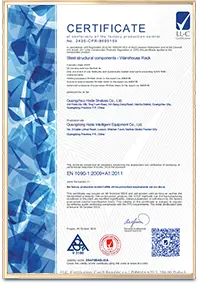
CE CPR Structural Certificate
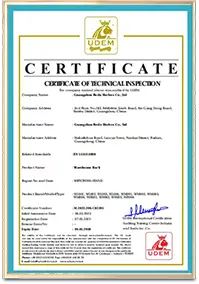
ISO 9001:2015 Registered
Precision Fabrication Stream: From Raw Coils to Calibrated Racking
Prime Steel Slitting
Direct sourcing of Q235B & Q355B coils from certified domestic mills with full chemical mill test certificates.
CNC Punching
High-speed continuous CNC punch presses create precision teardrop or 50mm diamond pitch upright pitch holes.
Continuous Roll Forming
18-to-24 station continuous roll-forming lines bend profiles progressively without causing micro-fissure stress fractures.
Robotic Seam Welding
Fully automated Panasonic welding robots execute gas-shielded fillet welds uniting beam connectors with box-beam profiles.
Pickling & Phosphating
Multi-stage acid immersion wash removes mill scale and oil, generating an anti-corrosion zinc phosphate primer layer.
Powder Application
Swiss Gema electrostatic guns deliver a uniform 60–90 micron thermosetting epoxy-polyester powder layer.
Thermal Curing
Continuous 200°C curing tunnel ensures complete polymerization, delivering high impact and scratch resistance.
Dynamic Track Assembly
Precision calibration of full-width or split steel gravity rollers, internal bearings, and centrifugal brake retarders.
Destructive QC Testing
Statistical load deflection tests validating beam deflection limits within strict L/200 (or L/250) structural tolerances.
Seaworthy Export Packing
Components bundled in steel cradles with moisture-resistant film and customized container loading schematics.





Frequently Asked Questions on Flow Through Pallet Racking
Direct, technical answers addressing slope calculation, pallet quality constraints, cold room compatibility, brake roller placement, and shipping logistics.
Q: How is the optimal slope gradient calculated for a gravity flow pallet lane?
The standard incline ranges between 2.5% and 3.5% (approx. 1.5°–2°), equating to a 30mm to 35mm drop per linear meter of track. Lighter pallet loads (under 400kg) or flexible plastic pallets with greater surface friction typically require a slightly steeper 3.5% to 4.0% incline. Conversely, heavy rigid wooden pallets (1,000kg to 1,500kg) utilize a gentler 2.5% slope to avoid excessive acceleration. HEDA's engineering team conducts physical test runs on customer pallet samples to confirm the exact optimal pitch before mass fabrication.
Q: What pallet bottom conditions are mandatory for flow through racking?
Flow through pallet racking relies on unbroken direct contact with roller tracks. Pallets must feature bottom runner boards oriented parallel to the roller travel direction. Missing bottom boards, exposed projecting nails, warped stringers, or damaged deck boards will cause hang-ups in the lane. For warehouses utilizing inconsistent pallet footprints or multi-directional entry styles, we supply full-width dual or triple roller track beds instead of split twin tracks to maintain continuous surface engagement.
Q: How many brake speed controllers are required per pallet lane?
As a rule of thumb, one centrifugal brake roller is installed per pallet position starting from the second pallet position from the loading face, up to the separator mechanism at the discharge front. In lanes deeper than 10 pallets, engineering calculations dictate placing a brake roller every 1.2 to 1.5 meters. In cold-chain environments (-25°C), low-temperature lubricants are utilized inside the internal planetary gear assemblies of the brake rollers to ensure consistent centrifugal resistance.
Q: What is the functional difference between Pallet Flow (FIFO) and Push-Back (LIFO)?
While both systems utilize sloped tracks, Flow Through (Pallet Flow) is dedicated to strict First-In, First-Out (FIFO) stock rotation: pallets are loaded at the elevated rear aisle and unloaded at the separate front aisle, making it ideal for perishable foods, pharmaceuticals, and date-sensitive SKUs. Push-Back Racking operates on a Last-In, First-Out (LIFO) principle using nested rolling carts where loading and retrieval occur at the same aisle face, optimal for high-density, multi-pallet storage of stable SKUs.
Q: How does HEDA engineer flow through systems for seismic activity?
Seismic design for gravity flow racking adheres to FEM 10.2.02, EN 15512, and AS 4084 guidelines. Because flow through systems possess high stored mass that can shift dynamically during ground tremors, our engineers increase upright profile wall thickness (up to 2.5mm or 3.0mm), install heavy-gauge welded base plates anchored with Hilti mechanical or chemical expansion bolts, and incorporate heavy structural horizontal and vertical back bracings configured to withstand local peak ground acceleration (PGA) ratings.
Q: Can flow through pallet racking operate seamlessly inside deep-freeze rooms (-30°C)?
Yes. In sub-zero cold stores, conventional lubricants congeal and carbon steel can suffer cold embrittlement. HEDA customizes cold-chain flow through racks with specialized Q355D impact-tested structural steel, hot-dip galvanized or high-adhesion zinc-phosphate powder finishes, stainless steel roller bearings sealed with aviation-grade low-temperature grease, and low-friction polymer separators that do not ice-lock or bind during continuous sub-zero duty cycles.
Q: What documentation is provided for customs clearance and on-site engineering approvals?
Every international export project is accompanied by a comprehensive engineering packet: complete CAD architectural layouts, 3D structural renders, finite element analysis (FEA) load calculation certificates, mill test certificates (MTC) proving steel tensile and yield strength, CE Declaration of Performance (DoP), and color-coded component packing lists coordinated with individual shipping container seals to accelerate customs inspection and sorting.
Q: How are installations supervised and managed across global destination facilities?
HEDA delivers complete, step-by-step 3D assembly shop drawings, component marking tags, and detailed high-definition video walkthroughs for every system. For large-scale distribution centers and complex multi-tier flow-through mezzanine platforms, we dispatch certified senior installation supervisors to the client’s jobsite to direct local rigging crews, oversee laser leveling, and perform final test roll-offs before operational sign-off.
Request a Free Custom 3D Flow Rack Layout & Engineering Proposal
Send our senior engineering team your warehouse dimensions, pallet specifications, and throughput targets. We deliver an itemized CAD floor plan, 3D animation, and factory-direct FOB/CIF quotation within 24 business hours.