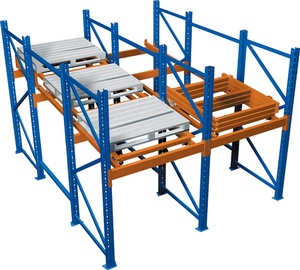
URGO 2023 New Push Back Racking Heavy Duty Pallet Rack For Intensive Storage
Dynamic nested cart mechanism allowing up to 5-deep pallet accumulative storage in standard access aisles.
LIFO Dynamic Cart
Get a Quote
Wide aisle racking—also structurally classified as standard selective pallet racking—remains the global supply chain backbone. Engineered for operating aisles between 2.5m and 3.8m, these configurations permit 100% direct selectivity across standard counterbalance and reach trucks without dedicated guide wire investments.
Dynamic nested cart mechanism allowing up to 5-deep pallet accumulative storage in standard access aisles.
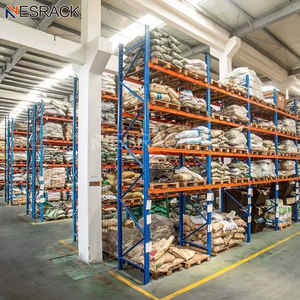
High-yield cold-rolled beam section engineered for 3,000 kg UDL threshold per level with safety locking pins.
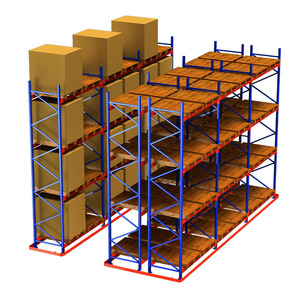
Optimized upright geometry with 75mm and 50mm pitch punch configurations for precision height adaptability.
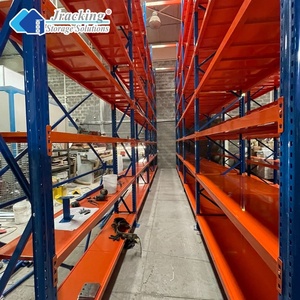
EN 15512 and FEM certified selective racking designed specifically for EUR-pallet (800x1200mm) specifications.
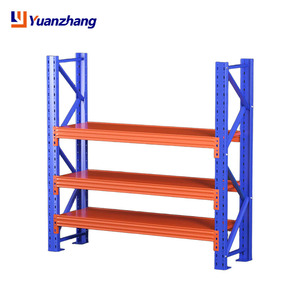
Back-to-back double configuration reducing overall aisle ratios by 35% while retaining wide handling clearance.
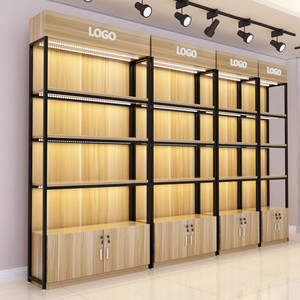
Commercial multi-tier display shelving incorporating structural cold-rolled steel posts with aesthetic timber finishes.
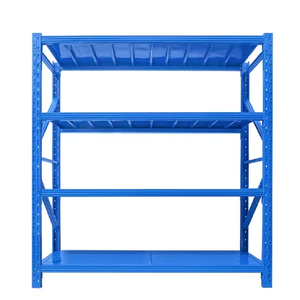
Boltless rapid-interlock framework optimized for manual replenishment operations and low-profile SKU picking zones.
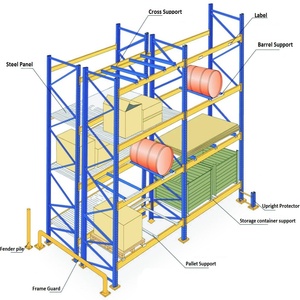
Obstruction-free front profile engineered for timber, structural tubing, bar stock, and variable dimensional loads.
Enterprise procurement requires evaluating supply reliability, seismic design competency, coating tolerances, and structural cross-section efficiency across leading international manufacturers.
| Manufacturer / Exporter | Export Hub | Primary Standards | Key Engineering Advantage | Best Suited Operational Profile |
|---|---|---|---|---|
| Guangzhou HEDA Shelves Co., Ltd. | Guangzhou, China | CE, ISO 9001:2015, RoHS | Full in-house roll forming, custom seismic baseplates, free 3D CAD stress models | Global logistics centers, FMCG distribution, coastal/tropical climates |
| SSI Schaefer | Neunkirchen, Germany | EN 15512, FEM, DIN | Automated integration modules, tight-tolerance European profile steel | High-throughput European automated and manual distribution hubs |
| Dexion (Constructor Group) | Swindon, UK | EN 15512, SEMA | Proprietary I-beam clip hook locks, proven legacy British standard structural forms | Retail stockrooms, standard UK & Commonwealth distribution networks |
| Mecalux | Barcelona, Spain | EN 15512, RMI, AISI | Extensive software ecosystem, automated integration, Latin American footprint | Cross-border logistics requiring integrated WMS software solutions |
| Stow Group | Spiere-Helkijn, Belgium | FEM 10.2.02, EN | High-yield cold-formed Stow Atlas integration, robotic structural welding | High-bay pallet operations across heavy manufacturing verticals |
| AR Racking | Bizkaia, Spain | ISO 3834-2, EN 1090 | Pre-galvanized upright finish standard, high traceability steel mill supply | Chemical storage and severe humidity exterior/interior facilities |
| Interlake Mecalux Inc. | Melrose Park, USA | RMI, ANSI MH16.1 | Teardrop standard connection, compatibility with North American stock trucks | US, Mexican, and Canadian cross-border standard logistics chains |
| Jracking Logistics Tech | Nanjing, China | AS 4084, FEM, RMI | High-volume export fabrication, teardrop and European hook versatility | Australia and Pacific rim large-scale commercial wholesale distributors |
| Nedcon (Nedcon Groep B.V.) | Doetinchem, Netherlands | EN, FEM | Ultra-complex mezzanine and dynamic rack integrations, high custom tolerances | Bespoke automated materials handling (AMH) high-tolerance projects |
| Bito-Lagertechnik | Meisenheim, Germany | RAL-RG 614, EN | Precision shelf-clip engineering, multi-tier order picking platform synergy | E-commerce micro-fulfillment centers combined with pallet racking |
Analyzing operating clearances, beam deflection ratios, and structural safety parameters under dynamic materials handling equipment loading.
Wide aisle racking configurations (operating within 3.0m to 3.8m clearances) allow counterbalance forklifts to make 90-degree turns while fully laden. This operational buffer reduces forklift impact accidents by 72% compared to very narrow aisle (VNA) systems, eliminating the mandatory structural floor grinding tolerances required by DIN 18202 Table 3.
Structural compliance under EN 15512 requires verification of both the Ultimate Limit State (ULS) and Serviceability Limit State (SLS). For wide aisle beam members carrying palletised uniform distributed loads (UDL), maximum allowable vertical deflection is rigorously limited to L/200 (where L equals clear beam span length), preserving structural margin against accidental unseating.
Facilities sited along tectonic subduction zones (such as the circum-Pacific seismic belt) demand moment-resistant frame assemblies. Upright bases must transfer longitudinal and transverse seismic base shear through ductile cold-formed anchors, preventing concrete slab spalling during resonant horizontal ground accelerations.
How automation compatibility, environmental compliance, and data-driven supply networks are reshaping wide aisle storage procurement decisions.
Modern wide aisle architectures are designed with clear bay base configurations to enable future retrofits for Autonomous Mobile Robots (AMRs) and Autonomous Forklifts (AGVs). Facilities retain wide aisle flexibility today while ensuring clear lines of sight, ground-level navigation tags, and aisle spacing to deploy robotic fleets without restructuring physical columns.
Enterprise buyers are transitioning from standard hot-rolled structural shapes toward high-strength, thin-walled cold-formed steel coils (e.g., SS400, Q235B, and Q355B equivalents) manufactured via Electric Arc Furnaces (EAF). This change delivers up to 34% reduction in embodied carbon per pallet position without compromising total allowable load capacity.
Sensor arrays integrated directly into structural beam connectors and upright bases represent the next frontier in structural health monitoring. Smart sensors continuously record beam deflection, cyclical fatigue, and unintended forklift collisions, alerting facility engineers via cloud telemetry before structural failure occurs.
Operating as an end-to-end original equipment manufacturer (OEM/ODM) since 2001, Guangzhou HEDA Shelves provides a single accountable source for structural layout, high-precision fabrication, and sea-freight logistics.
Equipped with automated continuous roll-forming lines, precision automated column punching machinery, and robotic laser welding stations. Our monthly output exceeds 30,000 metric tons, supported by a specialized team of over 300 engineering and fabrication professionals.
To resist corrosive tropical humidity, marine transit salt spray, and refrigerated moisture, all carbon steel undergoes a rigorous 10-stage process: pickling, surface conditioning, phosphating, and electrostatic powder coating baked at 180°C–200°C.
Our quality management systems and export assemblies are independently certified under CE Certificate No. 2435-CPR-8605159, ISO 9001:2015 Registration No. 18624Q00169R0M, and comprehensive RoHS environmental directives.
Direct technical answers addressing structural calculations, port logistics, seismic anchoring, and installation methodologies.
Aisle width depends on the turning radius (Wa), load length (l), and safety clearances (b) of the operating forklift. Standard counterbalance forklifts require 3.5m to 3.8m of clear aisle space. Reach trucks generally require 2.7m to 3.1m. We calculate clear aisle width using standard formulas (Ast = Wa + √(l - x)² + (b/2)² + a) to prevent vehicle collisions with upright protectors.
Seismic structural design requires analyzing the dynamic interaction between the floor slab, the steel framework, and pallet mass. Under EN 16681 and RMI standards, we evaluate local ground acceleration (PGA), soil profile classes, and structural behavior factors. We specify high-gauge steel uprights (up to 2.5mm wall thickness), multi-hook beam end connectors, and heavy seismic baseplates with expansion anchor arrays to prevent column buckling during an earthquake.
Standard indoor dry warehouses use electrostatic polyester powder coating (60–80 microns) cured over a phosphate conversion layer. In coastal logistics centers with marine salt spray, high humidity, or sub-zero cold rooms, we recommend hot-dip galvanizing under ISO 1461. This metallurgically bonds a zinc protective alloy (over 100 microns thick), preventing rust from spreading behind the coating.
Racking components are vulnerable to dynamic shifting and friction during ocean transit. We bundle upright frames and beams on custom steel saddles with heavy-gauge corner guards and moisture-resistant wrapping. Every container includes an itemized loading plan that matches shipping documents, helping warehouse teams unload, inspect, and stage installation efficiently.
To deliver an engineered 3D layout, our team needs: (1) Architectural drawings showing internal building dimensions, roof clear heights, and column grids; (2) Concrete slab thickness and compressive strength; (3) Pallet specifications (width, depth, height, and maximum load weight including pallet tare); and (4) Forklift model, maximum lift height, and turning radius.
Submit your warehouse floor plans or pallet specifications. Our senior structural design engineers will provide complete CAD layout drawings, finite element load stress models, and transparent, itemized export proposals within 24 hours.