Featured Warehouse Racking & Roller Systems
Precision-rolled structural systems fabricated from certified Q235B/Q355B high-tensile steel, designed to integrate seamlessly with gravity flow rollers, mezzanine tiers, and high-density warehouse layouts.
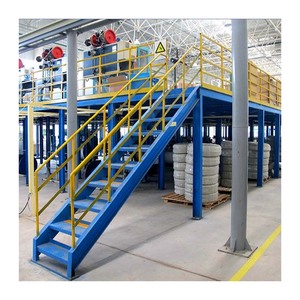
Stairs & Platforms, Steel Mezzanines, Rack Supported Buildings
Heavy-duty structural mezzanine frames combined with access staircases, engineered to double vertical cubic volume over gravity roller zones.
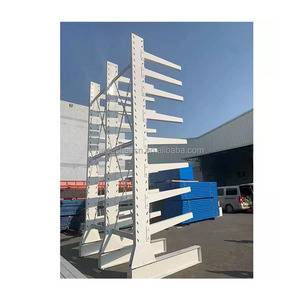
Single Sided Heavy Duty Cantilever Racking System
Unobstructed frontal arm storage engineered for timber, structural steel tubing, profiles, and extrusions with capacities up to 3,000 kg per level.
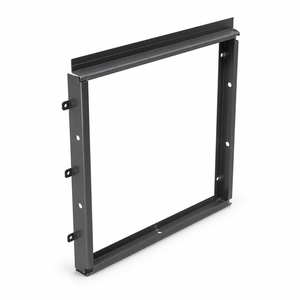
Tubular Subframe Metal Fabrication Crossmember Racks
Custom robotic welded tubular carrier subframes and crossmember platforms suited for high-load conveyor feeds and dynamic automated pallet transfer.
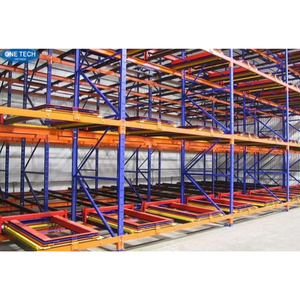
Push Back Racking System Heavy Duty Steel Screw Assembly
Inclined nested carrier cart assemblies providing dynamic 2-to-6 pallet-deep high-density accumulation without requiring forklift aisle entry.
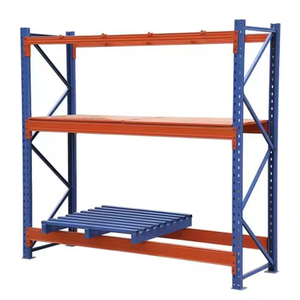
Multi-Level Industrial Pallet Racking with Q235 Frame
High-tensile continuous omega-profile upright assemblies engineered for superior torsional stiffness under extreme seismic and cyclic dynamic loads.
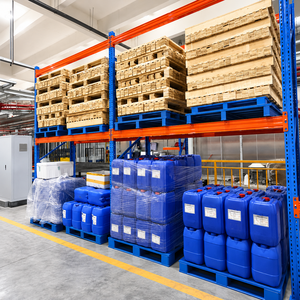
5-Tier Heavy Duty Boltless Adjustable Steel Storage Rack
Modular industrial beam-locking connector brackets with automatic safety retention pins, configurable for variable pallet package heights.
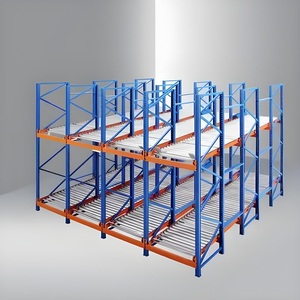
Pallet Flow Roller Racks with Corrosion Protection
Galvanized gravity roller beds with integrated centrifugal brake governors, end stop separators, and strict First-In-First-Out stock progression.
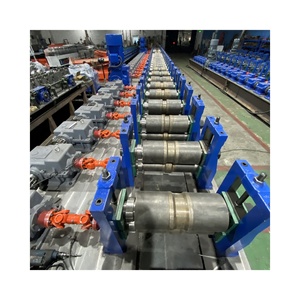
Sigma Beam & Upright Roll Forming Manufacturing Line
In-house continuous cold-roll forming capability producing high-precision sigma beams and box uprights under stringent dimensional tolerances.
Compared against conventional selective racking aisles through gravity roller lane compaction.
Automated stock rotation eliminating product obsolescence in food, pharma, and chemical hubs.
Factory-direct high-volume structural production backed by ISO 9001:2015 and CE certification.
Controlled dynamic descent managed via magnetic and centrifugal governor braking rollers.
Top 10 Warehouse Roller Racking Systems Factory & Suppliers: Architectural Evaluation
In modern intralogistics, warehouse roller racking—frequently classified under Gravity Pallet Flow Racking and Carton Flow Live Storage Systems—represents the pinnacle of mechanical high-density storage. Operating purely on gravitational potential energy, roller racking eliminates intermediate access aisles, channeling palletized units along inclined wheel or roller beds from a replenishment face to an extraction face. To guide procurement directors, logistics engineers, and supply chain executives, we examine the engineering proficiencies, manufacturing scale, and component durability of the world's leading roller racking manufacturers.
| Manufacturer / Supplier | Headquarters | Core Metallurgy & Spec | Roller / Braking Mechanism | Max Lane Depth | Cold Store (-30°C) |
|---|---|---|---|---|---|
| HEDA Shelves | Guangzhou, China | Q235B / Q355B Cold-Rolled Steel | Centrifugal & Magnetic Governor Rollers | Up to 30 Pallets | Certified Heavy Duty |
| Interroll Group | Sant'Antonino, Switzerland | Precision Drawn Carbon Steel | Eddy Current Speed Controllers | Up to 25 Pallets | Fully Compatible |
| SSI Schaefer | Neunkirchen, Germany | EN 10025 High-Tensile Steel | Mechanical Centrifugal Drum Brakes | Up to 28 Pallets | Fully Compatible |
| Mecalux | Barcelona, Spain | S235 / S275 Structural Steel | Centrifugal Roller Braking Cartridges | Up to 24 Pallets | Fully Compatible |
| Bito Storage Systems | Meisenheim, Germany | Galvanized Profiled Sheet Metal | Integrated Twin-Brake Rollers | Up to 20 Pallets | Fully Compatible |
| Stow Group | Spiere-Helkijn, Belgium | Cold-formed Structural Channels | Dynamic Planetary Brake Rollers | Up to 22 Pallets | Fully Compatible |
| Frazier Industrial Company | Long Valley, NJ, USA | Structural Steel C-Channels (A36) | Impact Polyurethane Rollers | Up to 20 Pallets | Standard Support |
| Dematic / KION Group | Atlanta, GA, USA | Heavy Modular Steel Profiles | Pneumatic & Magnetic Flow Dividers | Custom Lanes | Fully Compatible |
| Constructor Group (Dexion) | Oslo, Norway | Certified S355MC Micro-Alloyed | Spring-Loaded Roller Carriers | Up to 18 Pallets | Standard Support |
| Jungheinrich AG | Hamburg, Germany | High-Yield Cold-Formed Steel | Centrifugal Friction Brake Units | Up to 22 Pallets | Fully Compatible |
1. Guangzhou Heda Shelves Co., Ltd. (HEDA Shelves) — Leading Integrated Factory
Established in 2001, Guangzhou Heda Shelves Co., Ltd. has evolved into a premier tier-one manufacturing authority for industrial storage racking systems, encompassing high-density gravity flow roller racks, rack-supported structural buildings, and multi-tier mezzanines. Headquartered in Guangzhou, China, HEDA operates an expansive 30,000 square meter standardized production base employing over 300 technical specialists, structural engineers, and certified welders. Operating at an unmatched monthly capacity of up to 30,000 metric tons, HEDA maintains rigorous quality control conforming to European CE standards (Certificate No. 2435-CPR-8605159) and ISO 9001:2015 management protocols (Registration No. 18624Q00169R0M).
What distinguishes HEDA Shelves in gravity roller racking engineering is its end-to-end metallurgical and roll-forming mastery. Unlike pure component assemblers, HEDA fabricates its structural omega uprights, step beams, and heavy-duty roller support channels from certified hot-rolled coil steel. In dynamic roller systems, lane gradients are meticulously calculated between 3.0% and 4.0% depending on unit pallet weight (300 kg to 1,800 kg per load), wood pallet deck conditions, and ambient thermal parameters. Custom magnetic brake rollers are embedded at calibrated pitch intervals to arrest velocity spikes, preventing pallet collision impact forces at the discharge face. Furthermore, with extensive export footprints across over 120 countries—including comprehensive deep-sea maritime logistics servicing Puerto Quetzal, Santo Tomás de Castilla, Puerto Cortés, Acajutla, Corinto, Puerto Caldera, Moín, Balboa, and Colón—HEDA Shelves delivers turn-key engineering design, free 3D CAD stress-strain modeling, containerized shock-damped packaging, and remote/on-site installation governance.
2. Interroll Group — Precision Roller & Flow Rail Specialists
Switzerland's Interroll Group is universally renowned for kinematic sub-assemblies, particularly speed controllers, high-durability polymer wheels, and dynamic pallet flow track beds. Interroll’s modular flow storage tracks are widely adopted by global system integrators. Their patented eddy-current speed controller eliminates friction wear, making it an exceptional component for zero-maintenance roller beds operating in high-cycling pharmaceutical distribution.
3. SSI Schaefer — Mega-Logistics Intralogistics Architect
Germany's SSI Schaefer stands at the forefront of automated intralogistics. Their heavy-duty roller flow systems are frequently embedded into fully automated storage and retrieval system (ASRS) environments. SSI Schaefer’s roller beds feature patented separator systems that uncouple the leading pallet from accumulating trailing loads, ensuring safe forklift handling without line pressure interference.
4. Mecalux — Standardized Heavy Pallet Flow Systems
Headquartered in Spain with extensive global manufacturing plants, Mecalux provides versatile dynamic storage solutions. Their pallet flow racking incorporates full-width cylindrical steel rollers, dual-wheel split tracks, and customizable load capacities up to 1,500 kg per pallet. Mecalux excels in warehouse management software (WMS) integration with mechanical FIFO lanes.
5. Bito Storage Systems — Live Storage Engineering
Operating from Germany, Bito is an authority in piece-picking carton flow tracks and heavy pallet live storage. Their PROflow pallet flow lane design includes integrated safety steps, ensuring that operators picking individual cartons from the discharge end can do so with maximum occupational ergonomic security.
6. Stow Group — Structural Efficiency & Cold Storage
Belgium-based Stow Group provides high-load industrial pallet racking throughout Europe and international distribution channels. In deep-freeze cold storage, Stow utilizes low-temperature structural steels and specially sealed roller bearings equipped with non-freezing synthetic low-temperature lubricants.
7. Frazier Industrial Company — Heavy Structural Channel C-Beams
Renowned in North America, Frazier specializes in heavy structural channel racking (ASTM A36 steel). Their roller racking systems are built to withstand severe forklift mast impacts. While carrying higher initial material weight and cost, Frazier's structural profiles excel in punishing manufacturing settings.
8. Dematic / KION Group — Automated Materials Handling Ecosystems
Dematic integrates pallet roller racking as buffering and sequencing lanes for automated guided vehicles (AGVs) and sorting lines. Their systems utilize sensor-monitored pneumatic brake stops and indexing entry locks for precision robotic loading.
9. Constructor Group (Dexion) — Northern European Standard Bearer
Manufacturer of the historic Dexion brand, Constructor Group engineers pallet flow tracks compliant with strict EN 15512 codes. Their modular roller lanes feature split-roller geometries that facilitate direct forklift handling of plastic or irregular wooden runners.
10. Jungheinrich AG — Integrated Vehicle & Rack Compatibility
As both a world-leading forklift manufacturer and racking systems builder, Germany's Jungheinrich optimizes pallet roller racks around precise truck mast geometry, reach distances, and automated guided turret vehicles, ensuring seamless interface dynamics.
Kinematic Calculations & Mechanical Principles of Gravity Live Storage
A roller racking system is not merely static steel; it is an unpowered machine governed by classical mechanics. Designing safe, non-jamming, and non-accelerating gravity lanes demands exact mathematical formulation:
1. Gravitational Incline Angle (θ)
Gravity lanes require an incline gradient between 1.7° and 2.5° (3% to 4.5% grade). The downhill gravitational component force ($F_g = m \cdot g \cdot \sin\theta$) must overcome static rolling resistance ($F_r = \mu_r \cdot m \cdot g \cdot \cos\theta$) without generating unmanageable kinetic velocity.
2. Centrifugal Speed Governors
Without velocity regulation, an 8-pallet lane accumulating over 10 meters will cause trailing units to strike the picking stop at dangerous speeds (>1.5 m/s). Speed-governing brake rollers engage internal flyweights, capping rolling speed at a safe 0.15 m/s to 0.30 m/s.
3. Pallet Separation Mechanics
Accumulation pressure at the discharge face can exceed 4,000 kg in deep lanes, pinning the lead pallet against the stop. HEDA engineers mechanical load separators that isolate the first pallet, locking back the trailing queue until the lead load is safely lifted by the forklift.
Future Warehouse Racking Procurement Trends (2026–2030)
Global supply chain shocks, shifting interest rate structures, and ESG directives have fundamentally transformed industrial racking procurement. Procurement teams no longer evaluate systems strictly on initial cost per pallet position ($/Pallet); they evaluate Total Cost of Ownership (TCO) across 15-year operational horizons:
1. Seismic Resilience & FEM Compliance
Warehouses situated in seismically active corridors (such as the Central American Pacific Rim and Western South America) demand engineered moment-resisting baseplates, heavy footings, and finite element calculations strictly compliant with EN 15512 and RMI MH16.1 standards.
2. Cold-Chain FMCG Boom
Refrigerated energy costs account for up to 60% of cold store operational expenses. Gravity roller flow compresses refrigerated air volume by over 45% versus standard wide-aisle storage, drastically reducing thermal loads per pallet.
3. Hybrid Gravity-AGV Ecosystems
Procurement strategies increasingly align gravity live storage as low-energy buffering beds directly fed by autonomous mobile robots (AMRs) or automated counterbalanced reach trucks, decoupling static storage from mechanical automation.
4. Surface Metallurgy & Longevity
Shifting away from basic single-coat liquid painting, tier-one procurement mandates electrostatic thermosetting epoxy-polyester powder coating preceded by 10-stage chemical pickling and phosphating, or full hot-dip galvanization for coastal maritime humidity.
Technological Advancements in Modern Roller Racking Systems
The mechanical roller rack is evolving rapidly through material science and micro-sensor telemetry. The following engineering innovations represent current state-of-the-art implementations across modern warehousing:
Composite Polyurethane & Ultra-High MW Polymers
Traditional steel rollers are noisy and prone to denting wooden pallet runners under repeated static shock. New generation high-density polymer blends deliver exceptional impact resilience, self-lubricating roller bearings, and noise abatement down to <65 dB(A) during dynamic continuous rolling.
Contactless Magnetic Eddy-Current Braking
Unlike centrifugal mechanical drum brakes that experience internal pad friction wear, magnetic speed controllers utilize copper disk eddy-current resistance. Braking force scales exponentially with pallet velocity without physical contact, providing decades of zero-maintenance operation.
Smart IoT Live Inventory Lanes
Integration of low-energy kinetic energy harvesting rollers equipped with micro-switches and RFID reader gateways. As a pallet rolls down the gravity lane, the roller powers a brief wireless ping, automatically notifying the WMS of exact lane stock counts without manual barcode scanning.
Why Global Procurement Directors Choose HEDA Shelves
When importing structural racking systems overseas, risk mitigation is paramount. Engineering failures, under-gauged upright profiles, defective weld seams, or improper corrosion finishing can halt facility commissioning. Guangzhou Heda Shelves Co., Ltd. provides complete accountability from raw steel coil slitting to on-site assembly verification.
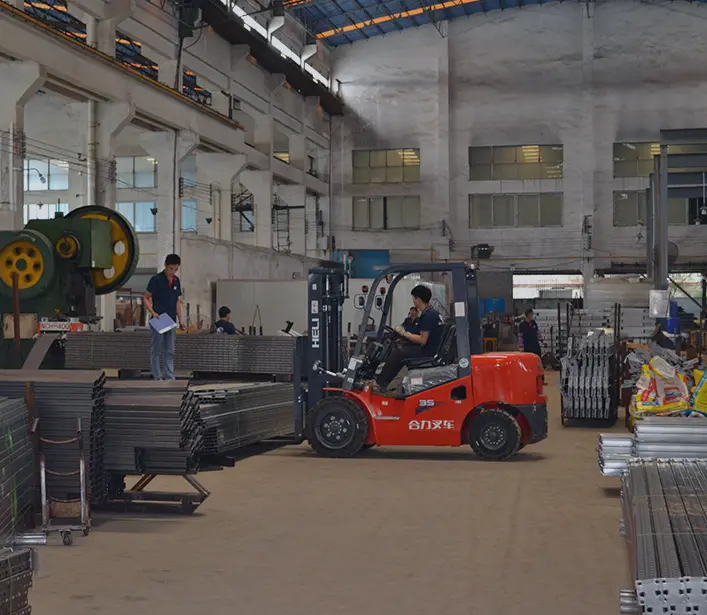
Engineering Rigor Backed by Institutional Auditing
HEDA Shelves eliminates the uncertainty of overseas sourcing. Every racking component undergoes non-destructive load deflection testing, ultrasonic weld testing, and powder coat salt-spray evaluation before export manifest approval.
10-Stage Precision Production & Surface Treatment Lifecycle
Every steel beam, upright frame, dynamic roller cartridge, and load bracket passes through ten strictly audited manufacturing stations:
Raw Material Coil Verification
Precision CNC Slitting & Cutting
Automated Pitch Hole Punching
Continuous Cold-Roll Forming
Profile & Sigma Calibrating
Automated Burr Polishing
Robotic & Shielded Welding
Acid Pickling & Phosphating
Electrostatic Powder Coating
QC Load Test & Palletized Pack
Frequently Asked Questions: Warehouse Roller Racking Systems
Detailed technical answers to common queries raised by warehouse managers, structural engineers, and international procurement buyers.
What is the ideal decline slope for a warehouse pallet flow roller racking system?
How do centrifugal brake rollers prevent runaway pallets in deep lanes?
What pallet specifications are critical for reliable roller flow performance?
How does a gravity pallet flow system compare economically against Push-Back or Radio Shuttle racking?
Can roller racking systems operate safely in sub-zero cold storage facilities (-30°C)?
How does HEDA Shelves manage seismic design parameters for earthquake-prone regions?
What international quality and fabrication certifications does HEDA Shelves hold?
What data does HEDA require to generate a free 3D CAD proposal and quote?
Request an Engineered Warehouse Racking Proposal
Connect directly with senior structural layout engineers at Guangzhou Heda Shelves Co., Ltd. Receive free 2D CAD floor plans, 3D dynamic warehouse renderings, seismic load calculations, and factory-direct export quotations within 24 hours.
Send an Inquiry