Engineered Industrial Storage & Pallet Handling Racks
Every facility demands a tailored equilibrium among cubic volume utilization, throughput velocity, selectivity rates, and load dynamics. Below are eight engineered systems built from certified Q235B/Q355B high-tensile cold-rolled steel, verified against FEM 10.2.02, RMI, and EN 15512 safety protocols.
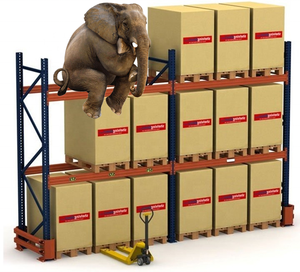
Heavy Duty Warehouse Selective Pallet Racks
Universal industrial standard for rapid rotation distribution hubs. Configurable beam tier spacing with interlocking 3-to-5 connector pins prevents seismic beam dislodgement.
Technical Specs →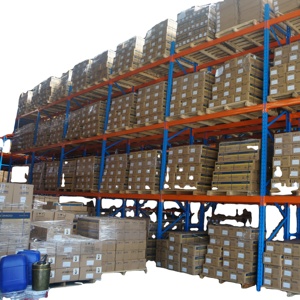
Heavy Duty Pallet Storage Racking System
Custom roll-formed upright frames engineered for intensive reach-truck and counterbalance traffic. Optimized upright perforation pitch facilitates swift vertical adjustments.
Technical Specs →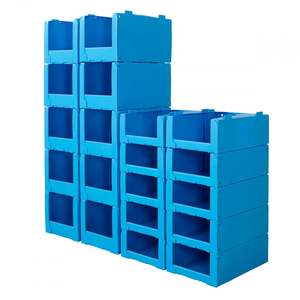
Foldable Stackable Plastic Picking Bins
High-density secondary containment bins designed for fractional order fulfillment, automated carousel buffers, and reverse logistics return-rate freight reduction.
Technical Specs →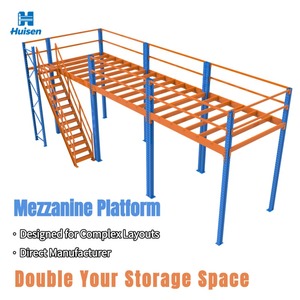
Wide-Span Structural Mezzanine Platform
Elevate floor utilization without facility structural expansion. Heavy I-beam girder construction supports automated sortation lines, modular offices, and packing tables.
Technical Specs →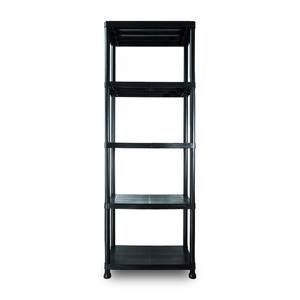
Solid Light-Duty 4-Tier Shelving Unit
Compact storage architecture for maintenance workshops, fulfillment picking zones, and micro-fulfillment centers with ergonomic hand-loaded bin compartments.
Technical Specs →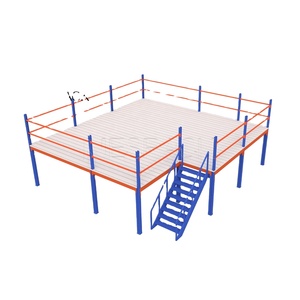
Customized Heavy Duty Steel Mezzanine
Integrated multi-tier catwalk platform system incorporating wire mesh decking, heavy pallet drop safety gates, and NFPA-compliant sprinkler pass-through clearances.
Technical Specs →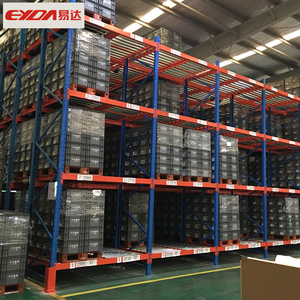
Gravity Pallet Flow Dynamic Racking
Gravity-driven pallet lanes inclined at 3–4 degrees equipped with centrifugal speed controllers and separation separators, ensuring fail-safe stock rotation for perishable foods.
Technical Specs →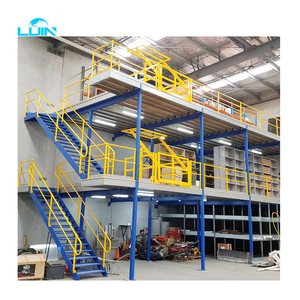
Multi-Level Rack Supported Mezzanine
The racking structure itself forms the support vertical uprights for intermediate elevated decks, eliminating redundant structural steel posts and drastically cutting cost per cubic foot.
Technical Specs →Engineering Comparison Matrix: High-Density vs. High-Selectivity Racking Architectures
Logistics directors and engineering procurement teams face critical tradeoffs between floor space utilization percentage, crane/truck operating cycle time, capital expenditure per pallet position, and FIFO/LIFO dispatch compatibility. The following table provides direct parametric engineering criteria to establish search intent validation for heavy-duty warehouse infrastructure:
| Racking Methodology | Space Efficiency (%) | Pallet Selectivity | Stock Management | Floor Slab Deflection Tolerance | Capex Index (Relative) |
|---|---|---|---|---|---|
| Selective Pallet Racks | 40% – 50% | 100% Direct Access | FIFO / LIFO Hybrid | L/300 Standard Industrial | 1.0 (Baseline Capex) |
| Double-Deep Racks | 55% – 65% | 50% Direct Access | LIFO Preference | L/350 Rigid Floor Slab | 1.25x |
| Drive-In / Drive-Through | 65% – 75% | 20% – 30% Access | Strict LIFO (or FIFO) | L/400 High Precision | 1.45x |
| Gravity Pallet Flow | 70% – 85% | Lane-Based FIFO | Automated Pure FIFO | L/500 Strict Leveling | 2.80x – 3.20x |
| Radio Shuttle Automation | 80% – 88% | Deep-Lane High Selectivity | Dynamic FIFO / LIFO | L/500 Autonomous Tolerances | 3.50x – 4.20x |
| Rack-Supported Mezzanine | 160% – 220% (Multi-Tier) | 100% Carton / Pallet Mix | Omnichannel Sortation | Custom Concentrated Point Loads | 2.10x – 2.60x |
*Note: Capex indices include base structural steel, precision roll-formed connectors, anchoring systems, and seismic tie-rods, but exclude material handling equipment (AGVs, Turret Trucks, or Forklifts).
Future Procurement Trends in Industrial Warehouse Storage
Macroeconomic pressures, reshoring activities, and hyper-automated supply chains have altered the procurement landscape for structural warehouse racking systems. Forward-looking buyers are integrating systemic longevity over immediate component cost.
High-Yield Micro-Alloy Steel Metallurgy
Rising freight rates and global carbon audits drive the replacement of standard structural steel with high-strength, low-alloy grades (such as Q355B and high-yield cold-rolled coils). This enables a 15–22% component weight reduction while maintaining identical yield-strength profiles and moment resistance, directly reducing ocean container shipping costs.
Total Cost of Ownership (TCO) Procurement
Enterprise procurement now accounts for ongoing operational expenditures: routine damage replacement, impact deflection tolerance, beam tear-out risks, and facility reconfiguration costs. Factory-certified welding under EN ISO 3834-2 and finite element analysis (FEA) simulations prevent catastrophic collapses and premature frame abandonment.
Seismic-Ready Structural Standardization
Supply chain infrastructure built across seismic hazard zones (e.g., Latin America's Ring of Fire, Mediterranean zones, and East Asia) mandates baseline dynamic load modeling. Buyers insist on oversized, multi-hole anchor base plates, thicker column profiles, and ductile back-to-back row spacers compliant with seismic building codes.
Key Product Development Trends in Storage Racks
Technological disruption is bridging the gap between passive steel structures and dynamic automated ecosystems. Explore the four technological shifts shaping the next decade of pallet racking architecture.
01 Automation-Ready Shuttle Compatibility
Modern pallet racks are increasingly fabricated with modular bracket stampings that facilitate future drop-in upgrades for 4-way autonomous radio shuttles and pallet-runner robotics. By eliminating the necessity of internal forklift maneuvering, lane depths can safely exceed 35 pallets with zero mast impact risks.
02 Advanced Nanocoating & Anti-Corrosion Chemistry
Standard solvent coatings have transitioned to multi-stage pickling, iron phosphate passivation, and high-polymer thermosetting electrostatic powder coating. In high-humidity coastal hubs, pharmaceutical cleanrooms, and blast freezers down to -30°C, high-durability epoxy-polyester coatings and continuous pre-galvanization prevent stress-corrosion steel fatigue.
03 Structural Health Monitoring & IoT Deflection Sensors
Racking systems deployed in Tier-1 logistics networks are pioneering fiber-optic strain gauges and tri-axial tilt sensors anchored inside upright base columns. These smart structural modules detect forklift impact energy, real-time beam sag, and out-of-plumb vertical deviations exceeding the 1/200th slope standard, immediately alerting safety directors before collapse thresholds are breached.
04 Circular Design & Modular Bolted Flexibility
To support rapidly evolving e-commerce SKU profiles, the industry has abandoned permanent welded connections in favor of modular beam-to-frame locking pins and boltless teardrop or 75mm European pitch upright designs. Platforms can be dismounted, expanded vertically, or converted into multi-tier mezzanines with zero hot-work or structural scrap.
Need an Engineer-Certified Warehouse Layout & Structural Calculation?
Submit your warehouse dimensions, clear height under truss, pallet footprint, and forklift turning radius. Our structural team provides full 3D CAD drawings and finite element load calculations within 24 hours.
Get a QuoteEnterprise Advantages: Guangzhou Heda Shelves Co., Ltd.
For more than two decades, HEDA Shelves has stood as a tier-one designer, manufacturer, and international supplier of heavy industrial storage systems, solving logistics challenges for multinationals across Latin America, Southeast Asia, Europe, and the Middle East.
30,000 m² Automated Factory
Our centralized manufacturing base in Guangzhou incorporates high-speed continuous cold-roll forming mills, CNC punch presses, robotic multi-point welding stations, and automatic conveyorized powder-coating curing lines delivering over 30,000 metric tons per month.
ISO 9001 & CE Certified Rigor
Holding official CE Certificate No. 2435-CPR-8605159 and ISO 9001:2015 registration No. 18624Q00169R0M (verified active through June 2027), every structural element is traceable to raw steel mill certificates, guaranteeing ultimate tensile integrity.
Free 3D Layout & Seismic Design
Our staff of 300+ professionals includes specialized intralogistics structural engineers who generate customized 3D spatial models, dynamic aisle clearance calculations, and point-load distribution layouts validated against local seismic and slab requirements free of charge.
Container-Optimized Port Delivery
Extensive experience shipping through principal gateway ports across Latin America (Puerto Quetzal, Cortés, Acajutla, Corinto, Caldera, Balboa, Colón) and globally. Bundled, serialized packing lists ensure fast customs clearance and zero-loss on-site reassembly.
Frequently Asked Questions on Industrial Pallet Racks
Detailed engineering and procurement insights designed to address critical evaluation parameters for commercial buyers, safety officers, and warehouse operations managers.
Q1: How do you determine the required steel gauge and column profile for heavy-duty pallet uprights?
Upright design is not determined simply by multiplying pallet weight by total tiers. Our structural engineering team calculates total static dead loads plus dynamic live loads (forklift impact factors, placement shock loads, and seismic acceleration). Profile selection (e.g., 80x60mm, 90x70mm, 100x70mm, or 120x95mm with steel thicknesses from 1.5mm to 2.5mm) is dictated by beam tier pitch spacing—since higher first-beam clearances significantly elevate upright unbraced column length (Euler buckling susceptibility). Structural modeling follows EN 15512 and RMI standards to ensure safety factors exceed 1.65.
Q2: What floor slab engineering parameters are required before installing high-bay pallet racking?
Before anchoring heavy-duty racking, facility planners must verify slab compressive strength (typically minimum 25–30 MPa / 3500–4000 PSI concrete), slab thickness (typically 150mm to 250mm reinforced concrete), and flatness tolerances (FF/FL numbers according to ASTM E1155 or DIN 18202 standards). For Very Narrow Aisle (VNA) systems exceeding 10 meters in height, ground level tolerances must meet VDMA Guideline Class A or Superflat criteria to eliminate dynamic mast sway and rack collision.
Q3: Can HEDA Shelves design and certify racking for seismic-active or high-vibration zones?
Yes. Many of our core export markets, including Latin America (Guatemala, Costa Rica, Panama) and the Pacific Rim, lie on active tectonic fault lines. We model dynamic horizontal seismic shear forces using modal response spectrum analysis. We specify enlarged base plates with multiple heavy chemical/mechanical anchor bolts, heavier cross-bracing diagonal profiles, high-ductility steel formulations, and back-to-back row spacers to absorb seismic ground motion energy without brittle joint failure.
Q4: How does electrostatic powder coating compare to hot-dip galvanizing for warehouse durability?
Standard indoor ambient facilities perform exceptionally with automated electrostatic powder coating (epoxy-polyester hybrid), providing a 60–80 micron dry film thickness with superior impact resistance, abrasion protection, and aesthetic color-coding. However, for outdoor storage, high-salinity coastal logistics zones, or blast freezer cold storage (-25°C to -40°C where condensation and humidity induce rapid oxidation), we recommend pre-galvanized upright roll-forming or full hot-dip galvanization conforming to ASTM A123 / ISO 1461 standards, extending rust-free service life past 25 years.
Q5: How do you verify pallet rack load ratings and quality before ocean container dispatch?
HEDA Shelves maintains a complete quality assurance regime. Raw steel coils are tested for chemical composition and tensile yield strength upon factory gate receipt. Roll-formed components undergo automated dimensional inspections (upright pitch punching accuracy within ±0.1mm, beam straightness tolerances under L/1000). Welded beam connectors undergo magnetic particle inspection and destructive shear testing according to ISO 9001:2015 protocol No. 18624Q00169R0M. Finished goods are test-assembled, load-deflection verified under full capacity, and accompanied by formal Factory Acceptance Test (FAT) reports.
Q6: What documentation is provided for customs clearance, local engineering approvals, and on-site assembly?
Every overseas shipment is accompanied by complete commercial documentation (Bill of Lading, Certificate of Origin, Detailed Packing List with itemized container tags, and Commercial Invoice). On the technical side, buyers receive stamped CAD architectural floor layouts, 3D rendering views, structural design calculations, beam load warning plaques, and step-by-step engineering installation manuals. Our project team also provides comprehensive high-definition video walkthroughs and remote video supervision, with options for on-site engineering supervision on large turnkey projects.
Consult an Intralogistics Racking Specialist Today
Partner with an accredited manufacturer with 25 years of engineering pedigree, CE & ISO 9001 certifications, and verified deployments in over 120 countries. Discuss your storage requirements, footprint limitations, or tender specifications directly with our engineering department.