Engineered High-Density Pallet Racking Solutions
Precision-manufactured structural racking systems engineered to optimize warehouse cubic utilization, throughput velocity, and compliance with seismic and industrial loading standards.
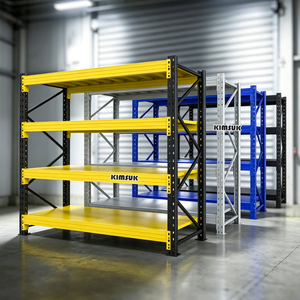
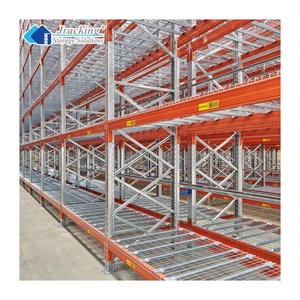
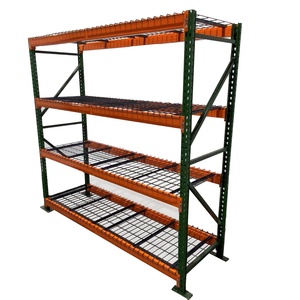
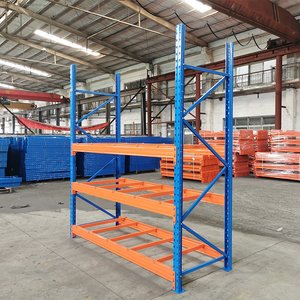
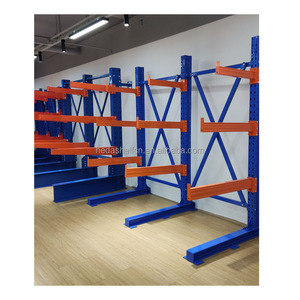
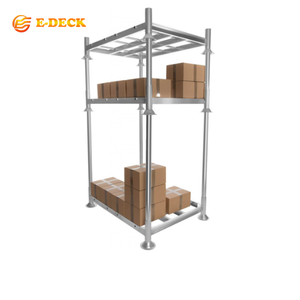
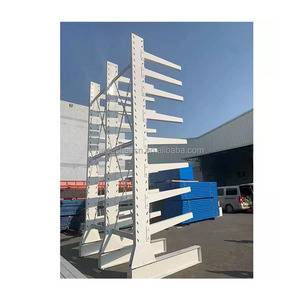
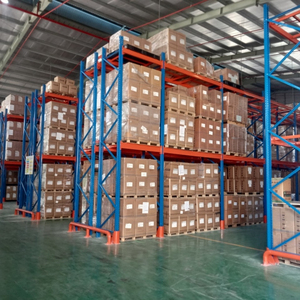
Executive Technical Brief: Dynamics of Live Pallet Racking
Live pallet racking—frequently designated across logistics engineering as pallet flow racking or gravity flow storage—represents the pinnacle of high-density dynamic storage methodologies. Utilizing inclined roller tracks typically sloped at an exact gradient between 2.5% and 4.0%, pallets feed smoothly from the loading (replenishment) face down to the picking (unloading) face purely under gravitational force. This architecture establishes an automated First-In, First-Out (FIFO) stock rotation mechanism that minimizes forklift travel distances by up to 60%, eliminates internal operating aisles, and maximizes warehouse footprint utilization by upwards of 75% compared to conventional selective racking layouts.
Modern live pallet racking installations incorporate mechanical speed controller rollers (centrifugal brakes), robust entry funnel guides, load separation mechanisms, and end-stop buffers to maintain controlled movement of palletized freight weighing from 500 kg to over 2,000 kg per position. As global logistics faces intensifying pressures around land costs, cold-storage energy consumption, and SKU velocity, selecting an engineered live pallet racking manufacturer requires precise structural validation, high-tensile steel integrity, and customized roller bed engineering.
Top 10 Live Pallet Racking Manufacturers & Suppliers
A comprehensive procurement evaluation of the world's premier live pallet flow racking system manufacturers based on engineering quality, structural safety, roller bed innovation, and supply chain reliability.
HEDA Shelves
A 25-year industry powerhouse operating a 30,000 m² factory with 30,000-ton monthly capacity. Renowned for custom seismic-certified live pallet flow layouts, heavy-duty centrifugal brake rollers, and direct-factory pricing across 120+ nations.
SSI Schaefer
A global leader in integrated automated warehouse systems and dynamic flow racking. Renowned for high-durability pallet flow beds, precision brake mechanisms, and seamless integration with stacker cranes and conveyor lines.
Interroll Group
The global benchmark for dynamic flow storage components. Their Magnetic Speed Controller and Time Delay pallet flow modules are integrated by premier integrators worldwide for maintenance-free pallet deceleration.
Mecalux Racking
Operating automated production centers globally, Mecalux provides versatile pallet flow solutions engineered for fast turnover FMCG distribution and high-density deep-lane storage lanes up to 30 pallets deep.
BITO Storage Solutions
Specialized in high-performance carton and pallet flow systems. BITO excels in ergonomic picking channels, split-roller tracks for non-standard skids, and heavy-duty cold-chain dynamic racking environments.
Stow Group
One of the largest structural racking manufacturers in Europe, Stow delivers robust Pallet Flow configurations with EN 15512 compliance, optimized roller modules, and integrated pallet separators for high-capacity lanes.
Frazier Industrial
Renowned across North America for 100% structural steel channel construction. Frazier’s gravity flow racking resists harsh forklift abuse and is widely deployed in severe temperature refrigerated distribution centers.
Advance Storage Products
A dominant provider of pushback and gravity flow systems in North America, manufacturing custom full-width roller and multi-track skate wheel configurations with rigorous factory-tested incline testing.
Jungheinrich
Combines heavy-duty dynamic flow racking with automated guided vehicles (AGVs) and specialized narrow-aisle material handling equipment for turnkey, fully synchronized logistics centers.
Dexion Storage Systems
With decades of heritage, Dexion delivers modular gravity flow configurations compliant with FEM and SEMA engineering standards, serving food processing, pharmaceutical, and 3PL fulfillment hubs.
Comparative Technical Evaluation Matrix
Key technical parameters to weigh when selecting between dynamic live pallet racking and alternative high-density warehouse storage systems.
| Storage Racking System | Stock Management | Floor Space Utilization | Throughput Speed | Energy & Maintenance Demand | Best Suited Application Profile |
|---|---|---|---|---|---|
| Live Pallet Racking (Gravity Flow) | Strict FIFO (First-In, First-Out) | 70% – 85% (Ultra-High) | Rapid (Simultaneous load & pick) | Zero operational power; Low mechanical wear | Perishable food, cold storage, pharmaceutical, high-volume fast SKUs |
| Radio Shuttle Racking | FIFO or LIFO | 75% – 90% (Maximum) | High (Automated cart transit) | Battery charging required; Periodic shuttle servicing | Bulk single-SKU, deep lane cold facilities, seasonal agricultural products |
| Drive-In Racking | LIFO (Last-In, First-Out) | 60% – 75% (High) | Low-Moderate (Forklift enters lane) | Low maintenance; High risk of rack collision damage | Low turnover bulk materials, building materials, non-dated inventory |
| Push Back Racking | LIFO (Last-In, First-Out) | 65% – 75% (Moderate-High) | Moderate (2–6 pallets deep per cart) | Zero operational power; Minimal mechanical maintenance | Medium turnover items, multi-SKU lanes, buffer staging areas |
| Standard Selective Racking | 100% Pallet Accessibility | 35% – 45% (Low-Density) | High accessibility, high travel time | Negligible maintenance; High floor space consumption | E-commerce retail, complex SKU assortments, 3PL general logistics |
Future Procurement Trends in Live Pallet Racking Systems
How supply chain executives, warehouse developers, and procurement directors are mitigating risks, stabilizing total cost of ownership (TCO), and structuring future-proof procurement contracts.
1. Shift to Factory-Direct OEM Sourcing
Enterprise buyers are increasingly bypassing regional intermediaries to contract directly with large-scale manufacturers like HEDA Shelves. Direct sourcing secures custom roll-formed profiles, transparent mill test certificates, and substantial cost reductions of 20% to 35% on major capital projects.
2. Total Cold-Chain Densification
With refrigerated warehouse power costs surging globally, live pallet racking has become the default procurement preference for frozen and chilled distribution. Gravity flow systems eliminate empty aisle volume, cutting refrigeration thermal loss per stored pallet position by up to 40%.
3. Pallet Quality Hedging & Split Rollers
Procurement teams now mandate dual-track or triple-track split roller assemblies over continuous rollers. This allows safe transit of non-standard, plastic, wooden Euro, or perimeter-base GMA pallets without warping or line jams during continuous gravity feed cycles.
Technological & Engineering Trends in Dynamic Live Storage
Emerging innovations reshaping the safety, operational velocity, and material science of gravity pallet flow systems.
Eddy-Current Non-Contact Braking
Traditional mechanical friction brake rollers are progressively yielding to non-contact eddy-current magnetic speed controllers. By generating dynamic electromagnetic resistance proportional to pallet speed, these systems eliminate rubber wear and brake pad degradation, ensuring lifetime maintenance-free speed control.
Seismic-Damped Energy Dissipation
Modern live racking installed in active seismic zones (such as the Pacific Rim and Central America) utilizes dynamic base plates, reinforced cross-aisle portal bracing, and seismic inertia dampers that prevent pallet roll-out or rail buckling during seismic ground accelerations.
Hybrid AMR / AGV Infeed Interfacing
Next-generation pallet flow lanes are engineered with automated optical alignment targets and precision mechanical entry funnels specifically calibrated for Autonomous Mobile Robots (AMRs) and automated counterbalanced forklifts, transitioning live storage into lights-out logistics nodes.
Engineered Manufacturing Superiority & Global Project Delivery
Since 2001, Guangzhou Heda Shelves Co., Ltd. has stood at the intersection of heavy structural steel craftsmanship and precision storage engineering. Owning an expansive 30,000-square-meter modern fabrication workshop supported by a 300+ technical workforce and professional structural engineers, our monthly throughput surpasses 30,000 tons of finished racking components.
Every dynamic racking design undergoes finite element analysis (FEA) calibrated to international standards, including European EN 15512, Australian AS4084, and American RMI specifications. From structural coil slitting and automated CNC column punching to high-precision cold roll-forming, robotic welding, and automatic multi-stage electrostatic powder coating, we ensure every upright, beam, and gravity roller bed delivers uncompromised structural longevity.
Frequently Asked Questions on Live Pallet Racking Procurement
Actionable answers to the most critical technical and contractual inquiries faced by logistics engineers and project procurement managers.
What is the recommended slope gradient for live pallet flow tracks?
The standard slope for industrial gravity pallet flow lanes is 3.0% to 3.5% (approx. 35 mm per meter). However, depending on bottom runner condition, pallet materials (wooden vs. HDPE plastic), and load weights between 500 kg and 1,500 kg, our engineers calculate the precise slope between 2.5% and 4.0% accompanied by roller brake frequency testing.
How do brake rollers prevent pallet runaways in deep flow lanes?
Centrifugal or magnetic speed controller rollers are installed along the gravity track at predetermined intervals (typically every 1 to 2 pallet lengths). These rollers generate rotational braking torque proportional to velocity, restricting pallet speed to a safe terminal velocity of approximately 0.2 to 0.3 meters per second.
Can live pallet racking operate reliably in sub-zero cold rooms?
Yes. For cold storage and blast freezers operating down to -30°C, we engineer specialized low-temperature bearings with food-grade non-freezing synthetic grease, low-temperature structural steel profiles, and either hot-dip galvanized or specialized zinc-rich poly coatings to prevent icing jams and thermal contraction brittleness.
What is the function of a pallet separator device at the unloading end?
A pallet separator is a critical safety and operational mechanism. When a forklift extracts the lead pallet from the discharge face, the separator holds back the entire rear line of pallets. This eliminates backpressure, preventing dangerous compression forces against the front pallet during picking operations.
How does live pallet racking compare to push-back and radio shuttle systems?
Live pallet racking guarantees strict First-In, First-Out (FIFO) with separate load and pick aisles, making it ideal for perishable date-coded inventory. Push-back is strictly LIFO and limited to 2–6 pallets depth. Radio shuttle offers high density for both FIFO/LIFO but involves mechanical and electrical maintenance of autonomous battery carts.
What technical data is required to obtain a custom CAD layout and quote?
To design your layout, our engineering team requires: facility length, width, and clear ceiling height; building column grids; floor slab thickness and concrete capacity; pallet dimensions (W x D x H) including maximum gross weight; forklift mast specifications; and required FIFO lane depth and daily SKU throughput.
Request an Engineered Live Pallet Racking Solution
Speak directly with our senior warehouse layout engineers. Get certified structural calculations, complimentary 3D spatial simulations, and factory-direct pricing tailored to your facility parameters.