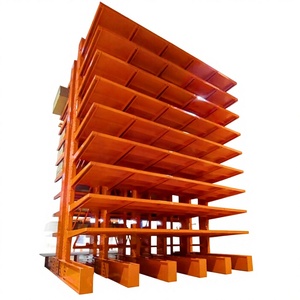
Engineered Storage Portfolio
High-Performance Industrial Racking Systems
Engineered to international structural standards (RMI, FEM, EN 15512), each component undergoes rigorous stress-path validation, robotic cold-roll profiling, and electrostatic protection for extended duty cycles.
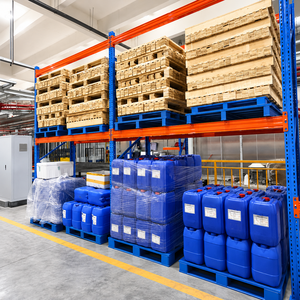
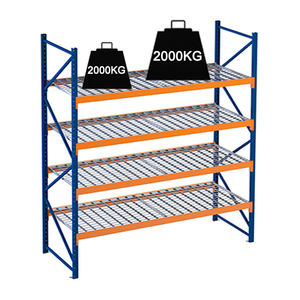
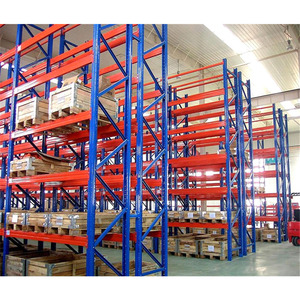
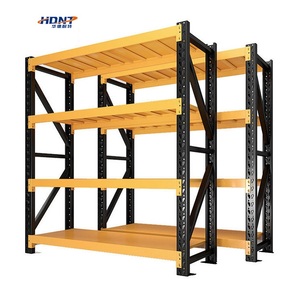
25+
Years Industry Engineering (Since 2001)
30,000 m²
Precision Production Facility
30,000 t
Monthly Cold-Formed Steel Capacity
10,000+
Global Turnkey Projects Shipped
Strategic Procurement Framework
Navigating the Global Industrial Rack Shelving Factory Landscape
Procuring heavy-duty warehouse racking and industrial shelving is not merely a transactional equipment purchase; it is a long-term capital expenditure directly linked to life safety, operational uptime, and warehouse cube utilization. Modern supply chains require procurement directors to evaluate not only raw piece prices, but also steel metallurgy, computerized roll-forming tolerances, certified weld penetration, and regional structural code compliance (such as EN 15512 in Europe, RMI ANSI MH16.1 in North America, and regional seismic provisions across the Pacific Ring of Fire and Latin America).
When evaluating the top industrial rack and shelving manufacturers globally, top-tier Tier-1 suppliers distinguish themselves by controlling the complete manufacturing lifecycle—from uncoiling and continuous roll forming of certified Q235B/Q355B high-tensile hot-rolled steel strip, to automated multi-station punch presses, robotic laser cutting, multi-stage automated pre-treatment baths (degreasing, phosphating, acid pickling), and thermosetting epoxy-polyester electrostatic powder coating. Sub-tier brokers or non-integrated fabricators often skip pre-treatment immersion stages or outsource welding, resulting in micro-cracks, uneven paint adhesion, and critical beam-to-column connector failures under cyclic warehouse forklift loading.
| Evaluation Parameter | Tier-1 Integrated Manufacturers | Secondary Fabricators / Trading Intermediaries | Procurement Risk Factor |
|---|---|---|---|
| Raw Material Integrity | Certified prime mill test certificates (Q235B, Q355B); strict chemical & yield analysis | Mixed scrap-source re-rolled steel; uncontrolled carbon/silicon content | Premature beam sag, deflection beyond L/200, localized brittle buckling |
| Structural Engineering & Design | Full Finite Element Analysis (FEA), custom CAD layout, 3D simulation, seismic bracing | Standardized catalog lookups; zero seismic calculations or baseplate stress modeling | Slab anchoring failure, rack collapse during seismic or forklift impact load |
| Welding & Column Punching | Automated CNC robotic multi-head welding; precision progressive die punching (±0.1mm) | Manual manual-arc welding; non-synchronized punching causing pitch accumulation errors | Connector dislodgement, jammed safety pins, uneven vertical plumbness |
| Surface Pre-Treatment & Finish | Multi-stage automatic wash, acid pickling, phosphating, 80-120μm electrostatic powder | Direct manual wipe-down spray; thin air-dry paints (<40μm) prone to flaking | Rapid oxidation, rust run-off in humid/coastal hubs, chemical contamination |
| Factory Compliance & Traceability | ISO 9001:2015, CE Marking (EN 1090 / CPR), verified factory-direct export protocols | Uncertified workshops, missing lot traceability, non-standard containerization | Customs port rejection, invalid warehouse insurance, failed municipality sign-offs |
Future Procurement Vectors
Emerging Trends Reshaping Industrial Storage Sourcing
Enterprise logistics managers are steering away from generic shelving toward purpose-engineered, automation-ready, and climate-resilient architectures.
Total Cost of Cube Utilization
Driven by skyrocketing land and warehouse leasing costs globally, procurement is pivoting from pure footprint cost to volumetric cubic efficiency. High-bay selective configurations, VNA (Very Narrow Aisle) systems, and multi-tier rack-supported mezzanines (delivering 300 to 1,000 kg/m² intermediate decking) are routinely prioritized over wide-aisle low-density storage.
Automation & Shuttle Readiness
Semi-automated pallet runner systems (Radio Shuttle Racking) and automated guided vehicle (AGV) interfaces are replacing standard deep-lane drive-in installations. Facilities demand tighter manufacturing dimensional tolerances on guide rails and profile uprights to prevent sensor failure and automated carriage jams.
Climate-Adaptive Coatings
With multi-region cross-border operations expanding across high-humidity, marine-coastal, and cold-storage environments (such as Central America and Southeast Asia), procurement specifications increasingly require hot-dip galvanization (HDG) or zinc-rich primer pre-treatments to resist pitting and chemical corrosion.
The HEDA Shelves Benchmark
Engineering Superiority Built Over 25 Years
Direct factory manufacturing capacity coupled with dedicated engineering consultation guarantees flawless site execution.
Full In-House Lifecycle Control
Founded in 2001 in Guangzhou, HEDA Shelves operates a modern 30,000 m² production facility backed by 300+ seasoned engineers and precision technicians. With continuous rolling lines producing up to 30,000 tons per month, we eliminate subcontracting margins and maintain 100% QA oversight from coil to shipping crate.
Complimentary Engineering & 3D Modeling
Every facility has unique operational bottlenecks. Our engineering office delivers comprehensive CAD spatial planning, forklift turning radius simulations, dynamic load calculations, and photorealistic 3D architectural renderings before metal is cut—ensuring code compliance and smooth municipality sign-offs.
Global Export & Seismic Design Expertise
Having shipped over 10,000 installations across 120+ countries—with dedicated logistical routing into key Pacific and Caribbean deep-water gateways (Puerto Quetzal, Acajutla, Puerto Cortés, Puerto Caldera, Balboa, Colón)—HEDA structures are engineered explicitly to withstand seismic shear conditions and tropical thermal cycling.
Knowledge Base
Frequently Asked Questions on Industrial Racking Procurement
Direct technical answers to critical engineering, safety, and logistical queries.
Q1: How do you prevent structural beam deflection under rated dynamic pallet loads?
HEDA engineers calculate structural beam safety based on the international FEM 10.2.02 standard, enforcing a maximum allowable deflection limit of L/200 (span length divided by 200). Our heavy-duty beams utilize interlocking welded connector claws with 3 or 4 claw hooks and high-strength safety locking pins, preventing unseating during dynamic forklift pallet placement.
Q2: What design adjustments are required for active seismic zones?
In earthquake-prone territories, seismic accelerations generate massive lateral shear forces. We expand column baseplate footings, increase steel gauge profiles, integrate heavy-duty floor anchor bolts (Hilti or equivalent anchor studs), and engineer specialized cross-aisle horizontal and vertical X-bracing towers designed to dissipate seismic energy.
Q3: What surface treatment guarantees corrosion resistance in humid or maritime sites?
For ambient coastal or tropical warehouses, our multi-stage electrostatic epoxy-polyester powder coating (cured at 180°C–200°C) provides excellent durability against humidity. For high-corrosion environments, cold-storage freezers (-25°C), or agrochemical staging, hot-dip galvanizing (HDG) complies with ASTM A123 standards to provide lifetime zinc barrier protection.
Q4: How does HEDA manage overseas containerization to prevent transit damage?
Structural steel components are vulnerable to transit friction, moisture condensation, and container shift. HEDA utilizes steel-banded bundling, foam edge protectors, waterproof plastic wrapping, and bespoke dunnage. Every bundle features itemized steel stamping matching the CAD bill of materials for expedited customs clearance and site sorting.
Q5: What input data is essential to begin a custom warehouse layout proposal?
To deliver an accurate CAD design and load quote, our team requires: (1) Architectural warehouse dimensions and clear eaves height, (2) Floor slab concrete thickness and load capacity, (3) Pallet specifications (width, depth, height, and gross weight), (4) Forklift model, turning radius, and max lift reach, and (5) Operational flow (FIFO vs. LIFO).
Q6: What third-party certifications substantiate HEDA factory quality?
HEDA Shelves products hold formal CE Certification (No. 2435-CPR-8605159) for structural European market conformity, ISO 9001:2015 Quality Management System Certification (No. 18624Q00169R0M, valid through June 2027), and verified RoHS chemical testing compliance on finishing powders.
Transform Your Warehouse Volumetric Capacity Today
Connect with our senior logistics structural engineering team to receive your bespoke facility layout plan, 3D rendering, and factory-direct quotation within 24 hours.