High-Density Dynamic Racking & Warehouse Storage Systems
Explore heavy-duty industrial storage configurations designed for continuous stock rotation, high-capacity bay loads, and maximized vertical utilization across global logistics hubs.
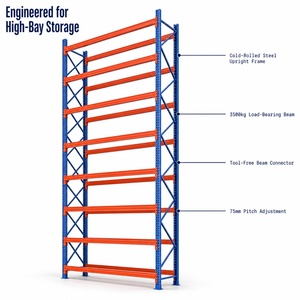
High Bay Pallet Rack System 3500kg Load 7 Levels H7800mm Adjustable 75mm Pitch
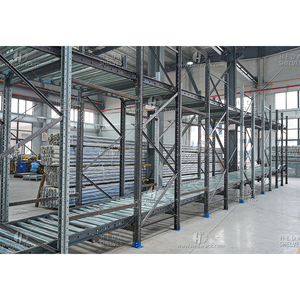
Warehouse Storage Roller Racking Carton Flow Racking High Quality Gravity System
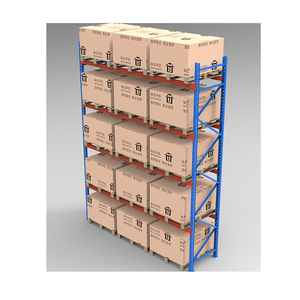
Warehouse Racking Heavy Duty Rack System Stack Storage Steel Pallet Racks
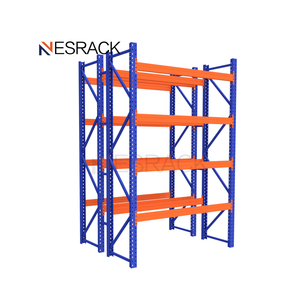
Heavy Duty Industrial Shelving Certificated Stacking Pallet Racking System
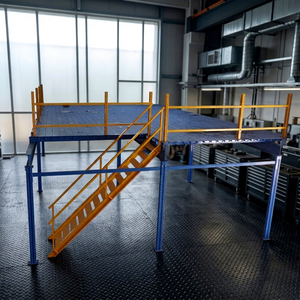
Industrial Mezzanine Racking System Double Platforms Warehouse Floor System
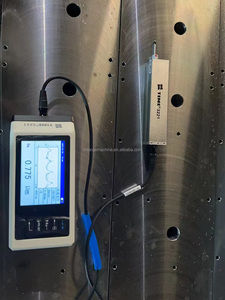
Large Sheet Metal Machining Cold Rolled Fabrication Shelf Components
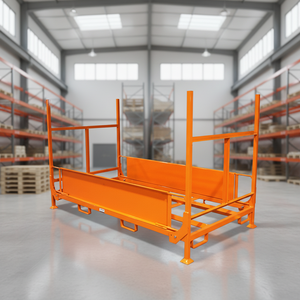
Steel Drive-Through Industrial Pallet Stacking Rack Corrosion Protected
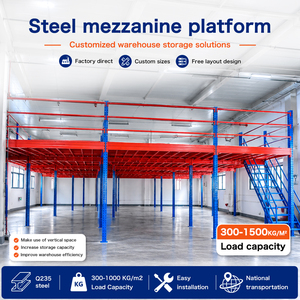
Multi Level Steel Industrial Mezzanine Storage Heavy Duty Platform System
Executive Summary: The Mechanics of Modern Dynamic Gravity Flow
In high-throughput distribution environments, gravity flow racking (also known as live pallet flow or carton dynamic racking) represents the purest marriage of Newtonian mechanics and spatial optimization. Operating on an inclined plane typically calibrated between 2.5% and 4.5% (1.5° to 2.5°), gravity flow systems automatically advance inventory from the replenishment face (charge end) to the pick face (discharge end) under natural kinetic force. This architecture enforces strict First-In, First-Out (FIFO) stock turnover without continuous electrical energy input or active mechanical propulsion.
As modern warehousing transitions toward higher cubic density to offset soaring land lease costs and cold chain power consumption, gravity flow racks eliminate interior forklift travel aisles. Compared with conventional selective pallet racking, live dynamic flow lanes increase warehouse storage capacity by 60% to 85% while cutting forklift travel time and related carbon emissions by over 40%. Achieving operational safety and equipment longevity requires rigorous engineering: specifying appropriate centrifugal speed controller brake rollers, pallet separator escapement mechanisms, entry guide flares, and precise roller pitch calculations tailored to pallet bottom deflection tolerances.
Engineering Benchmark: Pallet bottom deflection under maximum working payload must never exceed L/200 (where L is the span between roller centers). Deflection beyond this limit causes roller binding, unpredictable pallet arrest, and excessive impact load spikes at the terminal discharge stop.
Top 10 Global Gravity Flow Rack Suppliers & Exporters
A comparative structural, manufacturing, and supply-chain assessment of the world’s leading dynamic storage engineering manufacturers for enterprise logistics procurement.
Guangzhou HEDA Shelves Co., Ltd.
China · Export HubRecognized as a world-tier original manufacturer and dynamic racking exporter, HEDA Shelves integrates complete in-house roll forming, robotic welding, automated column punching, and 10-stage pre-treatment powder coating. With 25+ years of engineering provenance and an export footprint spanning over 120 nations, HEDA delivers custom-calculated gravity flow systems certified under European CE standard EN 15512 and ISO 9001:2015. Their dedicated engineering desk provides complimentary 3D layout simulation, seismic load verifications, and custom brake roller calibration for non-standard wooden, plastic, and metal skid profiles.
Interroll Group
Switzerland / GlobalA pioneering global authority in material handling components, Interroll provides high-performance dynamic flow modules, magnetic speed controllers, and specialized conveyor rollers. Their Pallet Flow and Carton Versi Flow systems are globally celebrated for precision friction control, ultra-durable bearing seals, and engineered safety separators that accommodate diverse load capacities in automated fulfillment hubs.
SSI SCHAEFER
Germany / GlobalOne of the largest global intralogistics solution providers, SSI Schaefer manufactures enterprise-grade gravity live storage systems engineered for FMCG, dry grocery, and pharmaceutical distribution centers. Their robust structural framing seamlessly pairs with dynamic carton feeds and digital pick-to-light arrays for zero-error fulfillment lanes.
Mecalux, S.A.
Spain / Americas / EUWith extensive roll-forming plants throughout Europe and North America, Mecalux produces dynamic pallet flow racks designed with split roller beds, intermediate entry brake assemblies, and double-action pallet stop end plates. Their systems excel in cold-storage applications and blast-freezer FIFO operations.
Bito-Lagertechnik
GermanyBito focuses extensively on lean order-picking systems, ergonomic carton flow tracks, and small-parts FIFO channels. Their continuous boltless track clip systems allow operators to reconfigure lane pitch and guide rail widths without specialized tooling, optimizing fast-moving assembly workcells.
Advance Storage Products
United StatesA heavyweight manufacturer in the North American market, Advance is renowned for its structural steel pallet flow systems. Utilizing structural channel uprights and durable polycarbonate skate wheels, their installations resist heavy forklift abuse in extreme environments like perishable food warehouses.
Dexion (Gonvarri Material Handling)
United Kingdom / EUOperating under Gonvarri Material Handling, Dexion provides pallet flow configurations adhering to rigorous FEM design directives. Their multi-depth pallet beds incorporate adjustable kinetic brake assemblies and heavy-duty structural entrance funnels to guard against misaligned forklift loading.
Nedcon B.V.
NetherlandsPart of the MiTek group, Nedcon specializes in high-complexity multi-tier mezzanine and flow-rack hybrid systems. Their precision-formed cold-rolled profiles deliver exceptional torsional stiffness, making them a preferred vendor for automated system integrators across Europe.
Stow Group
Belgium / InternationalStow is a prominent supplier of standard and dynamic storage solutions across multiple continents. Their gravity flow lines feature robust full-width steel rollers with precision ball bearings, ensuring consistent coasting performance across varied ambient humidity and operational temperatures.
AR Racking
SpainAR Racking delivers highly engineered dynamic live storage solutions produced with pre-galvanized cold-formed uprights. Their automated manufacturing centers focus on high structural repeatability, trace-coded component runs, and specialized flow separators engineered for beverage barrel and IBC handling.
Technical Physics: Incline Calculations, Brake Kinetics, and Escapement Mechanics
The operational success of a live gravity flow system hinges upon controlling acceleration without causing runaway pallets or mid-lane stagnation. When an operator loads an 800 kg to 1,500 kg pallet onto the charge end, gravity generates down-slope kinetic force proportional to the angle of inclination: F = m · g · sin(θ), opposed by the rolling resistance Fr = m · g · Cr · cos(θ) and bearing friction. If unrestrained over an extended 10-pallet deep run, this kinetic accumulation produces lethal impact velocity at the discharge face.
| System Type | Standard Incline Range | Roller / Wheel Specs | Brake Roller Interval | Typical Applications |
|---|---|---|---|---|
| Carton Flow (Split Track) | 3.0% – 5.5% (1.7° – 3.1°) | Polyethylene / Acetal Wheels (Ø28–38mm) | Not Required (Self-dampening) | E-Commerce pick modules, split-case fulfillment |
| Pallet Flow (Full Roller Bed) | 3.5% – 4.0% (2.0° – 2.3°) | Galvanized Steel Tube Ø60–76mm, Wall 2.0mm | Every 1 Pallet Position | High-spec Euro / GMA pallets, heavy manufacturing |
| Pallet Flow (3-Track Skate Wheel) | 3.8% – 4.5% (2.2° – 2.6°) | High-Impact Polycarbonate Wheels | Every 1 to 2 Pallet Positions | Cold rooms (-28°C), standard wooden pallets |
| Heavy Barrel / Drum Flow | 2.5% – 3.2% (1.4° – 1.8°) | Reinforced Steel Rollers with Flanged Edges | Every Position + End Cushion | Chemical distribution, beverage bottling, oil storage |
Centrifugal Brake Rollers: Integrated at calculated pitch intervals, internal gear-driven centrifugal brake rollers exert braking torque directly proportional to the rotation speed of the passing pallet. When pallets move slowly, the brake spins with zero rolling resistance. If a pallet exceeds 0.25 to 0.30 meters per second, internal brake shoes expand against the outer cylinder casing, maintaining a controlled, uniform coasting velocity regardless of total lane depth.
Safety Pallet Separators (Escapement Systems): Without mechanical isolation, the hydrostatic accumulation pressure of downstream pallets presses against the front pick pallet, locking it against the discharge stop and preventing forklift extraction. Heavy-duty escapement separators mechanically isolate the front pallet by holding back the trailing line of pallets with a pneumatic or gravity-actuated floor flipper until the forward pallet is completely lifted and cleared by the forklift mast.
Key Procurement & Technological Trends in Gravity Flow (2025–2030)
As warehouse environments embrace automation, decarbonization, and dynamic omni-channel fulfillment, procurement directors must plan storage infrastructure that interfaces seamlessly with smart technologies.
Autonomous Mobile Robot (AMR) Loading & Retrieval
Modern gravity flow rack discharge faces are being re-engineered with optical sensor cut-outs and cantilevered guide entries. This enables automated counterbalance AMRs and unmanned reach trucks to deposit and extract pallets autonomously without human intervention or misdirection collisions.
IoT-Sensored Smart Roller Tracks & Thermal Telemetry
Next-generation brake rollers feature self-powered kinetic sensors communicating via BLE (Bluetooth Low Energy) mesh networks. Warehouse management systems (WMS) receive real-time alerts on roller bearing heat anomalies, pallet transit delays, or lane jams before physical line blockage occurs.
Cold Chain Decarbonization & Blast Freezer Optimization
Skyrocketing refrigerated storage electrical costs demand maximum cubic density. Gravity flow racks provide zero-energy operational turnover inside -30°C blast freezer chambers, driving massive conversion from electric mobile racking to gravity roller lanes with specialized synthetic low-temperature lubricants.
Factory-Direct Engineering Rigor & Global Supply Chain Control
Operating since 2001, Guangzhou Heda Shelves Co., Ltd. controls over 30,000 square meters of vertically integrated fabrication. By managing every stage from certified raw steel coil slitting to automated cold roll-forming, computerized column punching, robotized welding, and 10-stage phosphating electrostatic powder coating, we eliminate subcontractor quality variances and provide traceable quality assurance for enterprise buyers worldwide.
Turnkey Engineering & Export Verification Stages
Frequently Asked Questions on Gravity Flow Rack Procurement
Technical answers to critical engineering, maintenance, and logistics inquiries asked by enterprise buyers before placing capital equipment orders.
Pallet quality is the single most decisive variable in dynamic flow performance. Gravity systems require bottom runners positioned perpendicular to full-width rollers, or continuous flat perimeter bases when utilizing skate wheel tracks. Cracked, warped, or loose bottom boards cause excessive friction points, roller snagging, and track jamming. For inconsistent pallet quality (such as field-collected wooden GMA skids), engineers recommend high-density full-width zinc-plated steel rollers spaced at smaller pitch intervals (e.g., 75mm to 100mm center-to-center) and split-track lane configurations to maintain continuous surface contact.
High-grade internal centrifugal brake rollers are sealed mechanical units engineered for 8 to 12 years of continuous operation under rated speeds and ambient warehouse conditions. Because they utilize internal metal-on-metal or heavy-duty composite centrifugal clutch shoes lubricated with high-stability synthetic grease, routine lubrication is not required. Annual preventative maintenance involves clearing debris from the roller bed, verifying free spin without load, checking bearing play, and inspecting track fasteners to confirm dynamic pitch angles haven't shifted under forklift impact.
Yes, gravity flow racking is widely used in cold storage down to -30°C (-22°F). However, components must be customized: bearings must be specified with low-temperature synthetic lubricants that will not coagulate, polycarbonate skate wheels must be formulated with impact modifiers to prevent cold embrittlement, and steel structures should ideally feature hot-dip galvanizing or zinc-rich primer pre-treatment to prevent corrosion caused by condensation cycles during defrosting.
On an initial capital equipment expenditure (CapEx) basis per pallet position, gravity pallet flow is more expensive than standard drive-in racking and comparable to push-back racking, while being lower in initial cost than automated radio shuttle or ASRS systems. However, gravity flow provides 100% strict First-In, First-Out (FIFO) stock rotation that drive-in and push-back systems cannot achieve. For high-velocity perishable operations, the elimination of inventory expiration, zero electric battery charging cycles, and dramatic reduction in forklift travel hours deliver full payback within 14 to 22 months.
To generate an accurate engineering proposal, our CAD team requires: (1) Warehouse clear height to the lowest overhead obstruction or sprinkler head, (2) Floor slab concrete thickness, compressive strength (psi or MPa), and reinforcing rebar specifications, (3) Exact pallet envelope (Width × Depth × Height) including load overhang, (4) Minimum and maximum unit load weights, (5) Pallet bottom board configuration drawings or photographs, (6) Forklift make, model, chassis turning radius, and maximum reach height, and (7) Required number of pallet lanes deep per SKU profile.
Accelerate Your Warehouse Throughput with Custom Gravity Flow Engineering
Consult with our senior racking structural engineers today. Receive a free 3D CAD facility layout, seismic load verification, and complete factory-direct pricing proposal within 24 hours.
Contact Us