High-Efficiency Modular Racking & Gravity Flow Systems
Explore heavy-duty, medium-duty, and retail-grade modular storage configurations designed for rapid dimensional adjustments, high-density cubic storage, and compliant industrial warehousing.

Retail Store Spring Loaded Auto Feed Transparent Plastic Divider Pusher System
- Auto-Facing Feeder
- Acrylic Track
- Variable Width
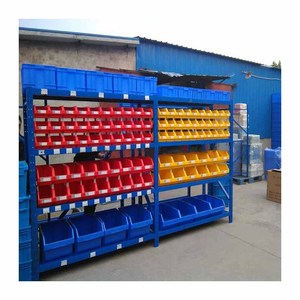
Mracking Popular Multi-level Light Duty Racking Wholesale Storage Bin Rack
- Up to 200kg/Shelf
- Bin Organization
- Toolless Adjust
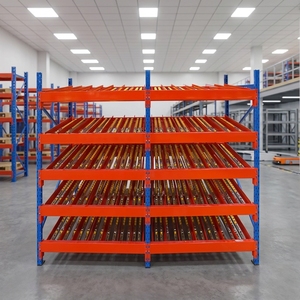
Xinanda Model 008 5 Layer Industrial Steel Roller Hanging Storage Rack Anti-Rust
- Heavy Castors
- Anti-Corrosion
- Multi-Tier
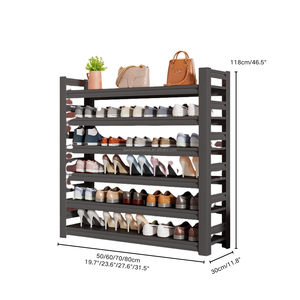
Tianhaida Adjustable Steel Freestanding Light Duty Utility Tall Garage Warehouse Storage
- Cold Rolled Steel
- Epoxy Coated
- Boltless Setup
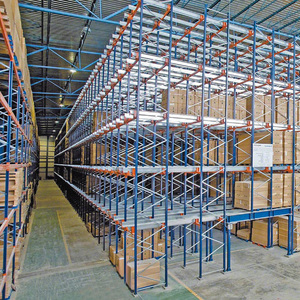
High Density 5 Layer Heavy Duty Radio Shuttle Racking Automated Pallet Storage System
- Automated Carrier
- FIFO / LIFO
- Max Depth Access
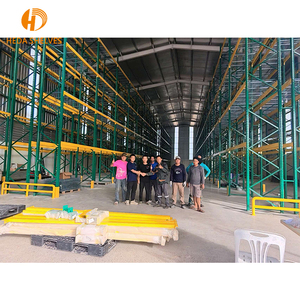
High Quality Q235B Metal Teardrop Pallet Rack Adjustable Warehouse Rack 5 Layer
- Q235B Grade Steel
- Teardrop Pattern
- Up to 4500kg/Tier
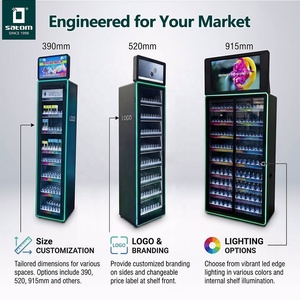
Europe Remote Control Lock Glass Door Cigarette Tobacco Stand Pusher System
- Motorized Lock
- Pusher Feed
- Secure Glass Door
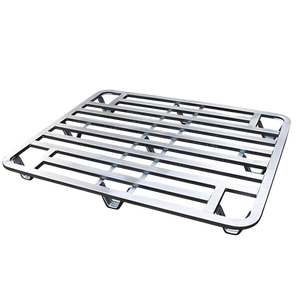
Heavy Duty Industrial Storage Factory Metal Pallet Single-deep Stackable Iron Rack
- Structural Welded
- Custom Footplates
- Forklift Integrated
Evaluating the Global Top 10 Adjustable Racking System Suppliers: Engineering, Safety & Lifecycle TCO
In modern high-density intralogistics, selecting an adjustable racking system is no longer simply a transaction of tonnage and structural steel. It represents an engineering decision that underpins structural safety, floor space utilization, SKU picking velocity, and compliance with strict seismic directives. Global supply chain shifts, coupled with rapid surges in cold-chain logistics and dynamic FMCG throughput, require structural systems that adapt to seasonal SKU re-profiling without compromising seismic integrity.
Industrial racking systems operate under continuous static loads, dynamic forklift impacts, and environmental degradation factors such as coastal salt fog and extreme interior thermal gradients. Leading tier-one procurement authorities assess manufacturing vendors across stringent engineering indices: cold-rolled profile geometry, cold-bending dimensional accuracy, steel yield thresholds (such as high-tensile Q235B vs. Q355B standards), weld joint robotic repeatability, and precision electrostatic finish longevity.
Comparative Analysis: Top Adjustable Racking Engineering Configurations
Selecting the optimal adjustable racking layout requires balancing spatial density against pallet selectivity. The table below delineates the primary engineering metrics evaluated during industrial tender procurement:
| Racking Architecture | Aisle Clearance | Pallet Selectivity | Floor Space Utilization | Optimal Industry Application |
|---|---|---|---|---|
| Selective Pallet Racking | 3.0m – 3.8m | 100% Immediate Access | 40% – 50% | General 3PL, Multi-SKU Retail, Pharma |
| Narrow Aisle (VNA) | 1.6m – 1.9m | 100% Immediate Access | 60% – 70% | High-Cost Urban Distribution Centers |
| Drive-In / Drive-Through | Dedicated Lanes | LIFO / Low Selectivity | 70% – 80% | Bulk Beverage, Uniform Raw Materials |
| Radio Shuttle Automation | Shuttle Rail Driven | Programmable FIFO/LIFO | 80% – 88% | Controlled Cold Storage, Meat, Dairy |
| Multi-Tier Mezzanine | Tier-Integrated | Direct Manual Access | Up to 200% Usable Footprint | E-commerce Picking, Automotive Spare Parts |
Future Procurement Trends: Where Modern Racking Engineering Is Headed
1. Structural Steel Chemistry and Cold-Formed Elasticity: Global procurement teams are moving away from heavy generic structural beams in favor of engineered high-yield cold-formed steel sections. Modern cold-roll forming lines enable variable thickness along the upright profile, placing mass precisely at high-stress shear zones while reducing dead weight. This optimizes container cubing efficiency and freight expenditure during intercontinental transit.
2. Seismic Resiliency Modeling (FEM Simulations): With major logistics nodes expanding across seismic zones (such as the Central American Volcanic Arc, the Pacific Rim, and Mediterranean fault zones), physical load testing is now coupled with advanced Finite Element Method (FEM) analysis. Upright baseplate design, non-linear anchor bolt behavior under cyclic shear, and dynamic beam-end connector stiffness parameters are engineered to absorb seismic energy without progressive collapse.
3. Specialized Tropicalized & Sub-Zero Surface Metallurgy: Standard alkyd paint has become obsolete in mission-critical logistics facilities. Modern specifications require multi-stage chemical pretreatment—including comprehensive automated acid pickling and immersion phosphating—followed by electrostatic thermosetting polyester powder coating. For aggressive sub-zero cold stores or high-humidity tropical coastal facilities, duplex coatings combining continuous hot-dip galvanizing with anti-microbial powder topcoats are becoming the definitive procurement benchmark.
Comprehensive Evaluation Criteria for Selecting a Top 10 Supplier
A comprehensive vetting audit of an adjustable racking supplier encompasses more than checking quotation spreadsheets. To eliminate operational failure risks, industrial procurement divisions apply the following four-tier supplier validation matrix:
1. Material Verifiability
Direct mill sourcing guarantees strict control over Q235B and Q355B hot-rolled coils, eliminating brittle fractures through verified elongation and impact-resistance metrics.
2. Roll-Forming Tolerances
Automated continuous multi-stage cold bending lines maintain ±0.5mm profile straightness along 12-meter continuous upright columns, eliminating torsional buckling.
3. Certified Joint Integrity
Beam-connector hooks, locking pins, and automated robotic weld beads must resist cyclical shear testing in compliance with validated ISO and CE technical directives.
4. Engineering Packaging
Container packing schemes must bundle heavy profiles with timber buffers and steel strapping, preventing transit deformation and facilitating clear offsite crane unloading.
End-to-End Precision Manufacturing Execution
High-capacity fabrication across 10 controlled stages transforms raw structural coils into certified, corrosion-protected industrial storage systems.
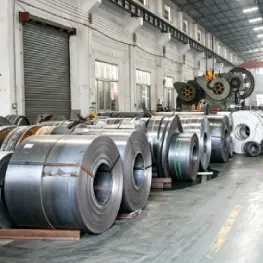 STAGE 01
Raw Materials
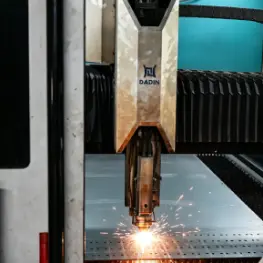 STAGE 02
Precision Slitting
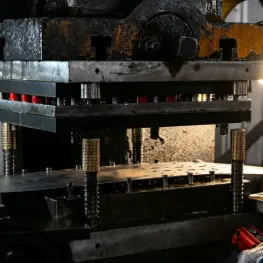 STAGE 03
CNC Column Punching
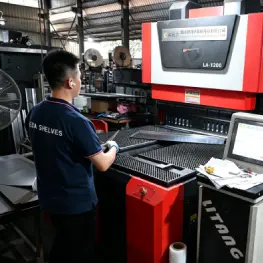 STAGE 04
Cold Bending
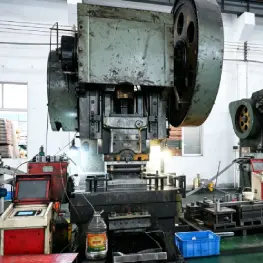 STAGE 05
Profile Roll Forming
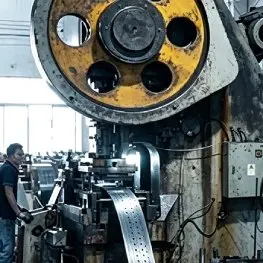 STAGE 06
Surface Deburring
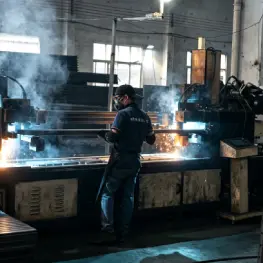 STAGE 07
Robotic Welding
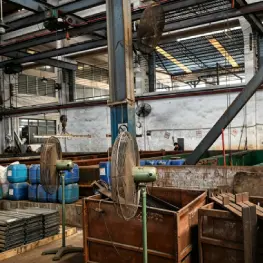 STAGE 08
Pickling & Phosphate
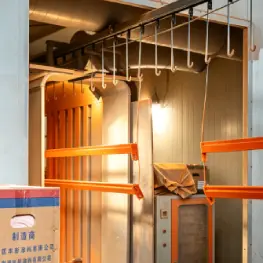 STAGE 09
Powder Coating
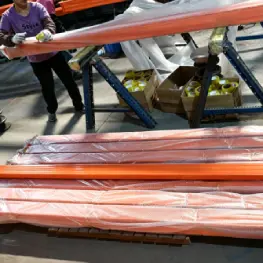 STAGE 10
QC & Export Pack
Manufacturer Pedigree & Institutional Validation
Operating out of Guangzhou with over two decades of dedicated structural logistics manufacturing, Guangzhou Heda Shelves Co., Ltd. backs every engineered system with verified third-party technical credentials.


Frequently Asked Questions on Adjustable Racking
Critical structural, logistic, and regulatory answers addressing high-volume international racking imports and facility engineering.
Consult with a Structural Racking Application Engineer
Send your warehouse dimensions, clear height, pallet parameters, or target site drawings. Our engineering division will return a complete, itemized CAD layout and load assessment within 24 hours.
Send an Inquiry