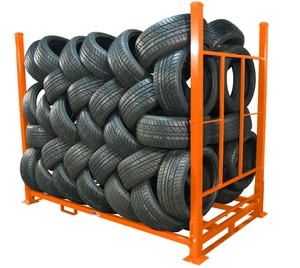
Factory-Engineered Inventory
High-Performance Industrial Storage & Warehouse Racking
Direct-from-factory structural steel solutions certified to global safety and load tolerances. Tailored for heavy-duty supply chains, cold storage facilities, and high-throughput distribution hubs.
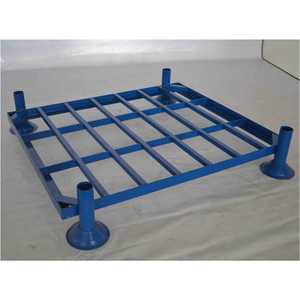
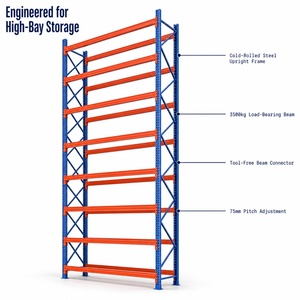
Procurement Whitepaper
Engineering Architecture & Lifecycle Economics of Warehouse Shelving
A technical guide for supply chain leaders, warehouse project directors, and logistics EPC contractors navigating custom racking design and cross-border procurement.
1. The Evolution of Industrial Racking: From Static Steel to Dynamic Spatial Systems
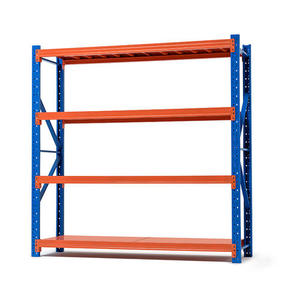
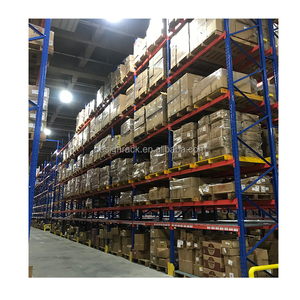
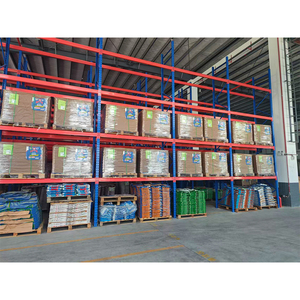
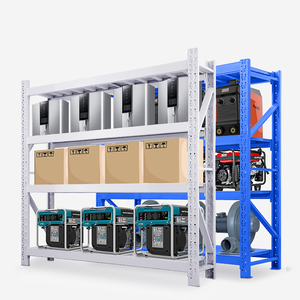
In modern industrial facilities, storage infrastructure is no longer evaluated merely as static steel frames for pallet placement. Instead, it serves as the foundational physical matrix that dictates throughput efficiency, material-handling automation compatibility, and floor-to-ceiling volumetric return on investment (ROI). Escalating land procurement costs and increasing industrial building heights globally have transformed vertical volume utilization into an urgent corporate mandate. Selecting the optimal layout—whether Selective Pallet Racking, Double Deep, Very Narrow Aisle (VNA), or Radio Shuttle platforms—requires an empirical evaluation of pallet turnover cycles, First-In-First-Out (FIFO) versus Last-In-First-Out (LIFO) material streams, and the kinematic tolerances of handling equipment.
As an OEM/ODM manufacturing facility operating under ISO 9001:2015 and European EN 15512 standards, structural integrity originates at the raw material stage. We utilize premium Q235B and high-yield Q355B cold-rolled structural steel coils. The precise profile geometry of our uprights—incorporating multi-bend omega shapes and continuous robotic column punching—imparts exceptional torsional rigidity and high flexural capacity under rated static and seismic dynamic loads. When planning distribution facilities, industrial procurement teams must scrutinize the yield strength of the steel, the beam-to-column connector lock mechanics, and the stability coefficients calculated through finite element analysis (FEA) to avert progressive structural collapse under real-world impact stresses.
2. Future Procurement Trends: Strategic Automation & Resilient Sourcing (2025–2030)
The global procurement roadmap for warehouse storage shelving is experiencing an epochal transition driven by three structural market currents: automation-readiness, environmental corrosion engineering, and localized regulatory compliance.
First, the imperative of Automation Readiness (ASRS and AMR Interoperability): High-density automated storage is shifting away from monolithic, proprietary systems toward modular, shuttle-accessible racking architectures. Enterprise buyers are demanding tighter manufacturing tolerances on beam deflection (often requiring 1/200 or 1/300 deflection metrics rather than standard industrial thresholds) to facilitate autonomous pallet shuttles, laser-guided automated guided vehicles (AGVs), and autonomous mobile robots (AMRs). Racking tolerances must remain stable across ambient, chilled, and blast-freezing environments to avoid misalignments that halt optical sensor paths.
Second, Advanced Corrosion Engineering for Harsh Environments: Global supply chains increasingly span tropical, coastal, and chemical distribution corridors where ambient relative humidity exceeds 85% and airborne chlorides accelerate oxidation. Modern procurement specifications have progressed beyond cosmetic liquid coatings to multi-stage surface treatments comprising acid pickling, zinc phosphating, and electrostatically applied polymer thermosetting powder coatings. For hyper-saline logistics corridors, cold chain installations down to -30°C, and agrochemical storage, hot-dip galvanizing (HDG) to ASTM A123 or EN ISO 1461 standards has become the default structural specification to eliminate recurring recoating downtime over a 20-year operational lifecycle.
Third, Structural Resilience and Region-Specific Seismic Design: With major logistics hubs expanding across active tectonic belts (from the Pacific Rim to the Mediterranean), generic off-the-shelf shelving systems pose severe operational and insurance liabilities. Enterprise supply chain procurement now mandates site-specific structural load calculations. This incorporates dynamic base plate anchor shear analyses, seismic bracing matrices (horizontal and vertical cross-bracing), and sub-slab ductility checks that comply with AS 4084, ANSI MH16.1 (RMI), and Eurocode standards.
ASRS & Shuttle-Ready Engineering
Micro-tolerance beam roll-forming engineered to integrate with Radio Shuttles, pallet runners, and automated mobile robotics without optical tracking variance.
Seismic Dynamic Finite Modeling
Bespoke upright bracing and reinforced anchor footplates calibrated against localized seismic acceleration coefficients to eliminate structural rupture risks.
Anti-Corrosive Surface Chemistry
10-stage automated pretreatment, pickling, phosphating, and electrostatic powder coating or heavy-duty galvanizing built for extreme humidity and freezing rooms.
25+
Years Engineering Experience
30,000 m²
Industrial Manufacturing Base
30,000 t
Monthly Production Capacity
10,000+
Global Installations Delivered
Why Choose Our Factory
End-to-End OEM/ODM Manufacturing Excellence
Combining industrial-scale production control, precision sheet metal fabrication, and full project lifecycle engineering support directly from the factory floor.
Custom OEM/ODM Profiling
From custom punched hole pitches (50mm, 75mm, 76.2mm) to bespoke structural roll-formed profiles and heavy-duty connector clips, we manufacture directly to OEM brand blueprints and third-party EPC specifications.
Free Engineering CAD & 3D Modeling
Our dedicated engineering department creates complete layout schemes, warehouse utilization heatmaps, 3D structural visualizers, and load-limit documentation within 24–48 hours at zero upfront cost.
Full Export Compliance & Packing
Container-optimized bundle strapping, pre-labeled SKU sequencing, moisture barrier packaging, and comprehensive shipping documentation ensuring seamless customs processing at major international ports.
Rigorous 10-Stage Precision Production Sequence
Every beam, upright frame, cross-tie, and footplate is tracked through strict quality inspection gates before export authorization.
STAGE 01
Raw Steel Selection
STAGE 02
Precision CNC Cutting
STAGE 03
Automated Punching
STAGE 04
Cold Bending Forming
STAGE 05
Profile Roll Forming
STAGE 06
Shot Blasting & Polish
STAGE 07
Robotic Structural Welding
STAGE 08
Pickling & Phosphating
STAGE 09
Electrostatic Coating
STAGE 10
Dimensional QC & Pack
Procurement Intelligence
Frequently Asked Questions by Industrial Buyers & Importers
Clear, technical answers to common queries regarding load testing, overseas customs delivery, seismic engineering, and OEM customization.
Q1: How does your factory verify structural load ratings and safety factors?
Our engineering division validates all frame profiles via static and dynamic Finite Element Analysis (FEA), backed by destructive physical sample testing in accordance with EN 15512 and RMI standards. Load tables incorporate standard safety margins of 1.4 to 1.5 against material yield, ensuring continuous security under heavy forklift dynamic placements.
Q2: Can your team engineer racks for regions with strict seismic codes?
Yes. By inputting your facility's geotechnical classification, building code requirements (e.g., Eurocode 8, UBC, or local seismic zones), and maximum pallet weight configurations, our licensed engineers calculate the necessary column thicknesses, seismic diagonal cross-bracing patterns, base plate dimensions, and wedge anchor embedment depths.
Q3: What surface treatment should we specify for humid coastal or cold storage warehouses?
For standard dry indoor warehouses, our 10-stage electrostatic powder coating provides superior corrosion resistance. For walk-in cold rooms (-25°C), coastal facilities with high salt fog exposure, or agrochemical/fertilizer hubs, we recommend hot-dip galvanizing to ASTM A123, ensuring decades of rust-free service without peeling.
Q4: What is your typical production lead time and container packing method?
Standard OEM/ODM orders ship within 15 to 25 business days from drawing sign-off. Upright frames and beams are bundled with steel strapping and protective corner guards; small parts, row spacers, and footplates are packed in heavy-duty wooden crates. Every container includes an itemized loading list correlating to installation drawings for fast customs clearance.
Q5: What architectural inputs are required to generate a customized 3D layout?
To produce an optimized CAD layout, please provide: building interior dimensions (length, width, clear height beneath ceiling beams), locations of floor columns and access doors, pallet dimensions including overhang (L x W x H), total load weight per pallet, and the turning radius and maximum lift height of your forklifts.
Q6: Do you provide installation supervision and after-sales support overseas?
Every shipment comes with detailed step-by-step assembly drawings, 3D exploded views, and video guidance. For major distribution centers and mezzanine platforms, our factory can dispatch bilingual installation supervisors to direct your local rigging crew and conduct final torque and plumb inspections.
Design Your High-Efficiency Warehouse Storage System Today
Send your warehouse dimensions and storage requirements to receive an engineered CAD layout, 3D spatial rendering, and direct factory-cost quotation within 24 hours.
Inquire Now