Engineered Portfolio
High-Performance Industrial Storage & Pallet Racking Systems
Direct factory manufacturing compliant with ISO 9001:2015, CE, and international FEM/RMI structural engineering design codes.
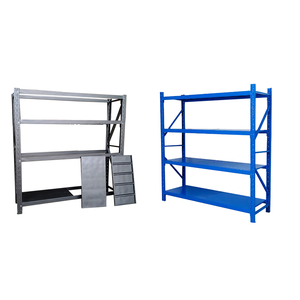
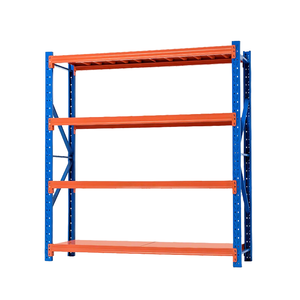
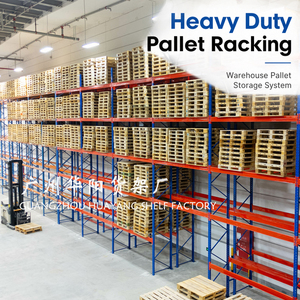
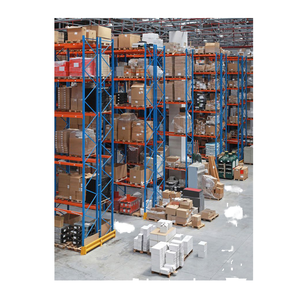
25+
Years Engineering Experience
30,000m²
Integrated Production Plant
30,000t
Monthly Steel Processing Capacity
120+
Export Countries & Regions
Engineering White Paper: OEM/ODM Standard Pallet Racking Procurement, Structural Safety & Lifecycle Asset Valuation
Modern warehouse logistics have evolved from passive storage spaces into high-throughput order fulfillment hubs. As industrial land values surge and supply chain resilience becomes a boardroom priority, engineering standardized, bespoke OEM/ODM pallet racking systems has emerged as the definitive benchmark for enterprise asset optimization. Selecting high-performance pallet racking requires a sophisticated synthesis of structural mechanical analysis, cold-formed steel metallurgy, material handling equipment (MHE) integration, and international regulatory code alignment.
Strategic Engineering Notice: Rack structural collapses are overwhelmingly caused by underestimated dynamic beam deflections, improper floor slab anchor engineering, or failure to design against localized seismic lateral acceleration forces. Specifying verified Q235B/Q355B structural steel and adhering to finite element analysis (FEA) standards prevents systemic supply chain disruptions.
Structural Metallurgy: Mechanical Selection Criteria for OEM/ODM Profiles
Standardized pallet racking systems depend heavily on cold-formed thin-walled steel profiles engineered to deliver superior strength-to-weight ratios without sacrificing ductile deformation properties under seismic loading. Uprights are subjected to combined axial compression and biaxial bending moments. Therefore, precision rolling mills must eliminate micro-fissures along profile corners while maintaining uniform steel sheet thickness across the entire cross-section.
- Upright Frame Column Geometries: Advanced roll-formed profiles featuring omega-shaped cross-sections with multiple stiffening ribs redistribute buckling lines, increasing critical torsional-flexural load resistance by up to 34% compared to generic C-channel configurations.
- Structural Connection Dynamics: The beam-to-column connector (clip) dictates overall semi-rigid frame stability. Modern systems utilize 3-prong to 5-prong cold-stamped connector hooks manufactured with negative clearance tolerances to eliminate structural frame sway and optimize moment resistance.
- Steel Substrate Specification: Tier-1 export standards mandate certified high-yield hot-rolled carbon steel coils (Q235B and Q355B). Yield strengths ranging from 235 MPa to 355 MPa provide predictable plastic hinge development, preventing catastrophic brittle failure during extreme seismic shock or severe forklift impacts.
Future Procurement Trends: Data-Driven Warehouse Racking Sourcing
Procurement directors and 3PL supply chain executives are moving away from piecemeal catalog buying toward fully customized, predictive-engineered turnkey solutions. Over the 2026–2030 purchasing cycles, global pallet racking procurement is defined by three transformative industrial trends:
- Transition toward Semi-Automated & Deep-Lane Shuttle Integration: As standard selective racking hits the physical limits of floor footprint utilization, brownfield retrofits increasingly specify radio shuttle channels and compact push-back arrays. These configurations double pallet storage density within identical warehouse perimeters without requiring complete automation investments.
- Seismic Resilience & Parametric Digital Modeling: Municipal building authorities across active seismic belts—from the Pacific Rim to Central and South America—enforce stringent dynamic base-shear calculation reports. Digital layout design now mandates BIM-ready Revit models and parametric finite element simulations prior to metal extrusion.
- Total Cost of Ownership (TCO) & Surface Metallurgy: Purchasing departments are recalculating TCO to include replacement cycles driven by surface abrasion. Multistage surface treatments—including automated shot blasting, hot acid pickling, zinc phosphating, and nano-ceramic electrostatic thermosetting polymer finishes—are replacing traditional wet spray coatings to withstand high-humidity, marine-port, and chemical-storage environments.
Product Evolution: The Intersection of Automation, ASRS, and High-Density Systems
The boundary between traditional structural racking and robotic handling systems is rapidly dissolving. Standard pallet racks are undergoing architectural redesigns to accommodate autonomous mobile robots (AMRs), automated storage and retrieval systems (ASRS), and narrow-tolerance optical forklift guidance systems.
- Ultra-Tight Fabrication Tolerances: Automated storage demands laser-guided accuracy. Punch-hole pitch variations must not exceed ±0.5 mm over continuous 12-meter profile lengths to ensure automated crane extractors and shuttle crawlers execute horizontal and vertical movements without mechanical binding.
- Built-In Sensing and IoT Structural Health Monitoring: Next-generation industrial rack arrays incorporate wireless triaxial accelerometers and strain gauges along baseplates and lower upright sections. These systems deliver real-time collision alerts and structural overload notifications directly to warehouse management software (WMS) control centers.
- Modular Hybrid Upright Configurations: Contemporary logistics facilities demand multi-tier rack-supported mezzanines integrated directly above selective pallet ranks. This allows lower levels to function as high-bay bulk pallet storage while upper decks support multi-level manual piece picking, light carton gravity flow, and pack-out stations.
Precision Manufacturing
10-Stage Industrial Production & Quality Control Lifecycle
Every cold-formed column, connector bracket, and box beam undergoes strict procedural tolerances under our certified ISO 9001 quality management architecture.
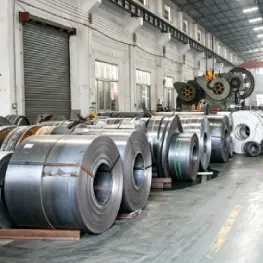 STAGE 01
Certified Coils
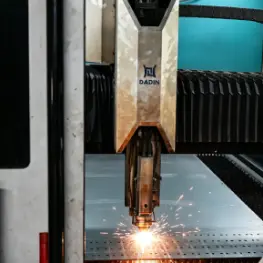 STAGE 02
Precision Slitting
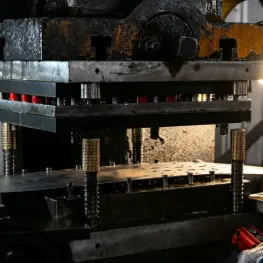 STAGE 03
Auto Punching
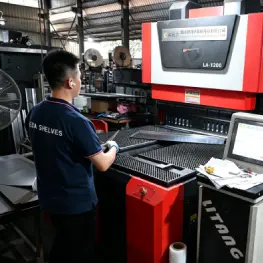 STAGE 04
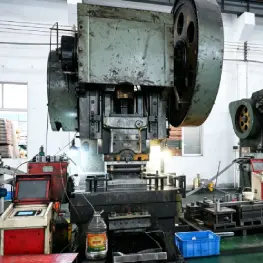
Cold Bending
 STAGE 05
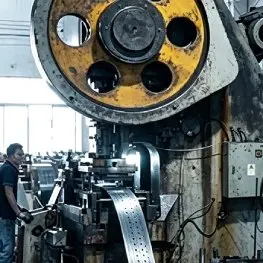
Roll Forming
 STAGE 06
Deburring & Finish
 STAGE 07
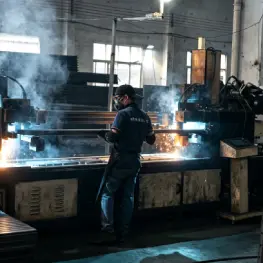
Robotic Welding
 STAGE 08
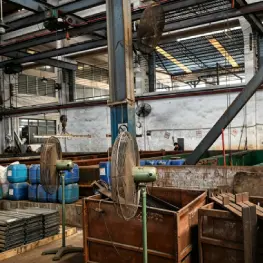
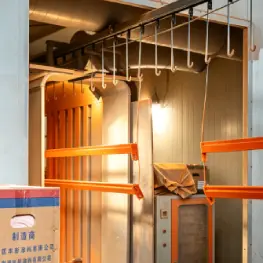
Acid Phosphating
 STAGE 09
Powder Coating
 STAGE 10
QC & Packing
Enterprise Superiority
Why Tier-1 Importers Partner With Us for OEM/ODM Projects
Combining heavy-industry manufacturing capacity with agile technical engineering to mitigate risk across cross-border procurement.
Full OEM/ODM Versatility
Custom profile fabrication matching universal teardrop, diamond, butterfly, and European slotted upright punches. Complete custom brand labeling, unique powder paint RAL matching, and custom structural accessory toolings.
Free Turnkey CAD & 3D Modeling
We eliminate structural planning risks before you place an order. Our dedicated engineering office prepares complimentary warehouse layout CAD designs, 3D visual renderings, dynamic aisle calculation sheets, and complete structural loading diagrams.
Global Export Ready Bundling
Optimized nesting and container-loading designs minimize ocean freight costs. Heavy steel upright frames and beams are strapped with protective composite spacers, tagged with position-matched packing lists, and moisture-sealed for long sea transit.
Compliance Verification


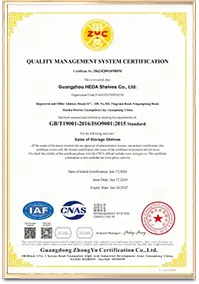
Certified Structural Integrity & Quality Audit Standards
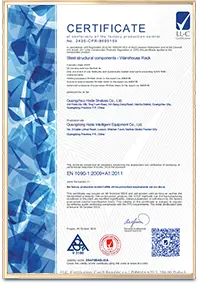
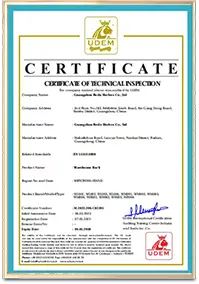
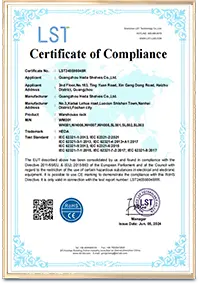
Global supply chains demand verified, independently audited documentation. Our manufacturing lines, structural engineering calculations, and workplace safety systems operate under continuously renewed, officially verifiable international certifications.
CE Certified
No. 2435-CPR-8605159
ISO 9001:2015
No. 18624Q00169R0M
RoHS Compliant
Heavy Metal & Eco Tested
EN 15512 Standards
European Racking Design
Procurement Knowledge Base
Frequently Asked Questions on Standard Pallet Racking Sourcing
Authoritative technical answers to common engineering, logistics, and quality assurance questions encountered during OEM/ODM purchasing cycles.
How do you calculate the maximum beam load capacity and safety deflection limits?
Beam load capacity is calculated under the EN 15512 and ANSI MH16.1 codes, which enforce a strict safety factor of at least 1.65 to 1.8 across uniformly distributed loads (UDL). The maximum allowable beam vertical deflection must not exceed L/200 (where L is clear beam length) under full static load, ensuring fork tines can safely enter pallet pockets without snagging lower racks during high-bay picking operations.
What steel grade certificates and mill test reports (MTR) are supplied?
All load-bearing upright profiles, box beams, and base connectors are produced exclusively from prime-grade hot-rolled steel coils conforming to standard Q235B or Q355B specifications (chemically and mechanically equivalent to European S235JR and S355JR / ASTM A36 and A572 Grade 50). Full certified Mill Test Reports (MTRs) detailing yield points, ultimate tensile strengths, elongation, and carbon equivalent values accompany every export container.
Can your engineering department adapt rack specifications to local seismic codes?
Yes. Our civil and structural mechanical team specializes in seismic design for active earthquake zones across the Americas, the Caribbean, the Middle East, and Southeast Asia. Using your geographic seismic zone parameters, site soil class, and building acceleration factors (Ss, S1), we model custom heavy-duty baseplates, high-embedment anchor studs, and horizontal/vertical cross-bracing configurations to prevent structural resonance collapse.
What surface coating methods are recommended for corrosive or cold-chain operations?
For standard dry distribution centers, we employ our multi-stage electrostatic thermosetting polyester powder coating (60–90 micron thickness), cured at 180°C–200°C for exceptional impact and scratch resistance. For blast freezers, ambient coastal ports, or corrosive chemical environments, we provide hot-dip galvanization conforming to ISO 1461 standards, creating an impermeable zinc-iron alloy surface that protects steel components against rust for decades.
What critical data is required to generate a complimentary 3D layout & quotation?
To produce an engineered proposal within 24 hours, our engineering desk requires: (1) Warehouse architectural drawings indicating clear ceiling heights, slab load ratings, column grids, and dock door locations; (2) Pallet specifications including overall dimensions (W × D × H) and maximum gross weight; (3) Forklift specifications including mast lift height, turning radius, and minimum aisle width requirements; and (4) SKU inventory flow dynamics (FIFO vs. LIFO).
How does your factory manage export packing to avoid transit damage during sea voyages?
Uprights are nested and bundled with reinforced composite straps and heavy timber cushioning to eliminate steel-on-steel friction. Beams are stacked in balanced, color-coded bundles with heavy-gauge corner protectors. All precision hardware, bolts, footplates, and shims are sorted into sealed wooden cases with clear cargo marks and bilingual packing lists to accelerate container unloading and customs clearance.
Transform Your Warehouse Logistics With Factory-Direct Engineering
Connect directly with our senior pallet racking application engineers. Request a comprehensive 3D layout design, complete load calculations, and a fully itemized factory-direct quote tailored to your facility.