Featured Racking Systems & Structural Decking Portfolio
Explore our precision-manufactured upright frames, boltless shelving, dynamic live storage systems, and heavy-duty wire decking. Every component is produced under strict ISO 9001:2015 and CE standards to guarantee load-bearing reliability and structural durability across demanding distribution hubs.
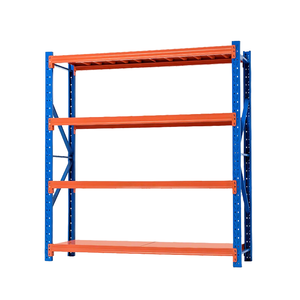
Industrial 4Layer Metal Shelving Stack Rack Light Duty Steel Shelving Boltless Racking Carton Storage Warehouse Rack
- Boltless Lock-In
- Cold-Rolled Steel
- Adjustable Pitch
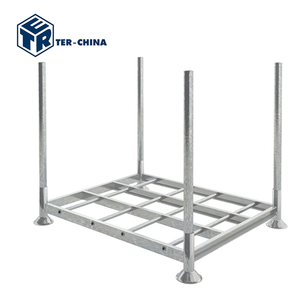
Post Pallet Rack Heavy Duty Stackable Removable Warehouse Hot-dip Galvanized Mild Steel Structure Rack Cargo & Storage Equipment
- Hot-Dip Galvanized
- Modular Stacking
- Q235B Tubular Steel
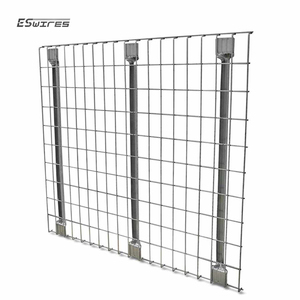
Europe Standard Fireproof Flared Channel 3 Support Channels Secure Design Metal Steel Mesh Wire Pallet Rack Decking
- EN NFPA Normative
- Flared Channel
- High Sprinkler Flow
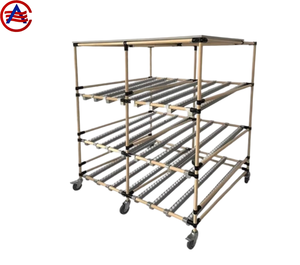
AOCHEN Industrial Steel Flow Rack Shelving System | Collapsible Adjustable Gravity Roller Shelves for Warehouse Storage
- FIFO Picking
- Gravity Rollers
- Ergonomic Feed
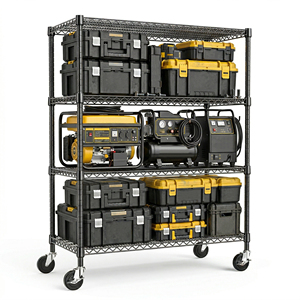
MZG USA Warehouse Local Stock Easy Assembly Industrial Heavy Duty 4 Tier Wire Black Metal Storage Rack Shelving Unit
- Powder Finish
- Toolless Assembly
- Commercial Grade
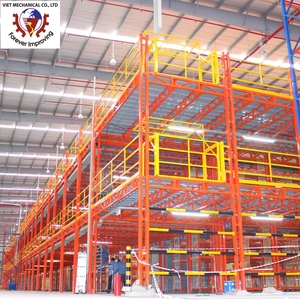
Mezzanine Floor Racking System Designed To Maximize Vertical Storage Space With Strong Structure And Flexible Warehouse Layout
- Heavy Multi-Tier
- 300-1000 kg/m²
- Stairway & Gates
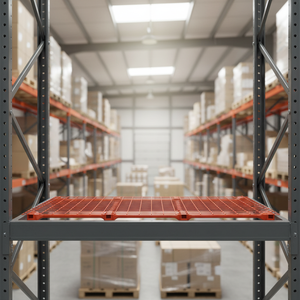
Optimized Wire Mesh Deck Pallet Racking Component Galvanized Deck Wire for Heavy Duty Warehouse Racking System Reliable
- Reinforced Ribs
- Zinc Galvanized
- Universal Fit
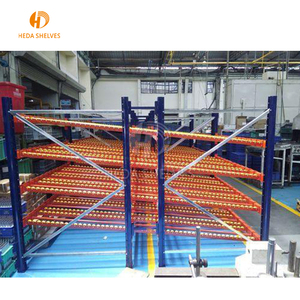
Wholesale Selective Warehouse Storage Gravity Carton Flow Racking Roller Rack/shelves System
- Aluminum Roller Bed
- Split Lane Dividers
- High Density
Engineering Authority: Pallet Rack Upright Frame Design & Cold-Formed Steel Metallurgy
The pallet rack upright frame serves as the vital vertical backbone of every intralogistics warehouse installation. Tasked with bearing severe static axial compressive forces, eccentric moments caused by dynamic forklift operations, and horizontal shear stresses resulting from wind or seismic accelerations, upright frames leave no margin for engineering compromise. As an authoritative OEM/ODM manufacturer, Guangzhou Heda Shelves Co., Ltd. builds structural upright frames grounded in structural mechanics, cold-formed steel design theory (AISI S100 and Eurocode 3 - EN 1993-1-3), and international safety verification protocols.
Pallet rack upright frames comprise two roll-formed cold-bent vertical columns interconnected by cold-formed diagonal and horizontal steel bracing profiles in a triangulated Warren or Pratt truss configuration. These components are securely anchored to the concrete foundation slab via high-tensile structural baseplates and expansion wedge anchors. The strength, serviceability limit state, and ultimate buckling resistance of an upright column are fundamentally determined by steel grade selection, cold-roll-forming work hardening, cross-sectional geometry, and perforation pattern precision.
Structural Insight: The compressive capacity of a slotted upright column is not merely a function of cross-sectional area, but of torsional-flexural buckling and local distortional buckling around cold-punched perforations. Our precision roll-forming lines preserve sectional continuity and eliminate residual micro-fissuring, yielding up to a 14% higher axial capacity compared to conventional stamped profiles.
Certified Structural Metallurgy
We source prime hot-rolled and cold-rolled steel coils conforming strictly to Q235B (yield strength ≥ 235 MPa) and Q355B (yield strength ≥ 355 MPa / ASTM A572 Grade 50 equivalent). Certified mill test reports accompany every batch, certifying carbon equivalent parameters, elongation over 26%, and notch toughness.
High-Precision Continuous Forming
Our 18 to 24-station automated roll-forming machines transform steel coils into complex multi-bend Omega profiles. Multiple stiffening ribs integrated along the web and flanges significantly elevate the section's radius of gyration, counteracting distortional buckling under extreme stack loads.
10-Stage Surface Treatment
To resist industrial corrosives, chemical fumes, and tropical humidity, upright frames undergo automated pickling, degreasing, zinc phosphating, and electrostatic epoxy-polyester powder coating cured at 180°C-200°C, exceeding 500-hour neutral salt spray (ASTM B117) corrosion standards.
Standardized Upright Column Dimensional Matrix
Our engineering matrix accommodates diverse logistical configurations, from standard selective pallet racking and high-density drive-in systems to multi-tier rack-supported mezzanines and automated storage and retrieval system (AS/RS) clad buildings.
| Profile Model | Section Size (W × D mm) | Material Thickness | Perforation Pitch | Material Grade | Typical Max Frame Load |
|---|---|---|---|---|---|
| HD-UP80 | 80 × 60 mm | 1.5 mm – 2.0 mm | 50 mm / 75 mm / 76.2 mm | Q235B / SS400 | Up to 8,500 kg |
| HD-UP90 | 90 × 70 mm | 1.8 mm – 2.3 mm | 50 mm / 75 mm / 76.2 mm | Q235B / Q355B | Up to 14,000 kg |
| HD-UP100 | 100 × 70 mm | 2.0 mm – 2.5 mm | 50 mm / 75 mm / 3" Teardrop | Q235B / Q355B | Up to 18,500 kg |
| HD-UP120 | 120 × 95 mm | 2.3 mm – 3.0 mm | 50 mm / 75 mm / Universal | Q355B / S355JR | Up to 26,000 kg |
| HD-UP140 (AS/RS) | 140 × 100 mm | 2.5 mm – 3.5 mm | 50 mm / 100 mm High-Tolerance | Q355B / High Yield | Up to 34,000 kg |
Global Procurement Trends: What B2B Buyers Must Anticipate
Procuring warehouse storage infrastructure has shifted from simple per-kilogram commodity transactions toward long-term total cost of ownership (TCO) optimization, structural safety mitigation, and supply chain resilience. Procurement directors, distribution hub planners, and warehouse infrastructure developers are managing five distinct procurement shifts:
AS/RS Precision Tolerances
With automated guided vehicles (AGVs) and autonomous mobile robots (AMRs) operating inside dense racking aisles, upright frame straightness tolerances have tightened from 1/500 to under 1/1000. Upright manufacturers must deliver millimetric dimensional repeatability across thousands of cold-rolled columns to prevent mast deflection and optical sensor errors.
Seismic & Geo-Specific Engineering
Global supply chains now mandate verified structural calculations conforming to localized building codes, such as the Chilean NCh2745, Eurocode 8, US IBC/RMI MH16.1, and AS 4084. Procurement directors reject generic frames, requesting site-specific Finite Element Analysis (FEA) verified against seismic soil classification, column baseplate ductility, and concrete slab anchorage.
Low-Carbon Green Steel Mandates
Multinational 3PLs and retail giants require verified Environmental Product Declarations (EPD) and Scope 1-3 carbon tracking for structural steel products. Utilizing recycled scrap in Electric Arc Furnaces (EAF) and closed-loop powder recovery systems has become an essential qualification metric in tier-1 international tenders.
Additionally, modular cross-compatibility and standard perforation pitches (such as North American 2-inch teardrop patterns, European 50mm and 75mm pitches, and Australasian slotted profiles) are transforming global inventory strategies. Multinational enterprise operators avoid single-vendor lock-in by specifying standardized profile geometries that allow cross-fleet interchangeability and reduced replacement lead times.
Technological & Structural Evolution of Upright Frames
The structural engineering of industrial pallet racking has progressed through advanced metallurgy, finite element simulations, and robotic manufacturing lines. The classical solid roll-formed column has evolved into a highly optimized, high-strength structural asset engineered with several breakthrough methodologies:
1. Advanced Cold-Roll Forming with Progressive Flange Stiffening
Conventional C-channels or simple omega sections exhibit vulnerability to torsional-flexural buckling when unbraced along their weak axis. Modern HEDA upright columns integrate multiple re-entrant return lips and intermediate return stiffeners along the profile edges. Through sequential multi-pass roll-forming, the steel receives precise cold-working without localized strain aging, systematically increasing yield strength along cross-sectional corners while maintaining core ductility.
2. Optimized Perforation Geometries & Net Section Capacity
Upright columns require regularly spaced perforations for flexible beam adjustment, typically on 50mm or 75mm centers. However, hole punches inevitably remove steel cross-section, reducing the effective net area ($A_{net}$). Utilizing non-linear finite element modeling (FEM), our engineering team designs slotted patterns that distribute shear stresses around punch contours, preventing high localized stress concentrations and micro-cracking during heavy cyclical loading.
3. Ductile Seismic Base Plate & Anchor Engineering
During seismic events, ground accelerations transfer instantaneous uplifting and rocking moments into the upright frame base. Modern seismic upright frames employ thick ductile structural steel baseplates (10mm to 20mm thickness) precision-welded with automated robotic submerged-arc welding. These baseplates redistribute moment stresses safely across concrete slabs, paired with heavy-duty chemical capsule anchors or torque-controlled wedge anchors designed to prevent brittle shear pull-out failure.
Enterprise Advantages: Why Global Importers Trust Guangzhou Heda Shelves
With over two decades of dedicated manufacturing excellence since 2001, Guangzhou Heda Shelves Co., Ltd. is a premier Chinese manufacturer and global exporter of heavy-duty warehouse storage systems. Operating from our state-of-the-art 30,000 m² production facility in Haizhu District, Guangzhou, we bridge Chinese industrial manufacturing scale with international engineering discipline.
Verified Certifications (CE & ISO)
Our quality control management system is verified under ISO 9001:2015 (Certificate No. 18624Q00169R0M, valid through June 2027), accompanied by full European CE Certification (Certificate No. 2435-CPR-8605159) and RoHS compliance, facilitating straightforward customs approval and client inspection.
Complete OEM/ODM Customization
We manufacture custom column widths, proprietary punch slot configurations, non-standard structural depths (from 600mm to 1500mm), and brand-specific RAL powder coating tones. We also provide white-label private packaging for international rack distributors.
Container-Optimized Logistics
Shipping cold-rolled steel worldwide demands high container load efficiency. Our engineering team utilizes custom nesting software to pack upright frames, bracing members, and accessories into 40ft HQ containers with zero wasted cube, complete with steel strapping and fumigated protective packaging.
Factory Strength in Numbers: Backed by 300+ technical employees, 30,000 tons of monthly throughput, and more than 10,000 completed intralogistics projects worldwide, HEDA Shelves provides reliable delivery schedules, structural stability, and dependable after-sales engineering support.
Procurement FAQ: Critical Technical & Operational Answers
To assist procurement managers, logistics consultants, and structural engineers in evaluating upright frame specifications, our technical engineering team has compiled authoritative answers to frequent technical questions:
The allowable compressive capacity of an upright frame is governed by the unsupported vertical length between beam levels (buckling length $L_{cr}$), the effective cross-sectional area, radius of gyration, steel yield stress, and the presence of dynamic impact factors. Per RMI MH16.1 and EN 15512 standards, capacity is verified using stub column tests, upright-to-beam connection shear tests, and torsional-flexural buckling formulas with a minimum safety factor typically ranging between 1.65 and 1.95.
Q235B possesses a nominal yield strength of 235 MPa and is well suited for medium-load selective pallet racking under 8 meters in height. Q355B (yield strength ≥ 355 MPa, comparable to ASTM A572 Grade 50) delivers over 50% higher yield resistance. Utilizing Q355B enables engineers to reduce steel gauge thickness while supporting heavier frame loads (up to 30,000 kg per frame), offering major weight-reduction and freight-cost advantages for high-bay and AS/RS facilities.
Electrostatic polyester powder coating provides high abrasion resistance, color coding (such as safety orange beams and dark navy frames), and corrosion protection for ambient indoor warehouses with relative humidity below 70%. For deep cold-storage freezers (-30°C), outdoor covered canopies, coastal marine distribution centers with airborne chlorides, or corrosive fertilizer warehouses, Hot-Dip Galvanizing conforming to ISO 1461 (65–85 μm zinc barrier) provides long-term sacrificial galvanic protection against rust.
Yes. Under our OEM/ODM manufacturing contracts, our tooling department can engineer precision rolling dies and punching tool blocks to replicate specific customer hole profiles, including teardrop patterns, diamond keys, slotted channels, or hexagonal holes on 50mm, 75mm, or 76.2mm (3-inch) pitches. CAD cross-sectional drawings and physical sample reverse-engineering ensure seamless engagement with your existing beam inventory.
Every export container leaves our Guangzhou facility accompanied by an itemized packing list detailing piece marks and bundle identifiers, original Mill Test Certificates (MTC 3.1) verifying steel chemical and mechanical properties, CE Declaration of Performance (DoP), Certificate of Origin (CO / Form E / Form F), and internal Factory Acceptance Test (FAT) coating thickness and dimensional inspection reports.