Heavy-Duty Industrial Storage & Material Handling Systems
Engineered for mission-critical distribution centers, cold-chain environments, and specialized manufacturing facilities worldwide. Custom fabricated to bespoke load profiles and structural tolerances.
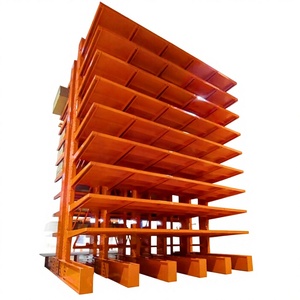
Heavy-Duty Cantilever Rack for Long & Bulky Materials
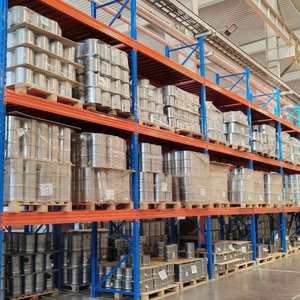
High Capacity Selective Pallet Racking with Drop-in Beams
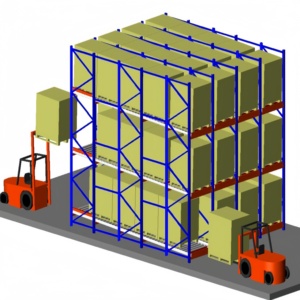
Industrial Cold Storage Live Pallet Flow Racking
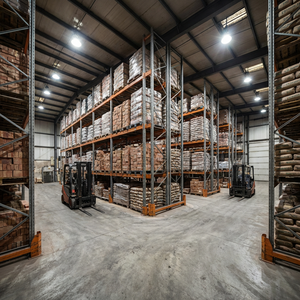
OEM Heavy-Duty Warehouse Selective Racking System
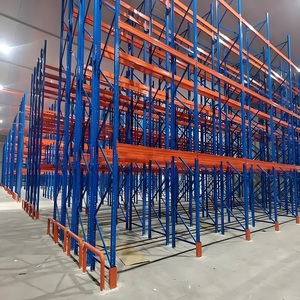
Adjustable Steel Industrial Double Deep Pallet Rack
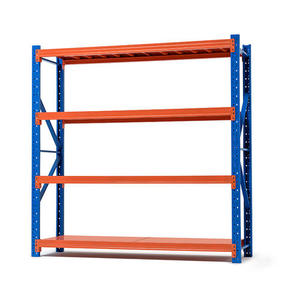
Industrial Light/Medium-Duty Steel Racking System
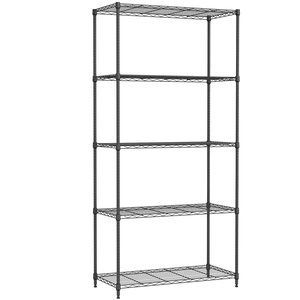
MZG 1250 lbs Multi-Tier Precision Wire Storage Rack
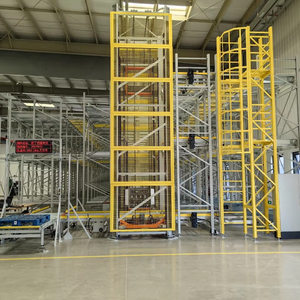
Intelligent Pallet Rack with Conveyor Integration
Dedicated structural steel rack manufacturing since 2001.
High-speed cold roll-forming & automated finishing lines.
300+ technicians ensuring reliable lead times.
Delivering port-ready solutions with complete engineering files.
Engineering Rigor in OEM/ODM Racking Manufacturing
From structural mechanics and seismic modeling to high-precision roll-forming and surface metallurgy, custom pallet rack design demands zero tolerance for structural fatigue.
In modern supply chain infrastructures, pallet racks represent vital structural assets rather than commodity fixtures. High-throughput distribution hubs, automated cold chains, and e-commerce distribution facilities expose steel racking to continuous dynamic stresses, fluctuating payload moments, forklift micro-collisions, and environmental degradation. As a global OEM/ODM manufacturer with 25 years of specialized operational history, our engineering methodology treats every profile as an engineered beam-column element optimized through advanced Finite Element Method (FEM) analysis.
Information Gain Principle: A dependable racking supplier does not simply bend cold steel; they provide certified structural load safety factors, metallurgical traceability (Mill Test Certificates for Q235B/Q355B), and compliance verification aligned with RMI MH16.1, EN 15512, and AS4084 standards.
Material Science & Structural Integrity
We source prime, hot-rolled steel coils verified for uniform tensile yield strength (minimum 235–355 MPa). Our multi-stage continuous roll-forming lines shape custom profile geometries with optimized stiffening ribs that resist torsional buckling.
- High-yield certified Q235B & Q355B high-strength steel
- Multi-bend cold roll-forming ensures minimal residual stress
- Automated optical punching delivers ±0.1mm pitch accuracy
Seismic Design & Dynamic Damping
Warehouses across the Pacific Rim, Central America, and active fault zones require rigorous earthquake engineering. Upright column cross-sections, base plate footings, and diagonal bracing arrays are calculated to dynamic seismic spectra.
- Calculated base plate sizing with dual-expansion anchor arrays
- K-bracing and X-bracing frameworks engineered to absorb seismic energy
- Finite element modeling of loaded deflection ratios (L/200 standard)
Anti-Corrosive Metallurgy & Surface Shielding
In high-humidity coastal climates, aggressive chemical plants, and cold-storage operations, surface corrosion leads to structural degradation. Our finishing facilities integrate multi-bath pre-treatment and electrostatic powder coating.
- Multi-stage chemical pickling & phosphating substrate preparation
- Thermoset epoxy-polyester powder coats cured at 180°C–200°C
- Hot-dip galvanizing per ISO 1461 for cryogenic and outdoor operations
Future Procurement & Technological Trends in Warehouse Storage
The global warehousing ecosystem is undergoing an unprecedented shift toward automation compatibility, nearshore supply agility, and lifecycle carbon accountability.
1. Convergence of Racking & AMR Automation
Traditional static storage is rapidly integrating with Autonomous Mobile Robots (AMRs), Automated Storage and Retrieval Systems (ASRS), and 4D pallet shuttle robotics. Procurement teams no longer purchase standalone racks; they buy high-precision robotic storage grids with tight vertical and horizontal tolerances (within ±1.5mm) to prevent autonomous shuttle jamming.
2. Digital Twin Layouts & BIM Procurement
Global logistics engineering requires Building Information Modeling (BIM) files and digital twin simulations prior to metal fabrication. Procurement pipelines require IFC/Revit models of rack bays to simulate egress paths, sprinkler head throw patterns, forklift turning envelopes, and automated conveyor interfaces during planning stages.
3. Decarbonization & Green Steel Mandates
Multi-national enterprises are driving supply chains toward lower Scope 3 greenhouse emissions. OEM manufacturers must demonstrate electric-arc-furnace steel sourcing, minimal VOC powder coats, zero-landfill scrap recycling, and optimized container packing density to reduce maritime transport fuel burn per pallet position.
| Racking System Type | Space Utilization Efficiency | Inventory Rotation Rule | Direct Pallet Accessibility | Standard Load Range / Level | Optimal Industry Application |
|---|---|---|---|---|---|
| Selective Pallet Racking | 40% – 50% | FIFO / LIFO | 100% Direct Access | 1,000 kg – 4,500 kg | FMCG, 3PL Distribution, Multi-SKU Retail |
| Double Deep Racking | 60% – 65% | LIFO | 50% Direct Access | 1,000 kg – 3,000 kg | Dry Grocery, Paper, Building Materials |
| Drive-In / Drive-Thru | 70% – 80% | LIFO / FIFO | Low (Lane-based) | 1,000 kg – 2,000 kg | Cold Storage, Beverage, Seasonal Batches |
| Pallet Flow (Gravity) | 80% – 85% | Strict FIFO | Lane Facing Only | 800 kg – 1,800 kg | Dairy, Pharmaceuticals, Perishables |
| Radio Shuttle Racking | 85% – 90% | Flexible FIFO / LIFO | Semi-Automated Lane | 1,000 kg – 2,500 kg | Blast Freezers, High-Throughput Buffers |
| Cantilever Racking | Variable Linear | Flexible Open-Face | 100% Arm Visibility | 500 kg – 3,000 kg / Arm | Steel Tubing, Lumber, Extrusions, PVC Pipes |
Frequently Asked Questions on Pallet Rack Sourcing
Comprehensive engineering clarifications addressing safety compliance, international shipping logistics, structural load testing, and custom OEM manufacturing.
To generate compliant structural designs, our engineering team requires: (1) Warehouse architectural drawings indicating clear ceiling heights, internal column grids, slab joint layouts, and overhead obstruction heights (HVAC, fire sprinklers); (2) Pallet specifications including overall dimensions (W × D × H), bottom board patterns, overhang, and total gross load weight; (3) Materials handling equipment data such as mast collapsed/extended reach heights, aisle turning clearances, and fork dimensions; and (4) Site-specific seismic zone coefficients, local building codes, and concrete slab compressive strength ratings (e.g., 25–30 MPa).
While all three international standards aim to prevent progressive collapse and establish structural safety margins, their mathematical formulations for cold-formed steel differ. ANSI/RMI MH16.1 emphasizes perforated column stub-column test empirical data and effective width equations based on AISI specifications. European EN 15512 requires limit state design incorporating comprehensive physical testing for beam-end connector moment-rotation stiffness and second-order P-Delta global frame instability analyses. AS4084 incorporates stringent Australian seismic and operational load factor models. As an experienced global OEM, we engineer and verify profiles specific to the destination country's required governing standard.
For standard ambient distribution warehouses, high-grade electrostatic polyester powder coating (dry film thickness 60–80 microns) applied over pickled and phosphated steel delivers solid durability. However, in blast freezers (-25°C to -30°C) where thermal cycling creates condensation and paint micro-cracking, or in coastal regions with salt-laden humidity, we recommend continuous hot-dip galvanization per ISO 1461 (minimum 55–70 microns zinc layer). Galvanized zinc provides sacrificial galvanic protection that prevents rust creep, even if punctured by mechanical forklift impacts.
Structural steel components represent heavy, dense freight where improper packing leads to container under-utilization or transit damage. We engineer custom modular steel saddles and wood-free strapping bundles that align precisely with 40-foot High Cube (40'HQ) internal container dimensions. Upright frames are nested or flat-packed with pre-assembled diagonal bracing to protect powder coats; step beams are interleaved with protective corrugated sheeting; and hardware fittings are boxed on certified fumigated heat-treated pallets. Detailed container packing maps accompany every Bill of Lading, facilitating rapid, sequential off-loading at the job site.
Request a Complete Engineering & Cost Proposal
Collaborate directly with our senior structural engineers. We provide free preliminary CAD space layouts, 3D digital renderings, structural deflection calculations, and transparent FOB/CIF pricing within 24 hours.