Featured Industrial Gravity Flow & High-Density Storage Series
Custom-fabricated OEM/ODM racking systems manufactured from certified cold-rolled steel, featuring zero-energy dynamic gravity roller tracks and high-efficiency FIFO stock management.
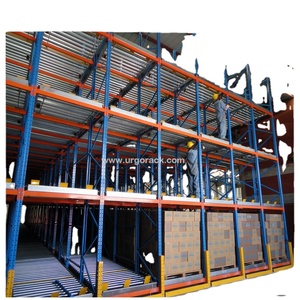 Dynamic FIFO
High Efficiency Order Picking Racking System, Gravity Flow Roller Racking System
- Continuous roller incline tracking
- 500–2,500 kg/lane payload capacity
- Integrated centrifugal speed brakes
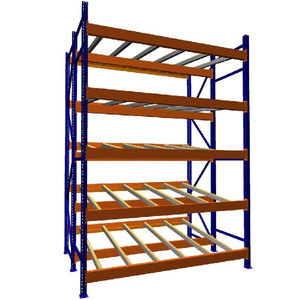 Split-Case Pick
Picking Flow Racking Carton Flow Rack Logistics Storage Racks
- High-grade aluminum/steel track lanes
- Adjustable lane width guide dividers
- Pick-to-light system compatible
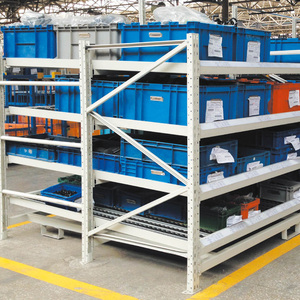 Heavy Duty Flow
High Density Heavy Duty 5 Cold Rolled Steel Powder Coated Flow Rack Warehouse Storage Carton Pallet Gravity Shelves Customized
- Q235B high-tensile cold rolled steel
- Electrostatic corrosion-proof powder coat
- Structural pallet separation safety stops
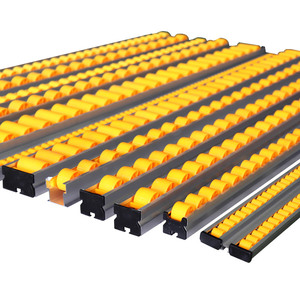 PE/ABS Track
Gravity Flow Rail Roller Track PE ABS Wheel 200KG Load Carton Flow Rack FIFO Storage Sliding Shelf for Warehouse
- Wear-resistant high-impact polymer wheels
- 200 kg certified load capacity per rail
- Low-resistance precision zinc axle pins
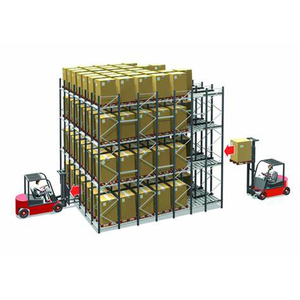 Pallet Flow
Warehouse High Density Gravity Roller Pallet Flow Racking
- Up to 20 pallets deep per storage lane
- Heavy galvanized steel roller beds
- Automatic safety load separator latches
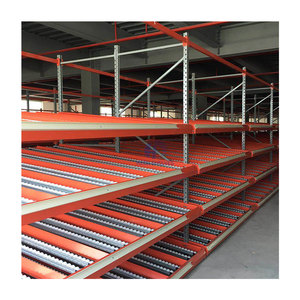 Custom Gravity
Ebb And Flow Vertical Rack Pallet Flow Racking Track Customized Gravity Carton Flow Racking System
- Hybrid vertical modular flow architecture
- Tailored roller pitch and incline slope
- Ergonomic pick trays with tilt shelving
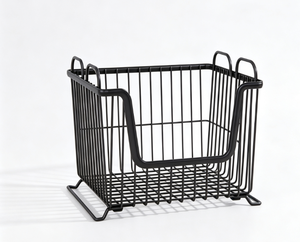 Narrow Slot Wire
Single-layer Floor-standing Narrow-slot Modern Minimalist Iron Wire Shelving Unit Casters Mobile Storage Rack Multi-functional
- Slim footprint for compact aisle staging
- Heavy-duty industrial swivel lock casters
- Chrome-plated corrosion-resistant finish
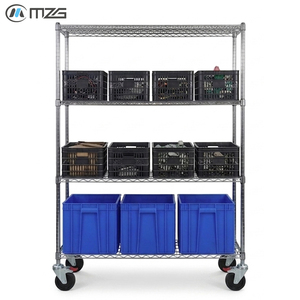 Mobile Wire Rack
MZG ODM Factory Industrial Warehouse Parts Metal Heavy Duty Storage Organizer Rack Wire Shelving Systems with Wheel
- High-tensile steel wire mesh decking
- 350 kg/tier distributed weight rating
- Rapid no-tool slot-in field assembly
Engineering Whitepaper: Dynamics & Structural Mechanics of Gravity Flow Systems
Gravity flow racking systems—commonly referred to in dynamic logistics engineering as Pallet Live Storage (PLS) or Carton Flow Systems—leverage gravitational potential energy to autonomously propel palletized unit loads and individual product cartons along an inclined, roller-fitted track. By separating material feeding from product picking into dedicated, opposing warehouse aisles, gravity flow architectures completely eliminate cross-aisle traffic interference, enforce strict First-In, First-Out (FIFO) stock rotation, and slash internal warehouse transit distances by up to 65% compared to conventional static selective racking.
The core physics of an industrial gravity flow lane hinges on an exact thermodynamic and mechanical equilibrium between gravitational forward acceleration and mechanical braking friction. The standard engineering pitch gradient ranges between 2.5% and 3.5% (approximately 1.5° to 2.0°). If the gradient is shallow (< 2.2%), pallets risk kinetic stalling due to uneven pallet bottom runner friction or settling over long static dwell times. Conversely, an excessive slope (> 4.0%) causes exponential velocity accumulation, placing destructive momentum loads onto the terminal unloading end-stop, threatening warehouse structural stability and operator safety.
Centrifugal Brake Rollers
Our heavy-duty dynamic lanes integrate sealed internal planetary gear-governed centrifugal brake rollers. These automatically adjust counter-frictional torque proportionally to pallet speed, capping maximum runway terminal velocity at an ultra-safe 0.25 to 0.30 m/s regardless of pallet mass variations from 250 kg to 1,500 kg.
Mechanical Load Separators
To eliminate excessive line-pressure exerted by downstream accumulated pallets onto the first retrieval pallet, our mechanical separation trip levers physically lock the second pallet in line until the lead pallet is completely lifted off the picking face by a forklift truck, dramatically easing pallet retrieval ergonomics.
Seismic & Fatigue Engineering
All upright columns and horizontal bed runners are modeled using advanced finite element analysis (FEA) compliant with international building codes (RMI, EN 15512, and AS 4084). Structural sections use Q235B/Q355B high-tensile cold-rolled steel, designed with base plates engineered to absorb localized cyclic dynamic impact.
Beyond pallet flow, Carton Live Storage systems apply identical principles to case-level picking operations. Utilizing aluminum profile track beds embedded with high-density polyolefin (PE) or acrylonitrile butadiene styrene (ABS) cylindrical wheels spaced at custom increments, these lanes provide fluid, zero-jam movement for tote bins, plastic containers, and corrugated boxes. Carton flow racks integrate seamlessly below pallet storage levels, creating high-density multi-tier picking modules that maximize volumetric utilization.
System Selection Architecture: Gravity Flow vs. Competing High-Density Systems
Analyze key performance parameters to evaluate capital expenditure (CapEx), operational efficiency (OpEx), and space reclamation factors.
| Storage Racking System | Rotation Rule | Floor Utilization | Operating Energy | Forklift Aisle Travel | Pick Face Selectivity | Relative CapEx / ROI |
|---|---|---|---|---|---|---|
| Gravity Flow (Pallet Live) | Strict FIFO | 65% – 75% | Zero (Gravity Driven) | Min. (Perimeter Aisles Only) | 100% per Lane (High) | Medium-High / Fastest ROI (< 2 Yrs) |
| Drive-In / Drive-Through | LIFO (Strict) | 60% – 70% | Zero (Passive) | High (In-Rack Truck Entry) | Poor (< 20% Direct Access) | Low / High Damage Maintenance |
| Radio Shuttle Racking | FIFO or LIFO | 75% – 85% | Battery / Semi-Automated | Low (Dock Face Operation) | 100% per Active Channel | High CapEx / Ongoing Battery Upkeep |
| Push-Back Racking (Carts) | Strict LIFO | 55% – 65% | Zero (Forklift Mechanical Push) | Moderate (Single Aisle Loading) | Moderate (2–6 Pallets Deep) | Medium / Mechanical Wear on Carts |
| Static Selective Racking | Flexible | 35% – 45% | Zero (Static Steel) | Very High (Aisle at Every Bay) | 100% Total Direct Access | Lowest Initial / Poor Volumetric Use |
Full-Cycle Production Infrastructure & Rigorous Quality Control
Manufactured under strict ISO 9001:2015 and CE standards. From certified raw coil slitting to automated cold roll-forming and 10-stage anti-corrosion chemical treatment.
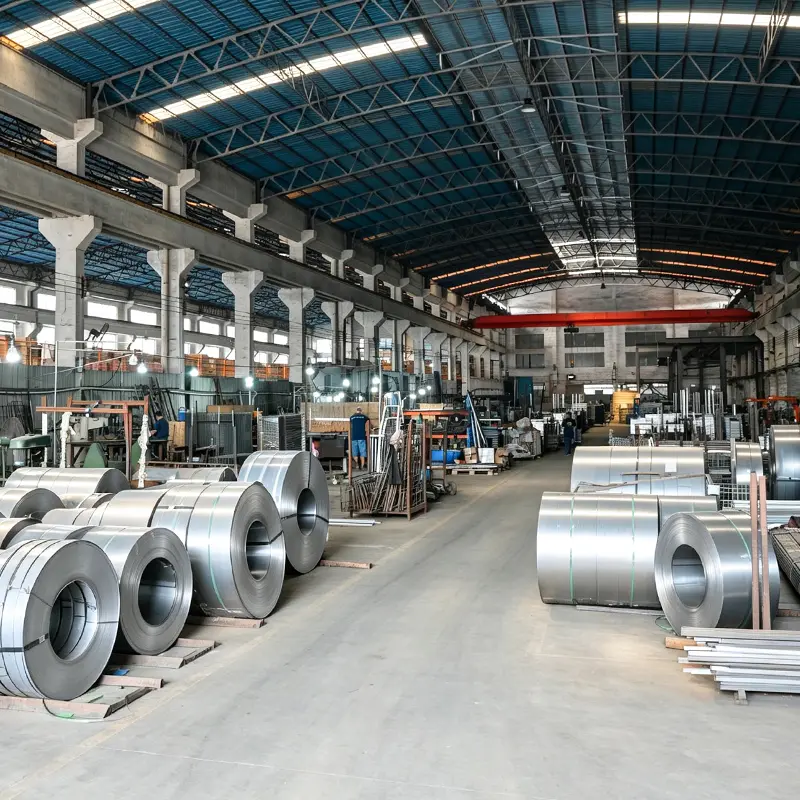
25+ Years Racking Engineering Heritage
Founded in 2001 in Guangzhou, China, HEDA Shelves has completed over 10,000 structural logistics projects across the globe. Our in-house engineering team provides free 3D CAD modeling, custom roller slope calculations, and structural static/dynamic stress certifications tailored to regional seismic requirements.
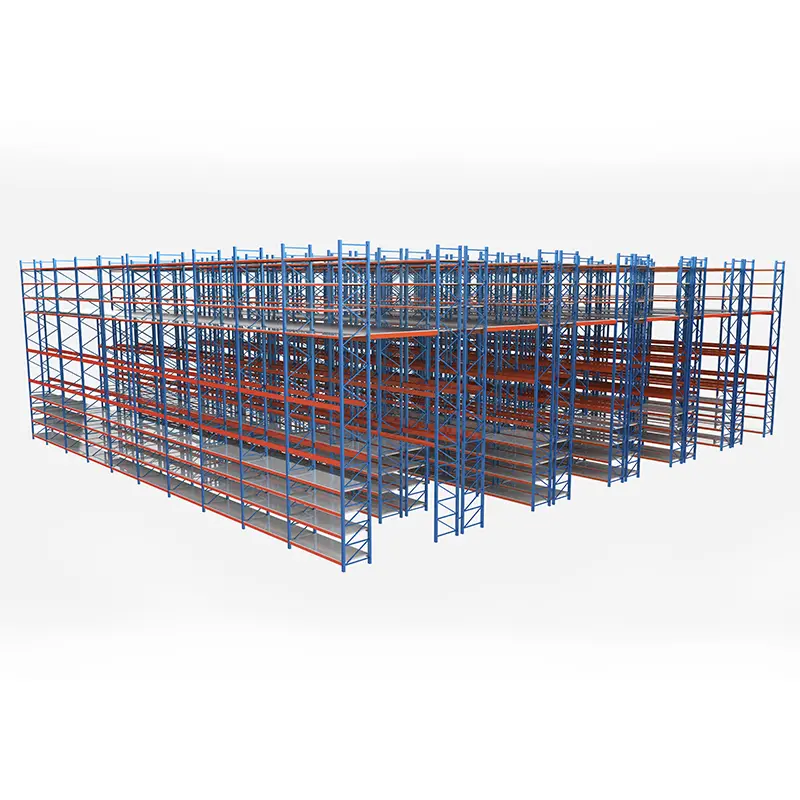
Bespoke OEM/ODM Customization
Every gravity flow warehouse faces distinct physical demands. We supply fully customized roller bed configurations, specialized lane widths, varying brake roller pitches, variable skate-wheel materials, and bespoke upright punching patterns (50mm/75mm) to match existing warehouse racking configurations and equipment.
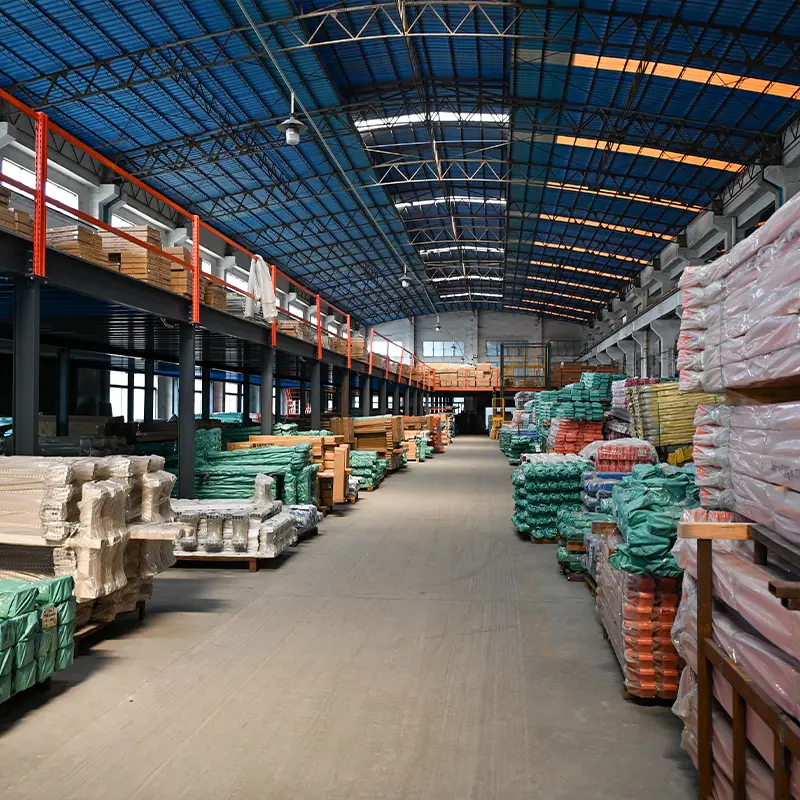
Tropicalized Surface Protection
All steel structural members undergo automated multi-stage pre-treatment: degreasing, ultrasonic cleaning, zinc-iron phosphating, and electrostatic epoxy-polyester powder baking (60–80 microns thickness). For extreme cold storage or high-salinity maritime warehouse environments, hot-dip galvanization is available.
10-Stage Precision Production Protocol
Precision-controlled tolerances ensure seamless roller track alignment and flawless load movement across 30-meter continuous gravity runs.
Coil Slitting
Premium Q235B cold-rolled steel inspection & coil slit calibration.
CNC Punching
High-speed continuous hole punching with sub-millimeter pitch accuracy.
Roll Forming
Multi-roller continuous cold profile bending for uprights & box beams.
Laser Profiling
3D robotic laser cutting for connector hooks, safety stops & brake mounts.
Robotic Welding
CO2 gas shielded automated welding ensuring full-penetration structural joints.
Shot Blasting
Surface descaling & rust removal achieving Sa 2.5 cleanliness standard.
Phosphating
Multi-bath chemical immersion enhancing anti-corrosive primer adhesion.
Electrostatic Coat
Automated powder spray cure at 200°C for superior scratch resistance.
Roller Assembly
Precision calibration of roller bearings, brake drums & safety triggers.
Export Packaging
Bundle wrapping with edge guards, steel strapping & container loading plan.
Future Trends in Gravity Flow & Dynamic Intralogistics
How automation, cold-chain expansion, and zero-carbon ESG mandates are reshaping gravity flow racking procurement globally.
Zero-Energy Warehouse Buffers
With corporate ESG commitments pushing for net-zero carbon operations, gravity flow systems are experiencing massive resurgence as sustainable staging buffers. Because gravity racking requires zero electricity, electric shuttle charging stations, or hydraulic actuators, dynamic gravity lanes drastically lower warehouse Scope 2 emissions while running 24/7 without power grid dependency.
Blast Freezers & Perishable Logistics
Refrigerated warehouse space is up to 8x more expensive to construct and power than ambient storage. The global surge in pharmaceutical, fresh grocery, and frozen food demand has made FIFO gravity flow the premier choice. Systems maximize cubic density while ensuring that temperature-sensitive vaccines and food batches rotate strictly according to First-Expired, First-Out (FEFO) protocols.
ASRS & AGV/AMR Dock Integration
Modern distribution centers no longer view gravity flow as an isolated manual storage unit. Modern installations integrate gravity roller beds directly as feeding queues for Autonomous Mobile Robots (AMRs) and Automated Guided Vehicles (AGVs) at dispatch docks. Gravity lanes act as self-replenishing accumulating buffer zones connecting automated crane storage with high-speed truck loading docks.
Frequently Asked Questions on Gravity Flow System Sourcing
Direct technical answers addressing structural calculation, pallet compatibility, seismic compliance, and global port delivery logistics.
What pallet conditions are mandatory for gravity flow roller lanes?
Pallet structural integrity is paramount. For gravity roller lanes, pallets must possess sound bottom runners oriented parallel to the roller travel direction. Hardwood GMA (1200x1000mm) or Euro pallets (1200x800mm) without broken bottom boards or protruding nails are ideal. For plastic pallets, full-perimeter cruciform runners or minimum 3-skid designs are required. In lanes with poor or varied bottom pallet runners, continuous full-width steel rollers or specialized three-track roller configurations are engineered to prevent deflection and point-load jamming.
How do you calculate the optimal brake roller quantity per lane?
The standard rule of thumb is one centrifugal brake roller positioned at every pallet position starting from the second pallet behind the discharge stop. For long lanes exceeding 10 pallets in depth, our engineers calculate the kinetic energy formula: Ek = 0.5 * m * v² along with incline friction coefficients. On average, brake rollers are installed every 1.5 to 2.0 meters. High-density cold-storage applications running heavier 1,500 kg loads may require increased brake roller frequency to avoid kinetic load surges during sub-zero operational cycles.
Can your gravity racking resist severe seismic forces and ground accelerations?
Yes. Our engineering department uses STAAD.Pro and custom structural software to calculate dynamic seismic response spectra according to IBC, Eurocode 3/8, and ASCE 7 standards. In earthquake zones (such as Central America's Pacific Ring of Fire or Western South America), we thicken upright column walls (up to 2.5mm or 3.0mm), expand heavy footplate anchors, install reinforced spine cross-bracing towers, and specify mechanical pallet arrestors that prevent unseated pallets from jumping roller beds during transverse ground shock waves.
What export shipping terms, lead times, and port handling support are provided?
We provide full-service export trade terms including FOB (Guangzhou/Shenzhen), CIF, and DDU/DDP shipments worldwide. Standard production manufacturing lead time is typically 20 to 25 business days from final CAD layout sign-off. Each shipping container is packed with computer-modeled weight balance to optimize ocean freight volume. Steel components are separated by protective corrugated cardboard, wrapped in thermal shrink plastic, strapped with high-tensile steel bands, and accompanied by color-coded bill of materials (BOM) documentation for swift customs processing.
Ready to Modernize Your Warehouse with Engineered Gravity Flow?
Consult with our senior logistics engineers today. We supply complimentary 2D/3D CAD design drawings, load calculation sheets, and customized factory-direct price estimates within 24 hours.