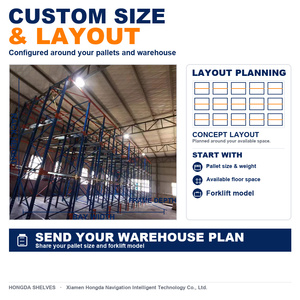
Factory Inventory & Tailored Form Factors
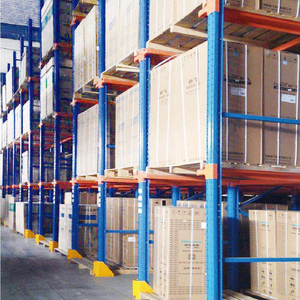
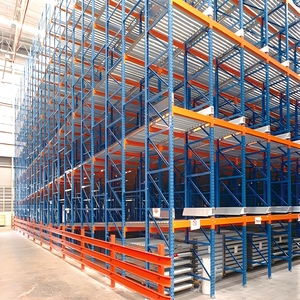
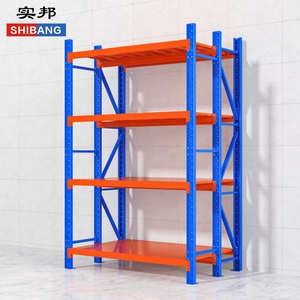
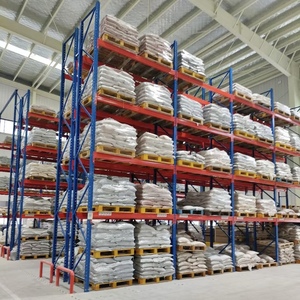
Heavy-Duty & Custom Drive-In Pallet Racking Systems
Our cold-rolled structural steel systems are fully customizable under private-label OEM and technical ODM contracts, engineered to ISO 9001:2015 and CE standards to withstand static, dynamic, and thermal stress regimes.
25+
Years Engineering
Factory-direct structural racking production established since 2001 in Guangzhou.
30,000m²
Workshop Footprint
Automated punching, continuous roll forming, and electrostatic powder coating lines.
30,000t
Monthly Output
Over 30,000 metric tons output capacity backed by 300+ seasoned engineers and specialists.
120+
Global Jurisdictions
CE (EN 15512), ISO 9001:2015, and RoHS compliant systems installed globally.
Drive-In Pallet Racking Architecture: Structural Integrity, Dynamic Clearances, and Volumetric Density
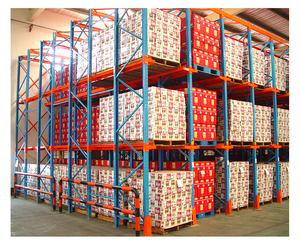
Drive-in and drive-through racking configurations represent the highest volumetric storage efficiency attainable for homogenous goods using standard counterbalanced and reach forklifts. By eliminating access aisles between individual rows, drive-in systems increase floor space utilization by up to 80% compared with conventional selective pallet racking. However, removing intermediate horizontal load beams requires specialized engineering design to counterbalance torsion, asymmetric forklift impacts, and seismic lateral displacements.
Information Gain Principle: Unlike static selective racking where horizontal beams form rigid box-frame closures, drive-in systems utilize continuous cantilever arms and floor-to-top bracings. Structural integrity relies heavily on cold-formed column stiffness, high yield-strength base plates, and precision track alignments.
1. Structural Anatomy & Load Dissipation Mechanisms
A high-capacity drive-in bay consists of upright frames anchored to the warehouse concrete slab, tied at the upper level by cross-aisle top ties and horizontal top bracings. Because forklifts must physically drive into the racking depth, structural pallet rails run perpendicular to the entry face, mounted to cantilever brackets welded or clipped to the vertical uprights. Because there are no interior load-bearing cross beams, horizontal shear stress is dissipated through the top horizontal truss framework and continuous ground-anchored guide rails.
In our Guangzhou production facility, raw coils of Q235B and high-tensile Q355B steel are rolled into multi-bend open upright profiles. These complex roll geometries increase the profile's radius of gyration, counteracting Euler buckling forces under extreme axial dead loads up to 40,000 kg per upright frame.
2. Technical Specifications & Design Criteria Matrix
Procuring drive-in racking requires balancing forklift mast width, pallet bottom configuration, and vertical clearance tolerances. Below is the structural matrix verified across our OEM/ODM custom operations:
| Engineering Attribute | Standard Specification | Heavy Cold-Chain / Seismic Spec | OEM Custom Limits |
|---|---|---|---|
| Steel Grade | Q235B Cold Rolled Carbon Steel | Q355B High-Yield Structural Alloy | Custom certified metallurgies |
| Column Profile Width | 80mm, 90mm, 100mm | 120mm, 140mm Heavy C-Profile | Up to 160mm continuous profile |
| Material Thickness | 1.8mm – 2.0mm | 2.5mm – 3.2mm | Tailored to FEM 10.2.02 codes |
| Surface Protection | Electrostatic Epoxy Powder (60-80µm) | Hot-Dip Galvanized (≥85µm) / Zinc Coat | Pickling & Phosphating Pre-treatment |
| Pallet Entry Tolerance | Minimum 75mm each side | 100mm with Tapered Lead-in Rail | Integrated ground optical tracks |
| Seismic Coefficient (pga) | Zone 1–2 (0.1g – 0.2g) | Zone 3–4 (≥0.4g Active Belt) | Engineered FEM calculation per project |
3. Dynamic Interaction: Forklift Interface & Floor Guide Engineering
In drive-in installations, forklift clearance represents the most critical operational variable. Unlike selective racking where trucks stay in a clear aisle, drive-in systems require forklifts to enter multi-level storage bays up to 10 pallets deep. Minor operator misjudgments can transmit dynamic impact loads to columns. To address this risk, our OEM engineering integrates three defensive systems:
Chamfered Entry Rails: The leading edges of pallet rails feature flanged guide horns that naturally center pallets during insertion, preventing snagging against upright edges.
Continuous Floor Guide Rails: Heavy steel angle irons or structural tubular sections anchored along the lane floor keep forklift chassis centered, preventing mast collision with racking columns.
Column Reinforcements & Floor Armor: Wrap-around column guards and solid steel floor bollards placed at entry bays absorb front-wheel impact energies without deforming primary structural uprights.
Strategic Sourcing Intelligence
Future Procurement & Technological Trends in Drive-In Storage
As automated warehousing, cold chain expansion, and ESG imperatives shape global logistics, drive-in systems are evolving from static frames to dynamic, hybrid structures.
Shuttle-Ready Hybrid Conversions
Modern enterprise buyers are selecting drive-in frames pre-punched with universal mounting points for semi-automated radio shuttles. This lets facilities start with budget-friendly forklift drive-in setups and transition to automated cart carriers without structural reconstruction as throughput demands increase.
Digital FEM Simulation & BIM Delivery
Standard procurement bids now demand complete finite element analysis (FEA) and Building Information Modeling (BIM) files. Factory engineers use stress simulation to design thinner wall sections with higher-grade Q355B alloy, reducing structural weight and carbon footprint while meeting regional seismic codes.
Thermoset Coatings for Refrigeration
With refrigerated and deep-freeze logistics (-30°C) expanding rapidly, traditional powder coatings face brittleness and condensation peeling. Modern specifications favor modified thermoset polyester powders or continuous hot-dip galvanization (≥85μm), preventing zinc bloom and maintaining structural ductility across cold-warm cycles.
Enterprise Manufacturing Backbone
Why Global Supply Chains Rely on HEDA Shelves
From single-bay prototypes to multi-thousand-pallet distribution hubs, our Guangzhou facility provides direct, single-source accountability from steel coil slitting to overseas container landing.
Complete In-House Manufacturing
Our 30,000m² factory runs automated slitting, high-precision hydraulic column punching, automated cold roll-forming lines, robotic welding stations, and a multi-tank pickling/phosphating pre-treatment system.
Engineering OEM/ODM Service
We customize upright pitch (50mm, 75mm), beam teardrop/butterfly/trapezoidal punch profiles, and private-label packaging. We deliver free CAD floor layouts, detailed 3D structural renderings, and load calculation sheets.
Verified Certifications
Every component conforms to verifiable international credentials: CE Certification (No. 2435-CPR-8605159), ISO 9001:2015 Quality Management (No. 18624Q00169R0M), and comprehensive RoHS environmental compliance.
Global Export & On-Site Support
Shipping to over 120 countries across North America, Latin America, Europe, Africa, and Southeast Asia. We supply bundle packing with itemized container loading lists, video install guides, and on-site engineering supervision.
Procurement Due Diligence
Frequently Asked Questions: Drive-In Racking Procurement
Clear answers to technical, operational, and commercial questions asked by supply chain directors and warehouse engineers before placing factory orders.
Q1: How does Drive-In racking compare with Push-Back and Radio Shuttle systems?
Drive-in racking delivers the lowest initial capital cost per pallet position for high-density requirements. Push-back racking uses gravity-nested carts, making it suitable for moderate SKU variations (2 to 5 pallets deep), while drive-in supports lanes 10+ pallets deep for bulk SKUs. Radio shuttle racking provides faster cycle times by handling travel with automated carts, but costs 2 to 3 times more per pallet position. Drive-in remains the most cost-effective choice for cold stores, raw materials, and seasonal goods.
Q2: What are the essential forklift specifications required for drive-in layout design?
Three measurements are critical: (1) Total chassis outer width (must allow at least 75mm to 100mm clearance on each side relative to the clear bay entry); (2) Overall collapsed mast height and maximum extended lift height; and (3) Overhead guard width. Forklift overhead guards must be narrower than the distance between cantilever pallet rails to avoid collisions as the truck raises its mast inside the lane.
Q3: Can drive-in racking accommodate bottom-skid and 2-way entry pallets?
Drive-in racking requires pallets to rest directly on side-mounted cantilever rails. Four-way entry perimeter-base wooden pallets, block pallets, and heavy-duty Euro or GMA plastic pallets work best. Two-way reversible or weak stringer pallets may sag between rails and need cross-beam supports or drop-over steel deck panels to safely span the rail gap.
Q4: How do you account for seismic risk and building foundation slab capacity?
Drive-in racks lack interior horizontal box-beams, so high concentrated point loads transfer directly through upright base plates into the concrete slab. During design, our engineering team uses your local seismic peak ground acceleration (PGA) values, soil class, and concrete slab thickness (minimum 180mm–250mm recommended) to calculate base plate dimensions, anchor bolt embeddings, and cross-bay top trusses according to FEM 10.2.02 codes.
Q5: Which surface treatment is optimal for sub-zero food cold rooms?
For dry cold rooms down to -25°C without frequent freeze-thaw cycles, our thermoset polyester electrostatic powder coating with zinc-rich phosphate pre-treatment provides dependable durability. For seafood flash-freezers, blast chillers, or tropical warehouses with high humidity, hot-dip galvanization (≥85μm thickness) is recommended to prevent rust creep under chilled condensation.
Q6: What is the standard lead time for custom OEM/ODM drive-in racking orders?
Standard production lead time ranges from 15 to 25 business days depending on tonnage and custom profile requirements. Once you approve the CAD floor layout and 3D drawings, steel coil slitting, cold roll-forming, punching, welding, and powder coating begin immediately. Every container is packed with numbered component bundles and an itemized loading plan to simplify export customs clearance.
Engineered Warehouse Layout Proposals — Free Within 24 Hours
Send us your warehouse dimensions, clear height, pallet weights, and forklift specifications. Our engineering team will prepare an optimized 2D CAD floor plan, 3D structural rendering, and a transparent factory-direct proposal.
Send an Inquiry