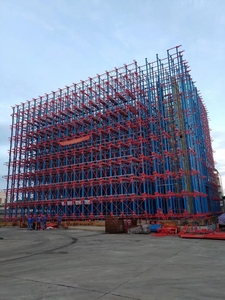
 Deep-Lane Auto
Enterprise Product Portfolio
Industrial-Grade Racking & Automated Storage Solutions
Our back-to-back selective configurations and integrated deep-lane dynamic structures provide structural rigidity, maximize floor utilization by up to 85%, and ensure rapid SKU fulfillment.
Deep-Lane Auto
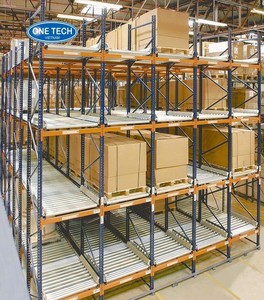 Dynamic FIFO
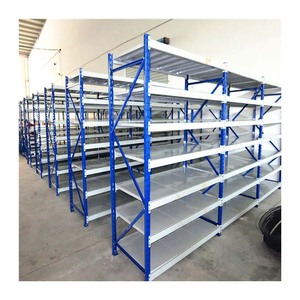 Boltless Shelf
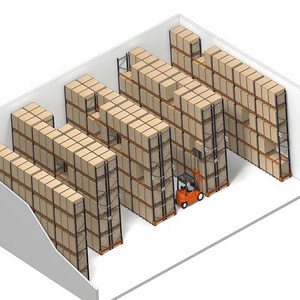 Heavy Duty Beam
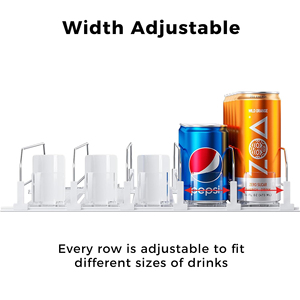 Retail Organizer
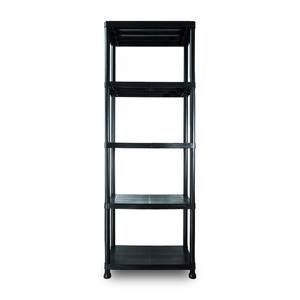 4-Tier Storage
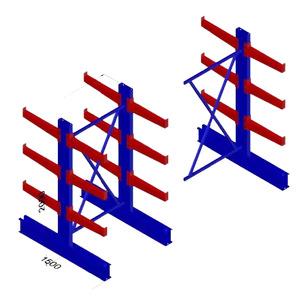 Long Goods Rack
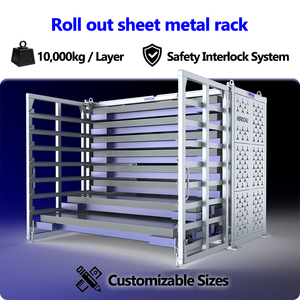 Certified Pallet
25+
Years of Precision Racking
Dedicated production since 2001 in our high-precision intelligent manufacturing plant.
30,000m²
Advanced Facility Area
Equipped with 10 continuous automated cold-roll forming lines and robotic welding bays.
30,000T
Monthly Output Capacity
Massive scalable manufacturing ensuring rapid container loading and consistent lead times.
120+
Export Destinations
Tested and trusted across high-seismic, tropical, and sub-zero refrigerated logistics corridors.
Manufacturing Superiority
Why Tier-1 3PLs and Global Distributors Rely on Our OEM/ODM Capabilities
From custom beam roll-forming to full finite element analysis (FEA), we provide complete structural accountability directly from the raw steel coil to your warehouse floor slab.
Full In-House Cold-Roll Forming
We operate 10 continuous roll-forming lines capable of handling Q235B and Q355B structural steel up to 3.0mm thickness. Profiles feature precision punch pitches that eliminate beam deflection under maximum live loads.
Stringent Surface Protection
Every structural upright and beam undergoes an automated 9-stage pickling, phosphating, and electrostatic powder coating process (60-80μm thickness). For high-humidity and outdoor sites, hot-dip galvanizing is engineered to EN ISO 1461 standards.
Free Engineering CAD & 3D Modeling
Our 30+ member structural engineering department creates site-specific CAD floor plans, aisle turning-radius checks for reaching trucks/counterbalance trucks, and precise 3D load simulation data before steel coils are slotted.
Seismic-Certified Engineering
Back-to-back rack frames incorporate rigid row spacers, dynamic bracing lattices, and enlarged baseplate anchor layouts calibrated to RMI MH16.1 and EN 15512 seismic performance standards for high-risk zones.
Audited Global Certifications
Backed by official CE certification (No. 2435-CPR-8605159), ISO 9001:2015 quality management accreditation (Certificate No. 18624Q00169R0M), and comprehensive RoHS environmental material compliance.
Turnkey Container Loading Lists
We eliminate port clearance bottlenecks. All parts are color-coded, steel-strapped with protective edge profiles, and documented with exact container bundle distribution mapping to ensure trouble-free onsite sorting and erection.
Industry White Paper: Engineering & Procurement Architecture of Back-to-Back Pallet Racking
Back-to-back pallet racking represents the foundational architecture for modern logistics centers, distribution hubs, and cold storage facilities. By placing two single rows of selective pallet racks back-to-back and connecting them with rigid structural row spacers, the system achieves mutual mechanical bracing. This setup significantly increases the moment of inertia along the cross-aisle direction, reducing frame slenderness and improving earthquake resistance while conserving valuable forklift aisle space.
As warehouse real estate costs continue to escalate globally, procurement managers and project designers face the challenge of maximizing pallet slot density without sacrificing the 100% immediate selectivity characteristic of pure selective racking. A back-to-back system configured with optimized aisle widths (from standard 3.2m–3.8m counterbalance aisles down to 1.7m–1.9m in Very Narrow Aisle (VNA) configurations) provides the highest floor utilization efficiency at the lowest initial capital cost per pallet position.
| Structural Parameter | Standard Engineering Range | High-Capacity / Cold Store Heavy | Design & Quality Compliance |
|---|---|---|---|
| Upright Column Sections | 80×60, 90×70, 100×70 mm (Thickness: 1.8–2.0mm) | 120×95, 140×95 mm (Thickness: 2.3–3.0mm) | Q235B / Q355B Steel (EN 10025) |
| Box Beam Profiles | 80×50 to 120×50 mm (Double C-interlock) | 140×50 to 160×50 mm (Heavy boxed sections) | Deflection limit < L/200, EN 15512 |
| Level Load Capacity | 1,000 kg – 2,500 kg per beam level | Up to 4,500 kg per pair of beams | Safety Factor ≥ 1.95 (RMI Standard) |
| Row Spacer Lengths | 200 mm to 300 mm (Standard pallet overhang) | 350 mm to 450 mm (Flue space & sprinklers) | NFPA 13 in-rack fire suppression compliance |
| Finishing Standards | Electrostatic polyester powder (60–80 μm) | Hot-Dip Galvanized (≥ 65 μm zinc coating) | ASTM B117 salt spray test ≥ 500 hours |
The Role of Flue Space & In-Rack Fire Protection: Modern regional fire safety codes (such as NFPA 13 and European EN standards) strictly regulate the vertical flue space between back-to-back rack runs. Our OEM/ODM design integrates engineered row spacers that lock frames at precise 300mm to 450mm apertures. This design guarantees unblocked vertical longitudinal flue spaces, enabling warehouse ESFR (Early Suppression Fast Response) ceiling sprinklers and in-rack pipe arrays to operate without flame channeling or delayed heat detection.
Strategic Sourcing Insights
Future Procurement Trends in Industrial Storage (2025–2030)
Purchasing decisions for heavy-duty storage racks are shifting from basic spot-metal buying to multi-attribute lifecycle analysis. Warehouse planners must consider the following technical and economic trends over the next decade.
Automation-Ready Hybrid Profiles
Racking systems are increasingly deployed to work alongside Autonomous Mobile Robots (AMRs), automated guided vehicles (AGVs), and stacker cranes. Upright punch tolerances and guide-rail integrations are now specified down to sub-millimeter tolerances to prevent automated sensing faults.
Decarbonization & Green Steel Mandates
Global supply chain contracts now demand lower embodied carbon metrics. Leading tier-one logistics builders look for manufacturers that source raw materials from low-emission electric arc furnaces (EAF) and utilize zero-VOC powder-coating recovery systems.
IoT-Connected Structural Monitoring
The integration of digital strain gauges and vibration sensors inside bottom upright legs allows logistics managers to monitor beam deflection, post-impact structural integrity, and seismic shifts in real time via facility management dashboards.
Direct Factory OEM/ODM Sourcing
Middlemen are being bypassed. Enterprise buyers are contracting directly with integrated Chinese manufacturing plants that provide complete certified FEA calculations, in-house quality control testing, and FOB/CIF destination port shipping arrangements.
Procurement Knowledge Base
Frequently Asked Questions on Back-to-Back Racking Systems
Clear, technical answers to help facility managers, procurement specialists, and warehouse contractors evaluate engineering standards, shipping logistics, and layout options.
What are the key structural benefits of back-to-back pallet racking compared to single runs?
+
Back-to-back pallet racks connect two runs of standard racking along their rear posts using steel row spacers. This dual-frame configuration provides substantial cross-aisle rigidity, reducing the unbraced length along the building depth and dramatically lowering deflection. It also cuts overall forklift travel distance by serving two deep pallet positions from a single shared aisle, eliminating redundant aisle space.
How does your factory accommodate seismic design requirements for overseas facilities?
+
Our engineering team uses local geotechnical site parameters, floor slab compressive strengths, and seismic spectral acceleration values (Ss, S1) based on international codes (including UBC, IBC, and EN 1998). We customize baseplate surface areas, anchor bolt diameters, upright steel grades (Q355B), and horizontal/diagonal frame bracing patterns to ensure complete seismic compliance.
What is the standard spacing (flue space) required between back-to-back rack frames?
+
The standard row spacer spacing typically ranges between 200mm and 450mm. A 300mm spacer is most common for standard 1200x1000mm pallets with a 50mm front/rear overhang, leaving a clean 150mm vertical flue space. For warehouses with in-rack sprinkler pipe systems or specific NFPA 13 requirements, 350mm to 450mm row spacers are installed to provide adequate clearance for plumbing and water discharge patterns.
Can we request custom punch pitches, colors, and profile dimensions under your OEM/ODM program?
+
Yes. We offer complete OEM and ODM services. We can manufacture uprights with teardrop, diamond, or hex pitch configurations (50mm, 75mm, or 76.2mm adjustment centers) to maintain backwards compatibility with your existing racking systems. We also provide full RAL color powder matching, custom steel roll-forming tooling, and branded product labels.
How are large racking components protected during sea container transit to prevent corrosion and damage?
+
Upright frames are stacked flat with non-abrasive corrugated separation sheets and corner protectors. Beams are bundled in matched pairs with steel banding, heavy plastic wrapping, and wooden skids beneath the strapping points. All small hardware items (safety pins, bolts, levelling shims) are sealed inside heavy wooden cases or reinforced, labeled export cartons to prevent moisture exposure and shifting during transit.
What technical data is required from our engineering team to generate a free layout proposal?
+
To generate a complete CAD design, 3D rendering, and quotation, we need: (1) Warehouse architectural drawings showing clear heights, column grids, and egress doors; (2) Pallet specifications (width, depth, overall height, and maximum loaded weight); (3) Forklift model details (turning radius, maximum mast elevation, and collapsed mast height); and (4) Operating temperature conditions (standard ambient, cool room, or blast freezer).
Ready to Engineer Your High-Density Back-to-Back Storage Facility?
Connect with our structural racking engineers to receive a free warehouse CAD design, static load simulation, and direct-factory quotation tailored to your operational requirements.
Get Catalog