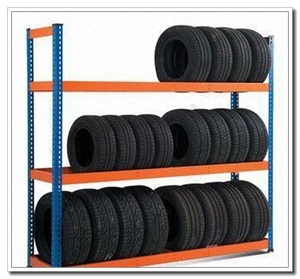
Wholesale Eyda Industrial Car Tyre Rack Metal Folding Stacking Rack
Designed for automotive OEM assembly lines and distribution hubs. Collapsible modular posts save 80% freight volume on reverse logistics.
Explore our heavy-duty, certified product lineup custom-profiled for precision manufacturing lines, raw material distribution hubs, and automated facility storage.
Designed for automotive OEM assembly lines and distribution hubs. Collapsible modular posts save 80% freight volume on reverse logistics.
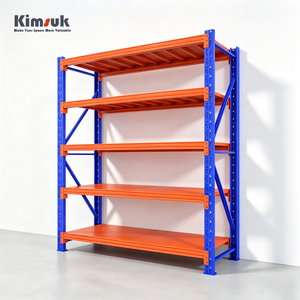
Precision riveted beam-to-column keyholes enable rapid, tool-free vertical pitch reconfiguration across fast-moving parts depots and buffer staging.
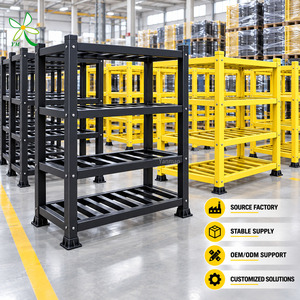
Pultruded fiberglass reinforced polymer profiles resist harsh chemical fumes, acid-wash protocols, and marine salinity in electroplating and MRO facilities.
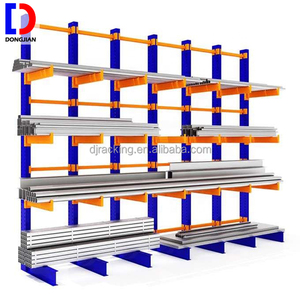
Heavy-duty track runners paired with cantilever guide rails allow unhindered overhead gantry crane access and high-cycle dynamic loading for machinery gates.
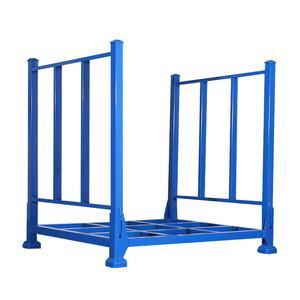
Interlocking cup-feet allow up to 5-tier vertical nesting without requiring static floor anchors, creating flexible staging lanes in stamping and forging plants.
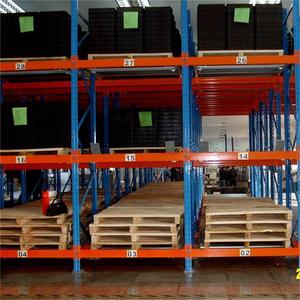
Integrated speed controllers and centrifugal brakes deliver controlled rolling speeds across deep lanes, optimizing strict batch expiration tracking.
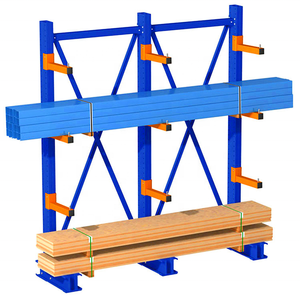
Eliminates front column interference, offering uninhibited horizontal loading for steel bundles, structural tubes, extrusions, and heavy lumber packs.
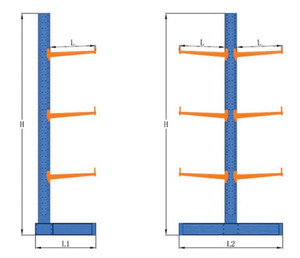
Built using high-tensile Q355B hot-rolled structural sections to withstand heavy side impacts and high dynamic torsion from sideloader fork operations.
Operating out of our 30,000 m² Guangzhou industrial facility, Guangzhou Heda Shelves Co., Ltd. combines heavy metallurgical engineering with automated precision forming to support demanding OEM warehouse projects globally.
Every structural profile undergoes strict batch testing to satisfy international building standards and seismic requirements.
We eliminate installation issues through in-depth digital twin layout modeling and dynamic stress calculations prior to stamping.
Exporting to Central America, the Caribbean, Southeast Asia, and Europe demands container-optimized packaging and modular assembly.
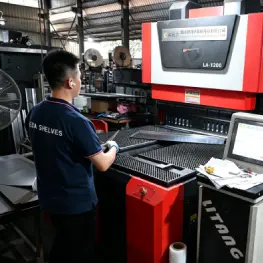
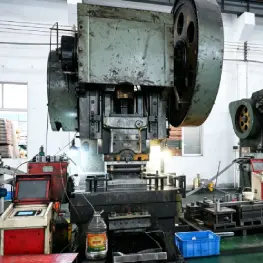
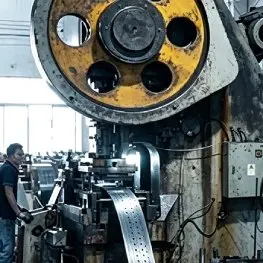
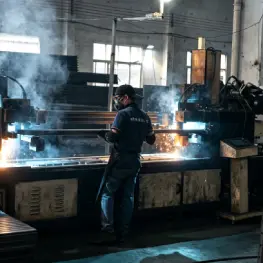
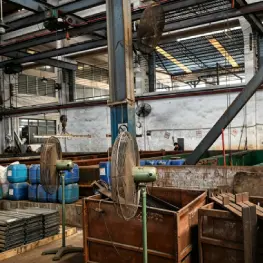
Every upright frame, support beam, and safety cross-tie is manufactured under strict quality gates in our dedicated workshop.
Industrial procurement is shifting from standalone component purchasing to integrated, lifecycle-engineered storage solutions. Plant managers are optimizing for space density, automation integration, and compliance resilience.
Traditional static drive-in racks are increasingly replaced by Radio Shuttle Racking and Autonomous Mobile Robot (AMR) platforms. Procurement teams are specifying tighter upright tolerances (±1.0mm) to allow smooth shuttle cart travel and optical sensor calibration without mechanical binding.
With manufacturing expanding across regional supply centers like Mexico, Southeast Asia, and Central America, factories need reconfigurable racking. Boltless adjustable beam connectors and bolted upright framing allow factories to reconfigure bay sizes as product lines change.
Factories are moving away from single-layer standard paints. Procurement engineers demand hot-dip galvanization (≥85μm) or epoxy hybrid electrostatic powder coatings to prevent corrosion in humid coastal warehouses and chemical manufacturing facilities.
Tier-1 factories avoid non-certified steel to protect insurance coverage and worker safety. Purchasing protocols prioritize manufacturers with traceable Q355B mill test certificates, verified CE load rating plates, and structural design calculations that comply with local seismic building codes.
| Storage System Type | Floor Space Utilization | Direct Selectivity | Typical Load Rating | Forklift Compatibility | Optimal Factory Application |
|---|---|---|---|---|---|
| Selective Pallet Racking | 40% – 50% | 100% (Direct Access) | 1,000 – 4,000 kg / level | Standard Counterbalance, Reach | High SKU counts, finished goods dispatch |
| Radio Shuttle System | 75% – 85% | Periodic / Batch Access | 500 – 1,500 kg / pallet | Standard reach (no rack entry) | Cold storage, food processing, buffer areas |
| Heavy-Duty Cantilever | 60% – 70% | 100% for Long Stock | 600 – 3,000 kg / arm | Side Loader, Multi-directional | Steel pipes, aluminum extrusions, timber |
| FIFO Gravity Pallet Flow | 70% – 80% | First-In, First-Out Only | 800 – 1,200 kg / position | Standard Counterbalance | Perishables, paints, chemical resins |
| Rack-Supported Mezzanine | Up to 180% (Vertical) | Tier-Specific Picking | 300 – 1,000 kg / m² | VRC, conveyors, hand trucks | Spare parts, kitting areas, maintenance MRO |
Modern industrial storage is driven by advanced metallurgical profiling, precision FEA stress analysis, and automated coating lines. Here is how our engineering practices set industry benchmarks.
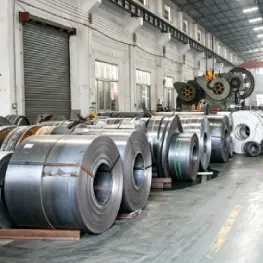
By using premium high-grade Q355B structural steel coils rather than conventional commercial-grade steel, our roll-forming stations create cold-formed upright profiles with increased yield strength (Fy ≥ 355 MPa). This provides higher strength-to-weight ratios and reduces the overall structural dead load on concrete warehouse slabs.
Multi-bend column profiles feature up to 13 strategic roll folds per section. This increases torsional resistance and prevents catastrophic localized buckling under dynamic seismic loading.
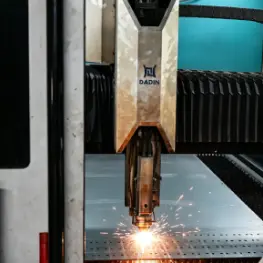
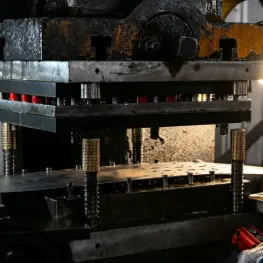
Beam deflection and dynamic sag are mitigated through our cold-punched, precision-stamped 3-claw and 4-claw beam end connectors. Welded with automated robotic CO2 shielded arc welders, these connections distribute heavy horizontal shear forces directly into the column wall.
Each connection point is secured with an integrated, zinc-plated spring safety pin that prevents accidental beam dislodgement from upward forklift mast impacts during high-bay picking.
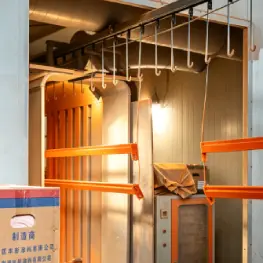
Long-term structural reliability depends on surface chemistry. Our finishing line runs through a full chemical treatment cycle: high-temperature alkaline degreasing, clean-water rinse, industrial acid rust removal, and a nano-ceramic phosphating bath.
Components are finished with an automated electrostatic thermosetting polyester powder coat and baked at 180°C–200°C. This yields a durable 60–90μm finish resistant to impact, scratching, and humidity.
Detailed technical, logistical, and structural answers to help plant managers, industrial architects, and procurement teams plan custom OEM storage projects.
Our engineers calculate system dynamics in strict compliance with ANSI MH16.1 (RMI standard) and European EN 15512 specifications. We use Finite Element Analysis (FEA) software to model frame stresses under full rated loads, forklift impacts, and seismic accelerations. For regions with high seismic activity (e.g., Central America or Southeast Asia), we calculate upright base-plate dimensions, back-to-back ties, and anchor bolt embeds based on local soil and building code data.
To produce an accurate 2D/3D CAD layout, our engineers need: (1) Warehouse architectural drawings detailing clear height, column grids, fire doors, and obstructions; (2) Pallet specifications including width, depth, overall height, and maximum loaded weight; (3) Forklift specifications, specifically turning radius, mast lift height, and collapsed clearance; (4) Inventory flow strategy (FIFO vs. LIFO) and daily throughput requirements.
Yes. As a direct OEM manufacturer, Guangzhou Heda Shelves produces custom beam profiles, open-face roll channels, cantilever arm angles, coil-cradle saddles, and cable drum supports. We adjust steel gauges (1.5mm to 3.5mm), upright depths (600mm to 1500mm), and beam punch configurations to match your specific production requirements.
For standard temperature-controlled warehouses, our multi-stage electrostatic powder coating provides strong corrosion resistance. For extreme environments—such as commercial blast freezers (-25°C) or coastal storage exposed to salt air—we recommend hot-dip galvanization (≥85μm thickness under ASTM A123) or epoxy-zinc primers to prevent rust and flaking over decades of service.
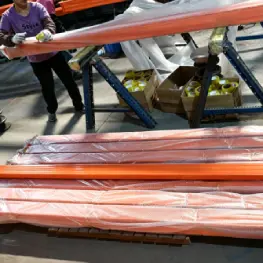
Uprights and frame trusses are steel-strapped with protective corner boards, corrugated wrappings, and dunnage pads to eliminate shipping damage. Beams are bundled by size with steel bands, while small parts (base plates, safety pins, shims, hardware) are crated in labeled wooden boxes. Every container includes an itemized packing list and structural assembly blueprint for customs and local staging.
For standard selective pallet racks with bays rated under 2,000 kg, a 150mm reinforced concrete slab with a compressive strength of at least 20–25 MPa (C20/C25) is typically sufficient. For heavy-duty cantilever systems, high-bay automated shuttle lanes, or multi-level mezzanines, we require 200mm to 250mm slabs (C30 or higher) to resist high localized point loads and moment stresses.
Discuss your facility dimensions, pallet loads, and expansion targets directly with our engineering team. We deliver custom 3D CAD layout proposals, complete load calculations, and itemized factory-direct pricing within 24 hours.