Specialized OEM Storage Racks & Pallet Systems
Precision-fabricated warehouse racking components engineered with cold-formed high-tensile steel, robotic welding arrays, and high-adhesion electrostatic finishing.
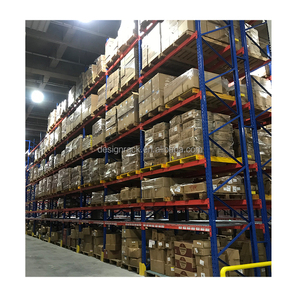
Universal industrial pallet racking providing 100% selective accessibility to every pallet location. Ideal for dynamic multi-SKU logistic centers.
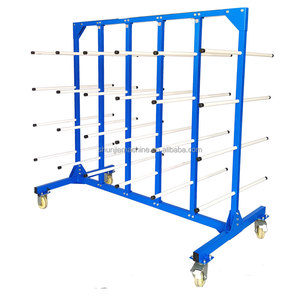
Heavy-duty structural storage for non-standard length profiles, steel tubes, aluminum extrusions, and timber packs with mobile transport wheels.
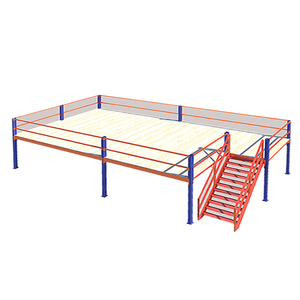
Multi-tier vertical floor structures doubling clear floor space. Designed with heavy beam spans engineered to bear 300–1,000 kg/m² live load.
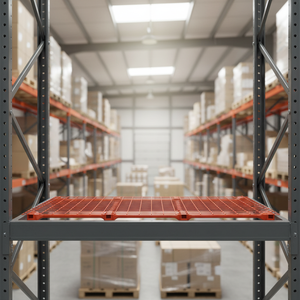
Fire-code compliant welded steel wire decking panels providing anti-drop safety, excellent water flow for sprinkler systems, and overhead illumination.
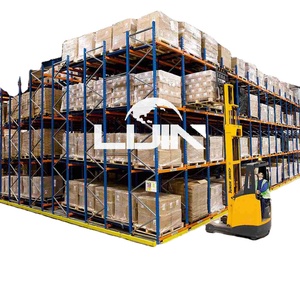
Automatic stock rotation operating strictly under FIFO (First-In, First-Out). Equipped with precision gravity brake rollers and automatic entry guides.
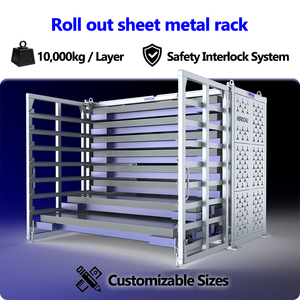
Certified cold-rolled structural upright frames built to resist lateral seismic forces and high-capacity loading per beam tier.
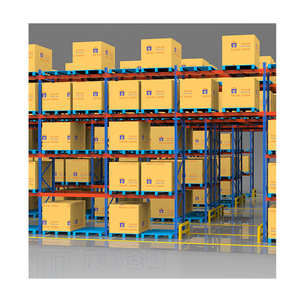
Optimized column footprint providing rigid, deflection-free beam spans for fast-turnover FMCG operations and third-party logistics fulfillment.
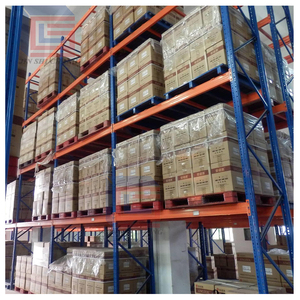
Turnkey high-bay warehouse rack infrastructure compatible with narrow aisle reach trucks, counterbalance forklifts, and AGV integration.
Push Back Racking Dynamics: Kinematics, Low Profile Rails, and Cart Tolerances
Push back pallet racking systems represent one of the most mechanically elegant solutions for high-density warehouse storage. Operating on an inclined rail framework (typically engineered at a 2.5% to 3.5% gradient), a push back system utilizes a series of nested rolling carts. The initial pallet is loaded directly onto the top nested cart by a standard counterbalance or reach forklift. When the second pallet is introduced, the forklift operator pushes the first cart rearward along the inclined rail track, exposing the second cart beneath it.
From an OEM manufacturing perspective, structural integrity and mechanical tolerances dictate system reliability. Guangzhou Heda Shelves Co., Ltd. builds nested push back carts from laser-cut structural steel tubing and press-brake cold-formed profiles, keeping vertical clearance losses under 120 mm per lane. This low-profile profile design allows multi-deep storage (2, 3, 4, 5, and up to 6 pallets deep) within vertical building envelopes that would choke bulkier systems.
Shielded Ball Bearings
Equipped with oversized steel bearings protected by dual labyrinth seals, preventing entry of warehouse dust, moisture, and debris while retaining high-grade lubricant across -30°C to +50°C environments.
Anti-Lift & Deceleration Stops
Integrated anti-lift mechanical hooks ensure nested carts never derail during impact loading, complemented by laser-cut end-stops that gently decelerate returning carts as front pallets are extracted.
Multi-Lane Modular Incline
Rails are designed in precision modular sections with laser-slotted pitch adjustments, allowing fine-tuning of gravity return speeds based on exact pallet weights, bottom runner types, and ambient cold room dynamics.
| Storage Racking Category | Space Utilization | Operating Principle | Forklift Lane Penetration | SKU Selectivity Ratio |
|---|---|---|---|---|
| Push Back Racking (OEM Dynamic) | 75% – 85% Floor Utilization | LIFO (Last-In, First-Out) | Zero (Mast stays in aisle) | High (1 SKU per lane) |
| Selective Pallet Racking | 40% – 50% Floor Utilization | FIFO / LIFO Access | Zero (Direct aisle picking) | 100% (Individual pallet access) |
| Drive-In Pallet Racking | 70% – 80% Floor Utilization | Strict LIFO Rotation | Deep Penetration Required | Low (1 SKU per entire bay) |
| Pallet Gravity Flow Racking | 80% – 90% Floor Utilization | Strict FIFO Flow | Zero (Separate load/pick aisles) | Moderate (1 SKU per lane) |
Procurement Trends in Dynamic Racking: Automation Compatibility & Life-Cycle ROI
Global warehouse real estate pressures and skyrocketing cold chain operational costs have structurally transformed pallet rack procurement. Today’s industrial supply chain directors no longer view racking as static steel shelves; they demand high-velocity dynamic assets designed around three distinct industry shifts:
1. Cold Room Footprint Compression
Refrigerated energy expenditures scale directly with cubic building volume. Procuring 4-deep and 5-deep push back systems allows temperature-controlled distribution facilities to compress required footprint by 40% compared to standard selective setups, drastically slashing refrigeration compressor loads and thermal loss per metric ton of stored perishable cargo.
2. Decoupling Equipment Risk from Operator Collision
Unlike drive-in systems where lift trucks must enter deep narrow structural tunnels—frequently causing rack column collisions—push back racks require forklifts to remain completely inside the working aisle. Procurement teams increasingly justify push back CAPEX by evaluating maintenance payback: zero mast-to-upright strikes inside lanes, decreased pallet handling cycle times, and minimal structural repairs.
3. Fleet Transition to AGVs & Reach Trucks
Modern fulfillment operations are deploying automated reach trucks (AGVs/AMRs). Customized push back racks require tightened fabrication tolerances (±1.0 mm) on guide-rail clearances and cart stops, ensuring automated guided vehicles can interface with push-back lanes with repeatable millimeter accuracy.
HEDA Shelves Manufacturing Ecosystem: From Raw Coil to Certified Racks
Operating a sprawling 30,000 m² state-of-the-art production base with an engineering and production workforce exceeding 300 technical specialists, Guangzhou Heda Shelves Co., Ltd. controls the complete manufacturing chain. Every push back rack, selective beam, and mezzanine component passes through rigorous, audited quality gates:
Automated CNC Roll-Forming
High-grade Q235B and Q355B structural steel coils are cold-bent and continuous-punched through dedicated automated production lines. Precision hole patterns ensure modular beam connection rigidity and anti-shear load resistance under extreme dynamic weight.
Multi-Stage Surface Preparation
Prior to coating, steel components undergo automated acid pickling and zinc-phosphating wash cycles. This removes mill scale and oxidization, establishing a chemical bond that guarantees superior adhesion for the subsequent powder coating layer.
Electrostatic Powder Polymerization
High-voltage electrostatic spray guns coat uprights, carts, and beams with non-toxic, RoHS-compliant thermosetting polyester powders. Cured at 200°C, the finish yields a durable 60–80 μm shield highly resistant to scratching, chipping, and tropical humidity corrosion.
Frequently Asked Questions: Push Back System Procurement
Direct technical answers from our chief structural design engineers to guide your facility planning, seismic verifications, and custom OEM manufacturing requirements.
How does push back racking compare to drive-in racking in cost and throughput?
While initial equipment CAPEX for push back racking is approximately 25% to 35% higher due to the mechanical rolling carts and precision rails, push back offers nearly triple the picking throughput. Forklifts do not enter lanes, cutting pallet loading/unloading cycle times from 4–5 minutes down to 90 seconds, while virtually eliminating structural forklift impact damage.
Can push back racking systems accommodate damaged or variable pallet sizes?
Yes. Custom OEM designs allow nested carts to feature solid wire mesh, perforated steel plates, or additional structural support cross-members. This allows facilities using non-standard GMA, Euro, or Australian pallets—or even pallets with broken bottom runners—to roll reliably without the risk of snagging.
What is the practical maximum pallet depth achievable in a push back lane?
Standard configurations operate efficiently at 2, 3, 4, and 5 pallets deep. While 6-deep lanes are structurally feasible, they require high forklift pushing force and mast capacity to compress five fully-loaded carts up the incline. For 5+ depths, our engineering team evaluates push-resistance calculations or recommends radio shuttle options.
How do you verify seismic stability for push back racking installations?
Our structural team runs finite element analysis (FEA) factoring in local seismic parameters (Ss and S1 spectral acceleration values), floor slab thickness, and compressive strength. Upright column gauges, diagonal bracing configurations, and heavy-duty seismic baseplate anchoring patterns are engineered to ensure life-safety standards.
What surface treatment is best for blast freezers and extreme coastal humidity?
For standard dry ambient warehousing, our 8-stage pickling, phosphating, and electrostatic powder coating provides robust corrosion resistance. For cold storage blast freezers (-25°C) or open-air coastal installations subject to salt spray, we provide hot-dip galvanized cart rails and zinc-plated structural hardware.
What documentation and CAD drawings are included before mass production?
Before steel cutting begins, HEDA Shelves provides comprehensive structural engineering packages including 2D CAD warehouse layouts, 3D clearance renderings, beam deflection calculations (conforming to L/200 deflection criteria), and stamped factory load capacity plaques.
Ready to Maximize Your Warehouse Storage Capacity?
Submit your warehouse floor plans, ceiling clearance heights, pallet dimensions, and operational throughput targets. Our engineering department will supply a complimentary 3D layout, structural load matrix, and itemized OEM factory quotation within 24 hours.
Get Catalog