Custom OEM Pallet Rack Bay Exporter & Exporters

Precision-Engineered Heavy Duty Warehouse Storage Racks, High-Bay Selective Bays, and Multi-Level Mezzanines Designed to Global CE, ISO 9001:2015, and RMI Structural Standards.

Engineered Heavy-Duty Solutions

Factory-Direct Pallet Rack Bays & Industrial Storage Equipment

Explore our certified heavy-duty storage bays, high-density selective racks, composite shelving, and multi-tier structural mezzanines custom-manufactured for international supply chains.

Get Catalog
25+
Years Manufacturing Excellence
30,000
Square Meters Factory Floor
30,000t
Monthly Fabrication Capacity
120+
Countries & Territories Served
Manufacturer Authority & E-E-A-T

Why Tier-1 Importers Partner With Us as Their Primary Pallet Rack Exporter

From metallurgical verification of Q235B and Q355B coils to robotic roll-forming and seismic load simulations, our export infrastructure guarantees flawless turnkey installation.

Dual CE & ISO 9001:2015 Certifications

We hold verifiable certifications including CE Certificate No. 2435-CPR-8605159 and ISO 9001:2015 Registration No. 18624Q00169R0M (valid through June 2027), fully meeting EN 15512, RMI, and FEM structural racking mandates.

Complimentary CAD & 3D Engineering

Our dedicated engineering department provides complimentary architectural layout modeling, dead-load/live-load calculations, slab reaction stress analysis, and full 3D BIM-compatible project previews within 24 hours of receiving site blueprints.

Container-Optimized Ocean Packaging

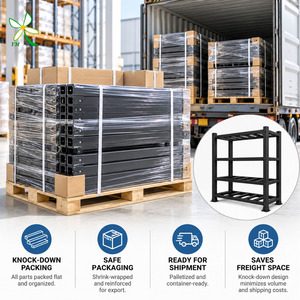
Every structural bay component, beam bundle, and upright pack is color-coded, labeled, and mathematically nested for 40ft High Cube containers, minimizing dead freight while accelerating customs clearance and on-site sorting.

10-Stage Controlled Manufacturing Workflow

Complete in-house manufacturing oversight guaranteeing zero metallurgical defect rates before container dispatch.

STAGE 01

Raw Material Inbound

Certified high-tensile Q235B/Q355B structural steel coils inspected for chemical yield composition.

STAGE 02

Precision Uncoiling & Slitting

Computer-guided uncoiling and continuous slitting to accurate beam and upright strip dimensions.

STAGE 03

Automated CNC Punching

High-speed hydraulic continuous punching of 50mm / 75mm pitch teardrop or diamond hole profiles.

STAGE 04

Continuous Roll Forming

Multi-station automated roller lines creating cold-bent upright Omega profiles without micro-fractures.

STAGE 05

Beam Profile Interlocking

Continuous twin-C seam welding and high-rigidity step-beam cold manufacturing for heavy deflection control.

STAGE 06

Robotic MIG Welding

Multi-axis automated robotic welding of multi-claw connectors to beam bodies with flawless penetration.

STAGE 07

Pickling & Phosphating

Automated multi-tank immersion pre-treatment removing scales and oxides, depositing an anti-corrosion barrier.

STAGE 08

Electrostatic Coating

Thermo-hardened epoxy-polyester powder application (60–80 microns) cured at 180°C–200°C for wear durability.

STAGE 09

Destructive QC Testing

Random batch testing for yield load ratings, weld seam micro-examinations, and coating salt-spray resistance.

STAGE 10

Seismic Packing & Loading

Heavy strapping, protective angle buffers, and computerized container weight-distribution placement.

Strategic Forecast: Future Global Procurement Trends for Industrial Racking (2025–2030)

The global warehousing and logistics industry is undergoing a structural paradigm shift driven by automated material handling, supply chain regionalization, and stricter building safety codes. For procurement directors, corporate supply chain leaders, and warehouse racking exporters, purchasing strategies are moving past simple cost-per-pallet metrics toward lifecycle value, dynamic compliance, and interoperability.

1. Automation-Ready Engineering (ASRS & AMR Integration): The proliferation of Autonomous Mobile Robots (AMRs) and Automated Storage and Retrieval Systems (ASRS) requires pallet rack bays with tighter manufacturing tolerances. Deflection tolerances under load are shifting from traditional L/200 thresholds to stricter L/300 or L/400 limits to prevent robotic sensor misalignment. OEM exporters must engineer bay uprights and support beams that seamlessly accommodate automated shuttle tracks and sensor reflectors.

2. Decarbonization & Low-VOC Powder Coating: Scope 3 emission reporting standards in Europe and North America have made environmental criteria central to industrial procurement. Global buyers are prioritizing exporters that utilize sustainably refined steel coils and zero-VOC, heavy-metal-free electrostatic powder coatings that pass stringent RoHS tests without compromising mechanical wear resistance.

3. Resilience Against High Seismic & Climatic Variability: With logistics hubs consolidating into seismic zones and coastal trade belts across the Americas, the Caribbean, Southeast Asia, and Oceania, standard generic rack bays are rapidly becoming uninsurable liabilities. Buyers demand site-specific seismic base plate engineering, customized chemical anchor embedment depths, and anti-corrosive finishes—ranging from hot-dip galvanization (HDG) to high-durability polyester finishes suited for high humidity and cold storage condensation.

Dynamic High-Bay Modularity

Modern procurement prioritizes boltless, reconfigurable bay connections that allow warehouse operators to adjust storage tier elevations as their SKU dimensions and pallet profiles evolve over operational cycles.

Total Cost of Ownership Focus

Long-term fleet maintenance costs are replacing upfront price metrics. Durable 5-hook beam connectors, column upright protectors, and factory-certified impact buffers significantly reduce warehouse downtime and repair expenditures.

Standardized Regional Compliance

Exporters must guarantee cross-border design documentation matching US RMI MH16.1, European EN 15512, and Australian AS 4084 standards, streamlining local municipal permit issuance and third-party engineering approvals.

Direct OEM Supply Agreements

Enterprise 3PL operators are bypassing domestic intermediaries to contract directly with high-capacity OEM factories, unlocking 20–35% direct CAPEX savings, guaranteed lead-time scheduling, and customized private-label color schemes.
Product Architecture & Technology Evolution in Heavy-Duty Rack Engineering

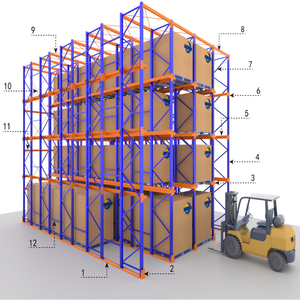
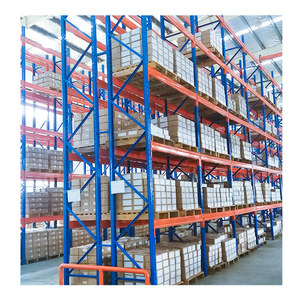
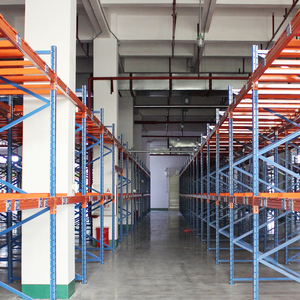
The structural engineering of modern pallet rack bays has evolved from simple post-and-beam frameworks into sophisticated, finite-element-analyzed (FEA) structures. As logistics operators build taller distribution centers to offset rising land lease costs, structural rack bays must withstand immense static vertical compression alongside complex dynamic stresses induced by high-reach turret trucks and seismic forces.

1. Finite Element Analysis (FEA) & Cold-Formed Section Optimization: Modern upright profiles feature continuous multi-bend Omega geometries that increase torsional rigidity without excessive steel dead weight. By redistributing cross-sectional material to critical stress corners, engineered cold-formed uprights achieve up to 25% higher buckling resistance compared to legacy rectangular or C-channel profiles.

2. Advanced Hook Connector Engineering: The mechanical interface between the horizontal step beam and the vertical upright column represents the critical failure point in high-bay racking. State-of-the-art bays incorporate 4-claw or 5-claw high-tensile stamped steel connectors welded with robotic precision. When locked by heavy-duty spring-activated safety pins, these connectors create semi-rigid rotational joints that effectively distribute live load bending moments across the entire frame structure.

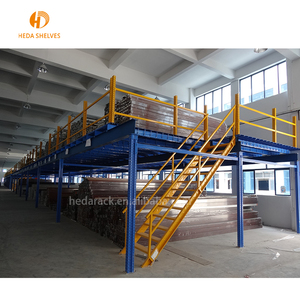
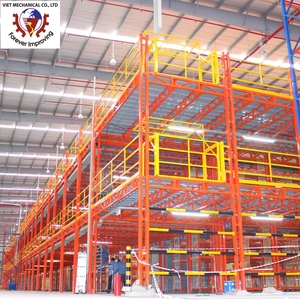
3. Hybrid Structural Mezzanine Platforms: To maximize cubic warehouse utilization without costly civil expansions, modern facilities utilize rack-supported multi-tier mezzanine floors. By transforming heavy-duty pallet rack uprights into primary structural columns supporting heavy C/Z-purlin subfloors, facilities can support automated carton-flow picking levels, conveyor routes, or packaging zones above primary pallet storage bays.

Knowledge Base & Buyer FAQs

Frequently Asked Questions on Custom OEM Pallet Rack Bay Procurement

Direct technical answers addressing structural calculations, steel certifications, surface treatments, seismic anchoring, and ocean shipping logistics.

?
What structural steel grades are utilized for heavy-duty pallet rack bays, and how is yield strength verified?
Our pallet rack uprights and load-bearing beams are fabricated from certified hot-rolled and cold-rolled structural steel coils corresponding to Q235B (yield strength ≥ 235 MPa) and Q355B / High-Tensile Grade 50 (yield strength ≥ 355 MPa). Each production batch is cross-referenced with mill test certificates (MTC), verifying carbon equivalents, tensile strength, and elongation according to ASTM A1011 or EN 10025 standards before processing.
?
How are seismic design categories and ground motion parameters factored into custom bay configurations?
For projects in earthquake-prone regions, our structural engineers evaluate the site's spectral acceleration coefficients (Ss, S1), seismic design category (SDC A through F), floor slab concrete compressive strength (fc), and slab thickness. We then adjust the upright profile gauge, expand the base plate surface area, optimize diagonal cross-bracing patterns, and specify high-tensile seismic mechanical wedge or chemical capsule anchors.
?
What is the recommended surface coating for high-humidity, coastal, or cold-storage environments?
For climate-controlled dry warehouses, our 10-stage automated electrostatic powder coating (pickling, phosphating, electrostatic powder deposition at 60–80μm) provides outstanding scratch and oxidation resistance. For non-climate-controlled coastal facilities, outdoor applications, or sub-zero food cold rooms, we provide continuous hot-dip galvanized (HDG) steel components adhering to ISO 1461, ensuring over 20 years of rust-free service life under condensation.
?
Can you manufacture custom teardrop, slotted, or diamond punch patterns compatible with existing systems?
Yes. As an experienced OEM and ODM exporter, our CNC punching presses are equipped with interchangeable tooling. We manufacture American standard teardrop punch profiles (fully interchangeable with mainstream US racking brands), European 50mm/75mm diamond and rectangular slots, and custom Australian 76.2mm pitch configurations to seamlessly integrate with your existing warehouse infrastructure.
?
How do you calculate safe beam working loads and deflection limits?
Safe working load (SWL) capacities are calculated based on uniformly distributed loads (UDL) per beam pair in accordance with ANSI MH16.1 and EN 15512 codes. The structural deflection limit is maintained at L/200 for standard manual forklift loading, and can be engineered to L/300 or L/400 for high-tolerance automated crane and shuttle systems. Every beam calculation includes an integrated safety factor of 1.5 to 1.65 against structural yield.
?
What documentation and support are provided to facilitate customs clearance and safe on-site installation?
Every export shipment includes a certified commercial invoice, packing list itemized by container bundle number, bill of lading, Certificate of Origin (CO/Form E/Form F), mill test reports, CE declaration of conformity, and comprehensive 2D/3D CAD installation assembly blueprints. For turnkey installations, we provide remote high-definition video engineering guidance or deploy factory engineers for on-site supervisory oversight.

Transform Your Warehouse Cubage With Precision OEM Racking

Submit your facility dimensions, floor plan CAD, pallet weight profiles, and forklift lift heights. Our engineering department will deliver an itemized CAD floor plan, 3D rendering, and structural quotation within 24 hours.

Get Catalog