Industrial-Grade Gravity Flow & Dynamic Racking Portfolio
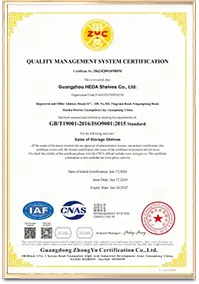
Manufactured strictly according to international structural standards (CE and ISO 9001:2015), offering unmatched pallet velocity control, high density, and optimized first-in, first-out (FIFO) logistics efficiency.
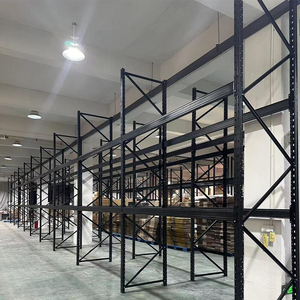
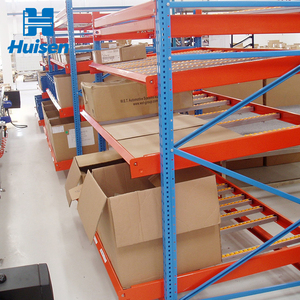
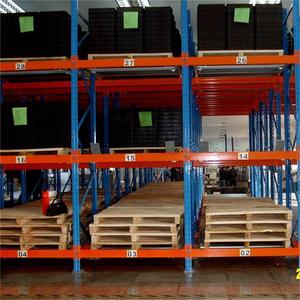
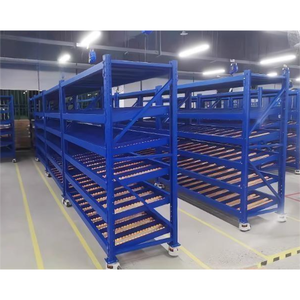
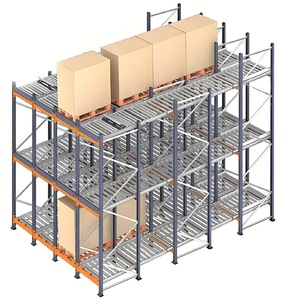
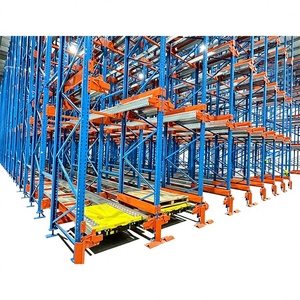
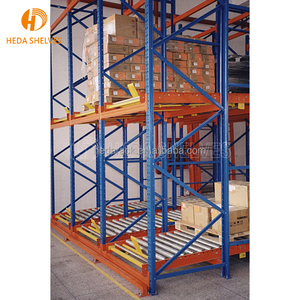
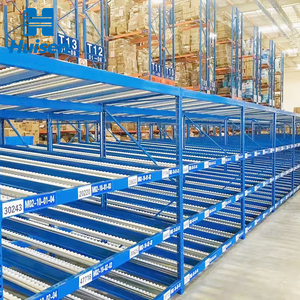
Engineering Deep-Dive: Mechanical Physics & Kinematics of Pallet Flow Racking
Pallet flow racking systems—often designated as gravity flow or dynamic live storage racking—utilize gravitational force to advance palletized unit loads automatically along an engineered inclined track. In comparison to static selective systems that demand multiple operating forklift aisles, custom OEM pallet flow racks establish dedicated loading faces (charge side) and picking faces (discharge side), eliminating up to 60% of internal transit corridors while achieving strict First-In, First-Out (FIFO) material movement.
The core operational integrity of a gravity pallet flow lane rests upon three fundamental hydrodynamic and mechanical variables: track pitch inclination angle (θ), dynamic rolling friction coefficients (μr), and controlled centrifugal velocity dampening. For typical GMA (48×40 inch) and Euro (1200×800 mm) wooden or composite plastic pallets, the track inclination gradient is calculated meticulously between 2.5% and 3.5% (approximately 1.5° to 2.0°). Insufficient pitch leads to stall conditions where pallets stop short mid-lane, whereas excessive gradient causes runaway velocity exceeding the structural dampening threshold, escalating terminal collision risk at the pick face.
In lanes extending beyond 4 pallet positions (deep-lane architectures exceeding 50 feet), HEDA integrates internal centrifugal friction brakes or non-contact magnetic eddy-current brake rollers. These dampening units rotate freely until the linear velocity of the descending pallet surpasses 0.3 meters per second. Upon reaching this critical threshold, internal brake shoes or eddy magnetic fields engage automatically, counteracting gravitational acceleration and maintaining uniform descent speed regardless of whether the pallet weighs 300 kg or 1,500 kg.
| Storage System Type | Space Utilization | Inventory Rotation | Forklift Travel Time | Cold Store Energy Efficiency | Ideal SKU Profile |
|---|---|---|---|---|---|
| Custom Pallet Flow (FIFO) | Up to 85% Volumetric | 100% Strict FIFO | Reduced by 45% - 65% | Exceptional (Minimal Air Volume) | Fast-moving, Perishables, FMCG |
| Standard Selective Racking | 35% - 40% Volumetric | Selective (Any Order) | High (Aisle dependent) | Poor (Large heated/cooled volume) | High SKU variety, Slow to Medium turnover |
| Drive-In Racking (LIFO) | 65% - 75% Volumetric | Strict LIFO | Moderate (Truck enters rack) | Good, but high equipment damage rate | Homogeneous bulk items, non-perishable |
| Push-Back Cart Racking | 60% - 70% Volumetric | Strict LIFO | Moderate (Push force required) | Moderate (Up to 5 deep lanes) | 2-5 pallets per SKU, Medium turnover |
| Radio Shuttle Systems | 80% - 90% Volumetric | FIFO or LIFO | Low (Semi-automated car) | High (Battery management required) | High-throughput, Deep lane cold vaults |
Strategic Sourcing & Technology Trends Shaping Pallet Flow Systems
As procurement executives and chief supply chain officers evaluate warehouse infrastructure capital expenditures (CapEx) for 2026 and beyond, pallet flow racking systems are transitioning from passive mechanical steel frameworks into intelligent, data-integrated logistical nodes. The following four macroeconomic and mechanical trends dominate contemporary OEM specifications:
Hybrid Pallet Surface Handling
Modern supply chains deploy wood, composite plastic, and metal skid runners simultaneously. Next-gen pallet flow tracks employ split triple-roller tracks and full-width staggered steel rollers capable of conveying irregular pallet runners without lateral jamming.
Sub-Zero Energy Optimization
Refrigerated and frozen food logistics demand maximum thermal cube density. Gravity flow systems eliminate forklift aisles within the conditioned envelope, slashing refrigeration run cycles and electricity consumption by up to 35% compared to conventional layouts.
High-Performance Surface Coatings
Standard indoor electrostatic powder coating is increasingly augmented by continuous pre-galvanized coils or full hot-dip galvanized (HDG) post-fabrication treatments, securing structural longevity in tropical 90%+ humidity or chemical environments.
Automated Separator Separators
To eliminate back-pressure when forklifts extract pallets at the discharge face, advanced mechanical pallet separators temporarily isolate the lead pallet from the upstream queue, safeguarding drivers, equipment, and structural uprights from dynamic shock.
HEDA Shelves Manufacturing Authority & Factory Advantages
Since our incorporation in 2001 in Guangzhou, China, Guangzhou Heda Shelves Co., Ltd. has developed into a premier tier-one manufacturing authority for industrial storage systems. Operating from an expansive 30,000 square meter standardized industrial facility powered by over 300 experienced engineers, CNC fabricators, and QA specialists, we achieve a robust monthly throughput of over 30,000 tons of high-strength structural steel.
Full OEM & ODM Customization
We do not impose fixed catalog dimensions. Our engineering department tailors beam lengths, frame depths, steel gauges (Q235B & Q355B structural grades), and roller configurations to your precise warehouse building clearances, floor loading limits, and pallet footprints.
Seismic & Tropical Climate Engineering
Having completed over 10,000 major installations across seismic zones in Latin America, Southeast Asia, and the Middle East, our certified structural engineers perform finite element analysis (FEA) to specify enlarged baseplates, heavy anchor bolts, and rigid cross-bracing frameworks.
Container-Optimized Logistics & Export Support
Exporting across 120+ countries means cargo must arrive straight, rust-free, and organized. We bundle components using heavy-gauge protective strapping, moisture-barrier wrapping, and color-coded shipping manifests matching 3D installation CAD diagrams.
10-Stage Precision Manufacturing & Quality Assurance Process
Every upright column, dynamic roller rail, and load beam passes through a rigorous sequence of 10 automated and quality-controlled fabrication phases to ensure strict dimensional fidelity, high load deflection resistance, and superior corrosion protection:
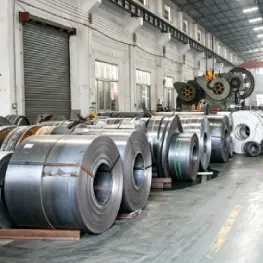
Raw Materials
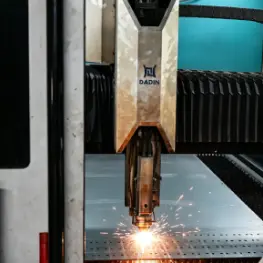
Precision Cutting
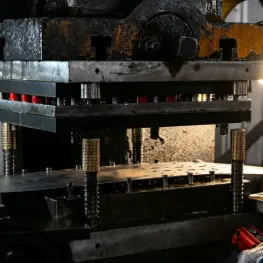
CNC Punching
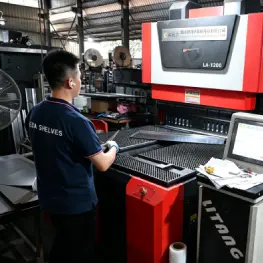
Cold Bending
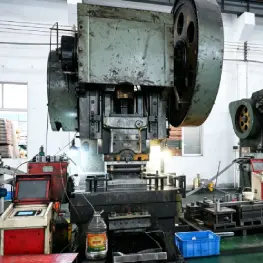
Profile Forming
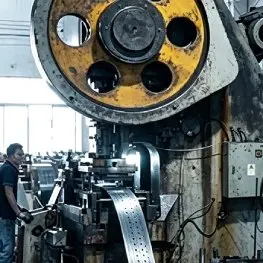
Edge Polishing
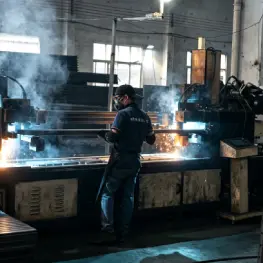
Robotic Welding
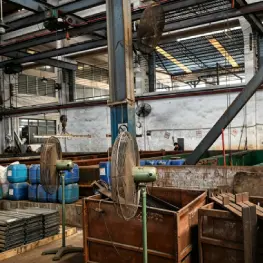
Pickling & Phosphating
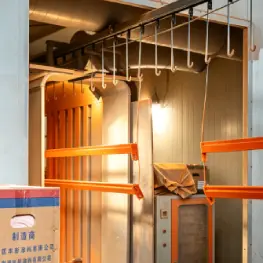
Electrostatic Coating
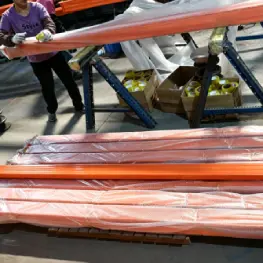
QA & Export Packing
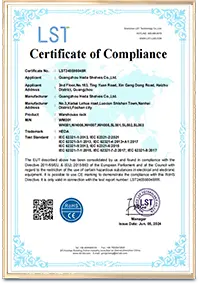
Audited International Certifications & Testing Accreditations
HEDA Shelves products carry verifiable credentials required by international civil engineers, structural certifiers, and industrial insurance underwriters:
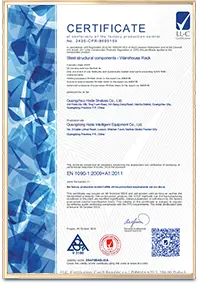
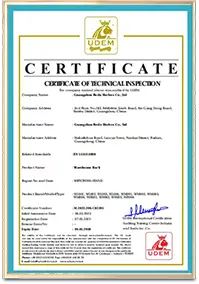
Frequently Asked Questions in OEM Pallet Flow Procurement
Comprehensive engineering and procurement answers for international supply chain directors, warehouse operations managers, and systems integrators.