Precision-Manufactured Warehouse Racking & High-Density Storage Solutions
Customized structural fabrication adhering to international building codes, FEA load validation, and automated profile cold-forming for distribution hubs, third-party logistics (3PL), and manufacturing yards.
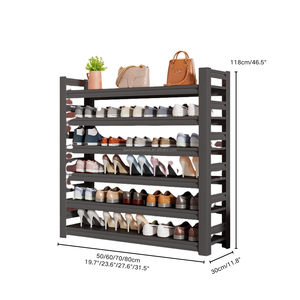 Light-Duty Utility
Tianhaida Adjustable Steel Garage Storage Shelf Rack
- Freestanding anti-corrosion utility steel
- Boltless beam level height adjustment
- Compact footprint for workshops & vaults
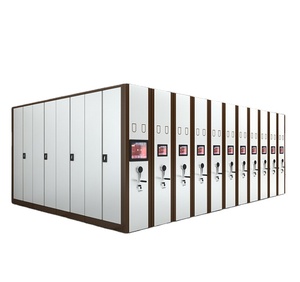 High-Density Mobile
JINGYE Intelligent Metal Mobile Book Shelving Archives
- Electronic / mechanical track-driven system
- Dense compact storage saving 60% aisle space
- Integrated anti-pinch infrared safeguards
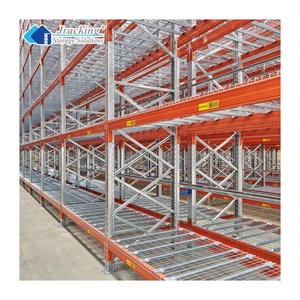 AS4084 Certified
Jracking Industrial Heavy Duty Pallet Racking System
- High-tensile Q235B / Q355B cold-rolled steel
- Certified to Australian AS4084 & EN 15512
- 1,000 to 4,500 kg per beam level capacity
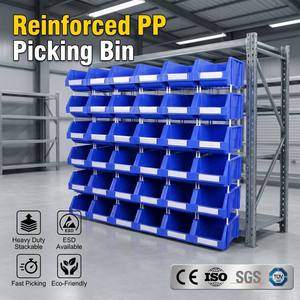 Order Picking Parts
INORDER Semi-Open Stacking Warehouse Bin Organizer
- Reinforced PP copolymer injection molding
- Rapid hardware classification & SKU sorting
- Modular integration on louvred louver panels
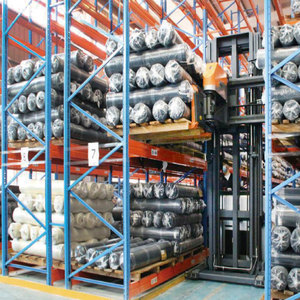 VNA Space Optimizer
Narrow Aisle 5 Layer Heavy Duty Steel Shelving
- Cold-rolled vertical profile optimization
- 5-tier ultra-narrow aisle configuration
- 500 to 1,200 kg uniform distributed loads
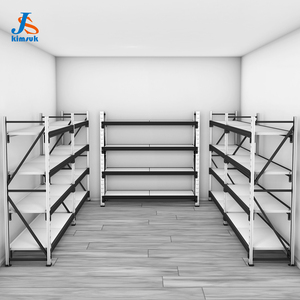 Selective / Cantilever
Warehouse Selective Pallet Racking Solutions
- 100% immediate pallet selectivity & access
- Adaptable to timber, mesh decking & skids
- Compatible with reach trucks & counterbalanced
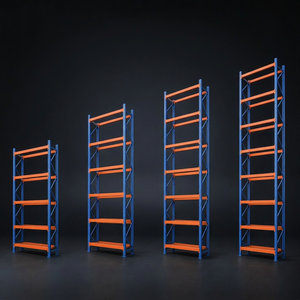 High-Bay Automated
Heavy Duty High Bay Warehouse Pallet Rack
- Up to H7800mm+ vertical clear bay elevation
- 3,500 kg per pair of heavy roll-formed box beams
- Strict verticality tolerance under dynamic shock
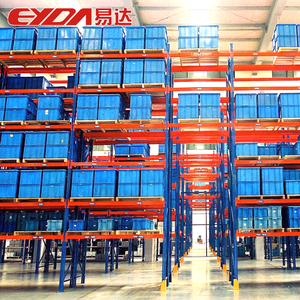 Industrial Multi-Duty
Single Deep Industrial Pallet Rack Shelving
- Single/double deep layout optimization matrix
- Heavy structural upright section cold rolled
- Electrostatic epoxy thermoset powder coating
30,000 m²
Factory Infrastructure
30,000 Tons
Monthly Steel Output
120+ Countries
Export Distribution
25+ Years
Since 2001 Audited OEM
Structural Integrity, Load Dynamics, and Seismic Mitigation in Pallet Racking Architecture
Modern industrial pallet racking systems are dynamic load-bearing steel structures subjected to combined gravitational, seismic, operational, and fork-truck impact forces. As warehouses extend clear heights to 12–30 meters and adopt high-speed reach trucks or automated guided vehicles (AGVs), the structural demands on upright columns, beam connections, and anchorage increase exponentially. Guangzhou Heda Shelves Co., Ltd. (operating since 2001) implements comprehensive computer-aided finite element analysis (FEA) to simulate 3D elastic-plastic stresses across all racking assemblies under EN 15512, RMI MH16.1, and AS4084 standards.
1. Metallurgy, Cold Roll-Forming Precision, and Moment Capacity
Structural reliability starts with raw coil metallurgy. We utilize high-ductility, certified Q235B and Q355B structural carbon steel (equivalent to ASTM A36 and ASTM A572 Grade 50). The cold roll-forming process introduces controlled strain hardening at critical section bends, enhancing the yield strength of the finished profile without sacrificing ductility. Upright columns feature multi-faceted omega profiles with up to 13 distinct bending planes, maximizing the cross-sectional moment of inertia ($I_x$, $I_y$) while minimizing torsional buckling tendencies.
Beam-to-column connections are engineered utilizing a multi-tooth drop-in claw design equipped with automatic spring-loaded steel safety pins (withstand shear force exceeding 1,000 kg). This mechanical locking mechanism resists accidental vertical forklift dislodgment while establishing dynamic semi-rigid moment connection behavior ($K_{conn}$), significantly dampening lateral side-sway across unbraced longitudinal aisles.
2. Complete Ten-Stage Anti-Corrosion & Automated Manufacturing Process
Unlike light commercial suppliers that apply spray-on lacquer directly over oily raw steel, our factory enforces a ten-step chemical pretreatment and thermal cure cycle to ensure 500+ hours of salt-spray resistance in tropical and high-humidity maritime logistics hubs:
Steel Coil Inflow
Mill test certificates (MTC) verification and ultrasonic thickness calibration.
Precision Slitting
High-tolerance longitudinal strip cutting to exact section blanks.
CNC Punching
Automated 50mm/75mm continuous pitch hole perforation with sub-millimeter precision.
Continuous Roll-Form
Multi-stage progressive cold bending to create structural upright and step-beam geometries.
Profile Calibration
Straightening and laser angle inspection to eliminate camber, sweep, and twisting.
Robotic Welding
Automated gas metal arc welding (GMAW) linking connector claws to interlocking box beams.
Mechanical Polishing
De-burring, slag extraction, and edge radiusing to prevent coating voids.
Chemical Pretreatment
Tri-stage hot water degreasing, acid pickling rust removal, and dense zinc phosphating.
Electrostatic Coat
Automatic electrostatic powder spray deposition (60–90 μm thickness) with thermoset epoxy.
Thermal Curing & QC
200°C curing tunnel, cross-hatch adhesion testing, and containerized bundle packaging.
3. Seismic Hazard Zone Engineering & Foundation Slab Load Transfer
Warehouses constructed across dynamic seismically active belts—such as Central America's Pacific Ring of Fire (Guatemala, El Salvador, Costa Rica, Panama) or Oceania—cannot operate with generic catalog racking. Dynamic horizontal seismic forces ($V = C_s \cdot W$) amplify floor shear and overturning moments. Our structural engineering team factors in site ground acceleration parameters ($S_s$, $S_1$), building occupancy importance categories, and concrete slab compressive strength ($f'_c \ge 25\text{ MPa}$). We supply oversized 12mm–16mm structural steel base plates anchored by dual heavy-duty wedge mechanical or chemical resin anchors, distributing dynamic point-loads across the slab to eliminate floor punching failure.
Pallet Racking System Architecture: Comparative Technical Matrix
Detailed performance benchmarks to assist procurement officers and warehouse operations directors in selecting optimal racking topologies.
| Storage System Architecture | Space Utilization | SKU Selectivity | Rotation Rule | Max Height Capability | Typical Applications |
|---|---|---|---|---|---|
| Selective Pallet Racking | 40% – 50% | 100% (Instant) | FIFO / LIFO | Up to 12.0 Meters | General FMCG, 3PL Warehouses, Multi-SKU Distribution |
| Double Deep Pallet Racking | 55% – 65% | 50% Direct | LIFO | Up to 11.5 Meters | Dry Grocery, Paper Products, High-Volume Identical Lots |
| Drive-In / Drive-Thru Racking | 65% – 75% | Low (Batch only) | LIFO (Drive-In) / FIFO | Up to 10.0 Meters | Cold Storage, Beverage Bottling, Seasonal Agricultural Crops |
| Radio Shuttle Automation Racking | 75% – 85% | Medium-High | FIFO or LIFO | Up to 24.0 Meters | Refrigerated Cold Rooms, Deep Freeze (-25°C), High-Throughput Food |
| Very Narrow Aisle (VNA) Systems | 60% – 70% | 100% (Instant) | FIFO / LIFO | Up to 18.0 Meters | High-Bay E-Commerce Hubs, Pharmaceutical Distribution, High-Land-Cost Hubs |
| Structural Rack Mezzanine Floor | Up to 200% Floor Area | Manual & Pallet Access | Flexible | Multi-Tier (2-4 Floors) | Automotive Spare Parts, E-Commerce Split-Case Picking, Garments |
Why Global Importers and Enterprise Supply Chains Choose Us
Combining 25+ years of factory-direct precision fabrication with end-to-end export documentation, custom OEM profile stamping, and international safety compliance.
Audited Certification Credentialing
Our production facilities maintain third-party audited compliance certifications verifiable by municipal planning boards and insurers worldwide.
- CE Certificate No. 2435-CPR-8605159
- ISO 9001:2015 No. 18624Q00169R0M
- RoHS Environmental Compliance
Free 3D Layout & Engineering Design
We provide full turnkey pre-sales structural calculation reports, AutoCAD floor layout drawings, and realistic 3D renderings within 24 to 48 hours.
- Optimized aisle widths for specific forklift models
- Building column bypass and egress route safety
- Deflection verification under $L/200$ criteria
Container-Optimized Global Export Logistics
Every shipment is packed with custom steel strapping, bubble wrap, corner dunnage, and sequenced barcoded crate labels for damage-free ocean freight.
- FOB, CIF, DDU/DDP delivery worldwide
- Direct routes to Balboa, Colón, Puerto Cortés, Puerto Quetzal
- Sequenced bundling matches project installation order
Future Sourcing & Procurement Trends in Warehouse Storage Systems
How automation integration, environmental ESG compliance, and micro-fulfillment demand are reshaping global supply chain infrastructure through 2026–2030.
1. Semi-Automated Shuttle Systems Replacing Deep Drive-In
While traditional drive-in racking delivers dense volumetric storage, forklift collision incidents with bottom uprights generate substantial ongoing maintenance overhead. Future-focused logistics procurement is rapidly migrating toward Radio Shuttle Racking and automated 4-way pallet shuttles. Shuttles glide along internal rails beneath pallets, eliminating the need for forklifts to enter the racking lanes. This slashes vehicle maneuvering cycles by up to 45% and reduces upright collision structural damage to zero.
2. Vertical High-Bay AS/RS Integration
Industrial land acquisition costs in urban periphery zones and port-adjacent free-trade territories have surged by over 30% globally. Procurement leaders are maximizing cubic volume rather than square footage. Turnkey high-bay automated storage and retrieval systems (AS/RS) extending up to 30 meters integrate directly with crane-tied rack structures. These setups feature ultra-strict verticality tolerances (within 1/1000 deflection) manufactured from high-yield, cold-drawn micro-alloy steels.
3. Green Steel & Low-VOC Closed-Loop Finishing
Global supply chain procurement mandates increasingly stipulate corporate Environmental, Social, and Governance (ESG) adherence. Sustainable racking manufacturing is transitioning to low-carbon electric arc furnace (EAF) recycled scrap steel and zero-solvent, heavy-metal-free thermosetting powder coatings. Our closed-loop powder reclamation recycling recovers 98% of oversprayed particles, providing fully compliant procurement credentials for international corporate balance sheets.
4. Near-Port Regional Resilience & Pre-Engineered Stock
Ocean freight volatility has caused global enterprise buyers to avoid single-supplier custom dependency. Forward-looking distributors in Latin America, Southeast Asia, and Europe are partnering with OEM manufacturers capable of producing universal teardrop, box-beam, and diamond-hole upright profiles. This ensures that field extensions, wire mesh decking, and replacement upright frames remain interchangeable with pre-existing warehouse racking inventory.
5. Smart Sensor Racking & Real-Time Overload Telemetry
Industry 4.0 intralogistics is embedding Internet-of-Things (IoT) strain gauge sensors and impact telemetry directly onto primary upright column baseplates and high-load connector beams. These smart nodes instantly alert warehouse safety directors via warehouse management systems (WMS) when a dynamic collision exceeds allowable elastic thresholds or when an unapproved overloaded pallet deflects a beam past safety tolerances.
6. Cold-Chain & Ultra-Low Temperature Specialization
The global surge in biologics, specialty pharmaceutical vaccines, and perishable agro-exports demands racking steel that resists low-temperature embrittlement down to -30°C. Standard commercial carbon steels undergo brittle fracture transition at sub-zero temperatures. Procurement trends prioritize normalized micro-alloyed steels with verified Charpy V-notch impact toughness and specialized cold-galvanized or double-thick hot-dip galvanized coatings.
Frequently Asked Questions: Industrial Racking Sourcing & Engineering
Authoritative technical guidance compiled by our senior structural engineers to resolve critical commercial and installation queries.
What precise technical parameters are needed to design an optimal warehouse racking layout?
To produce an engineered AutoCAD floor plan and quotation, we require: (1) Architectural building drawings showing interior clear height under trusses, column grids, fire sprinkler drops, and overhead door locations; (2) Pallet specifications including overall dimensions (W × D × H), bottom runner orientation, and maximum gross weight per pallet; (3) Forklift specifications including mast lowered/collapsed height, maximum reach elevation, and minimum required right-angle stacking aisle width; and (4) Throughput requirements (FIFO or LIFO stock turnover).
How do you guarantee load capacity and structural safety under seismic regulations?
Every proposal is accompanied by structural calculations verified using finite element analysis (FEA). We evaluate frame capacity based on upright cross-section, bracing pattern, beam span, and connector shear/moment capacity. For earthquake-prone regions (such as Central America and the Pacific rim), we incorporate the local seismic peak ground acceleration coefficient ($a_g$), selecting heavy-gauge uprights, reinforced baseplates, and high-tensile anchor bolts that satisfy national seismic structural building codes.
Which surface finish is recommended for humid, coastal, or cold-storage environments?
For standard dry distribution facilities, our 9-stage thermoset electrostatic epoxy-polyester powder coating (60–90 μm) provides optimal resistance against scratching, UV degradation, and normal industrial humidity. For coastal warehouses within 10 km of ocean ports, chemical fertilizer storage, or wet wash-down facilities, we supply hot-dip galvanized (HDG) steel components treated to ISO 1461 standards (coating thickness 70–120 μm) to eliminate rust and corrosion for 25+ years.
What are the standard international trade terms and ocean shipping lead times?
We routinely export under Incoterms 2020: FOB (South China main ports), CIF (destination port), or DDU/DDP. Standard manufacturing lead time for full container load (FCL) orders of 1–5 containers is typically 15–22 business days. Ocean transit varies by global route: 25–35 days to Latin America/Caribbean hubs (e.g., Puerto Quetzal, Puerto Cortés, Balboa, Moín), 18–25 days to Western Europe, and 12–18 days to Australia/New Zealand.
Can you provide custom OEM profile hole-punching and custom branding colors?
Yes. As a primary OEM manufacturer, we engineer custom tooling to match existing proprietary profiles (including teardrop, 76.2mm European pitch, 50mm Australian pitch, and metric step beams). We offer complete private labeling, custom steel stamping, and powder coating customized to your corporate RAL palette (popular colors: Safety Orange RAL 2004, Ultramarine Blue RAL 5002, Signal Yellow RAL 1003, and Anthracite Grey RAL 7016).
How is overseas site installation and quality assurance managed?
Every container shipment includes detailed, numbered assembly shop drawings, component identification schedules, and torque specification charts. We provide live remote technical video consultation throughout project installation. For enterprise logistics facilities exceeding 5,000 pallet positions or multi-tier mezzanine floors, we can deploy seasoned installation superintendents on-site to direct local rigging crews and certify final structural tolerances.
Engineer Your Warehouse Capacity with Zero Compromise
Submit your facility dimensions, floor plan, or pallet storage requirements. Our certified racking engineering team will deliver a complimentary AutoCAD layout, structural load calculation report, and factory-direct quotation within 24 hours.