VNA Ready
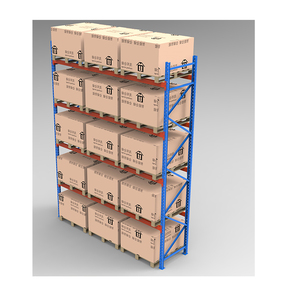
Wholesale High Bay Pallet Racking Certified Heavy Duty Storage Rack
Height: Up to 18m
Load: 1,000–4,500kg/lvl
Q235B/Q355B
Explore our heavy-duty warehouse racking assemblies designed for maximum vertical clearance utilization, narrow aisle maneuverability, and full pallet selectivity.
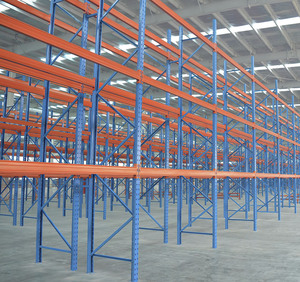
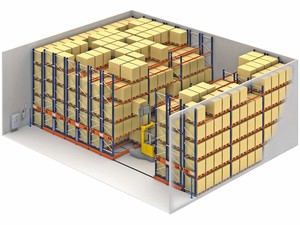
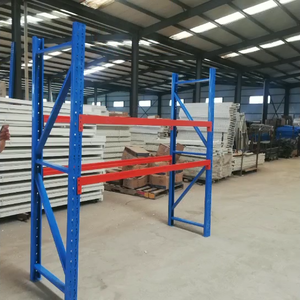
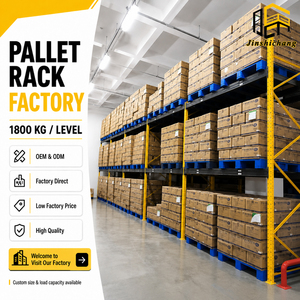
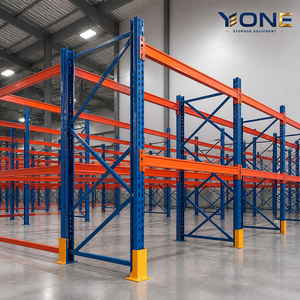
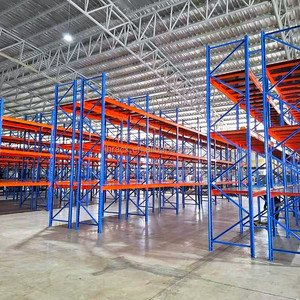
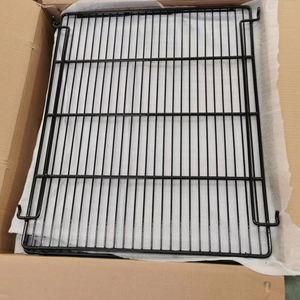
In modern supply chain architecture, the Very Narrow Aisle (VNA) racking system represents the ultimate synthesis of high volumetric storage density and instantaneous single-pallet accessibility. Standard wide-aisle counterbalance configurations frequently squander between 60% and 68% of warehouse floor footprint on forklift travel paths, requiring operational clearance spans between 3.5 and 4.2 meters. In contrast, engineered Narrow Aisle Racking Systems compress clear operating aisle widths down to an exact 1,600 mm to 1,900 mm, unlocking up to 50% additional pallet capacity without altering the external physical perimeter of the building.
Achieving this spatial compression while extending vertical bay heights up to 18 meters introduces rigorous structural dynamics. A VNA installation operates under strict static and dynamic deflection thresholds governed by international standards including EN 15512:2020 (Steel Static Storage Systems), FEM 10.2.02, and the RMI (Rack Manufacturers Institute) ANSI MH16.1. As high-lift articulated turret trucks or man-up order pickers elevate full payload capacities up to 1,500 kg to top-tier beam levels, horizontal sway and beam deflection tolerance must be restrained within L/200 to L/350 parameters to eradicate mast collision hazards.
Critical Tolerance Rule for High-Bay VNA: Unlike standard selective systems where general commercial concrete slabs suffice, Narrow Aisle High-Bay Racking demands uncompromising floor superflatness conforming to DIN 18202 Table 3 Group 4 or Concrete Society TR34 (Category DM1/DM2). Slabs with excessive micro-undulations cause angular mast deflection magnification: a mere 2 mm floor deviation at ground level translates to an alarming 30 mm lateral sway at a 14-meter pick elevation.
Our OEM engineering facility fabricates upright frames using high-tensile cold-rolled Q235B and Q355B structural carbon steel, roll-formed into continuous multi-faceted profiles featuring 11–13 fold resistance geometry. These continuous omegas deliver superior torsional rigidity under horizontal seismic acceleration and asymmetric dynamic loading, ensuring plant safety across seismic zones and extreme cycle throughput centers.
| Engineering Dimension | Standard Selective Pallet Rack | Drive-In Pallet System | Custom OEM Narrow Aisle (VNA) | Automated Radio Shuttle |
|---|---|---|---|---|
| Working Aisle Width | 3,200 mm – 4,000 mm | 3,000 mm – 3,400 mm | 1,550 mm – 1,850 mm | 3,000 mm – 3,200 mm |
| Vertical Height Ceiling | Up to 10 Meters | Up to 11 Meters | Up to 18 Meters | Up to 16 Meters |
| Direct Pallet Selectivity | 100% (Instant FIFO) | 10% – 15% (LIFO / Blocked) | 100% (Instant FIFO) | Low Selectivity (Channel FIFO/LIFO) |
| Floor Footprint Utilization | 35% – 42% | 65% – 75% | 60% – 70% | 75% – 82% |
| Guidance Infrastructure | None (Free Steered) | Entry Funnels / Floor Angles | Low-Profile Steel Rail / Induction Wire | Precision Internal Channel Track |
| Floor Flatness Requirement | DIN 18202 Group 3 (Standard) | DIN 18202 Group 3 | DIN 18202 Group 4 / TR34 DM1/DM2 | TR34 Category FM2 |
A comprehensive analysis of capital allocation shifts, regulatory decarbonization, and automated mechanical integration redefining B2B logistics infrastructure from 2026 to 2035.
Industrial land acquisition costs and high-interest financing make expanding warehouse footprints economically unfeasible. Procurement strategies have decisively shifted from horizontal greenfield projects to brownfield densification. Enterprise operators are replacing legacy 8-meter selective racking with 15-meter custom VNA systems, gaining immediate capacity without lease renegotiations, local permitting, or auxiliary roof construction.
The traditional boundary between manually steered turret trucks and automated guided vehicles (AGVs) is disintegrating. Modern narrow aisle procurement mandates dual-compatibility infrastructure: guide rails engineered to withstand heavy mechanical contact while incorporating magnetic or inductive floor-slot wire guidance for fully autonomous unmanned VNA reach trucks, mitigating the rising risk of warehouse labor shortages.
Global supply chain tenders increasingly enforce Scope 3 carbon compliance. Forward-thinking procurement teams require verified Environmental Product Declarations (EPDs). Our manufacturing operations utilize electric arc furnace (EAF) recycled scrap integration, coupled with non-toxic, solvent-free electrostatic epoxy powder systems that eliminate VOC emissions while surpassing 1,000-hour ASTM B117 salt spray corrosion tests.
Future high-bay systems are no longer passive steel racks. Sensor-embedded base plates, telemetry vibration monitors, and load-cell beam clamps feed real-time load distribution and seismic displacement data into warehouse management systems (WMS). This mitigates progressive collapse hazards caused by unseen forklift impact damage, allowing preventive maintenance before catastrophic upright buckling occurs.
Ocean freight volatility requires ultra-dense container cubic stuffing. We engineer our beam profile geometry, welded upright trussing, and spliced column joints for dense knockdown flat-packing. A standard 40-foot high-cube container accommodates up to 26 metric tons of pallet capacity with specialized bracing, reducing intercontinental logistics expenditure by $14 to $22 per pallet position.
Founded in 2001, Guangzhou Heda Shelves Co., Ltd. operates a premier 30,000 m² state-of-the-art production base backed by a dedicated engineering and fabrication team of over 300 technical specialists. Delivering a steady production capacity exceeding 30,000 metric tons per month, we offer direct end-to-end quality assurance, eliminating intermediary markups, delivery ambiguities, and technical coordination friction.
Full conformance with CE Certificate No. 2435-CPR-8605159, ISO 9001:2015 Quality Management System (Cert No. 18624Q00169R0M), and strict RoHS raw material chemical compliance.
From coiled prime steel slitting, automated numerical punching, and precision multi-roll profile forming to robotic CNC welding, automated acid pickling, phosphating, and electrostatic polymer baking.
In-house structural engineering teams prepare finite element analysis (FEA) models tailored to your facility's seismic zone factor (PGA), soil stratum class, and specific building code mandates.
Over two decades of export mastery across 120+ countries. Every maritime container ships with barcode-tagged pallet packs, pre-engineered anchor kits, and localized assembly documentation.
In-depth structural, operational, and logistics answers compiled by our chief rack design engineers to assist project managers and commercial procurement teams.
The required aisle width in a Narrow Aisle Racking System is primarily governed by the overall exterior width (AST) of the material handling equipment chosen. For standard 1,000x1,200 mm or 800x1,200 mm industrial pallets handled by dedicated articulated turret trucks or man-up trilateral pickers, the aisle span typically falls between 1,650 mm and 1,850 mm. With wire induction guidance, aisle clearance allows a tight 100 mm safety margin on either side. With mechanical steel guide rails (such as unequal angle L100x75 or structural channel), aisle width adds 150 mm to the turret truck chassis footprint.
Because VNA racking frequently utilizes vertical heights between 12 and 18 meters, standard floor level tolerances are inadequate. As high-lift equipment operates, minute deviations in floor levelness cause angular amplification at the truck mast. Under the DIN 18202 Group 4 or TR34 DM1/DM2 specifications, cross-aisle elevation differences must remain below 1.5 to 2.0 mm per meter. If floor surveys reveal deviations beyond these limits, our engineering team can provide heavy-duty precision leveling shims, or recommend mechanical laser slab grinding along wheel tracks prior to base-plate anchor torqueing.
Neither system is universally superior; selection depends on operational dynamics. Mechanical low-profile guide rails protect the lower upright sections from direct vehicle impacts and require no high-frequency electronic installation into the concrete. However, they limit cross-aisle picking transitions and require anchor maintenance. Inductive wire guidance embeds a low-frequency energized antenna wire into an 8 mm cut slot in the slab center, providing clean, unobstructed floor transitions and reducing tire wear. For facilities handling high pallet throughput with multi-directional transfers, wire guidance is increasingly preferred.
For climate-controlled distribution centers, our high-temperature electrostatic powder coating delivers an 80–120 μm dry film thickness with impact-resistant epoxy-polyester formulas. For coastal ports, unconditioned tropical facilities, or freezing environments (-30°C cold chain rooms), we provide hot-dip galvanized components conforming to ISO 1461. Steel components are immersed into molten zinc at 450°C, forming an iron-zinc metallurgical bond that offers self-healing cathodic protection against rust, moisture, and corrosion.
To produce a structurally sound, code-compliant proposal within 24 hours, our engineering team requires: (1) Clear architectural dimensions including clear height below roof trusses and concrete column grid spacing; (2) Pallet specifications (width, depth, overall loaded height, and gross target weight); (3) Intended material handling equipment model or preferred aisle clearance; (4) Facility seismic classification or regional building code; (5) Storage temperature range and slab load rating (kN/m² uniform distributed load and single point punch load).