High-Density Dynamic & Static Pallet Storage Implementations
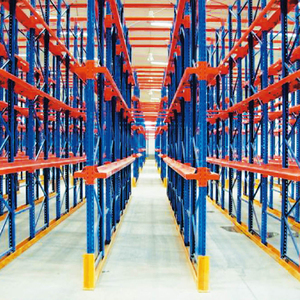
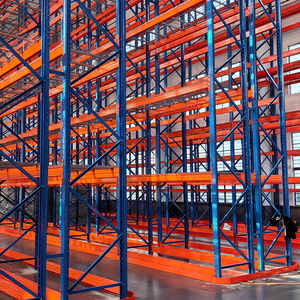
Explore our heavy-duty cold rolled steel storage arrays, high-density drive-in systems, and precision-manufactured mobile structural racks designed for extreme operational durability and high volumetric utilization.
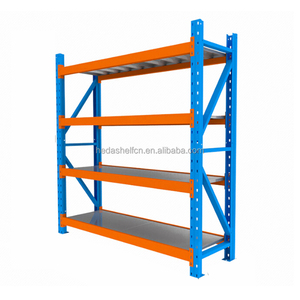
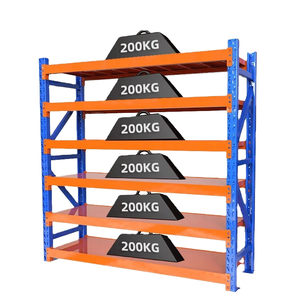
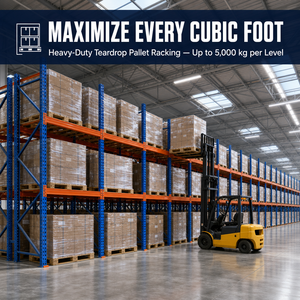
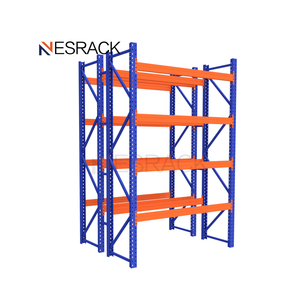
Structural Mechanics of Custom OEM Movable Pallet Racking Systems
A technical evaluation of floor load distribution, motorized dynamic rail carriages, and structural safety parameters under dynamic seismic and operational loads.
1. Kinematic Mobility and Space Optimization Ratio
A movable pallet racking system (also categorized under electrically powered mobile racking or heavy-duty mobile base racking) alters conventional warehouse economics by mounting conventional selective pallet racking superstructures onto electronically synchronized, motorized mobile carriages. In typical wide-aisle static configurations, up to 60% of the aggregate warehouse floor footprint is consumed by access lanes that remain dormant for the majority of the operational shift. Movable racking systems compress these redundant aisles into a singular, dynamic operational corridor.
By transforming static aisles into floating access points activated on demand via radio frequency (RF) remote, optical dispatch, or automated Warehouse Execution System (WES) signals, mobile bases increase bulk floor volumetric storage density by 80% to 100% within an identical cubic space. The mechanical integration requires precise structural calculations: each wheeled mobile base distributes wheel loads through engineered steel drive shafts running along recessed guide and flat running tracks, directly anchored to the warehouse reinforced concrete foundation slab.
2. Material Metallurgical Specifications: Cold Rolled Q235B vs. Q355B Steel
High-yield cold-rolled steel profiles provide the structural baseline for all upright frame columns, load-bearing box beams, and horizontal chassis assemblies. In our Guangzhou manufacturing facilities, upright columns are profiled from continuous high-tensile cold-rolled steel coils, punched with precision pitch hole patterns (such as 50mm, 75mm, or teardrop configurations) through high-tonnage multi-station CNC punching presses. For standard room-temperature logistics distribution centers, Q235B structural grade steel guarantees reliable ductility, minimum yield strength of 235 MPa, and exceptional resistance to localized deformation.
In low-temperature installations (-25°C to -30°C cold storage and flash-freezing facilities) or high-load seismic active zones, components are engineered using micro-alloyed Q355B or Q355D steel grades. The enhanced impact energy toughness prevents cold brittleness and micro-fracturing along welded upright seams under low thermal cycles. Beam end-connectors utilize 3-claw or 4-claw forged hooks fitted with automated safety lock pins to prevent vertical beam dislodgement under high-reach forklift docking maneuvers.
| Performance Parameter | Static Selective Pallet Rack | Drive-In Pallet Rack | Custom OEM Movable Pallet Rack |
|---|---|---|---|
| Aisle-to-Storage Ratio | Aisles consume ~60% floor area | Aisles consume ~25% floor area | Single floating aisle (~10-15% floor area) |
| Direct Pallet Selectivity | 100% immediate individual access | Low (Strict LIFO / deep accumulation) | 100% individual access upon aisle opening |
| Volumetric Efficiency | Baseline (100% Index) | +60% to +75% Capacity Gain | +80% to +110% Capacity Gain |
| Structural Frame Deflection | Static floor anchor loads | Requires top-tie structural bracing | Dynamic torsional stabilization on rail carriage |
| Cold Storage Operating ROI | High energy waste per pallet space | Moderate efficiency; forklift risks | Maximum thermal envelope cubic efficiency |
3. Dynamic Carriage Drive Engineering and Integrated Fail-Safe Systems
Each movable rack carriage is actuated by decentralized, shaft-mounted three-phase gearmotors controlled via Variable Frequency Drives (VFD). Smooth soft-start and soft-stop acceleration profiles prevent pallet destabilization, product slippage, or carriage skewing during transit. Synchronous electronic tracking continuously monitors motor RPM across all drive wheels, automatically compensating for micro-resistances and preventing chassis misalignment along parallel floor guide tracks.
Safety is maintained via a redundant multi-layer optoelectronic perimeter curtain. Full-height safety light grids and photoelectric infrared trip barriers run parallel along the chassis base at floor level and mid-height. If a forklift operator, technician, or fallen piece of cargo interrupts the optical beam while a bay is closing, the control system initiates a Category 0 emergency stop within milliseconds, locking the mechanical disk brakes. Furthermore, ultrasonic obstacle sensors, manual emergency stop pull cords, and automated rack-lock safety plungers ensure structural compliance with international warehouse functional safety protocols.
Future Sourcing & Technological Trends in Mobile Intralogistics
Analysis of macro-economic indicators, cold chain expansion, nearshoring, and automation convergence guiding enterprise racking investments through 2026-2030.
1. Sub-Zero Cold Chain & Energy Arbitrage
Refrigerated and frozen food supply chains represent the largest growth segment for movable pallet racking. Chilled air conditioning represents up to 70% of refrigerated warehouse OPEX. Sourcing teams prioritize mobile base systems that maximize cubic storage within insulated envelopes, cutting cooling energy consumption per pallet space by up to 45% compared to conventional fixed racking layouts.
2. AMR and AGV Interoperability
Procurement specifications are shifting from purely manual forklift integration toward automated guided vehicle (AGV) and autonomous mobile robot (AMR) compatibility. Modern movable racking systems now integrate API-driven PLC interfaces with warehouse management software (WMS), allowing automated mobile shuttles and driverless high-reach reach trucks to automatically signal aisle-opening cycles prior to approach.
3. Dynamic Seismic Resilience Engineering
Nearshoring hubs in Central America, Western South America, and the Pacific Rim require advanced seismic calculations. Static structural base connections are inadequate in dynamic seismic zones. Sourcing trends prioritize mobile systems engineered with specialized anti-tip guide rails, seismic floor anchors, and automatic seismic shut-off sensors that freeze carriage movement during ground acceleration events.
Ten-Stage CNC Manufacturing & Corrosion-Resistant Coating
Guangzhou Heda Shelves maintains end-to-end quality control across 30,000 square meters of precision fabrication, CNC punching, profile roll forming, and automated electrostatic powder coating lines.
Raw Coil Inspection
Precision Slitting & Cutting
Automated Column Punching
Continuous Roll Forming
Precision Cold Bending
Robotic Arm Welding
Surface Shot Blasting
Acid Pickling & Phosphating
Electrostatic Powder Coating
Full Load Stress Testing
Environmental Protection via 9-Stage Pre-Treatment Process
In high-humidity coastal zones and tropical environments, ordinary surface paints fail rapidly due to sub-surface rust creep and moisture penetration. HEDA Shelves components undergo an intensive chemical immersion process comprising degreasing, multi-stage water rinsing, acid pickling to eliminate scale, and chemical phosphating to create an insoluble crystalline iron-phosphate barrier. Components then receive thermosetting epoxy-polyester powder coats cured at 200°C, delivering salt-spray resistance, surface hardness exceeding 2H, and exceptional long-term anti-scratch durability.
Why Tier-1 Importers and EPC Contractors Partner with HEDA Shelves
Eliminating supply chain intermediaries through 25 years of direct industrial manufacturing, audited certifications, and custom turnkey structural engineering.
Audited CE & ISO 9001:2015 Certifications
Structural reliability backed by authenticated credentials including CE Certificate No. 2435-CPR-8605159, ISO 9001:2015 registration No. 18624Q00169R0M (valid through June 2027), and international RoHS environmental material compliance.
Free Structural Engineering & 3D BIM Layouts
Our senior mechanical engineering staff delivers complete 2D CAD floor configurations, 3D structural BIM models, structural column deflection analyses, and load distribution reports free of charge before production begins.
Container-Optimized Global Export Logistics
Exporting to over 120 countries, every container load features barcoded itemization, custom steel crate bundling, and optimized volumetric stuffing plans that protect powder-coated surfaces while accelerating port customs clearance.
Frequently Asked Questions: OEM Movable Pallet Racking
Clear, engineering-grounded responses covering civil floor slab tolerances, installation guidelines, electrical integration, and overseas delivery.
Q: What concrete floor slab specifications are required for movable pallet racking?
Movable pallet racking systems require precise floor tolerance compliance (such as DIN 18202 or EN 15620 classes) because dynamic wheel loads are concentrated onto steel guide and running rails. Slabs generally require a minimum compressive strength of C25/30 or C30/37, with thickness ranging between 180mm and 250mm depending on total bay height and pallet tonnages. Floor rails can be embedded into concrete floor cutouts during new construction or cast within a secondary concrete screed layer for existing warehouse retrofit projects.
Q: How do mobile racking systems perform in earthquake-prone regions?
Our engineering team performs dynamic structural finite element analysis (FEA) calibrated to local seismic ground acceleration factors (such as UBC-97, IBC, or Eurocode 8). Upright frame profiles are specified in higher gauge steel with reinforced diagonal bracing patterns, heavy-duty floor baseplate anchors, anti-derailment rail guides, and automated seismic shut-off relays that immediately ground carriage movements during initial primary seismic waves.
Q: What is the standard production cycle and lead time for custom OEM mobile racking?
Standard engineering CAD layouts and load calculations are delivered within 48 to 72 hours following receipt of warehouse architectural drawings and pallet unit specifications. Following approval of design drawings and structural sign-off, factory fabrication across our automated CNC punching and roll-forming lines typically requires 20 to 30 calendar days. Sea freight shipping schedules are booked FOB, CIF, or DDU depending on your logistics preferences.
Q: Can an existing static selective pallet racking system be converted into a movable racking system?
Yes, provided the existing upright frames, column pitches, and beam structural integrities match certified engineering load standards. HEDA Shelves can engineer and supply custom OEM motorized chassis carriages, guide tracks, drive systems, and electrical control switchboards tailored to your existing upright dimensions, enabling a cost-effective upgrade to dynamic mobile operations.
Q: How is international mechanical and electrical installation supervised on-site?
Every overseas shipment includes comprehensive, exploded-view 3D assembly blueprints, mechanical wiring schematics, and bilingual installation manuals. Furthermore, HEDA Shelves provides live video engineering guidance, remote PLC commissioning assistance, and can deploy senior site installation supervisors directly to your project location to oversee rail levelling, chassis mechanical assembly, and functional safety commissioning.
Request a Free Engineering Layout & Project Budget
Share your facility dimensions, pallet dimensions, forklift parameters, and storage targets. Our certified intralogistics engineers will provide a complete 2D/3D CAD layout, load simulation, and competitive factory-direct proposal within 24 hours.
Contact Us