25+
Years OEM Expertise
30,000 m²
Integrated Workshop
30,000 t
Monthly Rolling Output
10,000+
Global Projects Shipped
Engineered Product Portfolio
High Bay & Industrial Warehouse Racking Systems
Manufactured with high-tensile Q235B and Q355B structural steel, tailored for ultra-high vertical clearance, dynamic load stabilization, and automated retrieval systems.
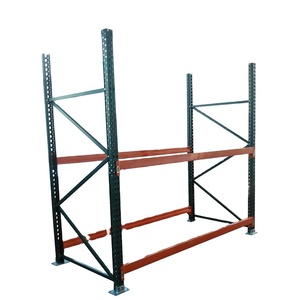
AU Standard Heavy Duty Warehouse Pallet Racking
AS4084 Certified
Specifications →
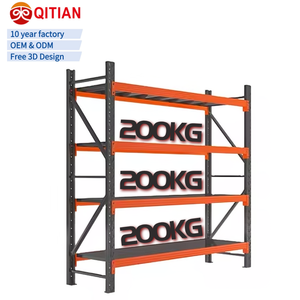
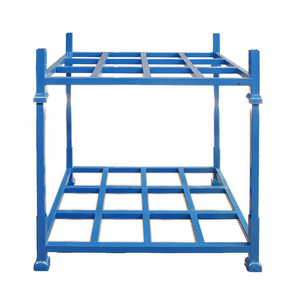
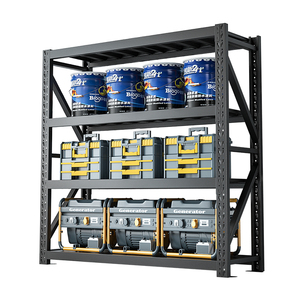
High-Bay Medium-to-Heavy Metal Storage Racks
Up to 1500kg/Tier
Specifications →
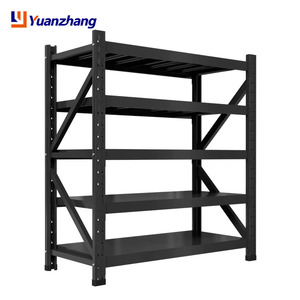
Modular 4-Tier Heavy Duty Stacking Shelving
Boltless Modular
Specifications →
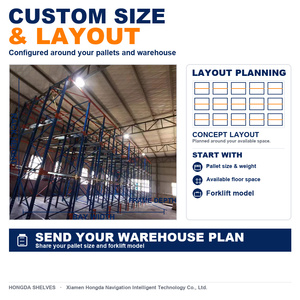
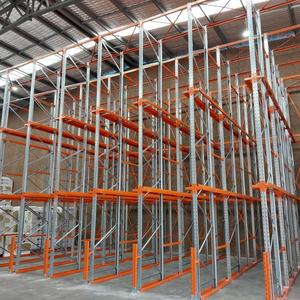
Drive-In High Bay Dense Pallet Racking System
Cold Chain Ready
Specifications →
Strategic Sourcing Intelligence
Procurement Shifts in Global High Bay Logistics (2025–2030)
Structural demands, automation convergence, and regulatory shifts are fundamentally redefining how procurement directors and EPC contractors source heavy industrial racking.
Clad-Rack & Ultra-Vertical Footprints
Escalating land lease values across major intermodal freight corridors have pushed clear ceiling clearances beyond 24 to 40 meters. Procurement is pivoting from stand-alone internal racking to Rack-Supported Building (Clad-Rack) architectures where the pallet racking itself serves as the load-bearing framework for warehouse wall claddings and roofs, cutting civil works expenditure by up to 28%.
ASRS & Shuttle-Ready Engineering
Warehousing facilities are transitioning away from standard manual counterbalanced forklifts. High bay racking now demands strict beam deflection ratios (L/200 down to L/300) to support automated crane-guided shuttles, Autonomous Mobile Robots (AMRs), and high-speed stacker cranes, requiring precision cold-roll tolerances during continuous mill forming.
Seismic Resilience & Ductility Codes
Recent seismic updates (EN 16681, RMI ANSI MH16.1, and AS4084-2023) mandate non-linear dynamic finite element calculations (FEM). High-bay buyers in high-risk zones (such as the Pacific Rim and Central America) require certified seismic base isolators, heavy boxed upright splices, and oversized footprint anchor footplates to eliminate progressive collapse risks under resonant oscillation.
| High Bay System Architecture | Vertical Clear Height | Aisle Width Reqmts | Space Utilization Index | Automation Compatibility |
|---|---|---|---|---|
| Selective High Bay (VNA) | Up to 18 meters | 1.6 – 1.9 m | 60% – 65% | VNA Man-up / Guided Wire |
| Automated Radio Shuttle Bay | Up to 24 meters | Lane-dependent | 80% – 88% | Semi-to-Fully Automated |
| Push Back Gravity Trolley | Up to 12 meters | Standard Counterbalance | 70% – 75% | Mechanical Gravity Drive |
| ASRS Stacker Crane Bay | 20 – 45 meters | 1.4 – 1.6 m | 90% – 95% | Fully Automated WCS/WMS |
Engineering Roadmap
Technological Frontiers in High Bay Pallet Racking
From metallurgical cold-forming precision to embedded IoT deflection monitoring, explore how OEM manufacturing lines are evolving to support modern high-throughput logistics.
IoT Structural Strain Telemetry
Modern mega-hubs are integrating strain-gauge sensors inside high-stress upright omega profiles. These smart nodes detect micro-deformations caused by accidental forklift impact or overloaded beam spans, feeding real-time safety warnings straight to warehouse SCADA dashboards.
Thermally Insulated Anti-Corrosion Finishes
Cold-chain high bay facilities face chronic condensation-driven rust. The latest finishing lines apply dual-action nano-zirconium conversion washes followed by thermosetting polyester TGIC-free powder coats, delivering over 1,000 hours of salt-spray endurance in sub-zero regimes down to -30°C.
Optimized Roll-Formed Omega Sections
Continuous CNC-driven multi-station roll-forming lines bend steel profiles with up to 14 cold-work folds. This geometric configuration maximizes structural moment of inertia while trimming overall dead weight, significantly cutting ocean container shipping tonnage and installation times.
OEM Manufacturing Rigor
Guangzhou HEDA Shelves: Engineered Excellence Since 2001
A quarter-century of manufacturing precision, verified compliance, and direct international containerized logistics for global warehouse operators.
Full-Scale 30,000 m² Facility
Equipped with 10 high-precision automated production stages: raw coil uncoiling, multi-head punching, precision cold bending, robotized argon-arc seam welding, 9-stage pickling and phosphating, and automated electrostatic powder coating.
Independent Global Certifications
Our structures comply strictly with CE Construction Products Regulation (CE Certificate No. 2435-CPR-8605159), ISO 9001:2015 quality frameworks (Certificate No. 18624Q00169R0M, valid through June 2027), and RoHS environmental limits.
Turnkey Export & Seismic Design
Container-optimized packaging with color-coded bundle schematics ensures seamless clearance across major global ports. Our engineering team prepares free CAD, 3D dynamic simulations, and seismic static structural reports prior to cutting steel.
CE Certified (2435-CPR-8605159)
ISO 9001:2015 Quality Verified
RoHS Material Assured
AS4084 / FEM 10.2.02 Standards
Sourcing Answers
High Bay Racking Procurement & Engineering FAQ
Authoritative guidance addressing the critical technical, load-bearing, seismic, and export parameters evaluated by warehouse procurement heads.
Q How is beam deflection calculated for high-bay operations?
For standard manual selective racking, deflection limits are typically rated at L/200 under uniformly distributed loads (UDL) as per RMI and FEM 10.2.02 standards. However, in high bay configurations exceeding 12 meters or integrating ASRS stacker cranes, deflection tolerances are tightened to L/300 or L/400 to prevent automated optical sensor trip errors and maintain safe retrieval clearances.
Q What slab concrete specifications are required for high bay loads?
High bay installations transfer massive concentrated point loads through baseplates to the warehouse foundation. Floor slabs generally require a minimum compressive strength of 25–30 MPa (C25/30), with flat-floor surface regularity adhering to DIN 18202 Table 3 Group 4 or TR34 Superflat (DM1/DM2) standards to eliminate mast lean and vibration risks at heights over 15 meters.
Q Can the racking structure be adapted for active seismic zones?
Yes. All OEM structural configurations can be modeled via dynamic finite element analysis (FEA) factoring in local Ground Peak Acceleration (PGA) values. We supply extended heavy-duty baseplates with multiple anchoring bolts, cold-formed tubular bracing patterns, and high-ductility safety beam lock pins to meet regional building safety codes across global seismic fault corridors.
Q Which surface finish protects against humid or sub-zero environments?
For ambient warehouses, our multi-stage pre-treatment (pickling, phosphating) with 60–80 micron electrostatic powder coat provides high corrosion resistance. For cold-storage applications down to -30°C, high-humidity coastal hubs, or bulk agrochemical warehousing, hot-dip galvanization (ISO 1461, yielding 85+ microns zinc depth) is recommended to prevent localized micro-pitting.
Q What technical information is needed for a full 3D CAD design proposal?
To produce an optimized CAD proposal and structural calculation report, our engineering department requires: (1) Architectural floor layout drawings with clear ceiling height, column matrix, and fire exit lines; (2) Pallet specifications (width, depth, height, and gross load weight including overhang); (3) Forklift or material handling equipment specifications (turning radius, maximum mast elevation); and (4) Throughput SKU rotation strategy (FIFO or LIFO).
Q How are overseas shipments packed to prevent in-transit mechanical damage?
High bay vertical uprights and horizontal beams are nested, bundle-strapped with protective edge-cushioning channels, and separated by non-slip dunnage. All connecting hardware, baseplates, and leveling shims are crated in labeled, weather-sealed wooden cases, accompanied by detailed container packing manifests to streamline customs inspection and on-site staging.
Design Your Custom High Bay Storage Infrastructure
Consult with our structural engineering team today to receive a complete, free CAD layout, 3D visualization, and certified load-capacity calculation quotation within 24 hours.