High-Performance Storage Equipment & Complementary Systems
Engineered for seamless integration with double deep pallet configurations, reach-truck corridors, and dynamic FIFO/FILO materials handling environments.
Whitepaper Analysis: The Structural Mechanics of OEM Double Deep Racking Systems
In modern supply chain optimization, industrial facility planners are continually caught between two opposing variables: cubic floor footprint efficiency and pallet retrieval selectivity. Conventional selective pallet racking offers 100% immediate selectivity but dedicates over 60% of gross floor square footage to reach aisles. Conversely, drive-in and radio shuttle systems achieve extreme bulk storage at the severe expense of SKU access and high dynamic cycle times.
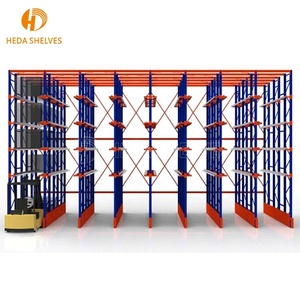
The Double Deep Pallet Racking System represents the optimized volumetric equilibrium. By storing unit loads two pallet positions deep along a back-to-back layout, double deep frameworks eliminate two out of every five access aisles, instantly delivering up to a 50% surge in storage capacity compared with standard selective systems. As an OEM factory leader since 2001, our facility manufactures precision-machined cold-rolled profiles engineered specifically to resist the increased torsional and deflection stresses inherent in two-deep cantilevered reach truck operations.
| Storage Matrix Feature | Standard Selective Racking | OEM Double Deep System | Drive-In Pallet Racking | Radio Shuttle Racking |
|---|---|---|---|---|
| Volumetric Floor Utilization | 35% – 40% | 55% – 65% (Optimal) | 65% – 75% | 70% – 85% |
| Pallet Selectivity Ratio | 100% (Instant Direct Access) | 50% (Pair-Sorted FILO/FIFO) | 10% – 15% (Strict LIFO) | 20% – 30% (Batch Dependent) |
| Required Material Handling Equipment | Standard Counterbalance / Reach | Pantograph Reach / Telescopic Forklift | Specialized Slim Drive-in Forklift | Standard Forklift + Automated Shuttle |
| Capital Expenditure Index ($/Pallet) | Baseline ($) | Low-to-Medium ($$ - Highly Economical) | Medium ($$$) | High ($$$$ - Electronic Subsystems) |
| Ideal Inventory Dynamics | High SKU count, 1-2 pallets/SKU | Medium-High SKU, 2-10 pallets/SKU | Low SKU, high-volume batch runs | High batch volume, FMCG cold store |
Q235B vs. Q355B Hot-Rolled Coil
We source certified Baosteel high-tensile structural coil. OEM frames feature multi-bend diamond perforation profiles with continuous automated cold-roll forming to prevent local flange buckling under secondary-depth dynamic impact.
Deflection Ratios (L/200 & L/300)
Each OEM beam incorporates a precision engineered 3 or 4-claw connector welded with automated CO2 gas-shielded robots. Load design strictly complies with FEM 10.2.02 and ANSI MH16.1 deflection thresholds under full working live loads.
Pallet Guide Rails & Safety Stops
Because rear pallets in double deep setups sit out of the direct line of sight for fork operators, we custom fabricate heavy-duty roll-formed top entry guide rails, rear mechanical stops, and optical targeting beacons to safeguard structural integrity.
Strategic Forecasting: Future Double Deep Racking Procurement Trends (2025–2035)
Industrial procurement heads, warehouse logistics directors, and 3PL corporate planners face evolving market pressures. Rapid land value escalation near global intermodal nodes and megacities makes horizontal expansion unfeasible. Based on field telemetry from over 10,000 implemented storage facilities, our engineering research group has isolated the four macro trends governing Double Deep Racking procurement over the next decade:
Sensorized Structural Health Monitoring (IoT)
Future global tenders are mandating integrated acoustic-emission and wireless strain-gauge sensors embedded directly on upright footplates. Real-time telemetry notifies maintenance supervisors of forklift upright impacts, floor settlement, and progressive beam sag.
Low-Carbon Circular Steel (EPD Certification)
ESG compliance is shifting procurement audits. International suppliers must furnish verified Environmental Product Declarations (EPD). Our production integrates 100% recyclable cold-formed steel scrap loops and solar-powered continuous powder coating curing ovens.
Narrow-Aisle Reach Truck (NART) Symbiosis
Tighter aisle dimensions (reduced from conventional 3.2m down to 2.7m) require synchronized engineering between rack suppliers and pantograph mast OEMs (Linde, Crown, Toyota, Jungheinrich), necessitating tight beam tolerance control within ±0.75mm.
Cold-Chain Hybrid Modularity
Temperature-controlled FMCG cold warehouses demand hybrid configurations: bottom two levels double deep for high-turnover staging, with upper levels housing multi-deep dynamic flow or cantilevered tie-ins, finished in corrosion-resistant 85μm hot-dip galvanizing.
Technological Innovations in OEM Double Deep Racking Engineering
The modernization of Double Deep Pallet Racking transcends raw steel bending. Our factory utilizes parametric Finite Element Analysis (FEA) combined with dynamic 3D simulation software to stress-test rack structures under high seismic accelerations (compliant with FEMA 460 and Eurocode 8).
Key Technological Breakthroughs in Our OEM Fabrication:
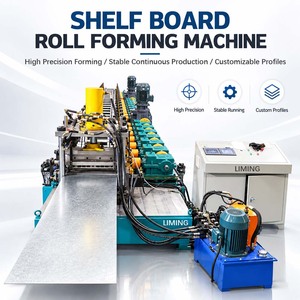
- Continuous Automated Roll-Forming Lines: Custom 28-station roll forming lines allow cold-forming of upright profiles up to 135mm web width without micro-cracking at bend radii.
- Laser-Guided Alignment Modules: In Double Deep setups, second-position pallet placement accuracy is critical. We provide modular magnetic laser-alignment targets installed on beams for fork-camera optical alignment.
- Patented Interlocking Beam Connectors: Our 5-hook cold-stamped beam end connectors provide an automatic secondary locking pin mechanism to prevent accidental dislodgement during steep reach lift actions.
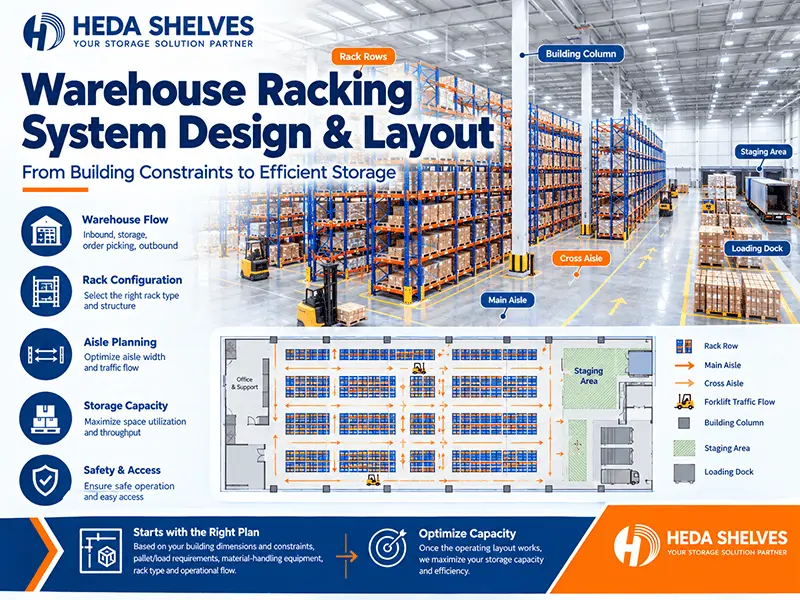
Why Tier-1 Warehouse Operators Partner With Us
From custom profile rolling to turnkey international shipping and layout certification, our vertically integrated plant controls every phase.
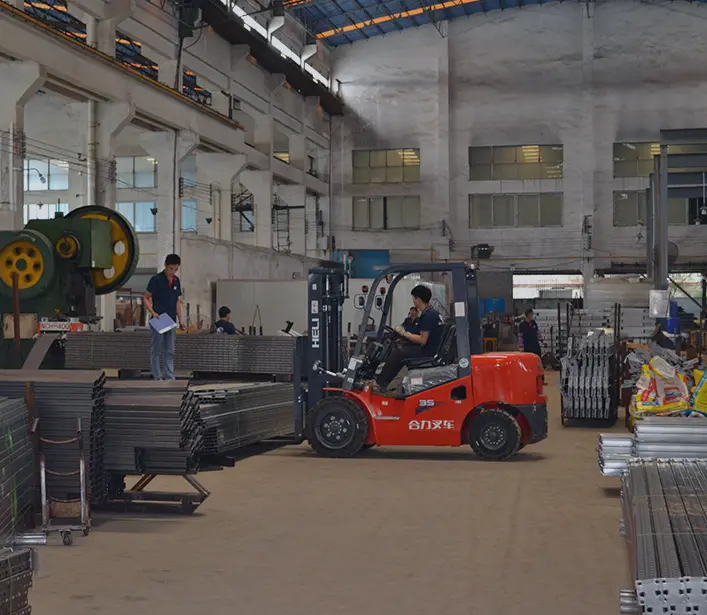
30,000 m² Integrated Facility
Equipped with 18 automated rolling lines, heavy stamping presses, continuous laser tube cutting cells, and dual electrostatic powder lines delivering 30,000 tons per month.
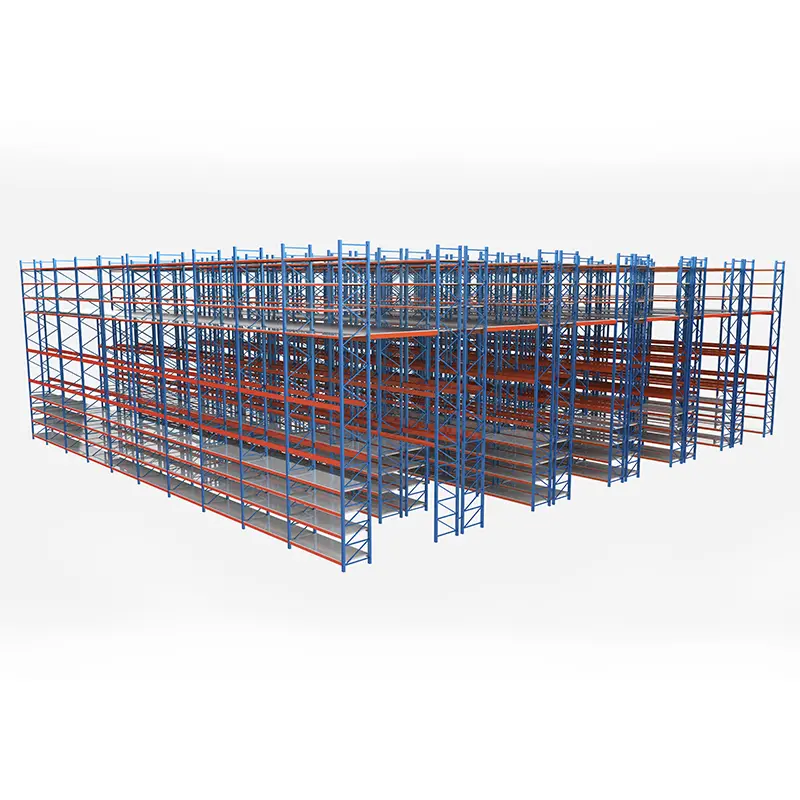
Complimentary 3D & CAD Design
Our in-house structural engineering group delivers compliant CAD schematics, dynamic 3D visualizations, and seismic load calculation reports within 24 to 48 hours.
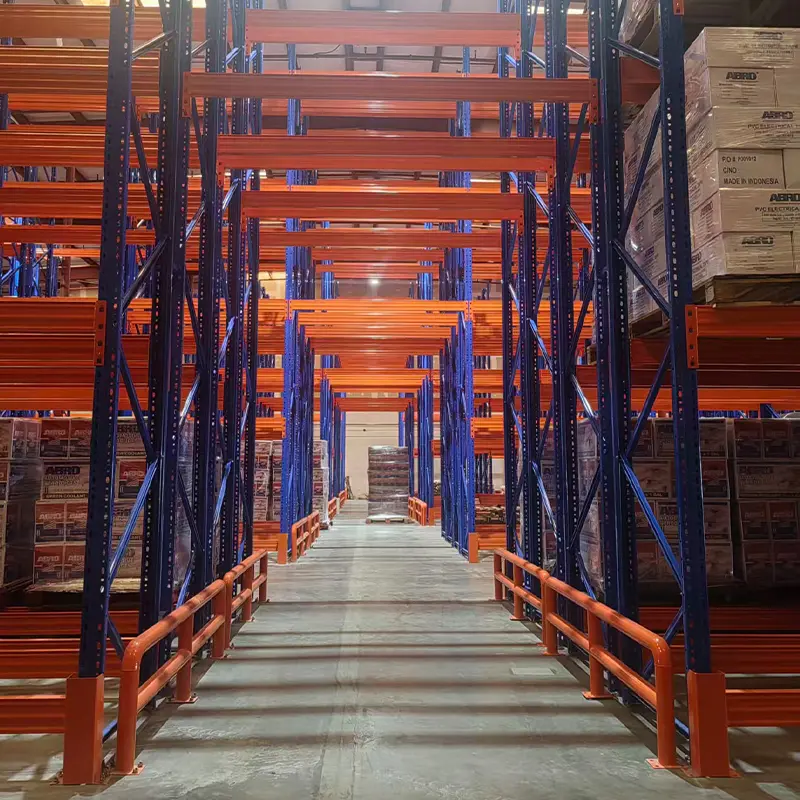
Turnkey OEM / ODM Solutions
From custom beam gauges, seismic footings, special RAL powder shades to custom export bundling for low container demurrage, we support international private labeling.
10-Stage Precision Manufacturing Process
Coil Slitting & Punching
High-grade certified steel coils, continuous precision slitting, and CNC multi-axis automatic column punch presses.
Roll Forming & Welding
Progressive cold bend forming, beam box-welding with Panasonic robotic arc cells, and slag-free grinding.
Pickling & Pre-Treatment
9-bath chemical pre-treatment: deep degreasing, acid pickling, rust conversion, and zinc phosphating coating.
Powder Coating & QC
Gema electrostatic spray guns, 200°C polymer curing oven, ultrasonic thickness audit, and steel-banded bundle packing.
Frequently Asked Questions: Double Deep Pallet Racking Systems
Comprehensive engineering clarifications addressing floor loads, equipment pairing, safety margins, and total cost of ownership.
Double deep racking requires specialized material handling equipment fitted with extended reach capabilities. This is achieved either via a pantograph scissor reach mechanism or telescopic double-deep hydraulic forks. Additionally, because the reach truck mast must extend out significantly when accessing the second pallet position, truck capacity derates (e.g., a nominal 2.0-ton reach truck may only support 1,000–1,200 kg at full second-depth reach). Fork-tip wireless cameras and height-selector pre-sets are strongly recommended above 6 meters.
Each two-deep storage lane functions on a First-In, Last-Out (FILO) access basis. To maintain operational speed without "honeycombing" (buried dead stock), optimal WMS slotting assigns identical SKU pairs or batches to the same double-deep lane. When pallet #1 is retrieved, pallet #2 immediately becomes accessible. Double deep configurations are ideal for medium-throughput operations with 2 to 8 pallets per SKU, striking an optimal balance between density and velocity.
Because double deep installations utilize higher uprights and withstand significant horizontal braking loads from reach trucks, the slab must typically be at least 180mm–250mm reinforced concrete with a compressive strength of C25/30 or C30/37. Anchor footplates are enlarged and secured with M12–M16 high-tensile chemical or wedge anchor bolts tested for dynamic shear pullout under seismic parameters.
In many instances, yes. A conventional single selective layout can be converted by connecting two rows together with heavy-duty structural row spacers (typically 200mm to 400mm clearance). However, our structural engineers must re-verify the load capacity of the existing upright columns and beam connectors because changing to a reach truck profile alters the impact zones and center-of-gravity moments.
All our racking engineering adheres to European standards EN 15512, EN 15620, EN 15629, and American RMI (Rack Manufacturers Institute) MH16.1. Our manufacturing plant holds audited ISO 9001:2015 quality certification (Cert. No. 18624Q00169R0M) and structural CE Factory Production Control (FPC) compliance. Third-party mill test certificates (MTC 3.1) accompany every raw coil batch.
Racking components present irregular dimensions that can cause dead freight if improperly bundled. Our factory uses automated 3D container packing software to nest upright frames and beams tightly into 40ft High Cube (40HQ) containers. Upright frames are separated with protective corrugated paper and heavy wood bolsters, then strapped with high-tensile polyester bands to prevent surface scratches and salt-fog oxidation.
Ready to Engineer Your High-Density Double Deep Facility?
Submit your warehouse dimensions, clear eaves height, pallet weights, and forklift specifications. Our licensed storage engineers will generate a complimentary CAD floor plan, 3D visualization, and structural quote within 24 hours.