High-Performance Structural Warehouse Racking & Decking Systems
Engineered with premium cold-rolled Q235B/Q355B structural steel, high-precision automated punch patterns, and environmentally resilient electrostatic powder coating.
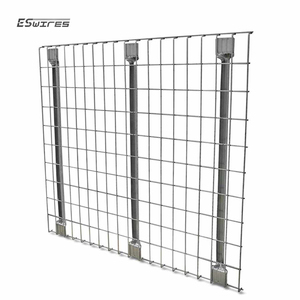
Europe Standard Fireproof Flared Channel 3 Support Channels Metal Wire Decking
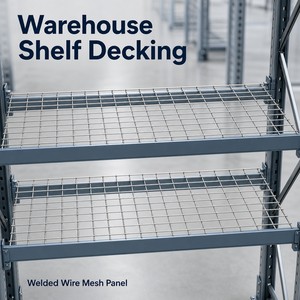
Heavy Duty Galvanized Steel Load Bearing Support Bar Drop-In Type Decking Panel
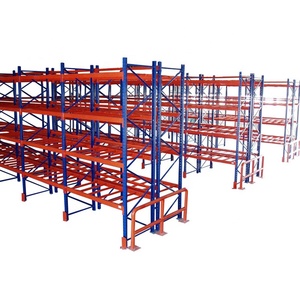
Warehouse Steel Pallet Racking Adjustable Leveling Feet & Seismic Anchoring Base
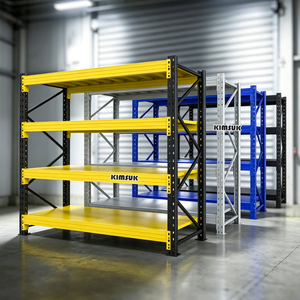
Manufacturer Heavy Duty Warehouse Selective Pallet Racking Storage System
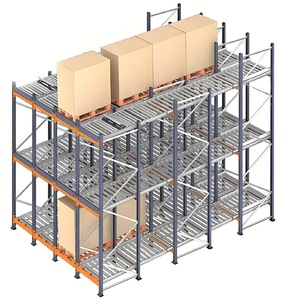
CE Certificated Wholesale Steel Roller Warehouse Gravity Pallet Flow Rack
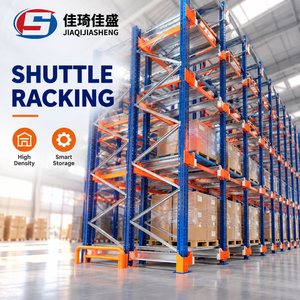
Custom Planning Intelligent Radio Shuttle Rack for High-Density Fulfillment
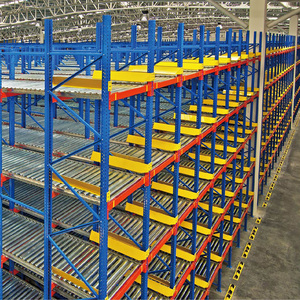
Heavy Duty Auto Sliding Powder Coated Warehouse Gravity Flow Pallet Racks
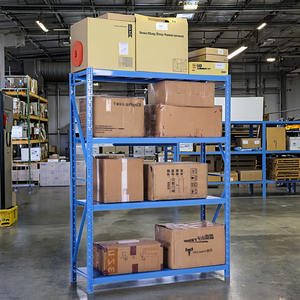
Boltless Rivet Metal Steel Pallet Shelving Warehouse Storage Manual Rack
The Engineering & Metallurgical Blueprint for Industrial Racking Procurement from China
In the contemporary logistics ecosystem, warehouse pallet racking systems have transitioned from passive steel shelving into mission-critical structural frameworks. Modern supply chain facilities demand unprecedented volumetric utilization, heightened dynamic loading tolerance, seismic resilience, and seamless integration with Automated Guided Vehicles (AGVs) and Autonomous Mobile Robots (AMRs). As global logistics engineers, tier-one 3PL operators, and international distribution hubs look to China wholesale warehouse racking system exporters, the decisive procurement criteria have shifted far beyond basic FOB pricing. Today’s high-volume procurement strategies focus on strict structural engineering standards, metallurgic purity, automated roll-forming tolerances, and cross-border seismic compliance.
1. Metallurgical Rigor: Cold-Rolled Q235B vs. Q355B Structural Steels
A racking structure is fundamentally only as resilient as the steel strip fed into the roll-forming mill. Experienced wholesale exporters utilize strictly certified prime steel billets from major state mills (such as Baosteel and Shougang). While light-duty commercial shelving may utilize basic cold-rolled coils, industrial heavy-duty racking relies on modified low-alloy high-strength steels. Structural upright columns are primarily engineered from Q235B (yielding a minimum tensile yield strength $f_y \ge 235 \text{ MPa}$) or high-performance Q355B ($f_y \ge 355 \text{ MPa}$) for extended multi-tier installations exceeding 12 meters in clear height.
During export quality verification, reliable Chinese exporters enforce Charpy V-notch impact testing, uniform chemical carbon equivalency analysis to verify weldability, and yield-to-tensile ratio verification ($f_u / f_y \ge 1.15$). This guarantees that under acute dynamic overloads or forklift impacts, the steel absorbs energy through plastic deformation rather than experiencing brittle structural fracture.
2. Structural Cold Roll-Forming Tolerances and Deflection Control
Advanced Chinese manufacturing facilities employ continuous automated rolling mills with 16 to 24 progressive roll stages. This step-by-step deformation process mitigates internal residual stress within the profile bends, safeguarding against torsional twisting and column bowing over 10-meter seamless upright lengths. Upright slot punching—engineered in teardrop, diamond, or omega configurations—is executed on high-speed CNC punching presses prior to roll forming, ensuring an exceptional pitch tolerance within $\pm 0.1\text{mm}$ across an entire 12,000mm upright section.
Under international engineering conventions including FEM 10.2.02 (European Federation of Materials Handling), RMI (Rack Manufacturers Institute MH16.1), and AS4084-2012 (Australian Standard for Steel Storage Racking), structural beam deflection is strictly held to a maximum threshold of $L / 200$ (where $L$ is clear span length between upright frames) under maximum design working load, maintaining warehouse operations well within safe operating envelopes.
| Racking Topology | Storage Density | Stock Access (FIFO/LIFO) | Floor Area Utilization | MHE Compatibility | Primary Industry Verticals |
|---|---|---|---|---|---|
| Selective Pallet Racking | Standard | 100% Direct Selective (FIFO) | 35% - 40% | Counterbalance, Reach Trucks | 3PL, Multi-SKU Retail, FMCG |
| Radio Shuttle Automation | Ultra-High | Dynamic FIFO & LIFO Switching | 75% - 85% | Standard Forklifts + Shuttles | Cold Storage, Food & Beverage |
| Drive-In / Drive-Through | Very High | Strict LIFO (FIFO Drive-Thru) | 65% - 75% | Narrow Reach Trucks | Raw Materials, High-Volume Batches |
| Gravity Pallet Flow | Ultra-High | Automated Dynamic FIFO | 70% - 80% | Standard Forklift Operations | Pharmaceutical, Perishables |
| Multi-Tier Mezzanine | Vertical High | 100% Manual Hand-Picking | 200% - 300% (Usable Floor) | Conveyors, Vertical Lifts | E-Commerce, Automotive Parts |
3. Multi-Stage Surface Treatment: Combating Corrosion in Humid & Coastal Hubs
One of the primary hazards in long-distance maritime export and subsequent warehouse deployment is environmental rust and paint delamination. Premium exporters execute an automated 9-to-11 stage pre-treatment regimen. The process involves hot alkaline degreasing, multi-stage water washing, acid pickling to eliminate scale, nano-ceramic or zinc phosphating for micro-crystalline substrate adhesion, and demineralized rinsing.
Following pre-treatment, components enter an automated electrostatic booth applying thermosetting polyester/epoxy hybrid powder coatings baked at temperatures between 180°C and 200°C. This delivers a uniform dry film thickness (DFT) of 70 to 110 microns, passing ASTM B117 salt spray testing for upwards of 500 to 1,000 continuous hours. For cold rooms (down to -30°C) and corrosive coastal distribution zones, full Hot-Dip Galvanization (HDG conforming to ISO 1461) is applied, yielding a zinc protection layer of 60 to 85 microns to stop zinc flaking and rust creep.
Why International Supply Chain Leaders Partner With Our Export Network
Integrated manufacturing control, accredited seismic stress testing, and customized cross-border engineering support deliver guaranteed project performance.
Full Regulatory & CE Certification
Complete compliance with European EN 15512, ISO 9001:2015 quality management systems, and RoHS environmental directives. Mill test certificates (MTC 3.1) accompany every master coil batch.
Finite Element Analysis (FEA) Modeling
Our in-house structural engineering unit carries out advanced 3D FEA stress simulation, calculating seismic accelerations ($S_s, S_1$), dynamic torsional loads, and slab anchoring shear capacities before tooling starts.
Container-Optimized Bundling Logistics
Proprietary nesting and packing software maximizes steel tonnage inside 40ft High Cube containers (up to 26.5 MT payload limit), avoiding transit scuffing via specialized non-marking wood dunnage and heavy steel strapping.
Complimentary 2D CAD & 3D BIM Designs
Within 24 to 48 hours of receiving floor plan DWGs, our engineers provide complete aisle layouts, turning radius verifications for specific MHEs, upright capacity schedules, and realistic Revit/3D models.
Comprehensive Custom Clearance Packs
We supply accurate, multi-lingual commercial packing documentation, weight-distributed packing lists per container, Certificate of Origin (Form A/E/RCEP), and factory pre-assembly match marks.
Global Installation Engineering Support
Every shipment includes step-by-step 3D assembly shop drawings, component identification tags, step-by-step video installation libraries, and dispatched site supervision engineers for multi-acre projects.
Emerging Warehouse Racking Procurement Trends (2025–2030)
How the convergence of automated material handling, green steel mandates, and smart sensor integration is transforming international racking specifications.
AMR & Shuttle-Ready Engineering
Traditional static storage is rapidly integrating 4-way shuttle runners and autonomous mobile robots. Export designs now demand narrower roll tolerances ($\pm 0.5\text{mm}$ across guide rail lengths) and ultra-flat floor base anchoring to support continuous robotic guidance.
Low-Carbon Green Steel & Zero-VOC Finishes
Procurement audits from multinational enterprises now prioritize low-emission electric arc furnace (EAF) steel coils and heavy metal-free powder coatings, reducing embedded carbon footprints across cross-border facility developments.
IoT Structural Health Monitoring
Next-generation upright configurations integrate localized strain gauges, wireless tilt sensors, and impact-detection beacons. These provide continuous load analytics and impact telemetry directly to modern warehouse management systems (WMS).
High-Bay VNA & Clad-Rack Systems
Driven by skyrocketing industrial real estate land costs, international distribution operations are moving upward to 15m–30m tall Very Narrow Aisle (VNA) and rack-supported building structures (clad racks) that eliminate conventional building structural columns.
Frequently Asked Questions on Importing Warehouse Racking from China
Direct answers from our Senior Structural Engineers to help procurement teams mitigate risks and specify exact requirements.
How are structural load capacities validated for seismic-active zones?
Our engineering team performs dynamic response spectrum analysis based on client-provided site geographical coordinates, soil classification, and peak ground acceleration parameters ($S_s, S_1$) in compliance with IBC, Eurocode 8, or AS4084 standards. Upright profile dimensions (e.g., 90mm to 140mm face width, 1.8mm to 3.0mm steel gauge), horizontal/diagonal bracing patterns, reinforced back-to-back ties, and enlarged footplates with chemical anchor dowels are structurally calculated to prevent seismic rack collapse.
What surface protection should be specified for humid, coastal, or blast freezer warehouses?
For ambient temperature, low-humidity dry distribution centers, our 80-micron electrostatically applied polyester powder coating over phosphated steel provides superior durability. For coastal ports exposed to marine salt fog, chemical warehouses, or blast freezers operating down to -30°C, we specify Hot-Dip Galvanization (HDG) per ISO 1461. HDG submerges the steel profile into 450°C molten zinc, creating a metallurgical zinc-iron alloy barrier that provides active sacrificial anode protection against oxidation.
Why is wire mesh decking mandatory under NFPA 13 fire safety standards?
Solid steel or wooden decking panels act as horizontal fire barriers that block water discharge from ceiling-mounted ESFR (Early Suppression, Fast Response) fire sprinklers. Under NFPA 13 standards, storage levels above 4.5 meters generally require a minimum of 50% open deck area. Our welded steel wire mesh decking achieves over 70% open area, allowing unrestricted water penetration and smoke ventilation, while preventing undersized pallets or loose carton cases from falling through beam openings.
How does an exporter guarantee damage-free delivery during ocean transit?
Structural steel beams and uprights are stacked using custom hardwood dunnage spacers and shrink-wrapped with UV-stabilized waterproof polyolefin film. Every bundle is bound using 32mm high-tensile steel straps with heavy-duty corner protection guards to eliminate contact friction. Small accessories (safety pins, footplates, row spacers, expansion bolts) are crated in steel-strapped seaworthy plywood cases, and all container loading plans balance axle and gross weight distribution to ensure stable, secure transit.
What crucial operational parameters are needed to generate an engineered layout quote?
To produce an optimized CAD proposal, our design office requires: 1) Architectural building DWG with clear eaves height and column grid positions; 2) Pallet specifications (width, depth, overall load height including pallet, and maximum gross weight); 3) Specific Material Handling Equipment (MHE) model, minimum right-angle stacking aisle width requirement, and max lift height; 4) Target total pallet capacity and rotation system (FIFO or LIFO); 5) Floor slab thickness, concrete compressive strength ($f'_c$), and local seismic acceleration values.
What is the standard production and shipping lead time from China?
Standard selective pallet racking orders ranging from 2 to 10 ocean containers require approximately 20 to 25 production working days from final approved CAD sign-off and deposit receipt. Highly customized radio shuttle racks, automated gravity flow roller beds, or bespoke multi-tier mezzanine steel structures typically require 30 to 35 working days. Ocean freight transit to European, North American, or Latin American gateway ports averages 20 to 38 sailing days depending on direct routing options.
Request an Engineered Layout Proposal & Wholesale Price Quotation
Send your warehouse architectural DWG drawings, pallet load specifications, and MHE models. Our structural racking engineering department will provide complete 2D/3D layout designs and structural calculations within 24 hours.
Inquire Now