High-Bay & High-Density Storage Solutions
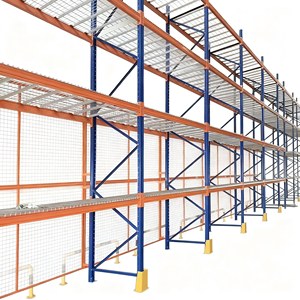
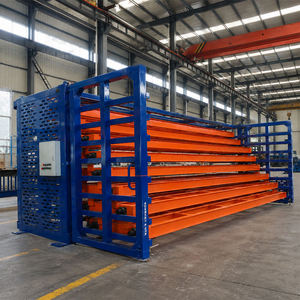
Custom structural systems engineered for selective accessibility, floor footprint minimization, and extreme vertical clearance utilization.
Engineering Authority & Production Scale
Direct manufacturer backing since 2001, providing structural validation, seismic calculations, and export-grade logistics packaging under unified quality control.
Accredited Global Certifications & Structural Compliance
When selecting a primary China wholesale Very Narrow Aisle (VNA) racking system exporter, engineering compliance and traceable raw materials represent the dividing line between long-term operational safety and catastrophic structural collapse. Our manufacturing facility adheres strictly to European and International safety frameworks, holding valid CE certification (Certificate No. 2435-CPR-8605159) for structural steel fabrication, ISO 9001:2015 quality management accreditation (Registration No. 18624Q00169R0M, valid through June 2027), and complete RoHS conformity across all powder-coating chemistries.
All structural columns are engineered from premium certified Q235B and high-tensile Q355B hot-rolled steel coil, sourced exclusively from tier-one mills such as Baosteel and Shougang. With an active engineering department of over 300 technical specialists, CAD draftsmen, and structural auditors, we provide free 3D design layouts, Finite Element Method (FEM) load models, and dynamic slab stress analysis to guarantee compliance with DIN 15185 and EN 15620 clearance classifications before a single beam is fabricated.
Factory Verification Standard: Every export container features pre-sorted, color-coded, and position-labeled components with accompanied mill test certificates (MTCs), certified seismic anchor sets, and step-by-step 3D assembly manifests to guarantee seamless port customs clearance and rapid on-site erection.
The 10-Stage Precision Manufacturing Workflow
High-bay VNA systems demand exceptional vertical plumbness and beam slot repeatability. A deviation of merely 1.5mm at floor level translates to dangerous lateral tilts at heights exceeding 14 meters. Our Guangzhou production facility employs a rigidly controlled 10-step sequence:
Raw Material Spectrometry
Precision CNC Slitting
Continuous Punching
Cold Bending & Roll Forming
Profile Calibration
Robotic Laser Trimming
MIG Robotic Welding
Pickling & Phosphating
Electrostatic Coating
Curing, QC & Bundling
Whitepaper Architecture: Engineering Mechanics of Very Narrow Aisle Systems
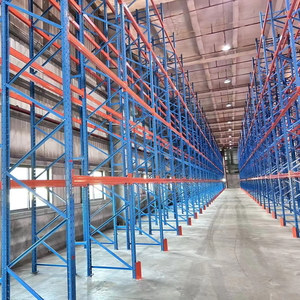
Very Narrow Aisle (VNA) racking systems represent the optimal geometric compromise between ultra-dense cubic warehouse utilization and 100% individual pallet selectivity. Unlike conventional selective racking systems—which require working aisle apertures between 3.2 meters and 3.8 meters to accommodate standard counterbalance or reach trucks—a precision VNA configuration condenses operating aisle widths down to 1.5 to 1.8 meters. By recovering up to 45% of previously wasted floor space, facilities can expand their pallet position capacity by 35% to 50% within the exact same building footprint.
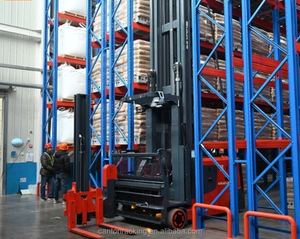
Operating at vertical building heights ranging from 7,000mm to beyond 16,000mm, VNA installations place severe structural demands on upright column stiffness and torsional resistance. The system utilizes specialized turret trucks or man-up order pickers where the mast does not turn; instead, the forks rotate 180 degrees via a trilateral pivoting mechanism. Consequently, horizontal dynamic sway must be completely suppressed through rigid frame bracing configurations, enlarged base plates, heavy anchor bolting, and floor-level physical guidance rails or sub-floor inductive wire tracking channels.
| Storage Matrix Feature | Conventional Selective | Very Narrow Aisle (VNA) | Drive-In Racking | Automated Shuttle (AS/RS) |
|---|---|---|---|---|
| Operating Aisle Width | 3.2m – 3.8m | 1.5m – 1.8m | 2.2m – 2.6m | 1.4m – 1.6m (Crane) |
| Direct Pallet Selectivity | 100% (Instant Access) | 100% (Instant Access) | < 20% (LIFO Batch) | Strict FIFO/LIFO Logic |
| Floor Area Utilization | 35% – 42% | 60% – 70% | 70% – 80% | 80% – 90% |
| Clear Height Ceilings | Up to 8,000mm | Up to 16,500mm | Up to 10,000mm | Up to 35,000mm |
| Floor Flatness Class (EN 15620) | Class 400 (Standard) | Class 100 / Superflat DM2 | Class 400 (Standard) | Class 50 / Superflat DM1 |
| Capital Investment (CAPEX) | Low Baseline | Moderate (High ROI) | Moderate | Very High |
A critical consideration during structural procurement is the selection between mechanical guide rails and magnetic/wire guidance systems. Mechanical systems utilize heavy hot-rolled steel angles (typically 100mm x 75mm x 8mm or 125mm x 75mm x 10mm) anchored directly into the slab along the rack bottom chords, accompanied by robust floor-mounted aisle entry guides. Wire-guided systems cut a millimeter-precision inductive loop into the warehouse concrete slab, leaving the aisle floor completely flush and eliminating impact wear on low-level pallet placement, while requiring truck transponders to maintain precise millimeter guidance along the vertical track.
Request a Free Engineering Layout & Seismic Load Calculation
Submit your warehouse dimensions, clear eaves height, pallet specifications, and forklift model. Our Guangzhou engineering headquarters will return a compliant 2D CAD floor plan and 3D visualization within 24 hours.
Future Trends in Global VNA Racking Procurement
Analysis of automation convergence, seismic modeling requirements, and decarbonized high-yield steel fabrication shaping the next decade of warehouse investments.
1. Autonomous AGV / AMR Cross-Compatibility
Procurement teams are shifting away from standalone manual turret trucks toward autonomous VNA guided vehicles. Future-proof rack orders now specify tighter hole punch tolerances, integrated aisle end-stops, reflective barcode positioning plates, and LiDAR scanning corridors capable of supporting hybrid human-robot throughput without structural modifications.
2. High-Yield Thin-Gauge Cold-Roll Metallurgy
To reduce international shipping freight rates and total carbon embedded emissions, Chinese exporters are leveraging micro-alloyed Q355B and high-yield cold-rolled steel. Optimized profiles provide higher section modulus ($W_x, W_y$) with thinner web thicknesses, maintaining deflection limits of $L/200$ under full static load while reducing container tonnage.
3. Superflat Floor Integration Protocols
Procurement contracts increasingly bundle racking engineering directly with slab flatness audits (DIN 18202 / EN 15620 standards). High-bay VNA exporters now mandate slab floor surveys prior to fabrication, supplying modular micro-leveling shims, seismic anchor baseplates, and high-strength grout interfaces to guarantee absolute verticality up to 16 meters.
Lifecycle Engineering: Anti-Corrosion Chemistries & Dynamic Resilience
Industrial warehousing environments present harsh ambient challenges, ranging from coastal humidity and temperature cycling to chemical vapors and aggressive condensation in sub-zero cold chain logistics. Our Guangzhou export lines implement an advanced surface preparation cycle before finish application. Components pass through continuous high-pressure alkaline degreasing, ultrasonic water rinsing, zinc-phosphate micro-etching, and passivating deionized rinses. This ensures the electrostatic epoxy-polyester hybrid powder creates an impermeable mechanical bond with minimum 70–90 micron dry film thickness (DFT), tested to withstand over 500 hours of continuous ASTM B117 salt spray exposure without blistering or edge creep.
For specialized cold storage and hazardous chemical applications, we provide full-immersion hot-dip galvanizing conforming to ISO 1461 / ASTM A123. This delivers self-healing sacrificial zinc protection exceeding 65 microns across all interior tubular weld seams, box-beam joints, and upright profile cavities, extending operational lifecycle beyond 25 years without recurring maintenance.
Frequently Asked Questions for Overseas Importers
Direct technical and logistical answers addressed to warehouse project managers, third-party logistics operators, and international sourcing directors.
Q1: What are the exact warehouse floor tolerance requirements for a 12m+ VNA system?
For VNA installations operating between 9m and 15m, standard industrial slabs are insufficient. Concrete floors must satisfy DIN 15185 or EN 15620 Table 4 (Classification Class 100 / Superflat DM2). Transverse elevation difference across truck wheel tracks must typically remain below 1.5mm to eliminate dangerous lateral mast sway at full lift extension. We supply heavy-duty slotted shim packs (1.0mm to 5.0mm) and high-load expansion anchors to ensure upright plumb tolerances stay within 1:1000.
Q2: How does a Chinese manufacturer ensure structural compliance with local building codes?
We execute finite element structural modeling based on the buyer's specified regional building code—whether American RMI (Rack Manufacturers Institute) ANSI MH16.1, European EN 15512 / EN 15620, or Australian AS 4084. Our engineers calculate seismic acceleration coefficients ($S_s, S_1$), wind load penetrations for clad rack buildings, and building slab point-load deflection thresholds, stamping certified calculation sheets for presentation to your local structural engineer or municipal inspector.
Q3: What critical data is required to generate a competitive layout quotation?
To provide a firm price quotation and 3D design within 24 hours, our engineering office requires: (1) Warehouse architectural CAD drawing showing internal clear height, building columns, fire doors, and overhead sprinklers; (2) Palletized unit load dimensions (width x depth x height including overhang) and gross weight per pallet; (3) Forklift/Turret truck specifications including minimum aisle turning width, mast collapsed height, and maximum fork elevation; (4) Local seismic zone classification.
Q4: How are upright frames and 12-meter high-bay columns packed for ocean container shipping?
Because standard 40ft High Cube ocean shipping containers possess an internal door height of 2,585mm and length of 11,800mm, uprights exceeding 11.5 meters are engineered with precision cold-formed structural splice joints. Splice kits feature internal heavy-gauge backing channels and high-tensile Grade 8.8 bolts that maintain 100% moment-carrying capacity across the connection joint. All profiles are nested, steel-strapped, wrapped in heavy protective PE foam, and labeled for direct unloading by forklift.
Q5: Can mechanical guide rails be replaced by inductive wire guidance in the future?
Yes. Many clients install low-profile structural steel guide rails (L100x75x8mm) during Phase 1 for immediate operation with conventional turret trucks. If the facility transitions to wire-guided or autonomous laser-guided AGVs later, the mechanical guide rails can be unbolted, and inductive guidance cables saw-cut into the center of the slab floor without altering the rack uprights, base plates, or load beam levels.
Q6: What on-site installation guidance and commissioning assistance do you provide?
Every shipment is accompanied by comprehensive 3D assembly shop drawings, component identification schedules, and video tutorials detailing baseplate anchor torque specs, diagonal bracing alignment, and beam safety lock pin insertion. For large-scale distribution centers (over 5,000 pallet positions), we dispatch certified bilingual installation superintendents to supervise local riggers, run laser plumbness audits, and issue final commissioning certificates on site.
Partner with a Premier China Wholesale Racking Manufacturer
Maximize your warehouse volumetric density while eliminating intermediary markups. Our direct factory export program guarantees factory-level accountability, custom engineering flexibility, and prompt global sea freight delivery to major container ports worldwide.