High-Performance Single & Selective Pallet Racking Systems
Engineered for maximum floor utilization, structural elasticity under extreme loads, and continuous forklift cycle longevity. Certified to CE and ISO 9001:2015 global safety parameters.
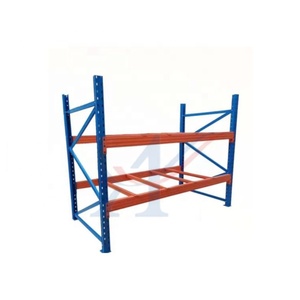
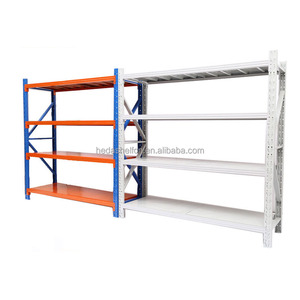
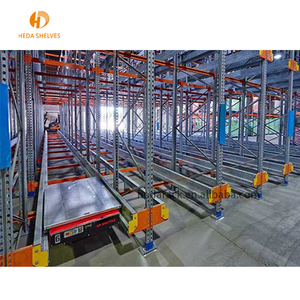
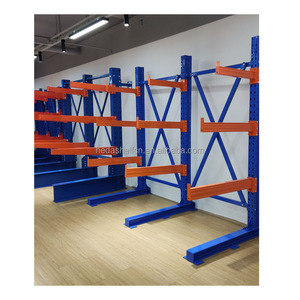
Structural Mechanics of Heavy-Duty Single Pallet Racking
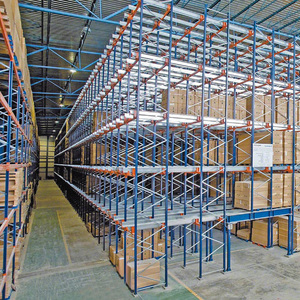
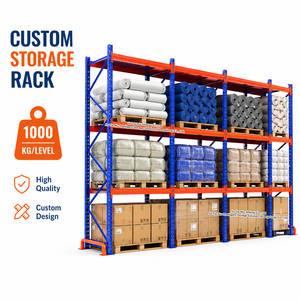
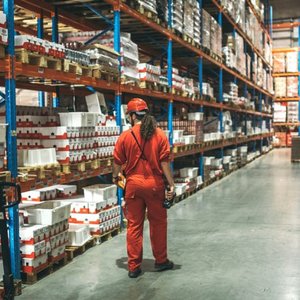
Single pallet racking—frequently designated in intralogistics engineering as selective single-deep pallet racking—remains the fundamental architecture of modern distribution centers. Unlike bulk-stacking or drive-in variants that restrict direct access, single pallet racking offers 100% individual selectivity for every stored unit load. However, the structural reliability of single-deep arrays under continuous cycle fatigue requires rigorous metallurgical standards, precision cold-roll-forming, and precise load deflection modeling under FEM 10.2.02, ANSI MH16.1, and AS4084-2023 design standards.
At Guangzhou Heda Shelves Co., Ltd., structural design initiates at the molecular level of high-tensile structural carbon steel. Prime commercial racking systems utilize structural grade Q235B or high-yield Q355B hot-rolled coil. The mechanical yield strength ($f_y$) must guarantee a baseline of 235 MPa to 355 MPa, paired with an elongation threshold exceeding 21% to avoid brittle fractures during seismic dynamic oscillations. The upright column profiles are cold-roll-formed via progressive multi-stage roller tooling into sophisticated Omega ($\Omega$) shapes featuring up to 12 reverse bends. These stiffening ribs optimize the moment of inertia ($I_x, I_y$), mitigating torsional-flexural buckling across high slenderness ratios.
Engineering Rule of Thumb: Under standard RMI and European FEM guidelines, permissible horizontal deflection of beams under maximum operational working load ($W$) must not exceed $L/200$, where $L$ is the clear span distance between upright columns. HEDA engineering tolerances restrict operational deflection to $L/250$, incorporating a baseline safety factor of 1.65 to 1.8 across all welded connector components.
Beam-to-column connections serve as the critical nexus for structural equilibrium. HEDA heavy-duty box beams are fabricated from interlocking twin C-sections continuous-seam robotically welded to ensure maximum torsional stiffness. Connector brackets utilize heavy-gauge multi-claw forged steel plates precision-welded with high-penetration carbon-dioxide shielded arc systems. Each beam connector integrates automatic spring-locking safety pins, engineered to withstand upwards dislodgement shear forces exceeding 5,000 N caused by accidental forklift mast upward movement.
Finite Element Stress Distribution
Every frame assembly is validated via digital FEA simulation under multi-axial cyclic loading, verifying uniform load redistribution and eradicating stress singularities across beam hooks.
Seismic Zone Structural Anchoring
Base plates are engineered with heavy cold-drawn ductile steel, featuring dual expansion anchor apertures to dissipate lateral ground acceleration in compliance with UBC and Eurocode 8 seismic zones.
Surface Passivation & Durability
8-stage automated pre-treatment featuring hot acid pickling and nano-ceramic phosphating before electrostatic curing guarantees 500+ hours salt-spray resistance (ASTM B117 standards).
| Structural Parameter | Standard Heavy Duty Specs | Ultra Heavy Industrial Specs | Compliance / Verification Method |
|---|---|---|---|
| Steel Grade | Q235B Cold-Rolled Carbon Structural | Q355B Micro-Alloyed High Tensile | EN 10025-2 / Mill Test Reports |
| Upright Column Pitch | 50 mm / 75 mm Adjustable Increments | 50.8 mm / 76.2 mm Teardrop Pitch | ISO 2768-m Precision Punch Matrix |
| Beam Section Geometry | Twin C-Interlock Welded Box (80-140mm) | Heavy Tube-Interlock Box (120-160mm) | CNC Automatic Profile Roll-Forming |
| Beam Deflection Limit | Max. L/200 Under Rated Static Load | Max. L/250 Rigorous Intralogistics | FEM 10.2.02 / ANSI MH16.1 Load Test |
| Connector Claw Matrix | 3-Tooth / 4-Tooth Riveted/Welded Lug | 5-Tooth Heavy Stamped Lug Interlock | Hydraulic Push-Pull Destruction Rig |
| Surface Coating | 60-90 μm Thermoset Epoxy Powder | Hot-Dip Galvanized (≥ 85 μm) / Double Layer | Cross-Hatch Adhesion ISO 2409 / ASTM B117 |
Macro Industry Trends & Next-Generation Racking Procurement (2025–2035)
Global logistics facilities are transitioning from static, labor-intensive footprints into high-bay, automated, and carbon-monitored ecosystems. Industrial procurement directors must engineer future flexibility directly into current single pallet racking assets.
1. AGV / AMR Floor Convergence
Modern selective arrays require widened bottom apertures, impact deflection collars, and reflective optical fiducials engineered into the bottom 300mm to accommodate LiDAR-guided automated mobile robots.
2. Hybrid Dynamic Topologies
Procurement models favor modular bays capable of immediate field retrofit from standard selective racking to radio shuttle rails, push-back gravity lanes, or carton-flow pick modules without replacing upright structural columns.
3. Green Steel & Scope-3 Audits
Tier-1 multinational operators now demand verified Life Cycle Assessments (LCA) and Environmental Product Declarations (EPD). Utilizing clean electric-arc furnace (EAF) scrap steel and non-toxic powder coats reduces project embodied carbon.
4. Structural Health Telemetry
Integration of wireless strain-gauge transponders and tri-axial MEMS accelerometers on critical upright frames allows real-time impact detection and structural overload alerting to building management software (WMS).
Total Cost of Ownership (TCO) & Supply Chain Sourcing Economics
When procurement managers assess Chinese wholesale manufacturing for single pallet racking systems, looking solely at FOB metric tonnage pricing creates a false economy. True Total Cost of Ownership involves calculating five discrete structural parameters: raw material steel coil index correlation, geometric profile efficiency (load capacity per kilogram of rolled steel), containerization cube utilization, structural life cycle under high-tempo forklift impacts, and field installation speed.
A poorly manufactured upright profile rolled from non-homogeneous secondary steel coils may show nominal unit cost savings of 8–12%. However, inadequate tensile yield limits require thicker gauges, adding dead weight to ocean freight containers. Conversely, HEDA Shelves deploys optimized multi-bend Omega geometries utilizing prime Q235B and Q355B coils that maximize strength-to-weight ratios. This engineering innovation increases structural load margins while allowing over 26,000 kg of densely bundled components to be packed into standard 40ft High Cube containers without exceeding volumetric or road-weight limits.
Guangzhou HEDA Shelves: 25 Years of Manufacturing Authority
Established in 2001, Guangzhou Heda Shelves Co., Ltd. operates a vertically integrated industrial manufacturing infrastructure spanning 30,000 square meters. Every structural column, beam, connector bracket, and bracing profile is fabricated in-house to guarantee uncompromising structural integrity.
10-Stage Precision Manufacturing & Quality Control Pipeline
From raw metallurgical batch verification to high-temperature powder polymerisation, our production lines execute strict ISO 9001:2015 process controls across all components.
Steel Verification
Spectrometric testing of hot-rolled Q235B/Q355B coils for chemical purity and tensile yield.
Precision Slitting
High-speed automated uncoiling and continuous longitudinal slitting to strict micrometer tolerances.
CNC Multi-Punch
Continuous mechanical hydraulic punching of 50mm / 75mm teardrop and diamond hole matrixes.
Cold Roll-Forming
18-station progressive roll lines forming reinforced Omega upright columns and box profiles.
Robotic Welding
Six-axis industrial robotic arms performing CO₂ gas-shielded fillet welds on beam end connectors.
Shot Blasting
Mechanical surface blasting removing thermal mill scale, oil, and welding residue to Sa 2.5 profile.
Chemical Wash
Multi-stage ultrasonic degreasing, hot acid pickling, rinsing, and nano-zirconium phosphating bath.
Electrostatic Coat
Automated reciprocating spray guns applying 70-90 μm uniform thermoset epoxy-polyester powder.
Thermal Curing
Continuous drying tunnel operating at 200°C for 25 minutes ensuring molecular polymer cross-linking.
QA & Unit Packing
Destructive weld torque tests, coating thickness checks, wooden dunnage strapping, and barcode tracking.
CE Certified: 2435-CPR-8605159
Fully compliant with European Construction Products Regulation (CPR) No 305/2011, establishing legal conformity for structural steel load assemblies across global supply chains.
ISO 9001:2015: 18624Q00169R0M
Audited Quality Management Architecture renewed and valid through June 2027, covering structural layout engineering, metallurgical stamping, robotic welding, and international export documentation.
Full Turnkey Engineering in 24h
Supported by 300+ technical personnel and senior racking engineers providing free CAD layout schematics, 3D structural perspective renderings, and bill of materials within 24 hours of specification submittal.
Single Pallet Racking Technical Procurement FAQ
In-depth structural, metallurgical, and international logistics solutions addressing common inquiries from warehouse operations managers, civil engineers, and supply chain procurement heads.
Request a Verified Structural Design & Factory-Direct Quotation
Send our senior engineering team your warehouse dimensions, clear height, pallet loading configurations, and forklift specifications. We will generate a comprehensive CAD floor layout, 3D structural model, and detailed bill of materials within 24 hours.
Inquire Now