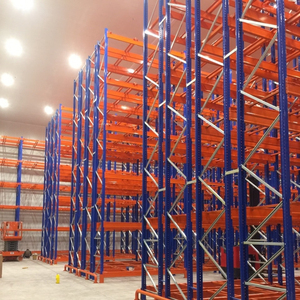
Durable Selective Racking System For Safe And Efficient Warehouse Storage
Load: 1,000–4,500 kg/tier • Direct 100% SKU Access
High-precision cold-roll-formed storage equipment and intra-logistics handling solutions designed for dynamic distribution centers, automated staging, and heavy manufacturing facilities.
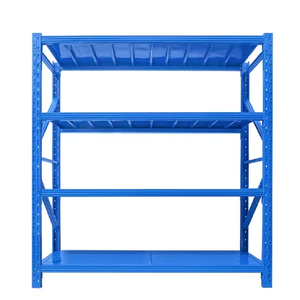
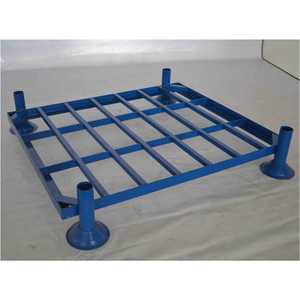
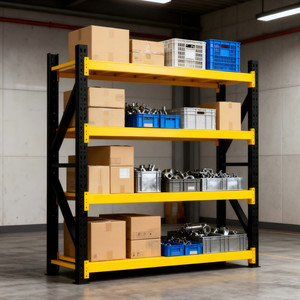
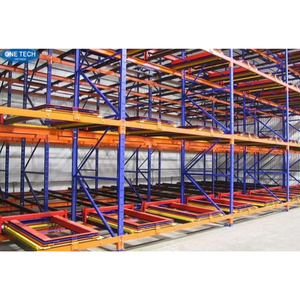
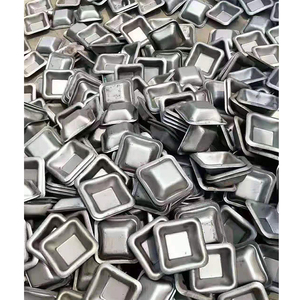
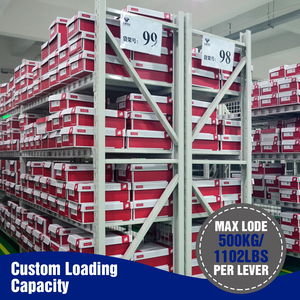
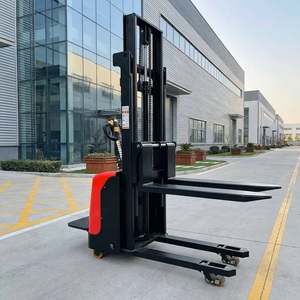
Selecting an industrial storage system requires balancing SKU diversity, inventory turn velocity, building slab live-load capacity, and operating handling equipment.
The global benchmark for multi-SKU fulfillment. Provides unhindered 100% individual pallet selectivity with standard counterbalanced, reach, or VNA turret trucks. Best suited for distribution hubs with rapid inventory turns.
Engineered for ultra-high-density cold storage, raw ingredients, and single-batch manufacturing. Eliminates operational aisles by channeling forklifts directly into deep storage bays under strict LIFO or FIFO logic.
Heavy-duty column-and-beam platforms that exploit vertical cubic height. Adds entire operational floors for light assembly, manual piece picking, sorting belts, or modular offices without increasing building footprints.
Semi-automated deep lane storage where radio-controlled shuttles transport pallets within drive-in bays. Drastically reduces forklift mast travel inside the system, minimizing steel impact damage and boosting cycle times.
| Storage Topology | Space Utilization | Pallet Selectivity | Stock Rotation | Handling Equipment Required | Initial CapEx Tier |
|---|---|---|---|---|---|
| Standard Selective Rack | 40% – 50% | 100% Immediate | FIFO / LIFO Dynamic | Standard Counterbalance / Reach Truck | Economic / Standard |
| Double Deep Pallet Rack | 60% – 65% | 50% (Two-deep access) | LIFO per Bay | Deep-Reach Pantograph Forklift | Moderate |
| Drive-In Racking | 75% – 85% | Low (Per Lane Batch) | Strict LIFO | Standard Narrow-chassis Reach Truck | Moderate |
| Push-Back System (Carts) | 70% – 75% | Moderate (Lane-dependent) | LIFO Gravity Flow | Standard Counterbalance / Reach | Moderate-High |
| Radio Shuttle System | 85% – 90% | High per Level / Lane | Flexible FIFO or LIFO | Electric Shuttle Cart + Host Forklift | High / Automated |
| Rack-Supported Mezzanine | 150% – 250% (Multi-level) | 100% on Picking Floors | Configurable per Tier | Hand Trucks, Lift Tables, Vertical Conveyors | Engineered Custom |
Procurement directors and supply chain engineers are shifting from simple per-ton steel sourcing to total life-cycle resilience, ESG compliance, and automated warehouse readiness.
Global warehouse operators increasingly bypass local regional middlemen, buying direct from original Chinese manufacturing plants. Consolidating pallet racks, structural mezzanine decks, wire mesh decking, and steel stillages inside dedicated high-cube sea containers yields up to 28% freight savings and guarantees complete structural component compatibility across cross-dock facilities.
Recent shifts in regional building codes mandate strict engineering verification under localized seismic events. Procurement demands finite element stress calculations (FEA) compliant with EN 15512, RMI MH16.1, and AS 4084. Factories must supply structural slab reaction loads, baseplate thickness verifications, and custom anchor embedment schedules prior to container dispatch.
Corporate ESG targets are forcing enterprise buyers to verify the carbon footprint of steel coils. Leading Chinese manufacturers are adopting high-tensile Q355B low-alloy steel to reduce section wall thickness without lowering load ratings, cutting raw material mass by 12% and slashing Scope 3 embodied carbon across large-scale logistics developments.
How digital engineering, intelligent automated guided vehicles (AGVs), and surface metallurgical innovations are redefining industrial warehousing standards worldwide.
Traditional static racking is re-engineered with robotic clearances, magnetic floor guidance tracks, and photoelectric sensor targets. Racks accommodate AMR (Autonomous Mobile Robot) tote shuttles and automated pallet lifters operating continuously in dark distribution centers.
Standard solvent coatings have been replaced by multi-stage nano-ceramic conversion and electrostatic thermosetting polyester powder baking. Tested to surpass 1,000+ hours in salt spray chambers (ASTM B117), resisting tropical humidity and aggressive coastal air.
Cold-forming roll profiles optimize the moment of inertia ($I_x$, $I_y$) through multi-bend rib geometry. This allows lighter gauge uprights to deliver equal or superior axial compressive buckling resistance compared to legacy thick hot-rolled channel sections.
Modern mezzanine floors utilize interlocking roll-formed primary and secondary C/Z purlins joined via high-strength metric grade 8.8 structural bolts. This eliminates on-site hot work and cutting, speeding up erection times by more than 45% in operational warehouses.
Operating continuously since 2001, Guangzhou Heda Shelves Co., Ltd. delivers integrated design, structural load calculations, precision roll forming, and worldwide container shipping under one roof.
From prime-grade hot rolled strip coils to final export-ready sea container packing, every production phase is monitored under strict ISO 9001:2015 traceability controls.
Mill-tested Q235B and Q355B cold-rolled structural strip steel with mechanical elongation verifications.
Continuous hydraulic multi-die punching lines generating precise 50mm / 75mm butterfly or teardrop pitch holes.
18-to-24 pass cold roll forming lines creating rigid omega upright profiles and multi-flange box beams.
CO2 gas shielded automatic welding stations bonding beam connector claws with zero spatter and deep root penetration.
Automated 7-stage immersion: degreasing, rust pickling, phosphating, and deionized water rinsing cascades.
Electrostatic Gema powder spray booths applying thermosetting polyester resins at 60–80μm uniform thickness.
High-temperature 200°C tunnel ovens providing polymer cross-linking for impact and scratch resistance.
Destructive and non-destructive weld shear tests, bend deflection measurement, and coating adhesion peel tests.
Anti-abrasion corrugated wraps, edge corner protectors, and steel strapped dunnage to prevent transport friction.
Quoted FOB, CIF, or DDU from major Pearl River Delta ports (Nansha, Huangpu, Shenzhen) with itemized packing lists.
Key engineering calculations, structural international standards, and logistical containerization factors answered by our warehouse structural engineering team.
Send us your building dimensions, pallet sizes, and load specifications. Our engineering team will return a compliant CAD layout, 3D rendering, and factory-direct quote within 24 business hours.
Get Catalog