Direct-from-Factory Storage Racks & Compatible Beam Systems
Every warehouse environment demands structural integrity engineered to exact operational thresholds. Explore our certified high-performance racking lines manufactured to international FEM, RMI, and EN safety protocols.
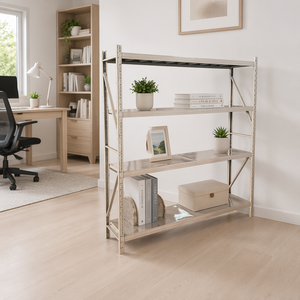
Custom Convenience Store & Light Duty Display Shelving
- Load: 100 - 250 kg / Layer
- Modular Boltless Assembly
- Scratch-Proof Powder Coat
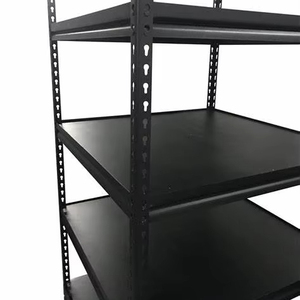
Heavy-Duty Mobile AGV Industrial Wire Racking
- Automated Guided Guided Docking
- Capacity: Up to 1500 kg / Tier
- Reinforced Optical Floor Tracks
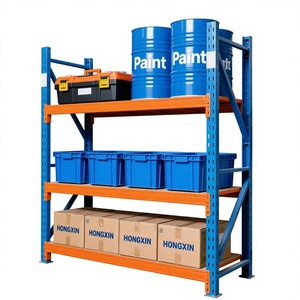
5-Layer Adjustable Boltless Industrial Warehouse Rack
- 500 kg Uniform Distributed Load
- Toolless Interlocking Pins
- Pre-Treated Anti-Corrosion Finish
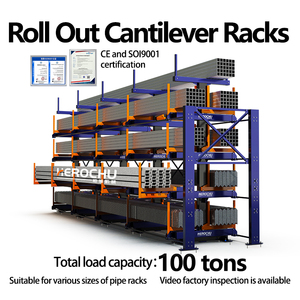
Double-Sided Heavy Duty Cantilever Racks (8T/Arm)
- CE Certified Carbon Steel
- Pipe & Rebar Dedicated Storage
- Telescopic Crank Extensions
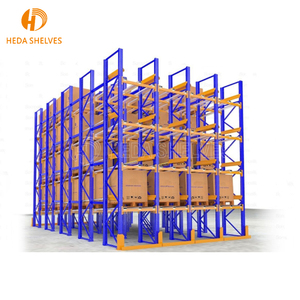
High-Capacity Drive-In & Drive-Thru Pallet System
- LIFO / FIFO Cold-Room Max Density
- Continuous Unbraced Pallet Rails
- Up to 85% Volume Utilization
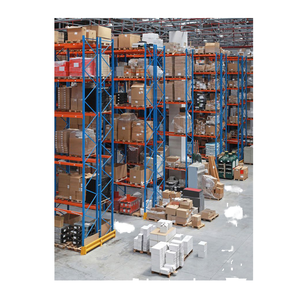
Multi-Layer Very Narrow Aisle (VNA) Pallet Racking
- Max Vertical Reach up to 15m+
- 100% Individual Pallet Selectivity
- Magnetic Floor Wire Guidance
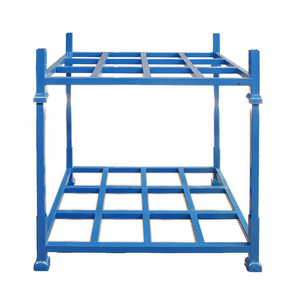
Galvanized Detachable Post Stacking Storage Rack
- Rust-Proof Coastal/Outdoor Rating
- Removable Upright Stanchions
- Dynamic Stacking: 4 to 5 High
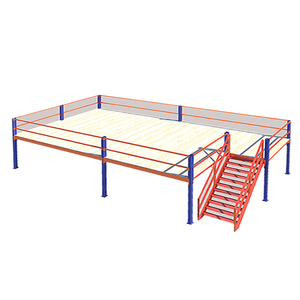
Industrial Warehouse Pallet Racking Mezzanine Platform
- Multi-Tier Floor Support: 300-1000 kg/m²
- Complete Integrated Staircases & Gates
- Doubles Floor Space Without Land Cost
Technical Anatomy of Heavy-Duty Pallet Racking Cross Beams
The cross beam is the fundamental horizontal load-bearing component of any selective, drive-in, or high-bay warehouse structure. Deflection limits, yield strength, connector claw configurations, and automatic robotic seam welding directly dictate structural survival under dynamic seismic stresses.
Box Beam vs. Step Beam Geometry
Box beams (interlocking double-C channels welded continuously) deliver maximum torsional resistance for Euro and industrial GMA pallets. Step beams provide an internal recess step designed specifically to seat wire mesh decking, solid timber shelves, or secondary drop-in cross ties without increasing beam profiles.
Q235B vs. Q355B Steel Metallurgy
Our factory manufactures cross beams using certified continuous pickled hot-rolled steel coil. While standard storage runs on Q235B (yield strength ≥ 235 MPa), heavy automated facilities utilize cold-formed high-tensile Q355B (yield strength ≥ 355 MPa), allowing a 20% reduction in tare weight with equal deflection limits (L/200 standard).
Multi-Claw Connectors & Safety Pins
Cross beam ends are integrated with cold-stamped 3-claw, 4-claw, or 5-claw connectors tailored to teardrop, 50mm pitch, or 75mm diamond pitch upright punch patterns. Automatic spring-loaded safety locks ensure instantaneous visual verification, resisting forklift upward dislodgement forces up to 5,000N per connection.
Standard Cross Beam Sizing & Load Verification Matrix (Pair of Beams)
| Profile Dimension (mm) | Material Thickness | Clear Span (L mm) | Rated Capacity / Pair | Deflection Threshold | Compliance Benchmark |
|---|---|---|---|---|---|
| Box 80 x 50 | 1.5 mm / 1.8 mm | 2300 mm (2 Pallets) | 1,200 - 1,800 kg | ≤ L / 200 (11.5 mm) | EN 15512:2020 |
| Box 100 x 50 | 1.5 mm / 2.0 mm | 2700 mm (Standard GMA) | 2,000 - 2,500 kg | ≤ L / 200 (13.5 mm) | ANSI MH16.1 (RMI) |
| Box 120 x 50 | 1.8 mm / 2.0 mm | 2700 mm - 3300 mm | 3,000 - 3,600 kg | ≤ L / 200 (15.0 mm) | AS 4084:2023 |
| Box 140 x 50 | 2.0 mm / 2.5 mm | 3600 mm - 3900 mm | 4,000 - 5,000 kg | ≤ L / 250 Heavy Spec | FEM 10.2.02 |
| Step 50 x 80 x 1.8 | 1.8 mm High-Tensile | 2700 mm Deck Ready | 1,500 - 2,200 kg | ≤ L / 200 (13.5 mm) | CE Certified |
Global Procurement & Future Engineering Trends for 2026–2030
As supply chain leaders move toward intelligent logistics and decarbonization, the procurement of warehouse storage racks has transformed from static commodities into hyper-engineered structural ecosystems.
1. High-Tensile Cold Roll-Forming Weight Reduction
Global logistics developers are pivoting toward micro-alloyed structural steels like Q355B and HC340LA. By optimizing cross beam inertia (Ix and Iy) through complex rolled multi-bend profiles, buyers reduce freight tonnage per container by 12–18% while sustaining identical uniform load metrics.
2. Automated High-Bay AS/RS & Shuttle Tolerances
With warehouse robotics requiring millimeter-level precision, cross beam fabrication now demands deflection limits as strict as L/300 to L/400. In high-density Radio Shuttle and ASRS racking, beams must eliminate thermal sagging and torsional deflection to prevent shuttle stall events.
3. Eco-Efficient Epoxy-Polyester Powder Formulations
Zero-VOC electrostatic powder coatings with cure temperatures lowered from 200°C to 160°C reduce factory carbon footprints. In cold-storage and tropical zones, anti-microbial and 1,000-hour salt-spray-rated finishes protect welded beam joints against humidity and galvanic deterioration.
4. Digital Twin Structural Modeling & Seismic FEA
Modern EPC contractors demand full Finite Element Analysis (FEA) reports prior to contract awards. Cross beam manufacturing now includes digital load simulations factoring in ground acceleration forces according to seismic zone parameters across Central America, Southeast Asia, and Europe.
5. Standardization of Smart Sensor Integration
The rise of automated warehouse integrity sensors has accelerated beam adaptations with pre-punched diagnostic ports. Optical sensors and load-cell brackets can be snapped directly onto beam inner flanges, facilitating real-time load distribution alerts and early structural overload detection.
6. Resilient Factory Direct Supply Chains
Large-scale 3PL operators bypass intermediate wholesalers, ordering directly from certified Chinese mega-factories. Complete turnkey custom fabrication—spanning 3D CAD design, robotic fabrication, custom RAL finishing, and modular container loading—ensures project timelines shrink by weeks.
10-Stage High-Precision Manufacturing Ecosystem
Every pallet rack cross beam manufactured in our Guangzhou production base undergoes an unbroken chain of automated processing and rigorous metrology inspection.
Coil Inspection
Spectrometric chemical analysis and mechanical tensile testing of steel coils.
Precision Slitting
High-speed CNC slitting lines strip steel to precise profile widths within ±0.1mm.
CNC Punching
Automated stamping of connector connector holes and safety locking slots.
Cold Roll Forming
18-to-24 station roll formers fold profiles into interlocking C-sections or step profiles.
Flying Cut-to-Length
Hydraulic tracking saws cut moving beams to length with absolute dimensional fidelity.
Surface Grinding
Mechanical de-burring and polishing of beam ends and connector flanges.
Robotic Welding
Dual-station robotic MAG welding securely joins connector claws with zero spatter.
Pickling & Phosphating
Full-immersion 9-tank pre-treatment removes all grease, scale, and surface oxides.
Electrostatic Coating
Swiss Gema automated powder guns coat components with 60–80μm durable epoxy-polyester.
QC & Bundling
Adhesion cross-hatch tests, deflection stress testing, and steel strapping for export.
Why Global Importers Partner with Guangzhou HEDA Shelves
Operating continuously since 2001, Guangzhou Heda Shelves Co., Ltd. provides comprehensive engineering, structural calculations, and export manufacturing across 120+ countries worldwide.
CE Certified Conformity
Certificate No. 2435-CPR-8605159 (Structural European Standards Compliance)
ISO 9001:2015 Audited
Registration No. 18624Q00169R0M (Audited Quality Systems Valid Through 2027)
RoHS & Eco Compliant
Heavy-metal-free thermosetting powder coat compounds for food and pharma warehouses
Frequently Asked Questions for Cross Beam Wholesale Procurement
Technical clarifications directly from our structural engineering and export logistics departments to assist project engineers, warehouse developers, and procurement managers.
? How is maximum beam deflection calculated and verified?
Under international standards (such as EN 15512 and RMI MH16.1), the maximum allowed vertical deflection is defined as δ ≤ L / 200 under 100% of the rated uniformly distributed load (UDL). For a 2700mm beam span, deflection under full capacity cannot exceed 13.5mm and must return to complete planar alignment upon load removal without plastic deformation.
? Can your beams integrate with our existing upright frame profiles?
Yes. Our automated CNC punching and connector stamping machinery produces connection hooks compatible with all mainstream international upright hole patterns, including 50mm pitch, 75mm diamond pitch, 76.2mm (3-inch) pitch, and American teardrop systems. Provide your upright drawings or samples for exact custom matching.
? What is the difference between interlocking box beams and open C-profiles?
Interlocking box beams are fabricated by roll-forming two identical C-sections that seamlessly clasp together before undergoing automated seam welding. This delivers closed tubular torsional stiffness, preventing cross-sectional twisting under dynamic pallet placement. Open C-profiles offer limited lateral resistance and are reserved only for manual light-duty shelving.
? How do you prevent beam dislodgement caused by forklift impact?
Every beam-to-column connector is fitted with an engineered steel safety locking pin. The pin mechanically passes through both the connector claw and the upright column face. It requires a manual vertical extraction force exceeding 5,000 N to detach, completely preventing accidental upward dislodgement by forklift tines.
? What surface finishes are recommended for tropical or cold-storage environments?
For standard dry ambient warehouses, our multi-tank pickling/phosphating followed by 60–80μm electrostatic powder coating provides superior durability. For frozen food chambers (-30°C) or coastal facilities with relative humidity exceeding 85%, we manufacture hot-dip galvanized cross beams complying with ISO 1461, ensuring over 20 years of rust-free operation.
? What structural data must be provided to receive a tailored engineering proposal?
To produce certified 3D CAD designs and exact load calculations, we require: (1) Pallet dimensions (W x D x H) including overhang; (2) Maximum gross weight per pallet; (3) Number of pallets per level; (4) Total clear warehouse ceiling height; (5) Forklift mast reach and minimum aisle clearance requirements; and (6) Local seismic parameters if applicable.
? What are the standard lead times and export packing configurations?
Typical lead times for standard wholesale orders (2 to 5 full container loads) average 15 to 20 working days. Cross beams are bundled using protective foam buffers, corner edge protectors, and high-tensile PET/steel straps. Palletized bundles are numbered per packing lists for fast customs clearance and direct site distribution.
? Do you provide seismic engineering calculations for active earthquake zones?
Yes. Our in-house structural engineering team utilizes specialized structural analysis software to calculate dead loads, live loads, and lateral seismic acceleration forces in accordance with UBC, Eurocode 8, or ASCE 7. We engineer upright frame gauges, beam-end connector rigidity, and base plates to guarantee full seismic compliance.