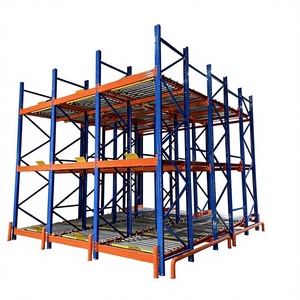
 High Density FIFO
Pallet Flow Racking Gravity Roller Flow Through Rack FIFO Metal Steel
- Gravity Rollers
- Anti-Rust Coated
- FIFO Rotation
Explore heavy-duty gravity lanes, synchronized roller conveyors, automated palletizers, and flow calibration systems manufactured directly in our 30,000 m² facility.
High Density FIFO
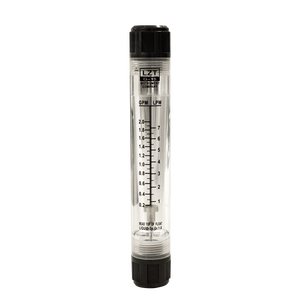 Flow Calibration
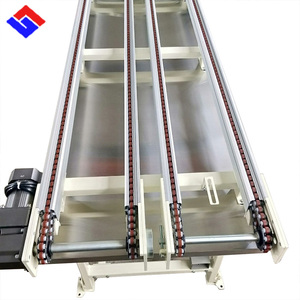 Powered Conveyor
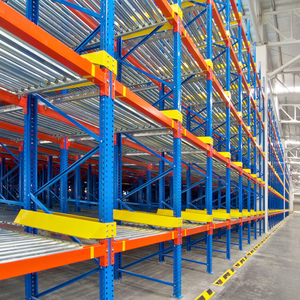 SGS Certified
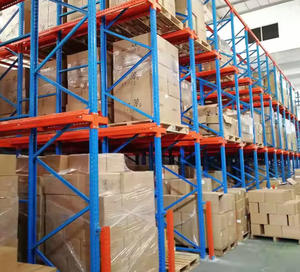 Maximum Density
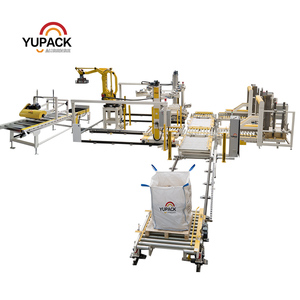 Automated Outflow
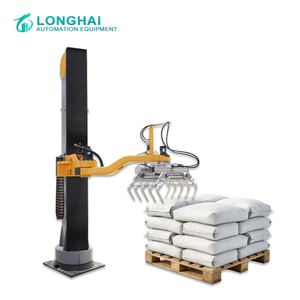 Robotic Palletizer
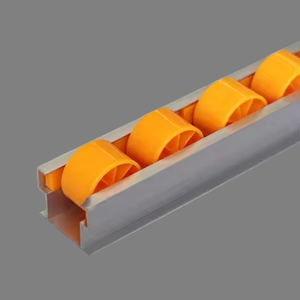 Modular Dynamic
Pallet flow racking—frequently designated as gravity flow racking, roll-through storage, or dynamic FIFO racking—represents one of the most efficient mechanical storage methodologies engineered for high-throughput distribution environments. Unlike static selective racking or semi-automated drive-in structures, pallet flow leverages gravitational kinematics, controlled deceleration, and automated queue separation to eliminate operator travel pathways inside storage aisles.
As a leading China wholesale pallet flow system exporter with over 25 years of structural engineering and metallurgical mastery, Guangzhou Heda Shelves Co., Ltd. supplies fully customized, turnkey gravity flow architectures to multi-national 3PL operators, cold-storage logistics parks, pharmaceutical manufacturing hubs, and FMCG packaging operations across five continents.
In high-density pallet flow systems, gravitational potential energy is converted into kinetic motion along an incline angle ranging from 3.0% to 4.2% (typically 3.5°). Systemic velocity control is maintained via internally housed magnetic or centrifugal friction brake rollers. Without calibrated retardation and pallet separators, line back-pressure from a 20-deep pallet lane would exert catastrophic crushing loads onto the leading discharge pallet, generating workplace hazards and structural fatigue.
A resilient gravity pallet flow bed is an intricate assembly of calibrated mechanical sub-components. To guarantee unhindered transit across lanes up to 30 meters in depth, the engineering design must account for pallet bottom board deflection, variable pallet wood moisture, gross load differentials, and environmental temperature shifts (notably within -30°C blast freezers).
| Engineering Parameter | Standard Heavy-Duty Specification | Cold-Chain / Harsh Chemical Spec | Functional Impact on Operation |
|---|---|---|---|
| Structural Steel Grade | Certified Q235B Cold-Rolled Carbon Steel | Q355B or Hot-Dip Galvanized ISO 1461 | Yield strength up to 355 MPa prevents frame buckling under full queue capacity. |
| Roller Pitch & Diameter | Ø50mm – Ø60mm, 75mm–100mm Pitch Centers | Ø60mm Heavy-Wall Steel with Dual Shielded Bearings | Ensures minimum 3-4 rollers permanently support pallet bottom runners at all times. |
| Braking Mechanism | Centrifugal Friction Speed Controllers | Sealed Viscous Magnetic Eddy-Current Retarders | Limits terminal rolling speed to a safe 0.2 m/s – 0.3 m/s irrespective of pallet mass. |
| Queue Pressure Relief | Mechanical Foot-Pedal Pallet Separator | Pneumatic or Timed Automatic Lock Separators | Isolates leading discharge pallet from line pressure, permitting safe forklift extraction. |
| Incline Gradient | 3.2% – 3.8% (1.8° – 2.2° Inclination) | 3.5% – 4.2% (Compensates for frozen timber friction) | Guarantees reliable self-starting restart after complete operational stop. |
| Surface Protection | 10-Stage Pickling, Phosphating, 80-120µm Powder Coat | Continuous Hot-Dip Galvanizing > 85µm Thickness | Resists moisture-induced electrochemical oxidation and industrial solvent damage. |
Procurement directors and supply chain engineers evaluating China exporters for pallet flow systems must align their capital expenditure with next-generation intralogistics ecosystems. Over the next decade, static high-density storage will rapidly transition toward smart-hybrid and environmentally optimized dynamic infrastructures:
Integration of gravity pallet flow lanes as staging decanting buffers connected directly to automated crane and Autonomous Mobile Robot (AMR) drop points to smooth cycle times.
Rising power costs are accelerating the adoption of gravity flow in cold stores. Pallet flow eliminates up to 60% of forklift transit corridors, slashing refrigerated volume requirements.
Transition from traditional centrifugal mechanical brake pads to non-contact magnetic eddy-current brake rollers, eliminating fluid leaks, brake dust, and physical wear across decades.
The manufacturing architecture of pallet flow systems from premier Chinese facilities has evolved far beyond rudimentary welded steel frames. High-precision laser cutting, automated multi-station cold roll-forming, and finite element analysis (FEA) testing simulate cyclical dynamic fatigue under maximum continuous load states:
1. Modular Universal Roller Beds: Transitioning from full-width welded roller frames to lightweight, modular zinc-plated multi-track beds. These tracks allow field-serviceable pitch adjustments without requiring flame cutting or structural re-welding on site.
2. Low-Profile Integrated Entry Guides: Robust steel entry alignment funnels mounted to loading beams self-center pallets off-squarely positioned by forklift operators, preventing derailment or track edge binding in high-throughput distribution lanes.
3. Heavy-Duty Pallet Retainer Separators: Advanced mechanical linkages automatically lock the second pallet in line precisely 150mm behind the first. Only when the extraction forklift completely clears the frontal discharge face does the linkage trip, releasing the queue smoothly forward.
When measuring Return on Investment (ROI), procurement teams frequently evaluate Selective Pallet Racking, Drive-In Racking, Radio Shuttle Racking, and Gravity Pallet Flow Racking. While initial capital outlay differs, the reduction of forklift travel, eliminated operator internal-rack transit, zero battery replenishment downtime, and absolute compliance with strict FIFO shelf-life mandates establish Pallet Flow as the premier ROI generator over a 5-to-10-year operational horizon.
Because pallet flow requires only two aisles—one loading corridor at the charge face and one extraction aisle at the discharge face—space utilization increases by up to 85% compared to conventional selective racking layouts.
Founded in 2001, we provide full-chain manufacturing control, global structural verification, and certified engineering competence to turn complex storage requirements into seamless high-capacity reality.
Certified under CE No. 2435-CPR-8605159 and ISO 9001:2015 No. 18624Q00169R0M with continuous RoHS eco-compliance testing.
Comprehensive warehouse floor layout optimization, 3D dynamic rendering, and structural seismic load modeling provided prior to contract sign-off.
Automated ultrasonic degreasing, acid pickling, zinc phosphating, and electrostatic epoxy-polyester powder coating for tropical anti-corrosion endurance.
Delivered to over 120 countries with containerized itemized bundling, CAD installation schematics, remote video guidance, and field supervisor dispatch.
In-depth technical answers addressing pallet compatibility, seismic compliance, speed control maintenance, and international shipping protocols.
Pallet flow requires standard wooden, plastic, or composite pallets featuring sound, un-deflected bottom runner boards oriented parallel to the rolling track. GMA (48×40 in), Euro (1200×800 mm), and Industrial (1200×1000 mm) pallets run smoothly on 3-track or full-width roller assemblies. Pallets with warped, split, or missing bottom deck boards must be handled using plastic slave boards or wire deck carton flow configurations to prevent hang-ups.
HEDA pallet flow systems incorporate self-governing speed controllers spaced evenly along the roller bed—typically every one or two pallet positions. These units employ internal planetary centrifugal flyweights or sealed eddy-current magnetic retardation to exert braking torque in direct proportion to rolling speed, restricting pallet velocity to safe operational thresholds between 0.2 and 0.35 meters per second.
In a 10-deep to 25-deep lane, cumulative gravity loads generate significant hydrostatic-like line pressure against the front pallet. The mechanical pallet separator locks the rear pallets in place, releasing the pressure on the discharge pallet so forklifts can retrieve it without binding or tilting. Once the operator backs out, the separator reset pedal triggers, smoothly admitting the next pallet into the discharge zone.
Sub-zero operating environments (-18°C to -30°C) increase lubricant viscosity in standard roller bearings and stiffen timber pallets, slightly increasing rolling resistance. HEDA counteracts this by specifying low-temperature synthetic grease, stainless steel roller bearings, calibrated 3.8% to 4.2% incline angles, and specialized high-grade polyurethane roller sleeves for condensation-free traction.
Yes. Our engineering division conducts structural finite element analysis in compliance with EN 15512, RMI, and local seismic building codes. Depending on the soil acceleration parameters (Ss and S1) of your facility site, we engineer heavy-duty structural upright profiles, reinforced diagonal bracing bays, oversized heavy-gauge baseplates, and high-tensile anchor bolts.
To produce an exact CAD drawing and itemized quotation, we need: warehouse dimensions and clear eaves height, floor slab load capacity, pallet specifications (width, depth, total height, minimum and maximum gross weight including pallet runner layout), forklift operational lift height, SKU count, and target operational pallet storage capacity.
Upright frames and horizontal beams are nested in heavy-duty protective steel stillages with corrugated cardboard liners, edge guards, and high-tensile PET strapping. Dynamic roller beds and speed controllers are crated in export-standard fumigated plywood crates with moisture-absorbent desiccant packets, preventing transit vibrations and maritime corrosion.
Because gravity systems contain no electric motors or continuous chains, preventive maintenance is exceptionally low. We recommend quarterly visual inspections of roller spindles, verifying that speed controller brake drums are free of debris, checking that entry alignment funnels and pallet separator mechanical linkages move without restriction, and cleaning track surfaces.