High-Performance Modular Racking Systems
Manufactured from premium cold-rolled Q235B and Q355B structural steel, our modular systems are optimized for dimensional accuracy, deflection tolerance, seismic resistance, and maximum cubic volume utilization.
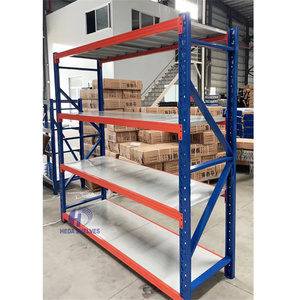
Customized Factory Industrial Workshop Display Iron Storage Rack
Precision cold-stamped upright profiles designed for line-side assembly staging, manual carton picking, and industrial tool room organization.
Contact Us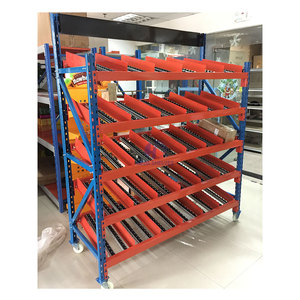
Customized Warehouse Pallet Flow & Lineside Gravity Flow Racking
Gravity-driven galvanized roller tracks with progressive magnetic braking for high-density perishable batch management and assembly picking.
Contact Us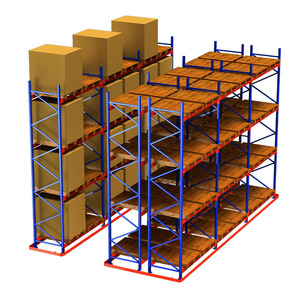
High-Bay Heavy-Duty Cold-Rolled Narrow Aisle (VNA) Shelving System
High-rigidity bolted upright trusses engineered for articulated forklifts and wire-guided turret trucks to maximize vertical warehouse volume.
Contact Us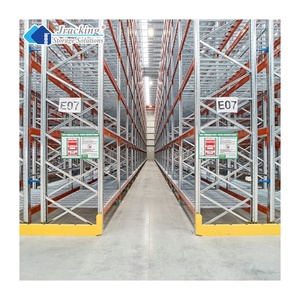
CE Certified Steel Pallet Storage Rack AU Compliant Standard System
Certified export configuration featuring heavy gauge teardrop or box-beam connectors tailored specifically for Australian and global warehouse criteria.
Contact Us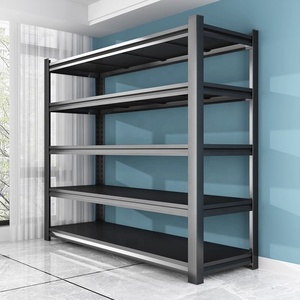
5-Layer 150KG Capacity Wire Decking Industrial Storage Shelf Unit
Welded steel wire mesh design optimizes overhead sprinkler water penetration, light penetration, and prevents dirt buildup in retail and pharmaceutical hubs.
Contact Us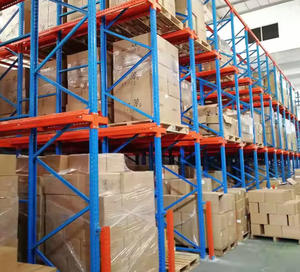
High Space Utilization Drive-In Pallet Rack with Heavy Guardrails
Eliminates operating aisles for uniform SKU bulk storage in beverage, chemical, and cold chain freezers with laser-cut heavy duty structural ground guides.
Contact Us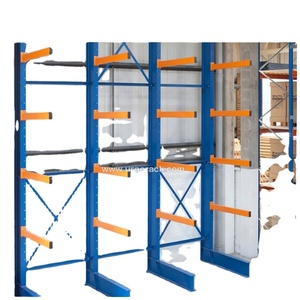
Industrial Heavy Duty Cantilever Racking System for Bulky Profiles
Unobstructed horizontal storage arms ideal for steel tubing, PVC conduits, lumber, extrusion aluminum, and awkward structural construction products.
Contact Us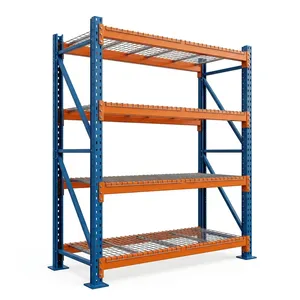
Heavy Duty Adjustable Beam Pallet Racking Modular Warehouse Unit
The gold standard in logistics fulfillment: continuous welded roll-formed box beams with 5-hook safety connectors for fail-safe SKU accessibility.
Contact UsStructural Metallurgy, Finite Element Analysis & Load Deflection Dynamics
In contemporary warehouse logistics, purchasing modular pallet racking is fundamentally an investment in structural civil engineering. A racking installation is not mere shelving; it operates as an unbraced or semi-braced steel building erected within an industrial shed. Structural integrity dictates that every component withstand dynamic dead loads, live pallet impacts, horizontal seismic accelerations, and eccentric operational placement forces. At our Guangzhou engineering center, all modular components are developed using certified cold-rolled high-tensile steel grades (predominantly Q235B and Q355B with verified yield strengths of 235 MPa and 355 MPa, respectively).
Under international engineering benchmarks such as the European FEM 10.2.02 / EN 15512 code, the American Rack Manufacturers Institute (RMI MH16.1) specification, and the Australian AS 4084 standard, pallet rack beams must satisfy strict elastic deflection criteria. The standard allowable vertical deflection limit is set at L/200 (one two-hundredth of the clear beam span) under full nominal safe working load. When evaluating bids from Chinese wholesale manufacturers, international procurement officers must look beyond steel raw ton prices and audit the section modulus (Z), moment of inertia (Ix), and connection moment-rotation stiffness of beam end connectors.
| Racking Topology | Pallet Selectivity | Volumetric Space Utilization | Ideal Inventory Rotation | Forklift Impact Risk Profile | CAPEX vs. ROI Velocity |
|---|---|---|---|---|---|
| Selective Pallet Racking | 100% Direct Access | 40% – 50% Ground Cube | FIFO / Continuous SKU Mix | Low (Standard Aisles: 3.2m–3.8m) | Lowest initial CAPEX; fast payback |
| Drive-In / Drive-Through | <15% (Tunnel-bound) | Up to 80% Density | LIFO (Drive-In) / FIFO (Through) | High (Forklift drives inside bays) | Moderate initial CAPEX; low SKU diversity |
| Gravity Pallet Flow | Lane Dedicated | Up to 75% Density | Strict FIFO (Food/Pharma) | Very Low (Separate Load/Unload) | Higher initial CAPEX; zero electrical cost |
| Radio Shuttle System | Lane Deep SKU Level | 80% – 85% Density | Flexible FIFO / LIFO Automation | Minimal (Truck remains in main aisle) | High CAPEX; lowest labour requirement |
| Very Narrow Aisle (VNA) | 100% Direct Access | 65% – 70% Cube (Up to 15m) | FIFO High Velocity | Controlled (Wire or Rail Guided) | Moderate rack cost; high mast truck CAPEX |
To eliminate operational catastrophic structural failures, our automated multi-roll cold profiling lines roll upright column posts with 12 to 14 distinct bending radii. Every additional fold profile increases polar moments of inertia without adding deadweight steel mass. Furthermore, computerized five-hook beam connector brackets feature reciprocal slot geometry that locks with zero slip into our 75mm and 76.2mm vertical column pitches, reinforced by spring steel safety pins capable of resisting 5,000 N shear dislodgement forces.
Emerging Procurement & Technological Trends in Modular Pallet Racking
Forward-thinking supply chain directors are aligning warehouse infrastructure with rapid automation, robotics integration, climate resilience, and sustainable ESG sourcing.
1. AMR & Robotic Automation Convergence
Traditional static racking is transitioning toward hybrid automation. Uprights are now precision-machined with tighter beam level tolerance (±1.0mm) to accommodate Autonomous Mobile Robots (AMRs), automated guided vehicles (AGVs), and stacker cranes. Aisle bottom apertures are designed with low-profile base plates to allow robotic navigation under lower pallet elevations.
2. Decarbonized Steel & Eco-Coating Chemistry
Global carbon tariffs (e.g., EU CBAM) demand verified environmental product declarations (EPD). Modern wholesale buyers require low-emission, scrap-recycled EAF (Electric Arc Furnace) cold coil processing, paired with non-toxic, zero-VOC TGIC-free polyester powder coats cured at reduced thermal thresholds to minimize carbon footprints.
3. Smart Racking IoT Impact & Overload Sensors
Predictive structural health monitoring (SHM) is entering commercial logistics. Next-generation racking beams are prepared with integrated magnetic sensor recesses to register continuous deflection strain and detect accidental forklift impact shocks, sending real-time warnings to warehouse management software before micro-fractures propagate.
End-to-End In-House Manufacturing Capabilities
From prime cold steel uncoiling to final protective sea-worthy packaging, Guangzhou HEDA Shelves maintains a unified quality oversight across our 30,000 m² production facilities.
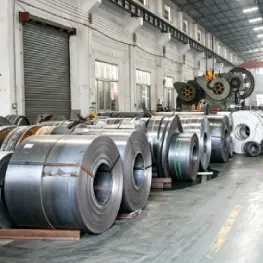
Raw Coil Verification
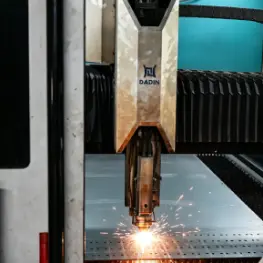
CNC Steel Slitting
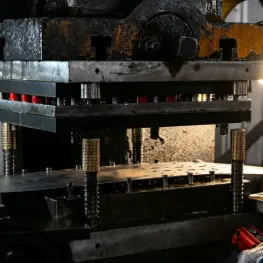
Multi-Axis Punching
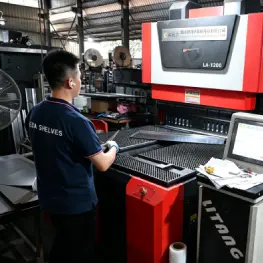
Roll Profiling Form
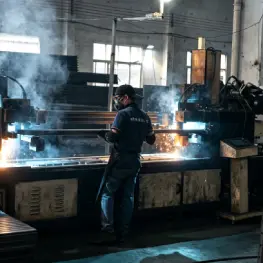
Robotic Connector Weld
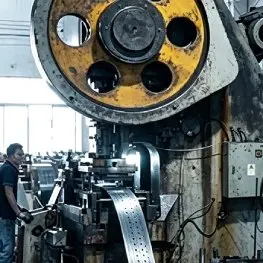
Shot Blast Polish
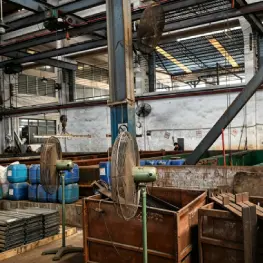
Chemical Phosphating
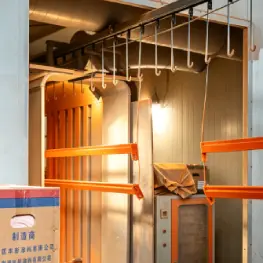
Electrostatic Powder
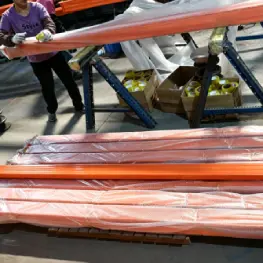
Curing & QC Audit
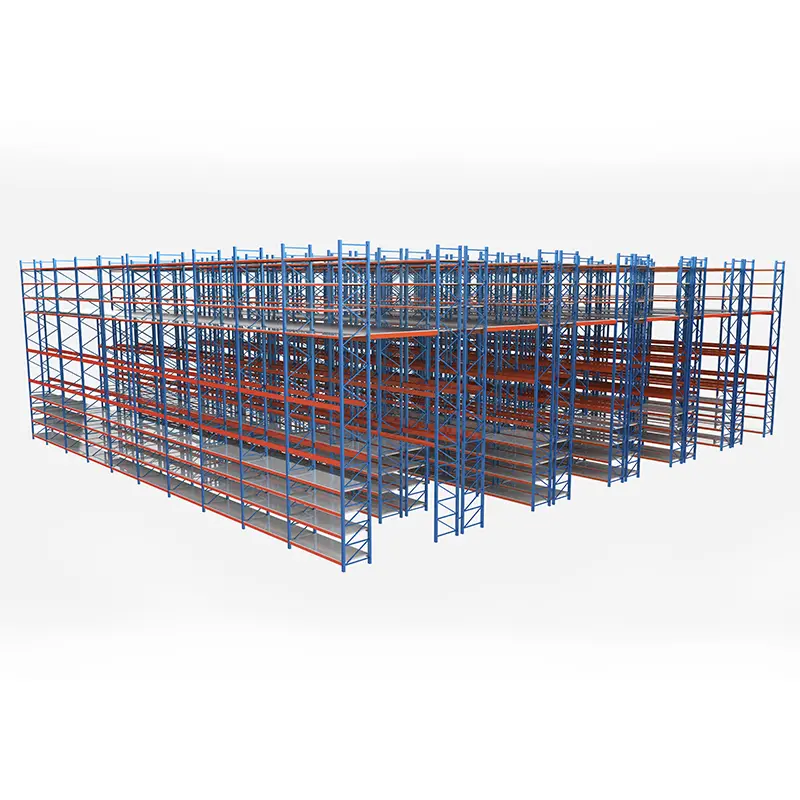
Export Container Nest
Direct China Factory Advantage — Certified Quality Verification
Founded in 2001, Guangzhou HEDA Shelves Co., Ltd. operates with accredited international credentials. We guarantee full traceability on all steel coil mill certificates (MTC), certified weld penetration, and 60–80 micron uniform dry film thickness (DFT).
Frequently Asked Questions on Importing Modular Pallet Racking
Expert engineering insights covering seismic design, surface anti-corrosion treatments, shipping container cubic efficiency, and structural certifications.
We compute seismic load factors in accordance with Eurocode 8, RMI MH16.1, or local building regulations (such as NZS 1170.5 or Chilean NCh 2369). We examine regional peak ground acceleration (PGA), floor slab thickness, subsoil site class, and ductility factors. Based on FEA calculations, we increase column base plate dimensions, add high-tensile anchor bolts (M12 to M16), reinforce upright cross-sections up to 2.5mm or 3.0mm, and install longitudinal spine bracing trusses.
For interior ambient warehouses with humidity under 70%, our 9-stage degreasing, pickling, phosphating, and electrostatic epoxy-polyester powder coating (60–80 microns) offers long-term resistance. For blast freezers (-25°C to -30°C), coastal ports, or agrochemical hubs with condensation risks, we manufacture components with Hot-Dip Galvanizing (HDG) under ISO 1461, yielding an 85+ micron pure zinc barrier that prevents rust formation caused by micro-scratches.
Racking components are dense and lengthy, posing risks of empty space loss if improperly nested. Our CAD export packaging team creates container stowage schematics. Upright frames are pre-assembled or flat-packed into interlocking bundles strapped with PET steel-core bands; beams are palletized with protective corrugated cushioning on end brackets. A typical 40ft High Cube (40HQ) container holds 22 to 25 metric tons of modular steel components with zero transit movement damage.
We require: (1) Architectural warehouse drawings indicating clear eaves height, building columns, and fire egress pathways; (2) Pallet specifications (width, depth, overall height including cargo, and gross weight); (3) Forklift model details (minimum aisle turning radius, maximum mast elevation, and collapsed mast height); and (4) Operating SKU velocity and target FIFO or LIFO inventory policies. Our CAD department returns a verified proposal within 24 business hours.
Yes. We regularly supply OEM and replacement components engineered to interlock with traditional teardrop profiles (prevalent in North America), 50mm pitch European patterns (compatible with Dexion, Stow, and Mecalux systems), and Australian 76.2mm standard configurations. During our engineering review, our tooling team cross-checks connector hook angles and column hole pitch geometry to ensure safe structural compatibility.
Every export container is accompanied by a coded bill of materials (BOM), step-by-step structural 3D assembly drawings, torque specification tables for base anchors, and safe operating load plaques. For large-scale multi-tier mezzanines or automated racking installations, we provide remote video engineering walkthroughs or deploy senior Chinese installation site managers to supervise local contractor crews.
Request an Engineered Warehouse Layout & Wholesale Factory Quotation
Connect directly with our senior structural logistics engineering team in Guangzhou. Receive an itemized calculation sheet, complete CAD warehouse floorplan, structural static analysis, and competitive factory-direct CIF/FOB pricing for your next logistics project.