Engineered Medium & Heavy Duty Warehouse Storage Racks
Tested under rigorous static loading tests (FEM 10.2.02 and EN 15512 safety factors), our racking systems bridge manual picking adaptability and automated logistics handling.
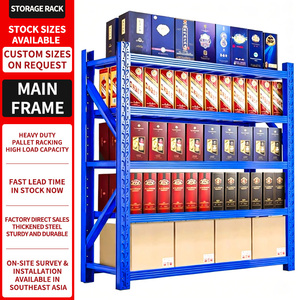
300kg Per Layer Medium Duty Warehouse Storage Shelving Racking System
Multilayer boltless steel shelving with adjustable butterfly-hole beams, cold-rolled steel decking panels, and durable 300kg uniformly distributed load (UDL) capacity per tier.
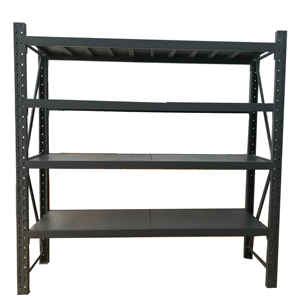
Medium Duty Garage Bolted Steel Shelving Metal Storage Shelf Rack
Heavy-gauge corner-angle upright frames with corrosion-resistant electrostatic finish, engineered for equipment maintenance bays, automotive components, and tool rooms.
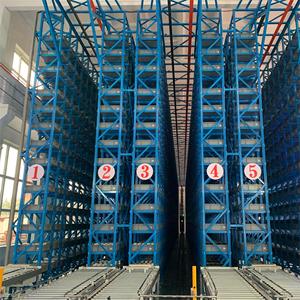
QDITC Medium Duty Warehouse ASRS Storage Racking System
High-precision tolerance guide rail interfaces integrated with automated stacker cranes (ASRS) and micro-load mini-shuttles, delivering 24/7 automated carton retrieval.
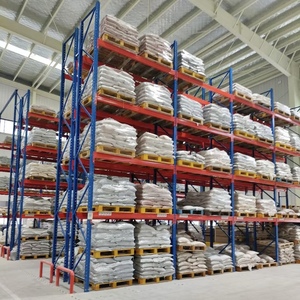
Heavy Duty 5 Layer Metal Pallet Racking System (1-5 Ton)
Configured with structural Q235B box beams and interlocking security safety pins, sustaining unitized pallet weights up to 5,000 kg across high-reach vertical tiers.
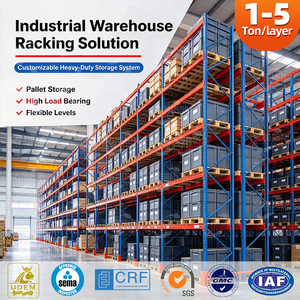
Selective Pallet Rack 1000-4500kg Load Capacity Q235B Steel
Offers 100% direct access to every pallet position for standard counter-balanced and reach forklifts, serving as the gold standard for high-SKU distribution logistics.
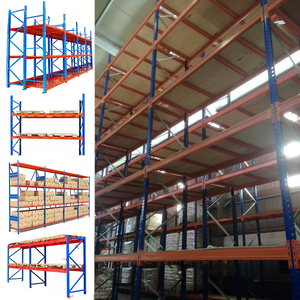
Adjustable Customized Gravity Storage Shelf Heavy Duty Racking
Continuous dynamic flow tracks with integrated speed controllers and brake rollers, guaranteeing strict first-in, first-out (FIFO) inventory cycling for food and FMCG batches.
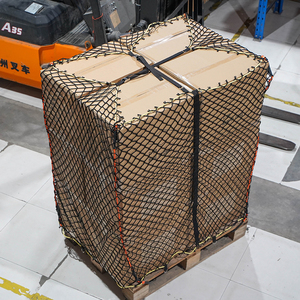
Shelf Cargo Secured Prevent Falling Reusable Pallet Nets
Industrial-grade high-tenacity polypropylene netting with fast-release cam buckles, preventing carton falls into pedestrian gangways and seismic spillages.
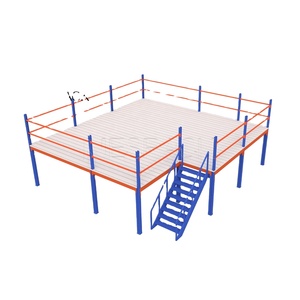
Customized Heavy Duty Steel Mezzanine Floor Platform
Rack-supported or structural column-supported second-floor mezzanine decks rated for 300–1,000 kg/m², doubling operational square meters without expensive civil building expansion.
Enterprise Manufacturing Power & International Compliance
As a leading Chinese racking exporter, we control the entire lifecycle of industrial storage: from hot-rolled steel strip slitting to automated continuous roll-forming, robotic welding, and thermoset electrostatic powder polymerization.
Certified Metallurgy
Fabricated exclusively from prime Baosteel and Shougang Q235B / Q345B carbon structural steel, validated with incoming mill test certificates (MTC) and rigorous chemical tensile verification.
Free 3D Layout & FEM
Our senior structural engineering desk generates complete AutoCAD layouts, Navisworks 3D clearance simulations, and finite element method (FEM) beam deflection safety calculations within 24 hours.
Anti-Corrosion Finishes
Utilizing a comprehensive 10-stage automated pickling, degreasing, phosphating, and electrostatic powder coating cycle that guarantees over 500 hours of neutral salt spray (ASTM B117) resistance.
Port-Ready Sea Packing
Tightly bundled uprights with edge protectors, waterproof plastic wrapping, palletized beam nests, and modular loading plans designed to maximize 40ft HQ container cubic utilization without freight damage.
10-Stage Precision Fabrication Workflow
Continuous dimensional inspection ensures hole-pitch accuracy (±0.5mm) across entire upright lengths for error-free overseas site installation.
Coil Slitting
High-precision uncoiling and hydraulic edge trimming of prime Q235B strip coils.
CNC Punching
Continuous CNC multi-station hydraulic hole punch press for 50mm / 75mm pitches.
Roll Forming
24-station roll forming line producing cold-rolled omega (Ω) columns without residual stress.
Robotic Welding
Multi-axis CO2 gas shielded robotic arms welding beam connectors with zero spatter.
Electrostatic Coat
Full pre-treatment chemical dip and thermoset polyester powder baking at 180°C.
Engineering White Paper: Mechanical Load Capacities & Deflection Tolerances
When procurement managers and supply chain directors import medium-duty racking systems, the primary engineering factor that defines system longevity is not merely the nominal steel gauge, but the moment of inertia (Ix, Iy) of the upright section and the structural deflection limit under full operational loading. According to European standard EN 15512 and American RMI (Rack Manufacturers Institute) guidelines, the maximum allowable vertical deflection of a horizontal beam supporting palletized or shelf cargo must not exceed L / 200 (where L is the clear span distance between upright columns).
For instance, on an 1800mm clear-span medium-duty beam layer rated at 300kg UDL, the center elastic sag cannot exceed 9.0mm under maximum design payload. Chinese manufacturing leaders achieve this by shifting away from standard single-fold channels to multi-angle cold-bent profiles with stiffening ribs. These internal structural folds distribute static load stresses away from weld seams directly to the vertical column hooks, preventing beam twisting and permanent plastic deformation.
In seismic-active zones or regions subject to thermal fluctuations (such as cold-storage warehouses operating down to -25°C), standard steel becomes brittle. Our engineering department selects killed carbon steel grades with elevated manganese content and impact toughness tests down to Charpy V-notch verification. Baseplates are upgraded to heavy ductile steel footplates pre-punched for dual chemical wedge anchors, transferring dynamic kinetic shockwaves harmlessly into the reinforced concrete slab.
| Structural System | Standard Load Rating | Primary Material | Pitch Adjustability | Optimized Storage Application |
|---|---|---|---|---|
| Medium-Duty Step Shelving | 200 – 500 kg / layer | Cold-Rolled Q235B Steel | 50mm Pitch (Boltless) | E-commerce cartons, automotive retail, bin-box components |
| Heavy Selective Pallet Rack | 1,000 – 4,500 kg / level | Box/Twin C-Beam Q235B/Q345B | 75mm Pitch Interlock | Forklift pallet handling, 3PL distribution centers, heavy manufacturing |
| Mini-Load ASRS Rack | 100 – 300 kg / bin | High-Tolerance Precision Steel | Micro-Pitch Engineered | Pharmaceutical sorting, high-speed automated picking, electronics |
| Gravity Flow Storage | 500 – 1,500 kg / pallet | Structural Steel + Roller Bed | Modular Incline Track | Perishable food logistics, dairy, strict FIFO chemical rotation |
| Rack-Supported Mezzanine | 300 – 1,000 kg / m² | Heavy Uprights + Steel Deck | Custom Engineered Decking | Garment picking catwalks, packing stations, multi-tier parts rooms |
Future Global Procurement Trends in Medium-Duty Racking
How global supply chain volatility, nearshoring, and carbon-neutral mandates are redefining how international buyers source storage racking from China.
TCO vs. Purchase Price
Global procurement teams are shifting focus from ex-factory unit price to Total Cost of Ownership (TCO), prioritizing pre-galvanized components, boltless tool-free assembly, and anti-corrosive powder chemistries that reduce on-site labor and 10-year maintenance cycles.
Hybrid Manual-Auto Modularity
Warehouses are increasingly ordering scalable systems that operate as standard manual shelving today, but incorporate structural tolerances and punch geometry capable of hosting automated guided vehicles (AGVs) and mini-load shuttles tomorrow without total rack overhaul.
Factory-Direct Engineering
Bypassing regional distributors, international warehouse developers now collaborate directly with Chinese factory CAD engineers. Real-time BIM and 3D IFC modeling allow rapid layout approval, cutting supply lead times from 18 weeks to 4–6 weeks.
ESG & Carbon Footprint
Global logistics REITs are requiring RoHS certification, VOC-free thermoset powder coatings, and recyclable steel scrap disclosures. Chinese Tier-1 exporters are answering with low-energy curing ovens and eco-friendly zirconium pre-treatment wash systems.
Technological Evolution: Smart Warehouse Integration & Metallurgy Innovation
The medium-duty storage sector is experiencing a rapid technological transition fueled by omnichannel retail acceleration and labor shortages. Traditional static steel shelving is transforming into intelligent storage nodes integrated into modern Warehouse Management Systems (WMS).
Key technological breakthroughs shaping the next generation of racking include:
- Ultra-High-Strength Thin-Gauge Cold Alloys: By introducing micro-alloyed carbon steels containing vanadium and titanium, cold-roll mills can produce columns with 20% thinner nominal wall thicknesses while sustaining higher buckling resistance. This dramatically cuts raw material weight, reducing ocean container shipping freight charges while preserving structural load safety.
- Built-in Electronic Pick-to-Light (PTL) Channels: Medium-duty shelving beams are now pre-punched with internal raceways and snap-in clip grooves that conceal low-voltage cabling and digital PTL display sensors. This facilitates rapid order picking speeds exceeding 300 picks/hour for e-commerce fulfillment centers.
- RFID & Optical Sensor Column Integration: Smart upright column inserts now house embedded RFID transponders and LiDAR alignment reflective targets, assisting automated guided forklifts and visual stocktaking drones in zero-error pallet localization.
- High-Ductility Seismic Connection Baseplates: Advanced finite element modeling has spurred the development of hysteretic energy-dissipating base connectors. During earthquake tremors, these connections flex elastically to absorb seismic shear forces, safeguarding personnel and sensitive stored pharmaceuticals from structural collapse.
Frequently Asked Questions for Medium-Duty Racking Importers
Critical considerations on metallurgy, container packing, seismic compliance, and international shipping logistics.
How do you verify the load capacity of medium-duty shelves before sea shipment?
Every customized production run undergoes physical static loading verification in accordance with FEM 10.2.02 standards. We test prototype shelf tiers up to 1.5 times the rated uniformly distributed load (UDL) for 24 continuous hours, measuring center elastic deflection using dial micrometers to ensure the sag remains strictly under the L/200 threshold without residual permanent deformation.
What is the difference between Q235B and Q345B steel for warehouse racking?
Q235B possesses a yield strength of 235 MPa and represents the industry standard for light and medium-duty shelving, offering superior cold-bending formability and cost efficiency. Q345B (yield strength 345 MPa) is a low-alloy, high-tensile steel specified for structural uprights in automated ASRS high-bay racks, mezzanine support columns, and heavy pallet racks over 8 meters tall.
When should we choose hot-dip galvanizing over electrostatic powder coating?
Electrostatic thermoset powder coating (60–80 microns) is optimal for climate-controlled, dry indoor warehouses across 90% of commercial facilities. Hot-dip galvanizing (HDG) per ASTM A123 is required for outdoor yard storage, coastal locations with high ambient salinity, fertilizer/acid chemical facilities, and sub-zero refrigerated cold rooms where condensation induces premature rust.
How are racking components packed to prevent damage in maritime transit?
Columns and upright frames are bundled in modular timber bunks with corrugated cardboard corner cushions and heavy-duty steel strapping. Beams are nested in matched pairs to protect connector claws, wrapped in waterproof poly film, and labeled with position codes. Steel shelf panels are stacked on wooden pallets with plywood tops to eliminate transit warping.
Can you provide structural seismic calculations for municipal building permits?
Yes. Our engineering department develops comprehensive structural calculation packets incorporating your local site seismic parameters (PGA values, soil classification, importance factors). Calculations verify upright buckling, baseplate shear transfer, anchor bolt embedment depth, and horizontal cross-bracing tension, all stamped for municipal building code submittal.
What information is required to receive a formal 3D layout and FOB/CIF quotation?
Please share your warehouse architectural floor plan (clear ceiling height, column grid spacing, door/dock placements), cargo profile (box or pallet dimensions, unit weight, maximum SKU quantity), material handling equipment specs (forklift minimum aisle turning radius and mast reach), and preferred destination seaport.
Transform Your Warehouse Volumetric Capacity Today
Consult directly with our senior racking design engineers. We deliver free CAD floor layouts, finite element load reports, and transparent factory-direct pricing within 24 hours.