Heavy Duty
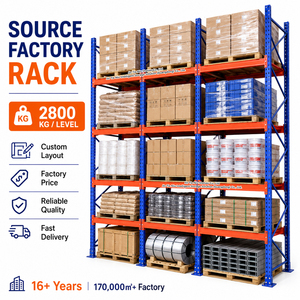
Precision-engineered with cold-rolled Q235B/Q355B structural steel, tailored for optimal cubic storage utilization, high load capacities, and seismic endurance in demanding global supply chain hubs.
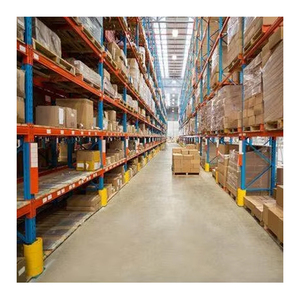
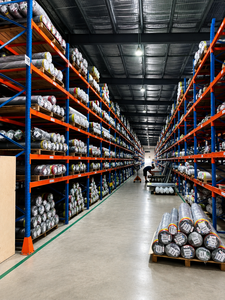
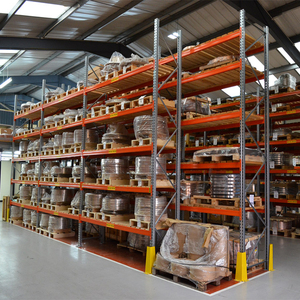
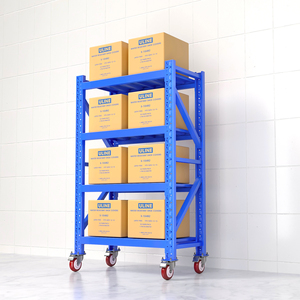
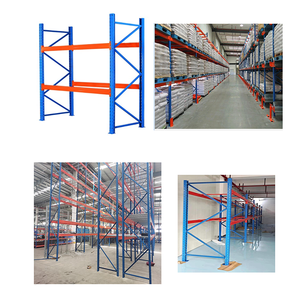
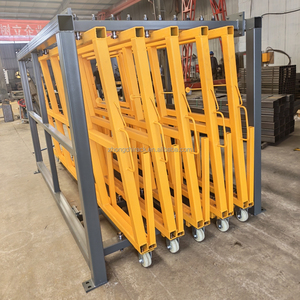
When procurement executives evaluate industrial warehouse storage rack systems from Chinese manufacturers and exporters, structural integrity transcends basic dimensional specifications. The underlying mechanical stability of high-bay pallet racking, rack-supported mezzanine floors, and automated drive-in channels is governed by rigorous finite element analysis (FEA), metallurgical consistency, and cold-roll manufacturing tolerances.
Industrial racking systems operate under complex dynamic forces, including uniform distributed loads (UDL), seismic ground acceleration, forklift side-impact shear forces, and thermal contraction variations in cold-storage microclimates. At Guangzhou Heda Shelves Co., Ltd., structural components are fabricated strictly from high-tensile certified structural steel grades (principally Q235B and Q355B, corresponding internationally to ASTM A36 and ASTM A572 Grade 50). Using inferior non-structural steels risks unexpected structural deformation under sustained rated loads or progressive brittle failure along punched upright columns.
Key Structural Metric: Upright profiles undergo multi-stage continuous roll forming with uniform cold work hardening. This continuous profiling enhances yield strength along critical flange bends by up to 18%, delivering optimum strength-to-weight performance while meeting European EN 15512, RMI (Rack Manufacturers Institute) standards, and Australian AS 4084 compliance.
The structural longevity of pallet racking hinges on matching the appropriate steel chemistry, minimum yield stress, and elongation factors to the building's operational velocity and seismic classification:
| Standard Grade | International Equivalent | Yield Strength (ReH Min) | Tensile Strength (Rm) | Typical Industrial Application |
|---|---|---|---|---|
| Q235B | ASTM A36 / EN S235JR | ≥ 235 MPa | 370 – 500 MPa | Standard selective pallet racking, longspan shelves, decking panels |
| Q355B (16Mn) | ASTM A572 Gr 50 / EN S355JR | ≥ 355 MPa | 470 – 630 MPa | High-bay uprights (>10m), heavy mezzanine primary H-beams, seismic bracing |
| Galvanized Cold-Rolled | DX51D+Z / ASTM A653 | ≥ 280 MPa | 360 – 430 MPa | Outdoor cantilever racks, deep-freeze cold storage (-30°C), coastal terminals |
| Static Dissipative ESD | Surface Resistivity 10&sup6;-10&sup9; Ω | Substrate Dependent | Substrate Dependent | High-tech microelectronics, PCB assembly storage, battery warehouses |
The global warehousing landscape is undergoing a systemic paradigm shift driven by urban land value inflation, escalating labor costs, and omnichannel supply chain acceleration. Traditional low-bay selective racking with 3.5-meter forklift working aisles is increasingly being upgraded to dense, high-throughput configurations that extract maximum volume per square meter of facility footprint.
Modern industrial storage is no longer viewed as passive steel furniture; it acts as the primary physical skeleton interfacing directly with Autonomous Mobile Robots (AMR), Automated Guided Vehicles (AGV), and Radio Shuttle satellites. High-density deep-lane radio shuttle systems, for example, eliminate internal drive-in forklift aisles entirely, enabling operators to achieve up to 80% theoretical space utilization while protecting steel uprights from vehicle collision stress.
Radio shuttle carriers glide on precision-formed horizontal rails to transport pallets within deep tunnels up to 40 meters deep. Accommodates both FIFO (First-In, First-Out) and LIFO modes without vehicle ingress, slashing handling cycle times by over 45% in food and FMCG distribution centers.
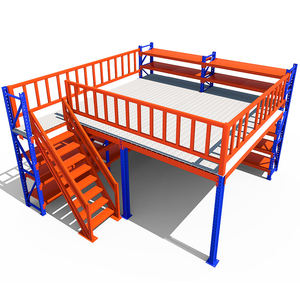
Transform overhead cubic voids into high-utility multi-tier picking platforms. Heavy-duty pallet rack uprights serve double duty as vertical structural columns supporting floor joists, perforated steel decking, perimeter safety balustrades, and integrated automated spiral chutes.
Upright profiles and baseplates are engineered with ultra-tight geometric tolerances (±0.5mm) to support precision guidance systems for Narrow Aisle (VNA) turrets and floor-scanning autonomous micro-shuttles, eliminating human handling errors.
Supply chain vice presidents and global infrastructure managers are recalibrating their capital expenditure models. Historically, international procurement focused almost exclusively on initial purchase price per ton or per pallet position. However, progressive operators evaluate suppliers based on comprehensive lifecycle metrics: seismic risk mitigation, anti-corrosion coating durability, container space optimization, and standardized modular upgradability.
1. Strict Compliance with Environmental, Social, and Governance (ESG) Criteria: International logistics operators are auditing powder coating chemistries to eliminate volatile organic compounds (VOCs) and heavy metal pollutants. At HEDA Shelves, electrostatic powder applications follow strict closed-loop recovery protocols with zero-discharge pickling and phosphating pre-treatments, verified by CE and RoHS testing accreditations.
2. Structural Resilience Against Extreme Geological Events: Across earthquake-prone regions such as the Pacific Rim, Central America, the Mediterranean, and South Asia, standardized off-the-shelf racking poses catastrophic failure risks under lateral resonance. Modern procurement demands project-specific structural simulations factoring in local soil class, seismic ground acceleration coefficients (Ss and S1), and baseplate anchor shear depth calculations.
3. Ocean Freight Volatility & Container Nesting Design: Freight logistics constitutes a major percentage of landed racking costs. Advanced suppliers employ engineered profile nesting, where upright frame trusses, step beams, and decking components pack symmetrically into 40HQ maritime containers, reaching max payload capacity (up to 26-28 metric tons) without damaging powder-coated surface layers.
TCO Insight: Utilizing factory-pre-assembled bolted frames with high-tensile 8.8-grade locking hardware reduces destination jobsite assembly labor by 35% compared to antiquated site-welded frames, drastically accelerating distribution center commissioning.
Founded in 2001 in Guangzhou, China, Guangzhou Heda Shelves Co., Ltd. has developed over a quarter-century into an audited industry leader specializing in heavy-duty warehouse racking, cantilever platforms, and structural steel mezzanines. Operating across a state-of-the-art 30,000 square meter manufacturing complex with more than 300 technical engineers and certified metallurgical fabrication specialists, the company sustains an industrial output exceeding 30,000 tons per month.
Every structural upright, support beam, and safety cross-tie flows through an automated 10-step precision manufacturing pipeline to guarantee dimensional tolerance and surface durability:
Coil Inspection (Q235B/Q355B)
Precision Slitting & Cutting
Automated CNC Punching
Cold-Bending & Roll Forming
Continuous Profile Calibrating
Edge Deburring & Polishing
Robotic Welded Connectors
Acid Pickling & Phosphating
Electrostatic Powder Curing
Load Testing & Export Stowing
Our structural designs and manufacturing facilities are audited by international third-party certification bodies, providing engineering documents and calculation sheets ready for review by municipal building inspectors and insurance underwriters:
Certificate No. 2435-CPR-8605159 (EN 1090 Structural Steel Execution)
Registration No. 18624Q00169R0M • Continuous Operational Compliance
Tested heavy-metal-free thermosetting polyester resin coatings
Detailed answers to technical, engineering, and logistics questions asked by international buyers, 3PL directors, and distribution engineers.
Our structural engineering department performs static and dynamic 3D structural analysis in accordance with European standard EN 16681 and American RMI MH16.1 specifications. By analyzing the site's spectral response acceleration (Ss, S1), seismic design category, and concrete floor slab thickness (minimum 150-200mm at 25-30 MPa), we specify enlarged baseplates, heavy cold-formed box column sections, continuous vertical spine bracing, and heavy mechanical or chemical anchors to resist ground motion without shear collapse.
For standard interior ambient facilities, our multi-stage electrostatic thermosetting epoxy-polyester powder coating (60-80 micron thickness) after pickling and phosphating provides excellent corrosion and scratch resistance. For high-humidity coastal zones, fertilizer plants, or deep-freeze cold storage (-25°C to -30°C) where condensation cycles accelerate oxidation, we provide hot-dip galvanized steel components conforming to ISO 1461, delivering over 25 years of corrosion protection.
To deliver an accurate, free CAD and 3D architectural plan, our engineering team requires: (1) Architectural floor plan indicating overall dimensions, clear building height to lowest roof obstacle/sprinkler, and column grid spacing; (2) Pallet dimensions (Length × Width × Overall Height inclusive of cargo overhang); (3) Maximum gross weight per pallet; (4) Material handling equipment specifications (forklift mast reach, collapsed height, turning radius, and aisle width requirement); (5) Stock turnover protocol (FIFO or LIFO).
Every beam-to-column connector is engineered with multi-tooth interlocking claw plates that seat into teardrop or diamond column punches. Additionally, all connections incorporate high-visibility zinc-plated spring safety locking pins. These pins can withstand an upward dislodgement force exceeding 5 kN (500 kg) per connection point, preventing accidental detachment if a forklift operator erratically lifts a pallet prematurely.
Structural mezzanine design accounts for primary Dead Loads (self-weight of steel framing, floor decking, railings), Live Loads (typically 300 kg/m² for manual order picking up to 1000 kg/m² for powered pallet jack transit), and Point Loads beneath shelving baseplates. Calculations also integrate seismic and wind forces (if exterior-facing), deflection limits (typically L/200 to L/300 for main beams), stair gradient safety codes, and fire-sprinkler clearance clearances.
All cargo is packed with protective foam wrapping, structural steel strapping, and wooden dunnage to prevent transport friction. Each maritime container includes a detailed packing list keyed directly to the project's CAD erection drawing. We deliver comprehensive 3D step-by-step installation manuals and HD assembly video guides. For large distribution centers (>5,000 pallet positions), our senior project managers can deploy on-site to direct your local installation crew.
Share your facility layout, pallet load profiles, and target throughput metrics. Our certified structural engineers will provide a complete 3D warehouse layout, load-capacity calculation sheets, and an itemized CIF/FOB export quotation within 24 hours.