1000–2000KG
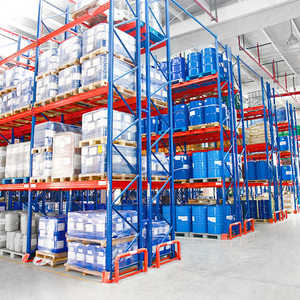
Custom Heavy-Duty 5-Layer Metal Stacking Shelf Rack 1000-2000KG Capacity 4-Layer Iron Shelving
- High-Grade Q235B
- Cold Roll Formed
- Adjustable Pitch
Source directly from certified Chinese manufacturing plants. Explore heavy-duty multi-tier, modular stackable, and high-throughput automated warehouse structures built for demanding global distribution networks.
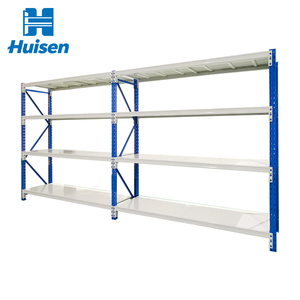
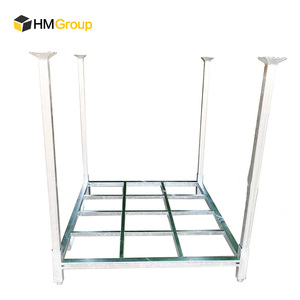
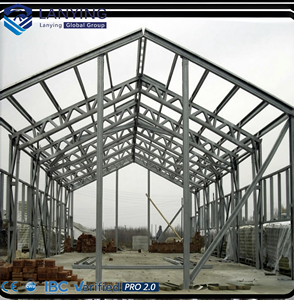
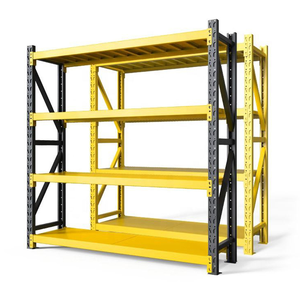
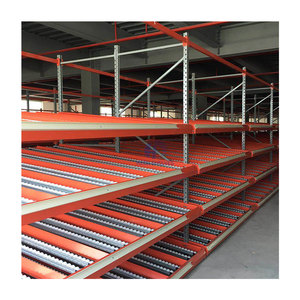
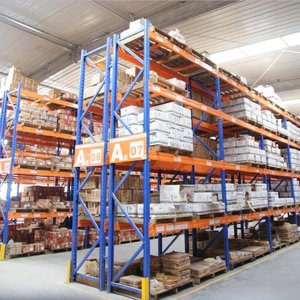
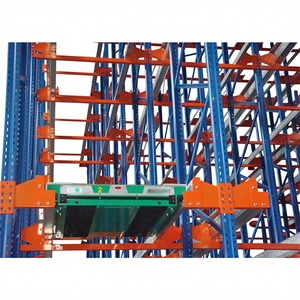
Modern distribution operations are confronting severe commercial footprint pressure. With industrial real estate costs climbing globally by an average of 8.4% year-over-year, logistics executives must shift from horizontal ground footprint expansion to three-dimensional volumetric density. Procuring industrial racking systems direct from top-tier Chinese manufacturing factories allows international distribution facilities to implement high-load, high-cube configurations while achieving capital expenditure savings of up to 40% compared to domestic intermediaries.
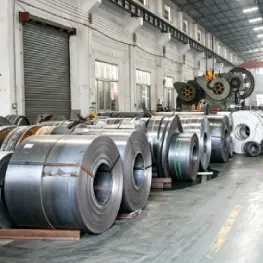
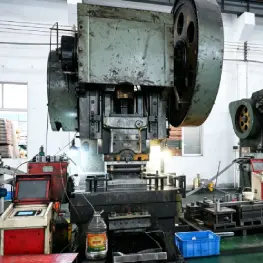
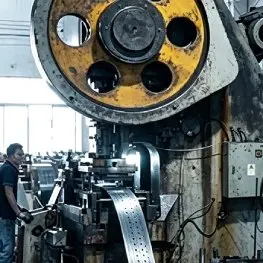
The structural reliability of high-density warehouse racking depends heavily on the metallurgical properties of the steel strip used during cold roll-forming. Leading Chinese racking manufacturers utilize certified continuous hot-rolled Q235B and Q355B structural carbon steel (equivalent to European S235JR and S355JR, or ASTM A36 and A572 Grade 50). Upright profiles are roll-formed through 16 to 24 precision progressive rolling stations, preventing localized residual stresses and micro-fractures in high-load corners.
Under seismic conditions (such as the Pacific Rim earthquake zones across Central and South America or Southeast Asia), upright frames require specific base plate thickness (typically 8mm–12mm structural steel) anchored directly into 200mm–300mm fiber-reinforced concrete slabs with dynamic anchor bolts. Beams must incorporate multi-tooth connector claws with automatic safety pins that resist a minimum upward dislodgement shear force of 5.0 kN according to EN 15512 safety protocols.
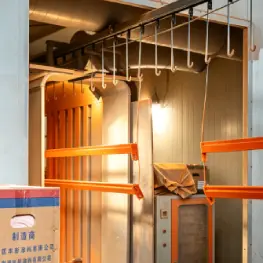
Atmospheric corrosion presents an existential risk to structural steel racking installed in coastal ports and high-humidity tropical climates. A high-density racking factory must implement a rigorous 10-stage automated pre-treatment and powder-coating regimen. Raw steel is degreased, acid pickled to completely eradicate mill scale, and phosphated to form a micro-crystalline zinc-phosphate conversion layer. High-durability thermosetting polyester resin powder is electrostatically deposited at 60–80 microns thickness, followed by 180°C–200°C curing tunnels. For blast-freezer operations (-25°C to -30°C) or open-air fertilizer and agrochemical storage, components are hot-dip galvanized according to ISO 1461, yielding an impenetrable 85–120 micron zinc barrier.
How supply chain engineering, robotic automation, and green metallurgical standards are reshaping the global racking procurement landscape over the next five to ten years.
Operations are moving away from traditional drive-in racking due to forklift collision liabilities. Shuttle systems move deep into racking lanes on precision guide rails via RF remote or WMS instructions, doubling turnover speed and protecting structural uprights from vehicle impacts.
B2B buyers are procuring racking frames designed for dual-phase conversion. Racks are deployed for standard reach trucks today, but feature beam punch-patterns and tolerances ready to mount vertical crane guide rails, conveyors, and automated guided vehicles (AGVs) in future fiscal phases.
Greenfield investments increasingly select clad-rack warehouses (Rack-Supported Buildings) where the racking structure itself supports the external roof and wall panels. This completely eliminates separate civil structural column investments, shortening building schedules by months.
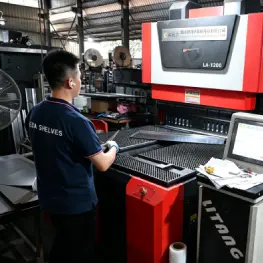
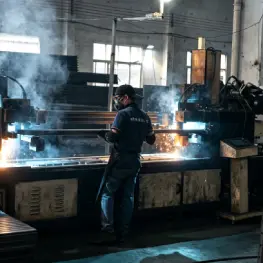
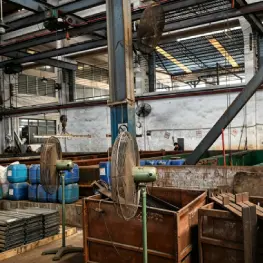
Founded in 2001 in Guangzhou, China, Guangzhou Heda Shelves Co., Ltd. has grown into an international leader in heavy-duty warehouse equipment manufacturing. Backed by over two decades of technical engineering, HEDA operates a continuous 30,000 square meter intelligent fabrication complex with 300+ technical personnel and a reliable output exceeding 30,000 tons of structural steel storage equipment per month.
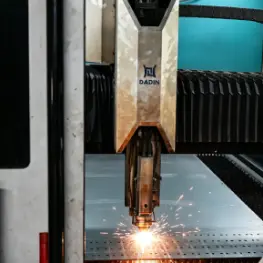
Every industrial project is verified with finite element analysis (FEA). Our certified engineers deliver comprehensive AutoCAD schematics, load deflection charts, and 3D architectural renders prior to metal stamping.
We hold European CE certification (No. 2435-CPR-8605159), audited ISO 9001:2015 quality management accreditation (No. 18624Q00169R0M, valid to 2027), and RoHS compliance for environmentally safe coatings.
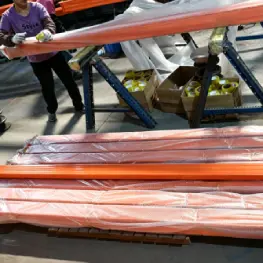
Over 10,000 completed installations across 120+ countries mean our shipping division packages upright frames and box beams with protective wrapping and numbered manifests for rapid port customs clearance.
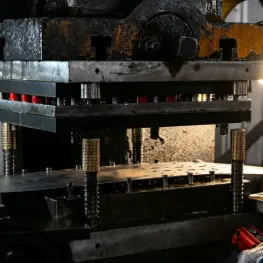
Traceable steel production from raw certified metallurgical coils to high-temperature powder-cured industrial assemblies ready for export.
Direct technical and commercial answers addressing structural safety, international shipping, seismic engineering, and customized warehouse layout calculations.
Qualified Chinese manufacturers utilize specialized structural engineering software (including ANSYS and SAP2000) to perform static, dynamic, and modal seismic calculations. In accordance with regional building codes (such as EN 16681 in Europe or RMI/ANSI MH16.1 in North America), our structural team designs custom upright cross-sections, adds diagonal frame bracing, and engineers oversized anchor baseplates to safely dissipate seismic ground acceleration forces.
While both offer deep-lane high-density pallet storage, Drive-In racking requires forklifts to physically enter the steel structural framework, causing frequent vehicle collision hazards, slower picking cycles, and strict LIFO (Last-In, First-Out) operations. In contrast, Radio Shuttle systems utilize an automated battery-powered carriage running on precision channel tracks; forklifts simply place pallets at the lane opening, eliminating rack damage, dramatically accelerating turnover, and allowing seamless switching between FIFO and LIFO modes.
Factory shipping engineers maximize both weight (up to 26–28 tons in 40ft High Cube containers) and cubic space utilization. Upright frames can be shipped pre-assembled or flat-packed (knock-down bolted) to reduce ocean freight costs by more than 50%. Beams are bundled with timber dunnage and heavy-duty steel banding, with all hardware packed into clearly labeled wooden crates corresponding to the installation assembly blueprint.
To deliver an accurate engineered design, we need your warehouse architectural CAD plan (including clear ceiling height, pillar locations, and entry door dimensions), pallet specifications (width, depth, overall height including cargo, and total loaded weight), material handling equipment specifications (forklift model, minimum turning aisle width, and maximum mast reach), and temperature parameters (ambient, cold room, or freezer).
Consult directly with our senior structural racking engineers. Receive a complimentary 2D AutoCAD storage layout, 3D photorealistic spatial render, and an itemized factory-direct commercial proposal within 24 hours.
Send an Inquiry