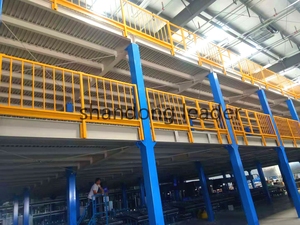
 Vertical Density
25+
Years Engineering Expertise (Est. 2001)
30,000m²
Automated Smart Production Base
30,000t
Monthly Cold-Formed Steel Capacity
10,000+
Global Warehousing Projects Shipped
Precision Structural Configurations
Featured Heavy-Duty High-Density Racking Systems
Engineered from premium hot-rolled Q235B and high-yield Q355B structural steel, our high-density racking series maximizes cubic spatial density up to 85% while meeting rigorous seismic, deflection, and FEM 10.2.02 / ANSI MH16.1 storage safety codes.
Vertical Density
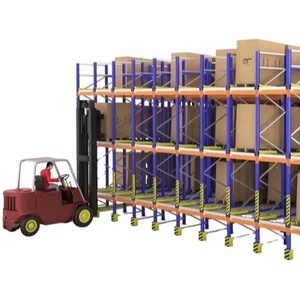 Automatic FIFO
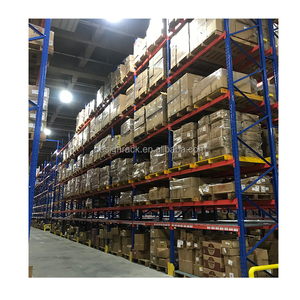 100% Direct Access
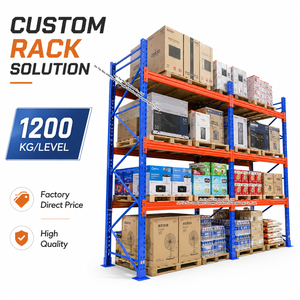 1200kg/Level
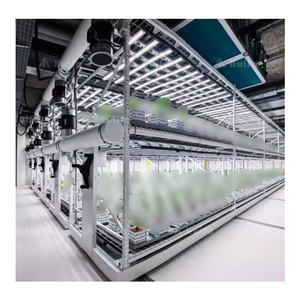 Hydroponic / Vertical
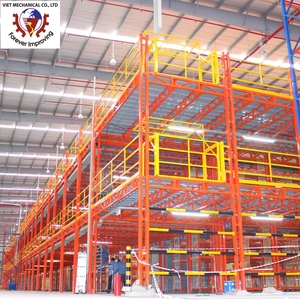 Structural Decking
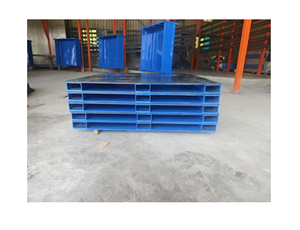 Engineered Tolerances
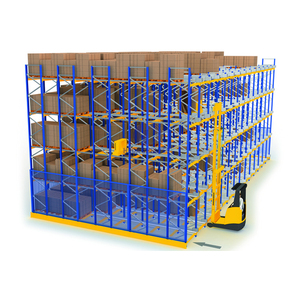 ASRS / 4-Way Shuttle
Whitepaper Section 1.0 • Engineering Classification
Structural Architecture of Industrial High-Density Racking Systems
In modern industrial logistics, commercial real estate overheads and escalating distribution footprints mandate extreme volumetric utilization. A high-density racking system is engineered to mitigate wasted interstitial aisle space, transforming conventional warehouse configurations from a standard 35%-45% floor volume utilization index up to an aggressive 75%-85% spatial yield.
From an engineering perspective, choosing between static, gravity-assisted, dynamic mechanical, and automated radio shuttle systems depends directly on inventory velocity, product homogeneity, pallet load weight, structural floor slab deflection limits, and building clear heights.
"Direct procurement from vetted tier-1 Chinese manufacturers eliminates downstream middleman premiums by 30% to 45%, yet requires strict structural verification regarding cold-rolled profile geometry, cold-bend springback tolerances, steel yield ratings, and seismic anchorage design."
Below is an empirical comparative analysis contrasting the core high-density racking methodologies manufactured in specialized Chinese production facilities:
| System Type | Storage Density Index | Rotation Logic | Aisle Space Ratio | Unit Pallet Capacity | Direct SKU Access | Ideal Industry Applications |
|---|---|---|---|---|---|---|
| Radio Shuttle Racking | Ultra High (85%) | FIFO / LIFO Hybrid | 10% - 15% | 500 - 1,500 kg | Channel-Indexed | Cold Chain, FMCG, Beverage, Pharma |
| Drive-In / Drive-Through | High (75%) | LIFO (Drive-In) / FIFO | 15% - 20% | 1,000 - 1,800 kg | Low (Per Lane) | Homogeneous Raw Materials, Agricultural |
| Gravity Pallet Flow | High (78%) | Strict FIFO | 12% - 18% | 300 - 1,200 kg | Lane Terminal Front | Perishables, Dairy, High-Turnover Food |
| Push-Back Racking (2-6 Deep) | Medium-High (65%) | Strict LIFO | 20% - 25% | 500 - 1,400 kg | Medium (Per Lane) | Medium Batch Manufacturing, Distribution 3PL |
| Rack-Supported Mezzanine | Max Cubic (Vertical 2-3x) | Manual / Case Flow | Variable | 300 - 1,000 kg/m² | 100% Floor Access | E-commerce, Auto Parts, Garments, Retail |
| Heavy Duty Selective Rack | Moderate (40%) | Complete Flexibility | 50% - 60% | 1,000 - 4,000 kg | 100% Instant Access | Mixed SKU Distribution Centers, Engineering |
Audited Manufacturing Standards
Guangzhou HEDA Shelves: 25 Years of Precision Metallurgy & Structural Design
Established in 2001 in Guangzhou, China, Guangzhou Heda Shelves Co., Ltd. operates a specialized 30,000 m² smart production compound equipped with fully automated continuous roll-forming lines, laser punching mills, robotic GMAW welding stations, and an environmentally compliant multi-stage continuous powder coating line.
01
Raw Steel Metallurgy
We source structural carbon steel exclusively from tier-1 mills (Baosteel, Shougang) certified under EN 10025-2 (S235JR, S355JR) and GB/T 700 (Q235B, Q355B), ensuring tensile strength consistency and zero micro-fissure embrittlement.
02
Automated CNC Roll-Forming
Equipped with 18-stage to 26-stage heavy-duty CNC roll forming lines. Continuous cold-forming guarantees upright post cross-sectional geometry within ±0.2mm tolerance, eliminating internal stress concentrations and twist warpage.
03
Multi-Stage Pre-Treatment
Components undergo strict non-acid spray cleaning, phosphating, electrostatic powder deposition, and 200°C thermosetting polymerization. Salt-spray resistance exceeds 500 hours, maintaining coating cohesion in extreme tropical humidity.
04
Certified Global Export Readiness
Compliant with CE Certification No. 2435-CPR-8605159 and ISO 9001:2015 Quality Management System No. 18624Q00169R0M. Comprehensive FEM, RMI, and AS4084 calculation reports are provided alongside itemized bilingual container manifests.
The 10-Stage Precision Heavy Racking Manufacturing Process
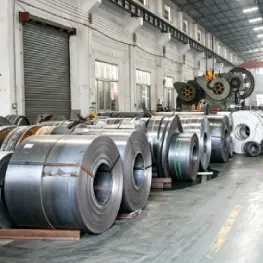
Raw Materials
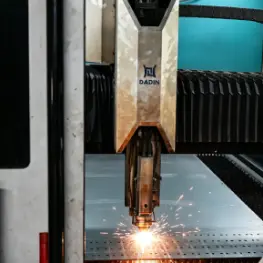
Precision Cutting
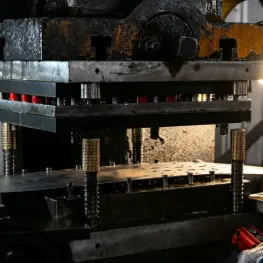
Automated Punching
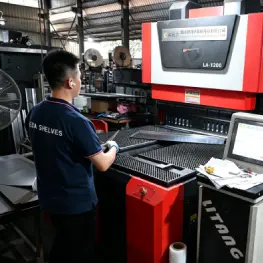
Cold Bending
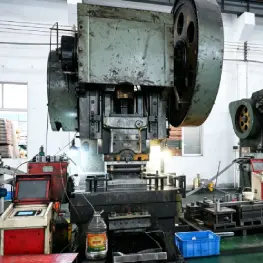
Profile Forming
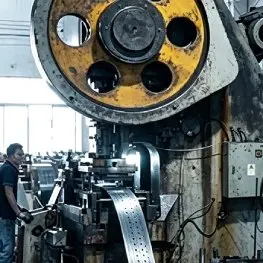
Edge Polishing
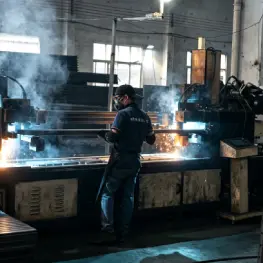
Robotic Welding
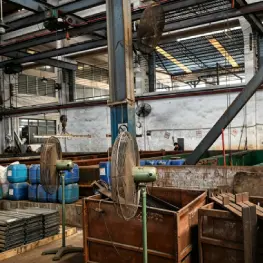
Pickling & Phosphating
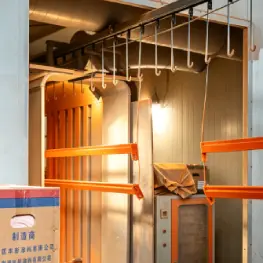
Powder Coating
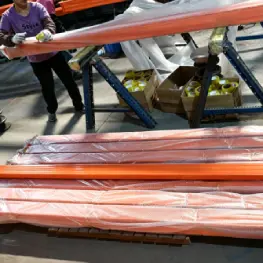
QC & Ocean Bundling
Independently Audited & Internationally Verified Accreditation
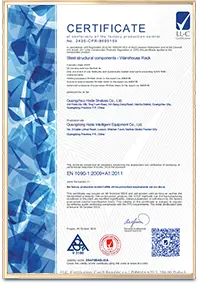
CE EN 1090-1 / CPR
No. 2435-CPR-8605159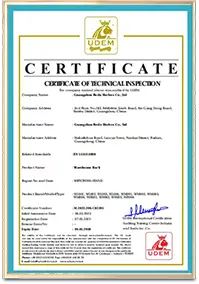
ISO 9001:2015 Quality
Cert No. 18624Q00169R0M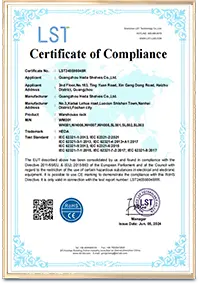
RoHS Environment
Directive 2011/65/EU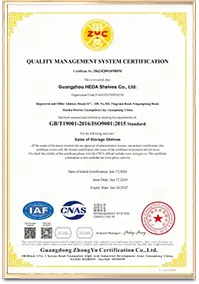
Structural Safety Audit
Verified Export Benchmark
Whitepaper Section 2.0 • Supply Chain Forecast
Future Procurement Trends for Industrial Racking (2025–2030)
Global logistics directors and third-party logistics (3PL) infrastructure funds are fundamentally revamping their capital expenditure (CapEx) strategies for storage assets. Procurement from Chinese wholesale racking factories is no longer driven solely by ex-factory unit price per kilogram. Instead, enterprise buyers evaluate full lifecycle Total Cost of Ownership (TCO), automated material handling compatibility, carbon footprint documentation, and localized structural compliance.
∞
Pre-Engineered Automation Readiness
Procuring static racking without future automation paths is quickly becoming obsolete. Forward-thinking operators specify high-precision cold-formed uprights and guide rails capable of immediate or phased retrofitting with 4-way shuttles, Autonomous Mobile Robots (AMRs), and stacker cranes without structural welding or structural re-certification.
§
Parametric FEA & BIM Digital Twins
B2B procurement contracts increasingly demand full 3D Building Information Modeling (BIM - Level 2) Revit files alongside Finite Element Analysis (FEA) reports before cutting coil. Structural behavior under dynamic forklift impact, cyclic thermal contraction in blast freezers, and localized seismic ground accelerations must be proven digitally.
Δ
Direct Container Loading Optimization
Escalating trans-Pacific and intra-Asia freight rates demand modular nesting designs. Modern Chinese factories deploy 3D packing algorithm software to package structural uprights, step beams, cross ties, and bracing in bundle modules that yield up to 26–28 metric tons per 40ft High Cube container, reducing freight cost per pallet location by up to 22%.
Shift Towards Standardized High-Yield Steel (Q355B vs. Q235B)
Historically, commercial storage racks relied on traditional Q235B mild steel. However, current global procurement specifications favor high-yield cold-rolled Q355B (equivalent to ASTM A572 Grade 50 and European S355). By leveraging a yield strength of 355 MPa compared to 235 MPa, engineers can decrease component deadweight by 12% to 18% while simultaneously increasing safe working load (SWL) capacity. This reduction directly dampens shipping weight, lowers overall logistics costs, and decreases raw material consumption per cubic meter of installed warehouse space.
Whitepaper Section 3.0 • Technology & R&D Horizons
Technological Breakthroughs in High-Density Warehouse Racking
The convergence of material science, industrial Internet of Things (IIoT), and autonomous robotic software is redefining the technological baseline for high-density storage platforms. Chinese manufacturing facilities are actively partnering with European and American automation integrators to pioneer next-generation storage hardware.
☼
Intelligent 4-Way Radio Shuttle Fleets
Moving beyond single-lane 2-way shuttles, 4-way directional shuttles leverage dual-direction motor drives, optical encoder positioning, and on-board LiDAR to traverse longitudinal storage channels and transverse transfer cross-aisles. Integrated with vertical lifts, single shuttles navigate complex multi-level matrices smoothly.
✆
Embedded IIoT Structural Health Sensors
Smart rack monitoring incorporates micro-electromechanical (MEMS) accelerometers, strain gauges, and tilt sensors directly inside upright baseplates and vulnerable frame corners. Real-time telemetry detects forklift collisions, frame deformation, and overload conditions, sending warnings to WMS dashboards before structural failure occurs.
❄
Ultra-Low Temperature Cold Store Metallurgy
In -25°C to -35°C deep freeze environments, conventional carbon steel exhibits Charpy impact ductile-to-brittle transitions. Leading Chinese exporters utilize specialized low-temperature micro-alloyed steel formulations alongside continuous pre-galvanized or hot-dip galvanized finishes to eliminate coating chipping and structural fatigue.
Surface Treatment Engineering: Powder Coating vs. Hot-Dip Galvanizing
Corrosion protection is a critical engineering parameter when importing steel structures into tropical, maritime, or chemical storage facilities. Standard electrostatic epoxy-polyester powder coating (70–90 μm dry film thickness) offers exceptional abrasion resistance, chemical inertness, and visual lane identification in dry ambient distribution centers. However, for ambient coastal ports, agrochemical fertilizer terminals, or high-humidity outdoor yards, hot-dip galvanization conforming to ISO 1461 (minimum 55–85 μm metallurgical zinc alloy layer) provides cathodic sacrificial protection that halts corrosion even if the outer layer is scratched during severe daily forklift maneuvering.
Whitepaper Section 4.0 • Structural Safety & Codes
Seismic Engineering, Slab Calculations, and Deflection Thresholds
One of the most frequent points of failure in international racking procurement is the disconnect between Chinese factory standard designs and local civil structural codes. When procuring high-density storage systems destined for earthquake zones (such as the Pacific Ring of Fire, Latin America, Japan, the Western US, or Southern Europe), static load calculations are entirely insufficient.
Our engineering division calculates racking frames in accordance with three recognized global standards:
- FEM 10.2.02 / EN 15512: European design code for adjustable pallet racking systems, defining member resistance, beam-to-column connector stiffness, and overall frame stability under second-order P-Delta effects.
- RMI (ANSI MH16.1): American specification for industrial steel storage racks, detailing column baseplate load distribution, anchorage pull-out safety factors, and torsional bracing.
- AS 4084: Australian steel storage racking design standard governing deflection limits under maximum allowable rated loads.
"Deflection Criteria Rule of Thumb: In high-density gravity and selective racking, maximum horizontal beam deflection under full working load must never exceed L/200 (where L is beam span). For radio shuttle systems, tolerances tighten to L/300 or L/350 to prevent shuttle track binding or optical sensor misalignment."
Furthermore, concrete slab integrity must be audited before installation. High-density structures transfer intense concentrated foot loads through upright baseplates onto the building foundation. Our structural engineering department provides exact foundation load schedules (dead load, live load, seismic uplift, and shear forces), allowing site structural engineers to verify slab compressive strength (typically requiring minimum 25–30 MPa non-shrink slab) and prevent floor punching shear failure.
Direct Factory Sourcing FAQ
Frequently Asked Questions by Industrial Racking Buyers
Clear, engineering-backed answers to the most vital commercial, technical, and logistics questions encountered when sourcing high-density racking systems directly from China.
QWhat primary data is required to generate a formal structural CAD layout and quotation?
To design an optimized system and calculate steel weights accurately, we require: (1) Warehouse architectural drawings detailing clear building height, column grids, dock door locations, and fire exit clearways; (2) Pallet specifications including width, depth, overall height with load, and gross weight; (3) Handling equipment model, turning radius, and maximum reach height; (4) Total target SKU counts and inventory turnover cycle (FIFO vs. LIFO); (5) Regional seismic acceleration coefficients (Ss, S1 values).
QHow do China factory wholesale prices compare with domestic European or US suppliers?
Procuring factory-direct from audited Chinese manufacturers like Guangzhou HEDA Shelves generally yields a 30% to 50% cost saving on steel components, even after calculating ocean container freight, marine insurance, and import duties. These economies of scale stem from automated continuous roll-forming lines, direct mill raw material purchasing, and integrated powder coating operations in our 30,000 m² Guangzhou facility.
QHow are high-density racking components packed to prevent transport damage during ocean voyages?
Upright frames and horizontal beams are bundled using high-tensile steel strapping, corner edge protectors, and waterproof multi-layer stretch shrink film. Specialized wooden blocking separates finished powder-coated surfaces to prevent abrasion during vessel transit. Small hardware (anchors, safety locking pins, shims, level pads, bolts) is packed into reinforced corrugated cartons on fumigated export pallets with clear, labeled container stuffing lists.
QWhat third-party testing and quality certifications should an importer verify?
Buyers should demand: (1) Mill Test Certificates (MTC) for steel coil chemical composition and tensile yield points; (2) ISO 9001:2015 Quality Management System verification; (3) European CE Conformity Certification (EN 1090-1 / CPR) issued by an accredited notified body; (4) Independent structural testing reports verifying beam-end connector moment-rotation capacity and upright stub column compressive strength under FEM/ANSI protocols.
QHow is international installation managed without local factory crews?
We supply full 3D assembly shop drawings, component identification tags, and step-by-step video installation guides. For large distribution centers or complex automated shuttle systems, we dispatch experienced installation supervisors to the client's jobsite to manage, test, and commission the system alongside local mechanical contractor crews. Remote video engineering support is available 24/7 across all global time zones.
QWhat is the typical production and shipping lead time for a 10 to 50 container project?
Standard engineering layout finalization and 3D FEA structural verification require 3 to 5 business days. Once engineering sign-off and deposit are received, production of standard cold-rolled pallet racking takes 15 to 25 calendar days. Custom automated shuttle or mezzanine systems average 30 to 35 calendar days. Ocean transit varies by destination port: 14–18 days to Southeast Asia, 22–30 days to Europe, 28–38 days to the Americas.
Whitepaper Section 5.0 • Quality Assurance Protocols
Factory Audit Checklist: How to Qualify a Chinese Racking Manufacturer
For engineering consultants, global supply chain executives, and EPC contractors, conducting an on-site or third-party factory audit is essential prior to releasing commercial deposits. Below is the technical inspection matrix utilized by professional engineering inspection firms (such as SGS, BV, or TÜV) when inspecting our Guangzhou facilities:
- Raw Material Verification: Inspecting incoming steel coils for metallurgical uniformity, thickness tolerances (±0.1mm), and spectrophotometer chemical verification matching Grade Q235B or Q355B.
- Roll-Forming Dimensional Control: Upright column pitch accuracy (±0.5mm across 12 meters), slot alignment symmetry, and beam connector hook fitment tolerance checks.
- Robotic Welds Ultrasonic/Magnetic Testing: Inspection of beam end-connectors to ensure full penetration GMAW welds without undercut, porosity, or cold overlap.
- Coating Adhesion Cross-Hatch Testing: ASTM D3359 cross-hatch tape test on powder-coated steel to guarantee Grade 5B adhesion without flaking.
- Impact Deflection & Overload Proofing: Periodic hydraulic ram destructive testing on fabricated frame assemblies to verify calculated safety factors exceed 1.5 to 1.9 times design capacity.
"Direct manufacturer transparency: HEDA Shelves welcomes client-appointed third-party quality inspectors at all stages of manufacturing, offering uninhibited access to mill certificates, dimensional calipers, coating thickness gauges, and packaging inspection lines."
Request a Custom Engineered Warehouse Layout & Direct Factory Quotation
Submit your warehouse dimensions, pallet parameters, and target storage capacities. Our senior logistics engineers will deliver an itemized CAD floor plan, 3D visualization model, and factory-direct price quotation within 24 hours.