High-Density Heavy Duty Warehouse Storage Configurations
Direct from Guangzhou Heda Shelves Co., Ltd.: certified heavy-duty storage configurations calibrated for rigorous seismic, tropical, cold-chain, and high-throughput operational envelopes.
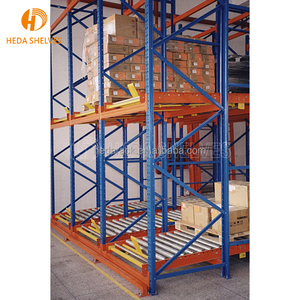
Factory Industrial Steel Gravity Flow Roller Racking Systems FIFO Carton Flow
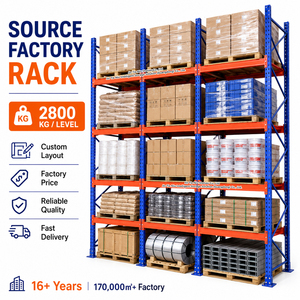
2800KG 5 Levels High Bay Industrial Pallet Racking Warehouse System
500 to 9000Kg/Layer Mobile Storage Bin Rack Shelving System
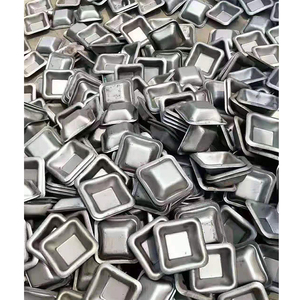
Metal Pallet Feet for Detachable and Foldable Steel Stillage Stacking Racks
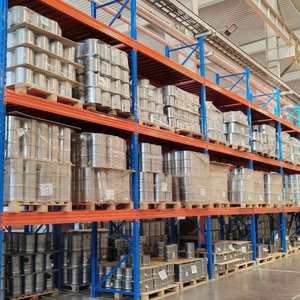
High Capacity Selective Pallet Racking Drop-in Beams Heavy Duty Steel Shelving
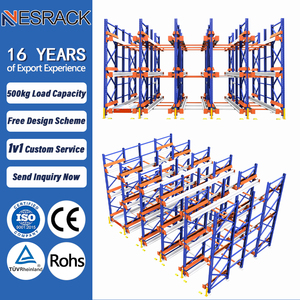
High Density Radio Shuttle Rack Heavy Duty Pallet Storage System
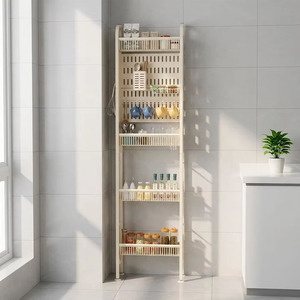
Stable Wall Mounted Slim 4-Layer Durable Multi-Purpose Storage Rack
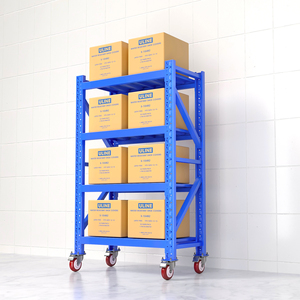
Longspan Shelving Rack High Bay Industrial Narrow Aisle Pallet Racking
The Mechanics, Metallurgical Standards & Physics of Deep Pallet Racking
Modern distribution complexes cannot afford volumetric inefficiencies. Deep pallet racking systems—primarily Double Deep (2-deep), Drive-In, Push-Back, and Radio Shuttle multi-deep channels—fundamentally re-engineer the ratio of usable storage cubes to vehicular aisles.
| Racking Typology | Storage Density | Direct SKU Selectivity | Stock Rotation (FIFO/LIFO) | Floor Space Utilization | MHE (Forklift) Compatibility | Relative CAPEX / Position |
|---|---|---|---|---|---|---|
| Double Deep Racking | +60% vs. Selective | 50% (2 deep per lane) | LIFO (by tier) | Up to 65% Floor Use | Pantograph / Telescopic Fork Truck | Economical ($$) |
| Radio Shuttle Deep-Lane | +120% Maximum | Lane Dependent (1 SKU/Lane) | Configurable FIFO / LIFO | Up to 85% Floor Use | Standard Counterbalance / Reach | Automated ($$$$) |
| Push-Back Cart System | +75% (2 to 6 deep) | Aisle Facing per Level | Strict LIFO | Up to 70% Floor Use | Standard Counterbalance / Reach | Moderate ($$$) |
| Drive-In / Drive-Through | +85% (Continuous) | Lowest (Batch Uniformity) | LIFO (Drive-In) / FIFO (Through) | Up to 75% Floor Use | Narrow Chassis Counterbalance | Economical ($$) |
| Standard Selective Rack | Baseline (100% Aisles) | 100% Direct Immediate | Strict FIFO Universal | 40% - 45% Floor Use | Universal Any MHE | Lowest Baseline ($) |
High-Grade Metallurgy: Q235B vs. Q355B
Structural reliability starts with raw coil properties. While mass-market producers utilize generic scrap cold-rolled sheet, HEDA specifies high-tensile hot-rolled Q235B and high-yield Q355B carbon steel sourced from tier-one Chinese mills (Baosteel/Ansteel).
- Yield Strength: Q235B (σs ≥ 235 MPa) for standard uprights; Q355B (σs ≥ 355 MPa) for critical dynamic load transfer.
- Elongation Performance: ≥ 21% guarantees ductile resistance during accidental dynamic forklift impact without catastrophic shear.
- Bend Radii Tolerance: Continuous 16-station cold roll-forming maintains consistent profile thickness across Omega (Ω) column flanges.
FEM 10.2.02 & RMI Beam-Lock Physics
Deep racking experiences asymmetrical torsion when pantograph reach trucks deposit deep-position pallets. Connection security relies on our 5-claw drop-in beam connectors engineered with integral taper wedges.
- Deflection Ceilings: Beams are rated to strictly satisfy deflection limits under full uniform load (L/200 max per FEM 10.2.02; L/180 per RMI MH16.1).
- Safety Shear Pins: Heavy gauge cold-drawn spring steel locks prevent accidental beam dislodgement under upward forklift misjudgment (> 5kN rating).
- Box Beam Seam Integrity: Continuous automated twin-wire submerged arc welding locks interlocking C-channels into a monolithic closed profile.
Seismic Dampening & Upright Base Anchoring
Deep pallet setups produce substantial overturning moments during seismic shear waves. HEDA's structural analysis calculates ground reaction loads based on site-specific seismic coefficients (IBC / Eurocode 8 / AS 4084).
- Heavy Footplates: CNC laser-cut 10mm to 16mm thick baseplates distribute concentrated axial loads across floor slabs.
- Chemical Capsule Anchoring: High-yield concrete wedge and M12/M16 chemical capsule anchors withstand dynamic pull-out tensions.
- Diagonal Horizontal K-Bracing: Bolted bracing patterns dissipate horizontal accelerations throughout the frame matrix.
Guangzhou HEDA Shelves: 25 Years of Manufacturing Authority
Founded in 2001 in Guangzhou, China, Guangzhou Heda Shelves Co., Ltd. has developed into a premier global manufacturer, operating comprehensive production facilities spanning precision roll forming, automated welding, and eco-certified powder coating.
Verified Global Certifications
Every structural system complies with international safety frameworks. We hold audited CE Certification (No. 2435-CPR-8605159), ISO 9001:2015 Quality Management System Certification (No. 18624Q00169R0M, valid through 2027), and strict RoHS heavy metal-free powder compliance.
10-Stage Anti-Corrosion Treatment
Our surface finishing process incorporates automatic degreasing, multi-stage acid pickling, zinc phosphating, high-temperature deionized water washing, and Swiss Gema electrostatic powder spray cabins. The resulting 60–90µm thermosetting epoxy-polyester coat withstands aggressive coastal and industrial climates.
Container-Optimized Sea Export
With thousands of ocean containers shipped globally, HEDA utilizes specialized steel cradle nesting and wooden spacer packing. Components are palletized and bundled systematically with detailed load lists to ensure damage-free transit and rapid container destuffing at destination ports.
Future Trends in Deep Pallet Storage & Warehouse Procurement
Modern distribution centers, 3PL providers, and pharmaceutical mega-warehouses face unprecedented real estate, labor, and energy costs. The following operational trends dictate how tier-one racking systems are being planned and procured for the coming decade.
Automated Shuttle Hybrid Integration
Standard manual deep-reach systems are increasingly transitioning toward semi-automated and fully autonomous radio shuttle matrices. By decoupling the lift truck from lane entry, cycle times drop by 45%, and structural impact damages caused by forklift upright collisions are virtually eliminated.
Cold Chain Volumetric Optimization
Refrigerated warehouse real estate costs 3.5 to 5 times more to operate than ambient space. Double Deep and Shuttle Deep configurations are dominating cold chain storage (sub-zero -25°C to -30°C facilities), concentrating mass, reducing thermal envelope volume, and trimming refrigeration kilowatt-hour overhead.
Zinc-Aluminum-Magnesium (ZAM) Coatings
In humid coastal regions, port-proximate free trade zones, and high-salinity agricultural fertilizers, conventional galvanized or painted steel faces aggressive micro-corrosion. The industry is rapidly adopting ZAM high-performance alloy-coated steel, offering 4 to 10 times higher corrosion resistance with self-healing sheared edge protection.
Non-Linear FEA Dynamic Seismic Simulation
Global building regulatory boards are tightening structural seismic verifications. Turnkey warehouse racking now requires three-dimensional finite element modeling (FEA) evaluating second-order (P-Delta) frame swaying effects, joint slippage stiffness, and ductility coefficients under major seismic occurrences.
Direct Mill Traceability & ESG Standards
International procurement groups now prioritize end-to-end metallurgical traceability. Factory direct sourcing from reputable Chinese manufacturers like HEDA ensures certified mill test reports (MTRs), consistent raw alloy chemistries, and environmental compliance documentation required by international project financiers.
Smart Sensor-Enabled Structural Monitoring
Enterprise logistics complexes are beginning to integrate optical beam sensors, load cells, and Bluetooth IoT impact sensors on base frames. This real-time telemetry notifies warehouse safety supervisors immediately of forklift impacts, overload hazards, and floor settlement anomalies before structural failures occur.
Deep Pallet Racking Sourcing: Technical & Operational FAQ
Direct technical answers addressing seismic planning, forklift compatibility, deflection tolerances, and import logistics for operations managers and corporate procurement teams.
Q: What is the difference between Double Deep and Standard Selective Pallet Racking?
Double Deep pallet racking stores pallets two positions deep in a back-to-back layout rather than single rows. This arrangement eliminates one operating aisle for every four rows of racking, increasing warehouse storage density by 40% to 60%. However, accessing the rear pallet requires a specialized forklift equipped with pantograph scissors or telescopic double-deep forks, resulting in 50% immediate pallet selectivity compared to 100% on standard selective systems.
Q: Which forklift types are required to operate within a Double Deep layout?
To operate a Double Deep system, you must deploy specialized material handling equipment. Standard counterbalance forklifts cannot reach the rear pallet. The primary choices include: (1) Pantograph Reach Trucks fitted with a hydraulic scissor mechanism; (2) Deep-reach Mast Trucks with telescopic forks; or (3) Articulated Forklifts (such as Bendi/Aisle-Master) fitted with extended reach attachments. Required operating aisle widths typically span between 2.8m and 3.4m depending on chassis design and mast height.
Q: How does HEDA verify structural integrity for seismic-active regions?
For installations in seismic zones (such as Central America, the Pacific Rim, or the Mediterranean), our engineering team utilizes finite element modeling software to perform non-linear modal response analyses based on IBC, FEM 10.2.02, or AS 4084 building codes. We upgrade upright steel gauges (often shifting to high-yield Q355B), expand baseplate footprints with multiple M16 anchoring points, integrate horizontal back-to-back structural spacers, and install diagonal K-frame braces to absorb dynamic horizontal ground accelerations.
Q: What are the international deflection limits for pallet racking beams under load?
Under FEM 10.2.02 (European standard), the maximum vertical deflection of a beam under safe working uniform distributed load (UDL) must not exceed 1/200th of the clear beam span (Deflection ≤ L/200). Under US RMI ANSI MH16.1 specifications, the deflection ceiling is set at L/180. HEDA beams are designed and factory proof-load tested to safely maintain a minimum safety factor of 1.5 to 1.65 against plastic deformation or connector shear.
Q: How are heavy pallet racks protected against damage and moisture during sea freight?
Over-ocean shipment exposes steel components to moisture and aggressive saltwater air. HEDA prepares all export goods with protective packaging: upright frames and beams are nested with non-abrasive PE wrapping, custom wooden/steel separator spacers prevent surface friction, and critical hardware fittings (bolts, baseplates, safety pins) are packed in heavy-duty wooden crates containing vapor-phase corrosion inhibiting (VCI) desiccants. Each shipment includes a detailed, color-coded container loading plan for simplified site unloading.
Q: What documentation and input data are needed for a custom 3D warehouse layout proposal?
To deliver an engineered 2D AutoCAD layout and 3D architectural rendering along with a precise structural quotation, we request: (1) Architectural floor plan showing column grid spacing, building clear heights, and door locations; (2) Concrete slab thickness, compressive strength (e.g., 25–30 MPa), and rebar specifications; (3) Pallet dimensions (width, depth, overall height including cargo overhang) and maximum gross weight; and (4) Existing or proposed forklift model specifications (lift height, closed mast height, and turning radius).
Request an Engineered 3D Layout & Wholesale Factory Quotation
Planning a new logistics hub, cold room expansion, or replacing outdated storage systems? Collaborate directly with Guangzhou HEDA’s senior warehouse structural engineering team for comprehensive CAD layouts, load capacity calculations, and factory-direct export proposals within 24 hours.